
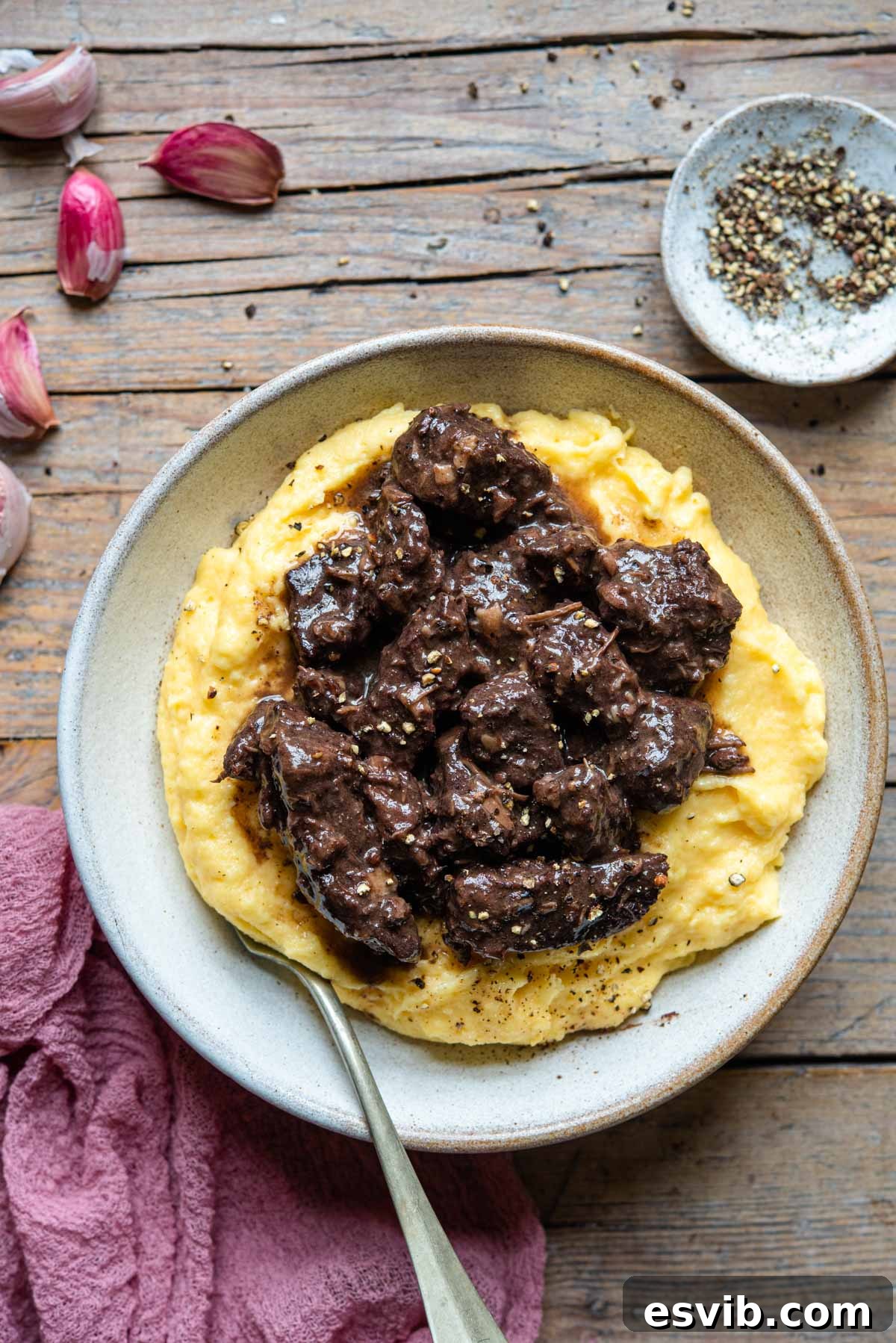
Authentic Peposo: A Centuries-Old Tuscan Red Wine Beef Stew from Florence
Peposo is more than just a stew; it’s a culinary embrace from the heart of Tuscany, specifically Florence. This traditional Tuscan Beef Stew stands out for its remarkable simplicity, yielding an extraordinary depth of flavor that belies its short ingredient list. Crafted with succulent beef, generous amounts of garlic, a bold kick of black pepper, and an entire bottle of robust red wine, Peposo offers a taste of Italian heritage that is both incredibly delicious and comforting. It’s truly a dish that transports you straight to the rustic kitchens of Italy, perfectly served alongside creamy polenta or a hearty slice of crusty bread.
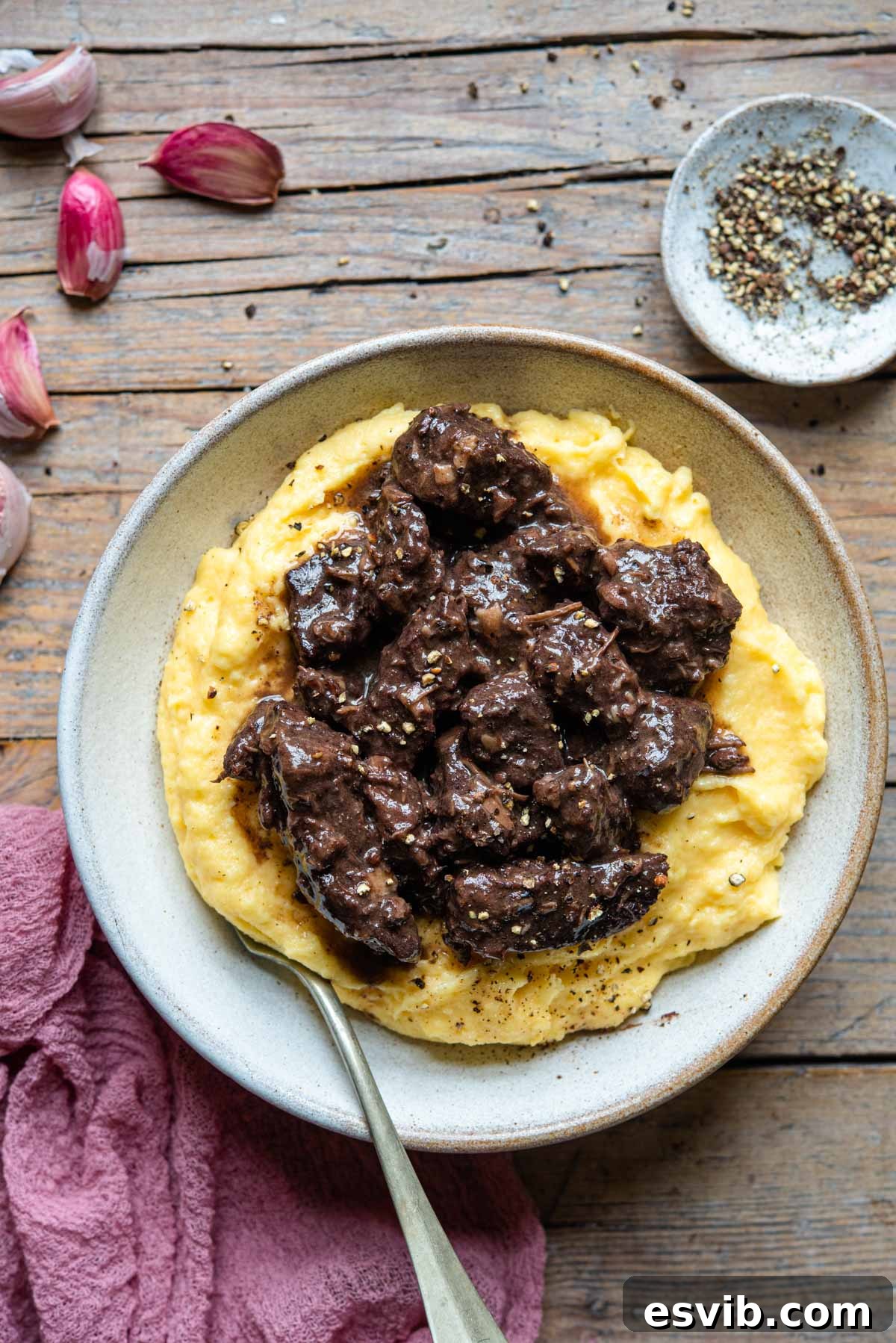
The Rich History of Peposo: A Taste of Ancient Tuscany
The origins of Peposo are deeply rooted in the history of Florence, tracing back to the kilns of Impruneta, a small town just south of the city renowned for its terracotta production. Legend has it that the furnace workers, who spent long hours tending massive ovens, needed a hearty and simple meal that could cook slowly while they worked. They would place earthenware pots filled with beef, garlic, pepper, and red wine inside the cooling kilns, allowing the stew to simmer gently for hours. This method yielded incredibly tender meat and a deeply flavorful sauce, requiring minimal supervision. This slow-cooking tradition, born out of necessity and ingenuity, is precisely what gives Peposo its authentic character and timeless appeal. It’s a testament to how simple, quality ingredients, combined with patience, can create something truly spectacular.
What Makes Peposo Uniquely Delicious?
A Symphony of Simple Ingredients
At its core, Peposo is a masterpiece of minimalism. The recipe calls for just a handful of fundamental ingredients: quality **beef chuck**, fresh **garlic**, a generous amount of **black pepper**, and a full bottle of fine **red wine**. That’s it. While many might be tempted to enhance a stew with herbs, various vegetables, chopped tomatoes, or stock, the traditional preparation of Peposo deliberately omits these. The beauty of this stew lies in the unadulterated interaction of these core components, creating a flavor profile that is surprisingly complex and profoundly satisfying. Trust the tradition; try it the authentic way at least once, and you’ll understand why its simplicity is its greatest strength.
The Bold Flavor Profile
The flavor of Peposo is remarkably rich and robust, largely due to the use of an entire bottle of red wine, typically a Chianti or Sangiovese. This generous amount of wine forms the heart of the stew’s sauce, imparting a deep, fruity, and slightly acidic base that perfectly complements the beef. The stew also delivers a delicious, spicy kick from the black pepper – a key ingredient that gives the dish its name, “Peposo” (meaning peppery). While the quantity of pepper might seem substantial, it mellows beautifully during the long cooking process, infusing the stew with warmth rather than overwhelming heat. The result is a well-balanced spice that enhances every bite.
Unlike many other beef stews that rely on flour for thickening, Peposo’s sauce remains naturally thinner. This allows the pure flavors of the wine, beef, and pepper to shine through, creating a lighter, more refined mouthfeel. The beef, after hours of gentle simmering, becomes incredibly tender but still retains a pleasant bite – it’s not quite falling apart, maintaining a satisfying texture. This unique characteristic is part of what makes Peposo stand apart, and it pairs exquisitely with creamy polenta or rustic, crusty bread, which can soak up every drop of that exquisite sauce.
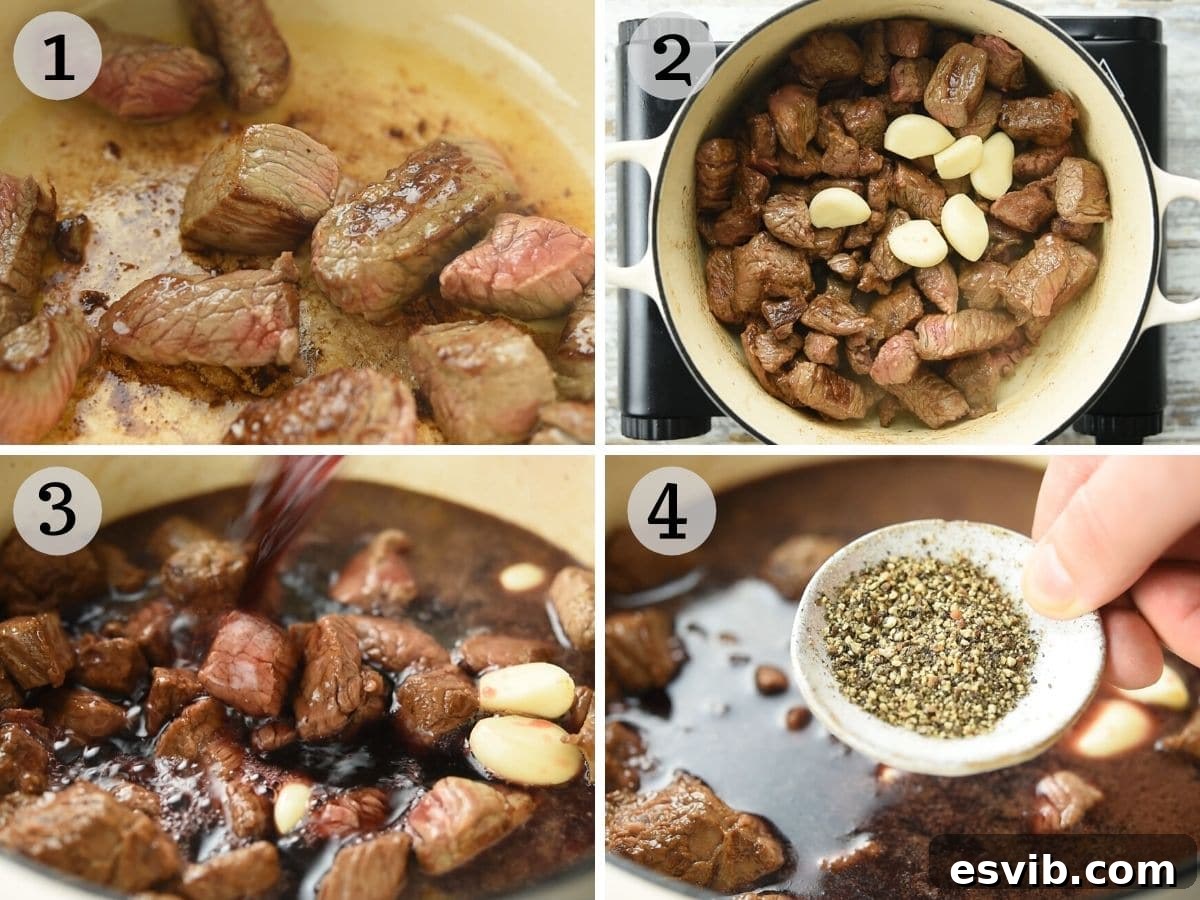
Crafting Authentic Peposo: A Step-by-Step Guide
Making this traditional Tuscan beef stew is straightforward, rewarding you with incredible flavors for minimal effort. Here’s how to bring this Florentine classic to your table:
- Brown the Beef: Begin by heating a tablespoon of olive oil in a large, heavy-bottomed pot or Dutch oven over medium-high heat. Add the beef chuck (or stewing beef), cut into 1-inch cubes, to the hot oil. Brown the beef on all sides for a minute or two until a rich, caramelized crust forms. It’s important to do this in batches if necessary to avoid overcrowding the pot, which can steam the meat instead of browning it. Browning is crucial for developing deep, savory flavors.
- Combine Ingredients: Once all the beef is browned, return it to the pot along with any accumulated juices. Pour in the entire bottle of red wine, ensuring it covers the beef. Add the whole peeled garlic cloves, the freshly ground black pepper, and sea salt flakes. Stir everything gently to combine.
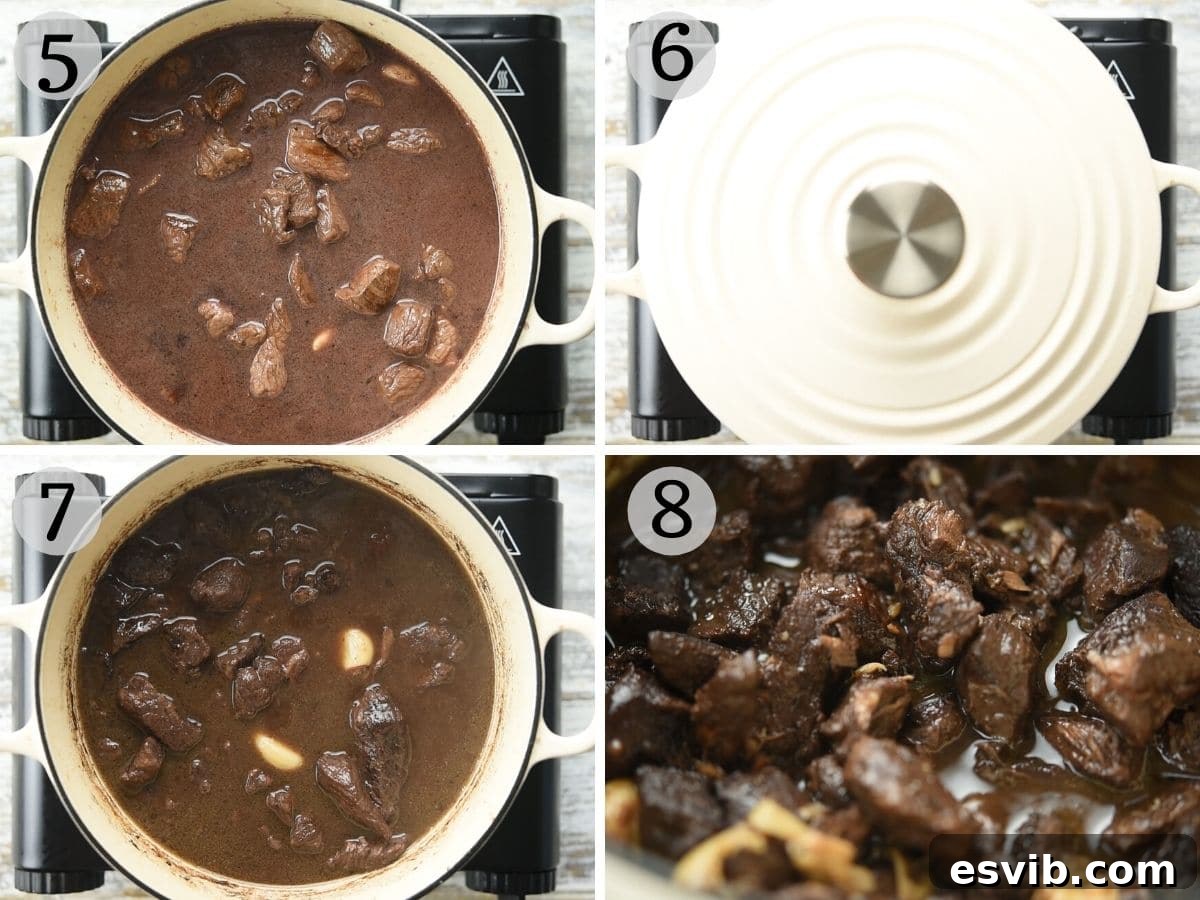
- First Simmer: Cover the pot tightly with a lid and bring the stew to a gentle simmer over medium-low heat. Maintain this low simmer for 1.5 hours. During this phase, the flavors will begin to meld, and the wine will slowly infuse the beef.
- Second Simmer & Reduction: After 1.5 hours, remove the lid from the pot. Continue to simmer the stew, uncovered, for another 1.5 hours. This allows some of the liquid to evaporate, concentrating the flavors and slightly thickening the sauce. During this uncovered simmering, remember to check the stew periodically and give it a gentle stir to prevent it from sticking to the bottom of the pot and to ensure the meat at the top doesn’t dry out.
- Check Tenderness: The beef should now be wonderfully tender but not completely falling apart. It should still have a pleasing texture that holds its shape.
- Serve: Your Peposo is ready to be enjoyed! Serve it piping hot with your chosen accompaniment.
Serving Peposo: Traditional Pairings and Modern Twists
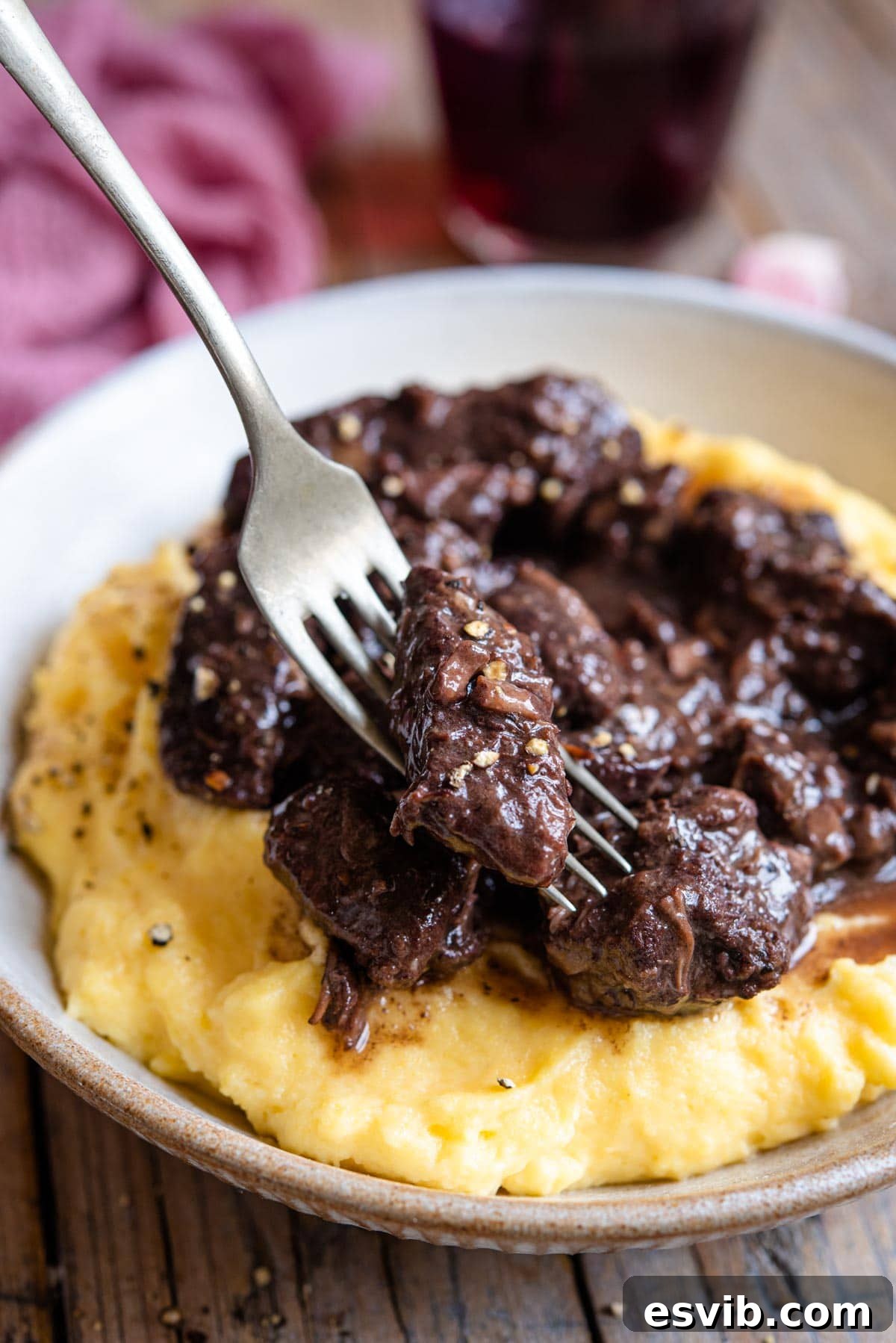
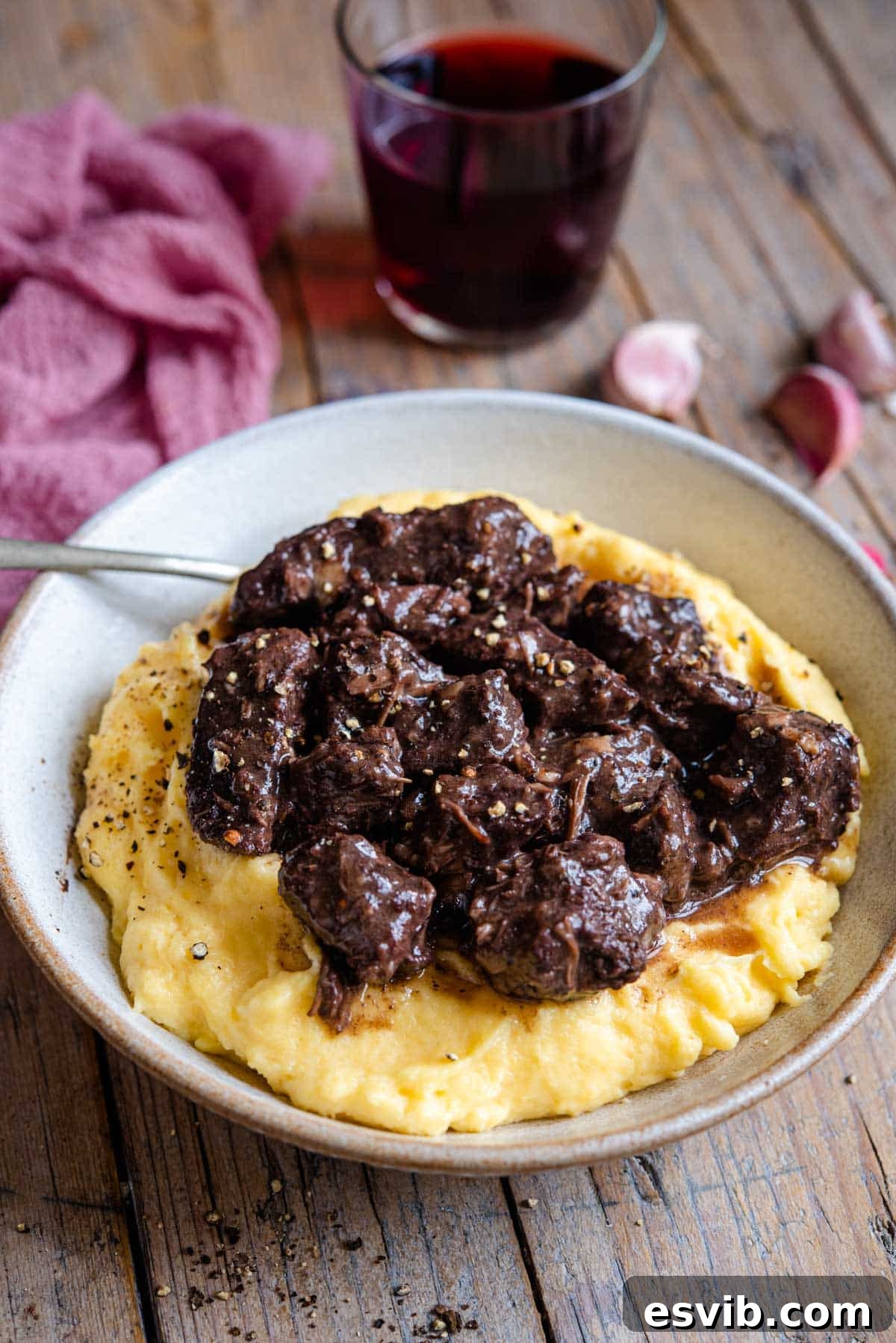
The beauty of Peposo lies in its versatility when it comes to serving. Traditionally, this robust beef stew is enjoyed simply with a rustic loaf of crusty bread, perfect for soaking up every drop of the rich, peppery sauce. However, it truly shines when paired with creamy polenta. We often prepare a slow-cooked polenta (requiring about 30 minutes instead of the quick 5-minute varieties) to achieve an extra smooth and luscious texture that complements the stew’s intensity beautifully. The soft, buttery polenta acts as a perfect canvas for the savory meat and sauce, creating a truly harmonious meal.
Beyond creamy polenta, other polenta preparations are equally delicious. Consider serving grilled polenta slices for a firmer texture and smoky flavor, or try baked polenta, perhaps by following our recipe for baked polenta fries and simply cutting the polenta into larger, more substantial slices. This adds another dimension to the dish, offering a delightful contrast in textures.
If you’re looking for alternatives, warm cannellini beans, gently heated in a saucepan with a drizzle of olive oil, make for an excellent, authentic Italian side. Roasted or mashed potatoes are also fantastic choices, providing a familiar and comforting accompaniment. And, of course, always ensure there’s plenty of fresh, crusty bread on hand to ensure no precious drop of that incredible sauce goes to waste!
Essential Tips for the Perfect Peposo
- Achieving Your Desired Sauce Consistency: The authentic Peposo sauce is naturally quite thin, allowing the pure flavors to truly shine. However, if you prefer a thicker sauce, you can easily adjust it at the end of the cooking process. Simply whisk together 1 tablespoon of cornstarch with 1-2 teaspoons of cold water to create a slurry. Stir this mixture into the simmering stew and cook for another minute or two until the sauce thickens to your liking.
- Choosing the Right Cooking Vessel: Traditionally, Peposo was cooked in terracotta pots, which are excellent for slow, even heat distribution. For modern kitchens, a good quality Dutch oven is an ideal substitute. Its heavy construction and tight-fitting lid create the perfect environment for long, slow simmering, locking in moisture and flavor. Any large pot with a lid that can hold the beef and wine comfortably will work well.
- Selecting the Best Beef: For the most authentic and tender results, opt for good quality stewing beef. Beef shank is traditionally used for its rich flavor and ability to become incredibly tender over slow cooking. However, beef chuck, cut into 1-inch cubes, is an excellent and widely available alternative that yields fantastic results. Look for cuts with a good amount of marbling for maximum flavor and succulence.
- The Power of Freshly Ground Black Pepper: The “peposo” in Peposo refers to the pepper, making it a star ingredient. For the best flavor, it is crucial to use freshly ground black pepper. Pre-ground pepper bought from supermarkets often lacks the vibrant aroma and pungent flavor that fresh grinding provides, which is essential for this stew’s characteristic kick. Invest in a good pepper mill for a noticeable difference.
- Picking Your Red Wine: This is arguably the most critical ingredient. The rule of thumb for Peposo (and most wine-based dishes) is to use a wine you would happily drink. Chianti or Sangiovese reds are the traditional and highly recommended choices, as they bring an authentic Tuscan flavor. Whatever you do, absolutely avoid using “cooking wine,” as its quality and flavor profile will not do this exquisite stew justice.
- Make-Ahead and Storage: Peposo is one of those dishes that often tastes even better the next day, as the flavors have more time to deepen and meld. You can easily prepare it a day in advance. Store leftovers in an airtight container in the refrigerator for up to 3-4 days. It also freezes beautifully for up to 3 months; simply thaw in the refrigerator overnight and reheat gently on the stovetop.
Explore More Italian Culinary Delights
- Pasta Al Forno (Baked Pasta)
- Italian Beef Ragu – A Classic Recipe
- Eggplant Parmigiana (Parmigiana di Melanzane)
- Walnut Sauce – Salsa di Noci
- Italian Slow Cooker Pulled Pork Shoulder
Peposo – Tuscan Red Wine Stew
By Emily
Prep Time: 5 mins
Cook Time: 3 hrs
Total Time: 3 hrs 5 mins
Servings: 4-6 servings
Peposo is a traditional Tuscan Beef Stew originating from Florence. It truly is the simplest stew you’ll ever make yet it has so much flavour. Made with garlic, lots of black pepper and a whole bottle of red wine, super delicious and perfect served with creamy polenta.
Ingredients
- 2 lbs beef chuck, or shank or stewing beef (1 kg) cut into 1 inch cubes
- 1 bottle red wine, Chianti or Sangiovese if possible
- 6 whole garlic cloves, peeled
- 1 tbsp freshly ground black pepper
- 1 tsp sea salt flakes or kosher salt
- 1 tbsp olive oil
Instructions
- Heat the olive oil in a large pot. Brown the beef on all sides for a minute or two (you might need to do this in batches so there is enough room).
- Add the beef and juices back to the pot (if browning in batches) and add the red wine, garlic, salt and pepper.
- Cover the pot with a lid and simmer on a medium-low heat for 1.5 hours.
- Uncover the pot and continue to simmer the stew for another 1.5 hours until the liquid has reduced slightly.
- Top tip: Once the stew is uncovered, check it every so often and give it a stir to make sure it doesn’t stick or the meat at the top dries out.
- The beef should be tender but not completely falling apart. Serve with creamy polenta and crusty bread.
Notes
- The stew sauce is quite thin but that’s how it should be. If you prefer a thicker sauce, simply whisk 1 tbsp of cornstarch with 1-2 tsp of water then add it to the stew at the end of cooking to thicken.
- Traditionally this stew is cooked in a terracotta pot but a Dutch oven is also excellent. You can use any large pot you have as long as it has a lid to cover it.
- Use any good stewing beef for this; traditionally beef shank is used, but beef chuck cut into chunks works wonderfully.
- Use freshly ground black pepper; don’t use pre-ground pepper that you can buy at the supermarket because it doesn’t taste as good.
- Whatever you do, do not use cooking wine! Use Chianti or Sangiovese red or a good red wine that you would happily drink.
Helpful Info for All Recipes
- I always use extra virgin olive oil in all of my recipes unless stated otherwise.
- When I use canned or jarred tomatoes of any kind, I always use Cirio or Mutti brands for the best results and flavor.
- All vegetables are medium sized unless stated otherwise.
- All recipes are tested and developed using a fan (convection) oven.
- Find out more about how nutrition is calculated.
- Check out our must-have Italian Pantry Staples.
- You can also find all our Essential Kitchen Tools for Italian Cooking.
Nutrition
| Carbohydrates: 6 g
| Protein: 44 g
| Fat: 30 g
| Saturated Fat: 12 g
| Cholesterol: 156 mg
| Sodium: 773 mg
| Potassium: 1011 mg
| Fiber: 1 g
| Sugar: 1 g
| Vitamin A: 29 IU
| Vitamin C: 1 mg
| Calcium: 63 mg
| Iron: 6 mg
Nutrition information is automatically calculated, so should only be used as an approximation.
Leave a comment below!