
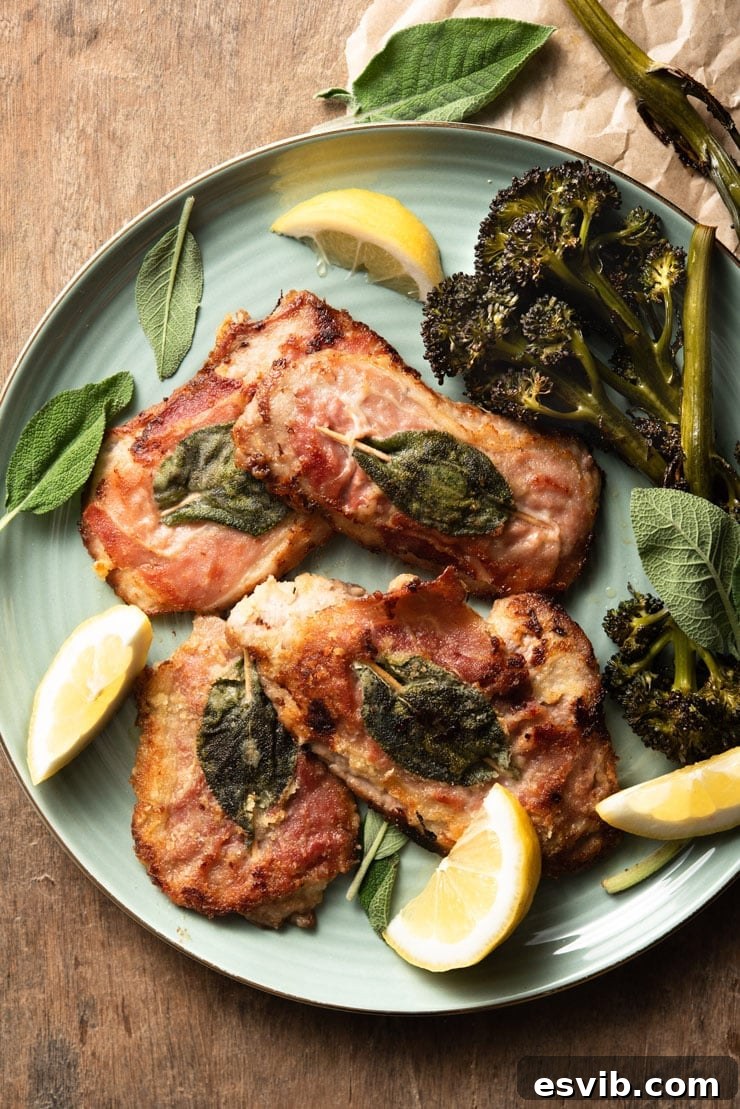
Veal Saltimbocca: An Authentic Roman Delight That Jumps in Your Mouth
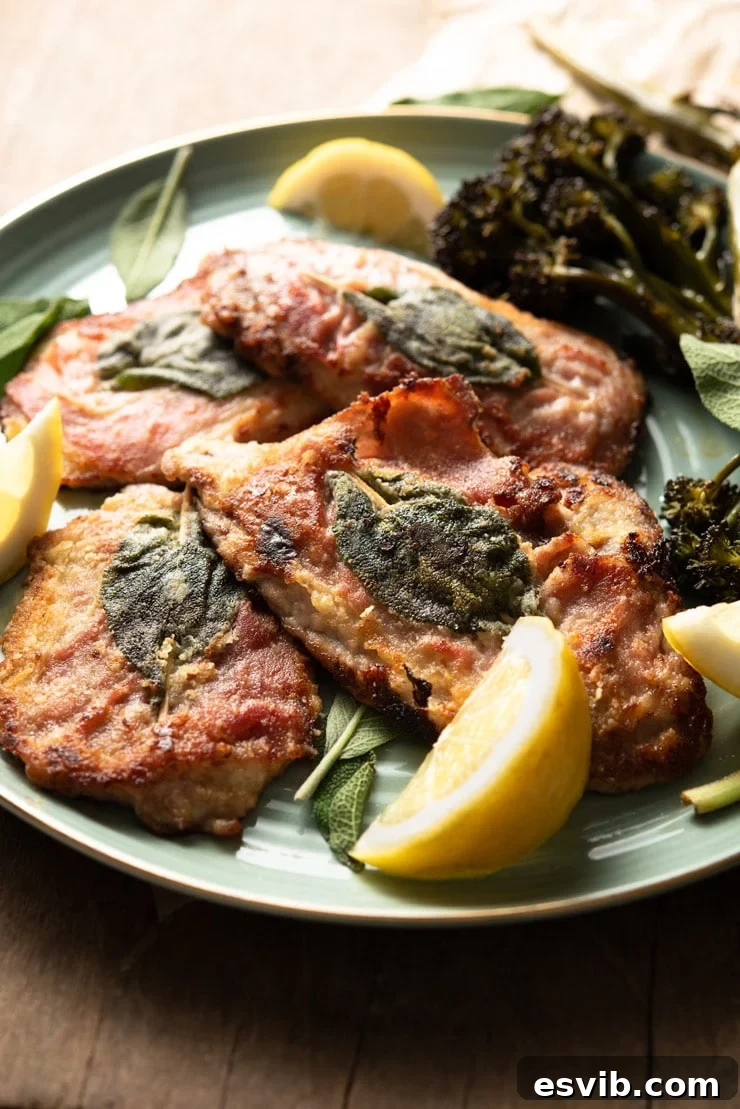
Prepare to be enchanted by Veal Saltimbocca, a truly captivating dish that epitomizes the elegance and simplicity of Roman cuisine. This classic Italian masterpiece features exquisitely tender veal cutlets, carefully pounded thin, then lovingly draped with savory, crispy prosciutto and vibrant, aromatic fresh sage leaves. Each piece is swiftly pan-fried to achieve a beautiful golden crust, resulting in a dish that is wonderfully juicy, incredibly tender, and bursting with an unforgettable symphony of flavors. Veal Saltimbocca is not just a meal; it’s an experience – a sophisticated yet remarkably easy-to-prepare dish that pairs beautifully with a variety of sides, from creamy mashed potatoes to crisp roasted asparagus or a fresh, simple salad.
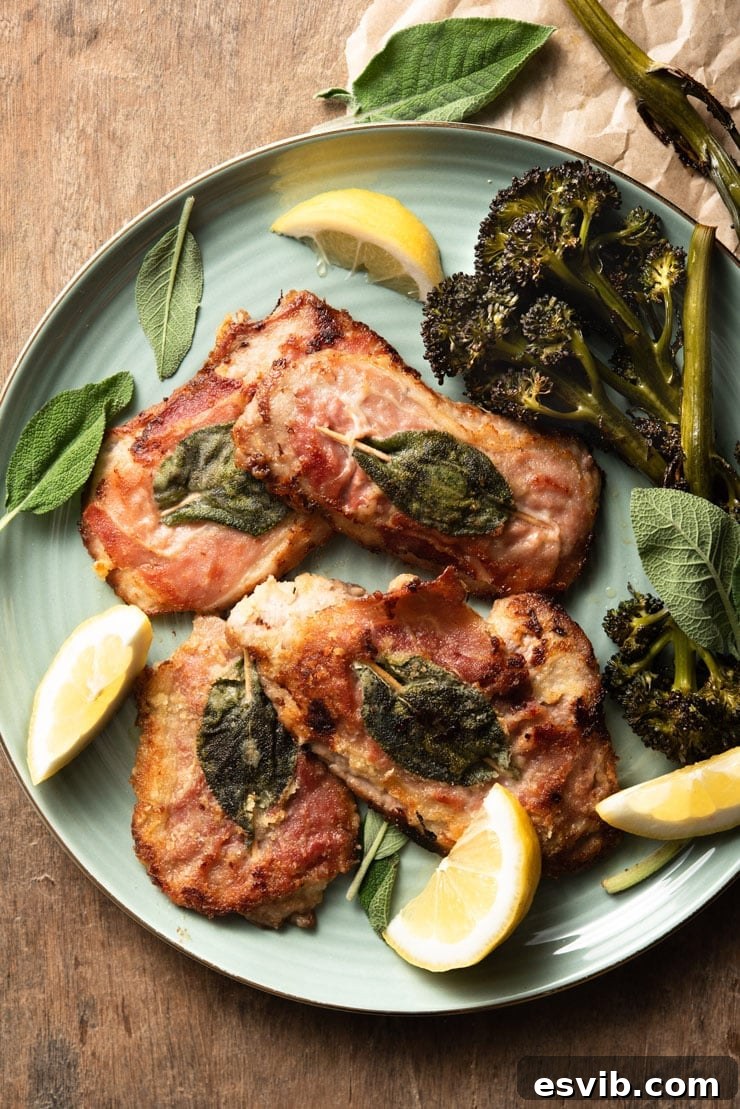
Unveiling the Magic: What ‘Saltimbocca’ Truly Means
The name “Saltimbocca” is one of the most charming in Italian gastronomy, translating literally as ‘jumps in the mouth’. This evocative phrase perfectly encapsulates the dish’s irresistible nature; it’s so incredibly flavorful and delightful, it practically leaps off the plate and into your senses, leaving a lasting impression. This simple yet profound name is a testament to the joy and immediate pleasure this dish delivers.
Beyond its playful moniker, this Veal Saltimbocca is cherished for a multitude of reasons, making it a culinary gem that every home cook should experience:
- Remarkably Quick to Prepare: In our fast-paced lives, finding a gourmet meal that doesn’t demand hours in the kitchen is a true blessing. Veal Saltimbocca is a testament to speed, cooking in a mere 4-5 minutes per side. This rapid cooking time ensures the veal remains exceptionally tender and juicy. We recommend preparing your chosen side dishes first, as the veal itself will be ready in a flash!
- Effortlessly Simple to Master: Despite its elegant appearance, the technique required for Veal Saltimbocca is incredibly straightforward. The most involved step is gently pounding the veal cutlets thin, a task your butcher can happily assist with. After that, it’s a simple assembly line: wrap the veal with prosciutto and sage, then pan-fry until golden. No complex sauces or intimidating methods here!
- Impressively Elegant for Any Occasion: Whether you’re hosting a sophisticated dinner party, celebrating a special anniversary, or simply treating yourself to an elevated weeknight meal, Veal Saltimbocca consistently impresses. Its visually appealing presentation, with the vibrant green sage and rich red prosciutto, combined with its refined flavor profile, makes it a showstopper that tastes like it came straight from a fine Roman trattoria.
- Unforgettable Depth of Flavor: The inherent delicate sweetness of high-quality veal is the foundation of this dish. Layered with the crispy, salty notes of authentic prosciutto and the earthy, aromatic essence of fresh sage, each bite is a complex yet harmonious blend. A final squeeze of fresh lemon juice brightens the entire profile, cutting through the richness and leaving a clean, zesty finish that truly makes the flavors sing. It’s a culinary masterpiece composed of just a few, perfectly balanced ingredients.
This dish stands as a prime example of the beauty found in simplicity. By focusing on a few premium ingredients and a clear technique, Veal Saltimbocca achieves a depth of flavor and elegance that often eludes more complicated recipes. Its versatility makes it suitable for any event, from a romantic dinner for two to a festive family gathering. Plus, with the option to prep the veal and its toppings in advance, the actual cooking process becomes even more convenient, allowing you to enjoy a luxurious meal with minimal stress.
The Secret to Tenderness: Why Pounding Veal is Non-Negotiable
Pounding the veal cutlets thin is arguably the most crucial step in preparing authentic Veal Saltimbocca. It’s not just about shaping the meat; it’s a fundamental technique that guarantees the dish’s signature tenderness and ensures perfect cooking. Neglecting this step would significantly compromise the texture and overall quality of your Saltimbocca. Here’s why this seemingly simple action makes all the difference:
- Achieving Supreme Tenderness: The physical act of pounding effectively breaks down the tough muscle fibers within the veal. This process tenderizes the meat, making it incredibly soft, succulent, and pleasant to chew. Without this fibrous breakdown, the veal would remain dense and could become tough when cooked, even if perfectly done.
- Ensuring Rapid and Even Cooking: When the veal is pounded to a uniform, thin thickness (ideally 1/4 inch or about 0.6 cm), it cooks much faster and more consistently across the entire surface. This is vital for a dish that is pan-fried, as it allows for a quick sear to create a beautiful golden crust without overcooking the delicate interior. Thicker, uneven cutlets would require longer cooking times, increasing the risk of drying out the meat or unevenly cooking it.
- Preventing Toughness: High-heat cooking, which is typical for pan-frying veal, can quickly toughen meat if it’s too thick. By ensuring the veal is thin and uniform, you can achieve that desired golden-brown exterior quickly, locking in the juices before the meat has a chance to become dry or rubbery. This precise control over the cooking process is key to an appetizing result.
If your veal cutlets are not already thinly sliced by your butcher, don’t worry! It’s an easy task to do at home. Simply place each cutlet between two sheets of plastic wrap or cling film to prevent sticking and mess. Then, using a flat meat mallet or even a sturdy rolling pin, gently but firmly pound the veal until it reaches the desired 1/4-inch thickness. This small effort will yield immense rewards in the final dish.
Crafting Your Roman Feast: A Step-by-Step Guide to Veal Saltimbocca
Bringing the authentic taste of Roman Saltimbocca to your table is a straightforward and rewarding culinary adventure. Follow these detailed steps to ensure every cutlet is a tender, flavorful masterpiece:
Preparation: Setting the Stage for Flavor
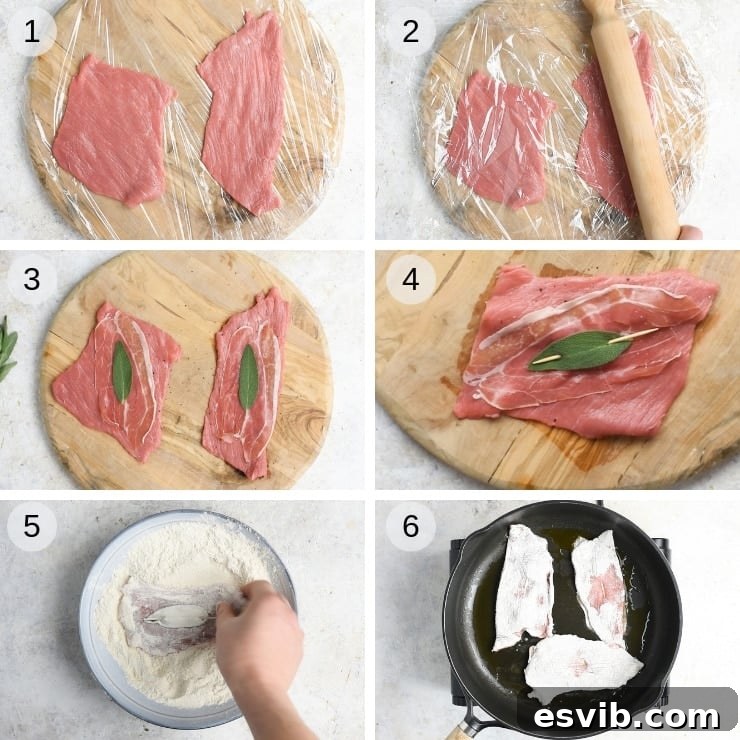
- Prepare the Veal Cutlets: Begin by placing each veal cutlet individually between two sheets of plastic wrap (cling film). Using a meat mallet or a rolling pin, gently but firmly pound each cutlet until it is evenly about 1/4 inch (0.6 cm) thick. This step is crucial for both tenderness and quick cooking. (Refer to accompanying photos 1 & 2 for a visual guide on pounding the meat.)
- Assemble the Saltimbocca: Take one pounded veal cutlet. Lay a single slice of prosciutto flat over one side of the veal. Then, place a large, fresh sage leaf on top of the prosciutto. To keep these layers together during cooking, pierce through all three layers (veal, prosciutto, sage) with a small wooden skewer or toothpick. Repeat this assembly process for all remaining veal cutlets. (Consult photos 3 & 4 for proper layering and securing of the ingredients.)
Cooking and Sauce Creation: The Grand Finale
- Flour and Pan-Fry: Lightly dredge each assembled veal cutlet in all-purpose flour, ensuring both sides are evenly coated. Gently tap off any excess flour – a light coating is all you need. Heat 2 tablespoons of olive oil in a large, heavy-bottomed pan or skillet over medium-high heat until shimmering. Carefully place the floured veal cutlets into the hot pan, being mindful not to overcrowd it; cook in batches if necessary. Fry for approximately 4-5 minutes on each side, until the prosciutto is slightly crispy, the veal is beautifully browned, and cooked through to a tender finish. Once cooked, remove the veal cutlets from the pan and transfer them to a warm plate to rest.
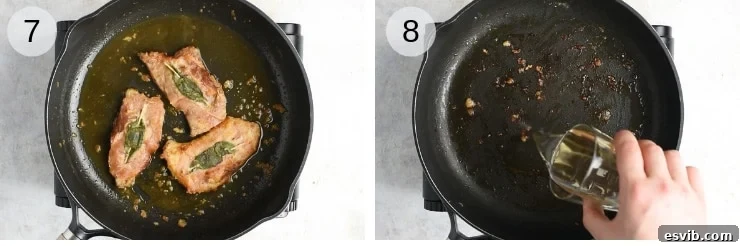
- Deglaze and Reduce the Sauce: With the cooked veal removed, immediately pour the 1/2 cup (125ml) of white wine into the same hot pan. The wine will vigorously bubble, helping to lift and release all the flavorful brown bits (known as “fond”) that have accumulated at the bottom of the pan during frying. This process is called deglazing and is essential for creating a rich pan sauce. Using a wooden spoon, scrape up all the delicious browned bits, stirring continuously. Allow the wine to simmer and reduce by half, which will concentrate its flavors and create a beautiful, light sauce. (See photos 5-8 for a visual representation of the deglazing and sauce reduction process.)
- Final Touch and Serving: Once the sauce has reduced, return the cooked veal cutlets to the pan for just 1-2 minutes. This allows them to warm through and become beautifully coated in the flavorful pan sauce. Serve your Veal Saltimbocca immediately, traditionally with a generous squeeze of fresh lemon juice over each cutlet. The bright acidity of the lemon elevates all the flavors and provides a refreshing counterpoint to the rich and savory notes of the dish.
Beyond Veal: Delicious Substitutes for Your Saltimbocca
While traditional Saltimbocca famously features veal, culinary flexibility allows for delicious adaptations, especially if veal is not readily available, is outside your budget, or if you simply prefer other proteins. It’s entirely possible to create a wonderful “Saltimbocca-style” dish using alternative meats, capturing the essence of the classic with a slightly different flavor profile.
The most common and highly recommended substitutes include:
- Chicken Breast: Thinly pounded chicken breasts are an excellent alternative. They cook quickly and absorb the flavors of the prosciutto, sage, and wine beautifully. Chicken offers a leaner option while still providing a satisfying texture.
- Turkey Cutlets (Escalopes): Similar to chicken, turkey cutlets are a fantastic choice. Their mild flavor allows the prosciutto and sage to truly shine, and they also cook very rapidly when pounded thin.
- Pork Tenderloin Slices: For a slightly richer alternative, thinly sliced and pounded pork tenderloin can be used. Pork pairs wonderfully with savory herbs like sage and the saltiness of prosciutto.
When using these alternative meats, the preparation steps remain largely identical to the veal version: pound the meat thin, layer with prosciutto and sage, secure with a skewer, flour (optional), and pan-fry. The cooking times may need minor adjustments based on the exact thickness of your chosen meat, so always ensure it is cooked through. While the delicate, unique flavor of veal is irreplaceable, these substitutes still create an incredibly delicious, elegant, and impressive meal that embodies the spirit of Saltimbocca. Don’t hesitate to experiment and find your favorite variation!
Elevate Your Meal: Inspired Serving Suggestions for Saltimbocca
Veal Saltimbocca is a versatile main course that beautifully complements a wide range of side dishes. The rich, savory flavors of the veal and prosciutto, balanced by the aromatic sage and bright lemon, open up a world of pairing possibilities. You can easily tailor your accompaniments to create either a light, elegant supper or a more comforting, hearty feast.
Popular and Classic Pairings:
- Potatoes, Prepared Your Way:
- Crispy Italian Roast Potatoes: These are a classic choice, with their golden-brown exterior and fluffy interior, perfect for soaking up the delicious pan sauce.
- Creamy Mashed Potatoes: For a comforting contrast, a pile of smooth, buttery mashed potatoes offers a soothing counterpoint to the crisp texture of the Saltimbocca.
- Garlic & Herb Smashed Potatoes: A slightly more rustic but equally delicious option, offering textural variety and robust flavor.
- Fresh Green Vegetables for Balance:
- Roasted Asparagus: Its earthy flavor and tender-crisp texture provide an excellent balance to the richness of the veal and prosciutto.
- Sautéed Broccolini: A vibrant, slightly bitter green that adds both color and a lovely textural crunch.
- Steamed or Sautéed Green Beans: Simple, quick, and healthy, allowing the Saltimbocca to remain the star of the plate.
- Sautéed Spinach or Swiss Chard with Garlic: A quick and flavorful green side that complements the dish without overpowering it.
- Other Delightful Accompaniments:
- Grilled or Roasted Seasonal Vegetables: A medley of grilled vegetables like zucchini, bell peppers, eggplant, or cherry tomatoes can add wonderful smoky notes and a burst of freshness.
- A Simple Fresh Salad: For a lighter meal, a crisp mixed green salad with a light vinaigrette provides a refreshing and palate-cleansing contrast.
- Creamy Risotto or Polenta: For a truly decadent and satisfying meal, a creamy Parmesan risotto or soft, savory polenta can serve as a luxurious base for the Saltimbocca, perfectly absorbing the pan sauce.
- Crusty Bread: Don’t forget a good loaf of crusty Italian bread to sop up every last drop of the exquisite pan sauce!
The key is to choose sides that either complement the richness of the Saltimbocca or offer a refreshing contrast, ensuring a well-rounded and satisfying meal. Enjoy experimenting with your favorites!
Chef’s Secrets: Top Tips for Perfect Veal Saltimbocca Every Time
Achieving a consistently perfect Veal Saltimbocca is simpler than you might think, especially when armed with a few expert tips. These insights will help you navigate common pitfalls and elevate your dish from good to truly exceptional:
- The Indispensable Pounding Step: I cannot stress this enough – always pound your veal cutlets thin. This crucial step tenderizes the meat, making it melt-in-your-mouth soft and ensures even, fast cooking. Without it, the veal can become tough and rubbery. Aim for a consistent 1/4 inch (0.6 cm) thickness.
- Choosing Your Wine for Deglazing: For the pan sauce, a dry white wine such as Pinot Grigio, Sauvignon Blanc, or Vermentino works wonderfully, providing a bright, acidic counterpoint. For a richer, slightly sweeter, and more complex flavor profile, Marsala wine is a fantastic traditional Italian choice that adds incredible depth.
- The Flour Coating: Lightly dredging the veal in all-purpose flour before frying serves two important purposes: it helps create a delicate, crispy crust on the cutlets, and it also contributes to thickening the pan sauce, giving it a velvety, luxurious texture. While you can omit the flour for a gluten-free option, the sauce will be thinner.
- Smart Advance Preparation: If you plan to prepare the dish ahead of time, assemble the veal cutlets with the prosciutto and sage, securing them with skewers. However, wait until the very last minute, just before cooking, to dredge them in flour. If flour sits on raw meat for too long, it will absorb moisture, creating a gummy or pasty texture that is undesirable.
- Crucial: Do Not Overcook! Veal, especially when pounded thin, cooks incredibly quickly. Overcooking is the most common mistake and will lead to dry, tough meat. Keep a close eye on your cooking times; typically, 4 minutes per side is ample to achieve a beautiful golden-brown exterior while retaining the veal’s delicate juiciness.
- The Essential Lemon Finish: Never skip the final squeeze of fresh lemon juice! This isn’t merely a garnish; it’s a vital flavor component. The bright acidity of the lemon acts as a perfect counterpoint, cutting through the richness of the veal and the saltiness of the prosciutto, harmonizing the flavors and adding a refreshing zest that truly awakens the palate.
- Exploring Meat Substitutes: Should veal be unavailable or if you’re looking for an alternative, chicken breasts, turkey cutlets, or even thin pork tenderloin slices are excellent substitutes. The preparation method remains the same, though slight adjustments to cooking time may be needed.
- Storing and Reheating Leftovers: Any leftover Veal Saltimbocca can be stored in an airtight container in the refrigerator for 1-2 days. It’s surprisingly delicious served cold, perhaps sliced thin over a salad, or gently reheated in a pan over low heat until warmed through. Be careful not to overheat during reheating to preserve the meat’s tenderness.
By incorporating these tips into your cooking, you’ll consistently create a Veal Saltimbocca that rivals any restaurant’s, bringing a genuine taste of Italy into your own kitchen with confidence and flair.
Step-by-step photos above provide a visual guide for perfect results!
Classic Veal Saltimbocca Recipe
By Emily
Average Rating: 5 stars from 8 votes
Prep Time: 15 minutes
Cook Time: 15 minutes
Total Time: 30 minutes
Servings: 4-6 servings
Print Recipe
Veal Saltimbocca – tender veal cutlets wrapped in crispy, salty prosciutto and fragrant sage leaves. This authentic Roman dish is pan-fried until juicy, tender, and incredibly delicious, making for a simple yet elegant meal. It’s a fantastic main course served with potatoes, asparagus, or a fresh salad.
Ingredients
- 6 veal cutlets (escalopes), about 1/4 inch thick
- 1/2 cup (80g) all-purpose flour, for dredging (optional, but recommended)
- 6 slices prosciutto, thinly sliced
- 6 large fresh sage leaves
- 1/2 cup (125ml) dry white wine (or Marsala wine)
- 2 tbsp Olive oil (recommended high-quality extra virgin olive oil)
- 6 wooden toothpicks or small skewers, to secure the cutlets
- Fresh lemon wedges, for serving
- Salt and freshly ground black pepper, to taste (optional, prosciutto is salty)
Instructions
- Prepare the Veal: Place each veal cutlet between two sheets of plastic wrap (cling film). Using a meat mallet or rolling pin, gently pound the veal until it is evenly 1/4 inch (0.6 cm) thin.
- Assemble Saltimbocca: Lay one slice of prosciutto over each pounded veal cutlet, followed by one large fresh sage leaf. Secure all layers together firmly using a small wooden skewer or toothpick.
- Flour and Fry: Lightly dredge each assembled veal cutlet in flour on both sides, shaking off any excess. Heat olive oil in a large pan or skillet over medium-high heat. Fry the cutlets for about 4-5 minutes per side, until the prosciutto is crispy, the veal is golden brown, and cooked through. Work in batches if necessary to avoid overcrowding the pan. Remove cooked veal and set aside on a warm plate.
- Deglaze the Pan: Add the white wine (or Marsala) to the hot pan. Using a wooden spoon, scrape up all the flavorful brown bits (fond) from the bottom of the pan. Stir continuously, allowing the wine to simmer and reduce by half, creating a concentrated pan sauce.
- Serve: Return the cooked veal cutlets to the pan with the reduced sauce for 1-2 minutes to warm through and coat. Serve immediately with a generous squeeze of fresh lemon juice over each cutlet. Enjoy!
Recipe Notes & Expert Tips
These crucial tips will help you perfect your Veal Saltimbocca:
- Pounding is Key: Always pound the meat to tenderize it; otherwise, it could turn out tough. This also ensures even and quick cooking.
- Wine Versatility: You can use either a dry white wine (like Pinot Grigio) or Marsala wine to make the sauce. Marsala offers a slightly sweeter, richer flavor.
- Flour’s Dual Purpose: Dredging cutlets in flour gives them a delicious crispy coating and helps thicken the pan sauce. This step can be omitted for a gluten-free version, but the sauce will be thinner.
- Advance Prep Caution: If prepping ahead, assemble the veal, prosciutto, and sage, but wait until the last minute to dredge them in flour, as it can absorb moisture and create an undesirable texture.
- Avoid Overcooking: Veal cooks very quickly when thin (around 4-5 minutes per side). Overcooking will make the meat tough and dry.
- Lemon is Essential: A squeeze of fresh lemon juice at the end brightens the flavors and beautifully cuts through the richness and saltiness of the dish. Don’t skip it!
- Meat Substitutes: Chicken, turkey, or pork cutlets can all be used as excellent, more affordable alternatives to veal, following the same preparation steps.
- Storing Leftovers: Leftovers can be stored in an airtight container in the fridge for 1-2 days. They are delicious eaten cold or gently reheated until hot all the way through.
Essential Information for the Home Cook
- I consistently use extra virgin olive oil in all my recipes unless explicitly stated otherwise, prioritizing quality and flavor.
- For canned or jarred tomatoes, I always recommend premium brands like Cirio or Mutti for superior flavor and consistent results in your Italian dishes.
- Unless otherwise specified within a recipe, assume all vegetables are of medium size for accurate proportions.
- All recipes provided have been thoroughly tested and developed using a fan (convection) oven. Please be aware that adjustments to temperature or cooking time may be necessary if you are using a conventional oven.
- For transparency, you can find more details about how our nutrition information is calculated.
- Elevate your Italian cooking by exploring our guide to must-have Italian Pantry Staples.
- Discover the tools that make Italian cooking a joy with our list of Essential Kitchen Tools for Italian Cooking.
Nutritional Information
Please note: Nutrition information is automatically calculated and should only be used as an approximation. Individual results may vary based on exact ingredients and preparation methods.
Per serving (approximate):
Calories: 491 kcal | Carbohydrates: 12g | Protein: 56g | Fat: 19g | Saturated Fat: 5g | Cholesterol: 206mg | Sodium: 242mg | Potassium: 997mg | Calcium: 15mg | Iron: 2.9mg