
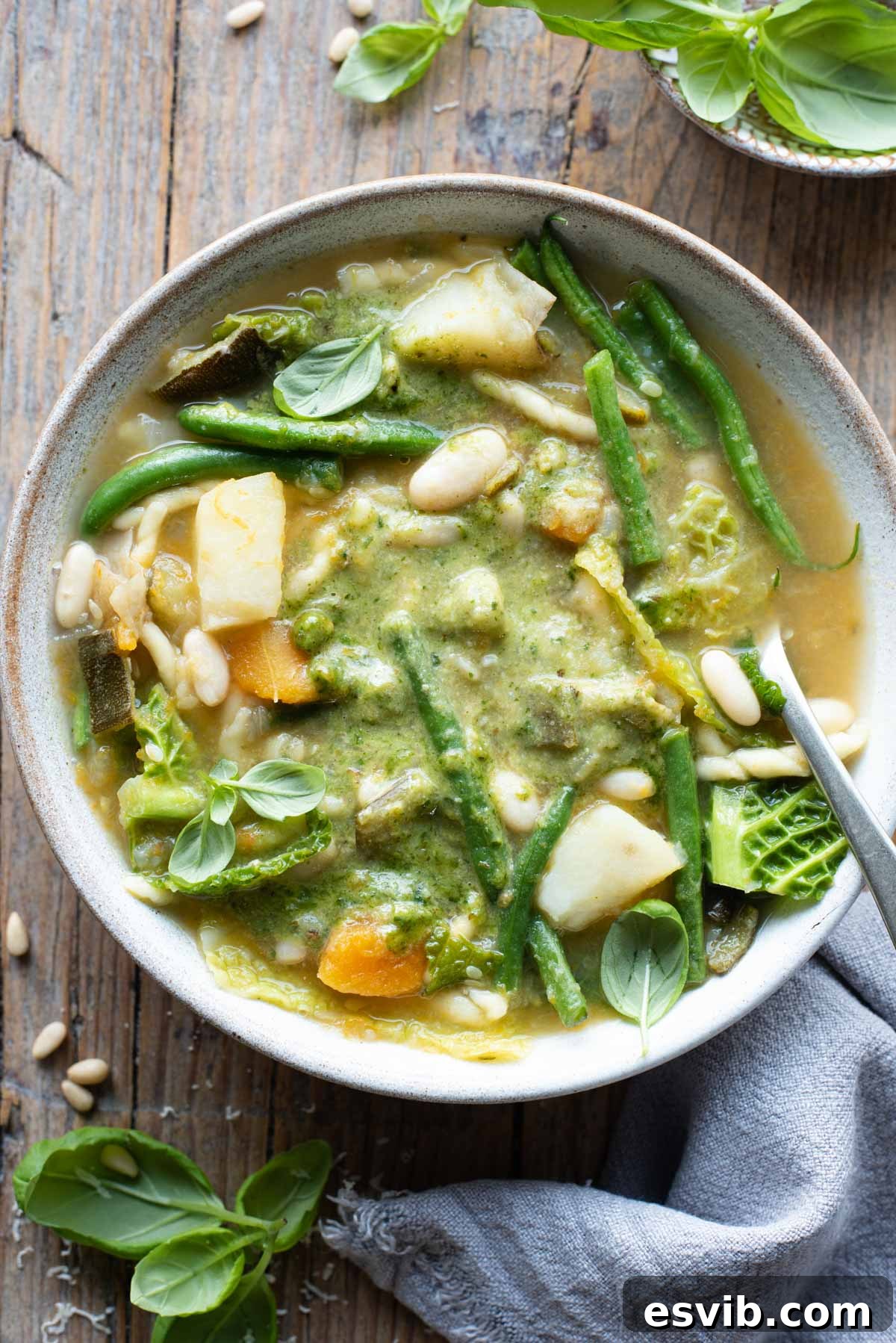
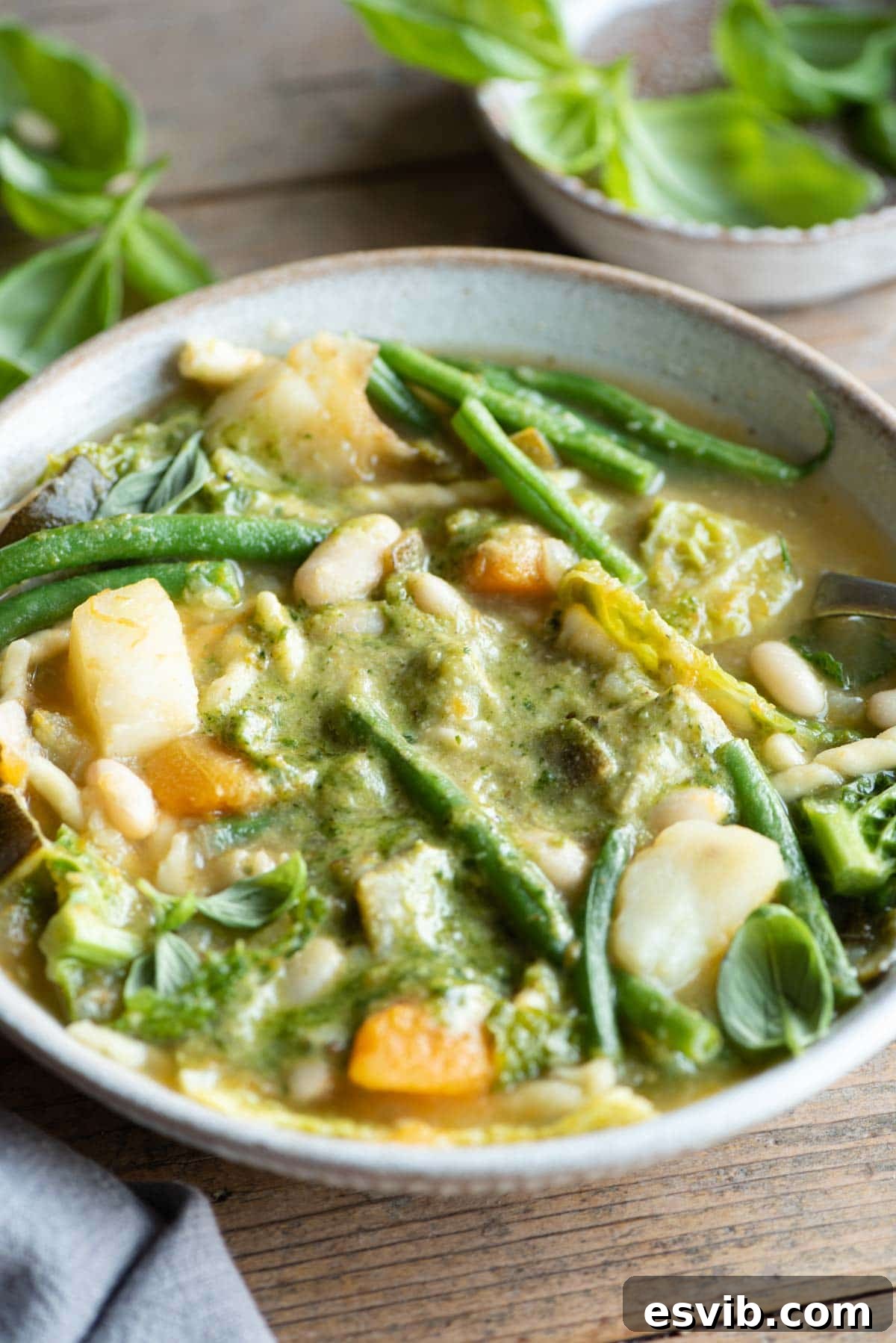
Ligurian Minestrone Soup is a celebrated culinary gem, brimming with the goodness of seasonal vegetables like butternut squash, tender zucchini, crisp cabbage, hearty beans, and small pasta. Its signature touch? A generous swirl of homemade Genovese pesto, transforming this humble dish into an extraordinarily rich and flavorful experience. This isn’t just a soup; it’s a comforting, healthy, and deeply satisfying meal, perfect for any season and a true taste of Italy’s Ligurian coast.
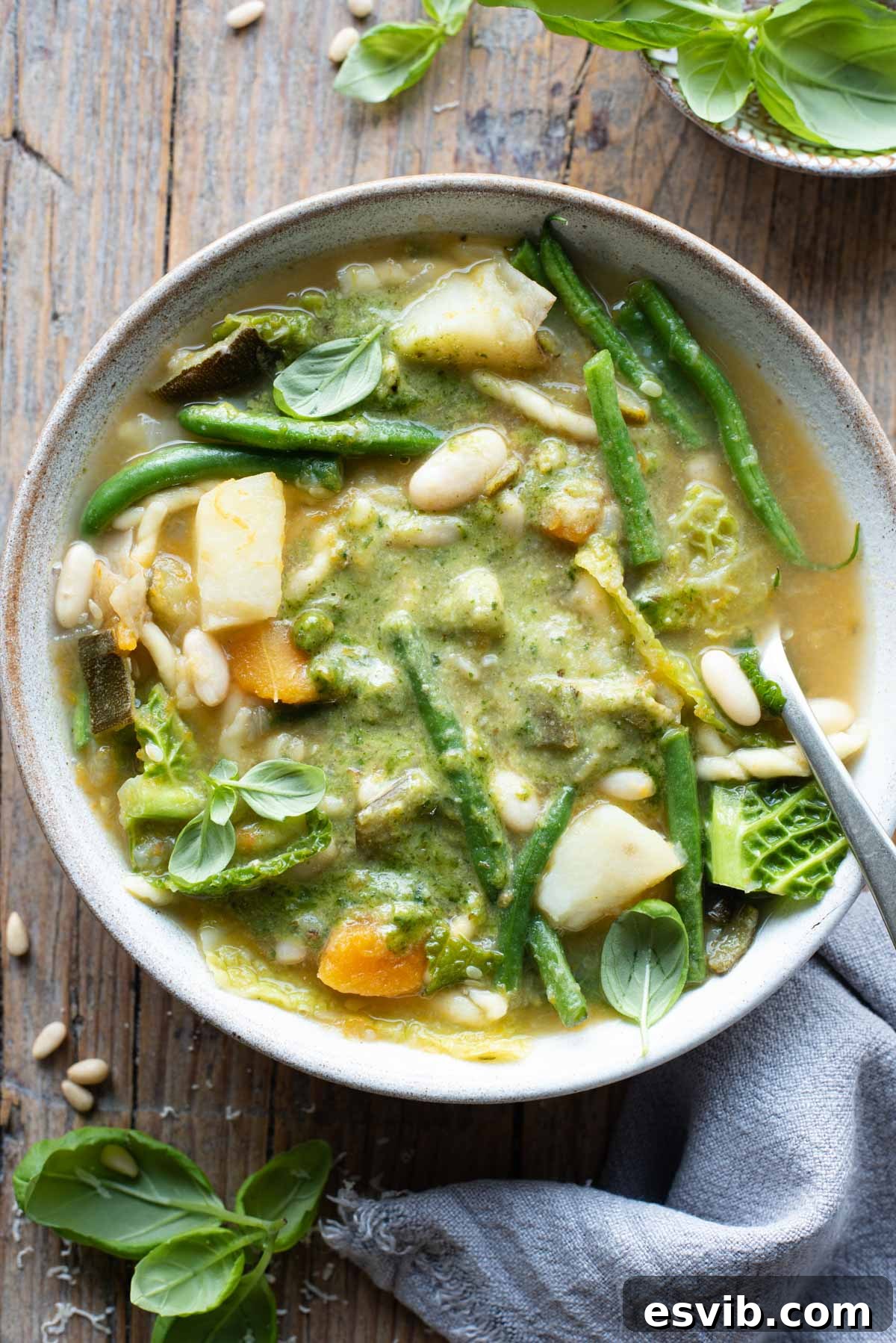
Authentic Ligurian Minestrone Soup with Genovese Pesto: A Hearty Italian Delight
Hailing from the picturesque Italian region of Liguria, Minestrone alla Genovese offers a unique and incredibly flavourful take on the classic vegetable soup. Unlike many other regional variations found throughout Italy, this Ligurian specialty proudly omits tomatoes, allowing the natural sweetness of the garden-fresh vegetables and the bright, herbaceous notes of traditional basil pesto to truly shine. It’s a revelation for those accustomed to tomato-based minestrone, offering a lighter yet equally satisfying depth of flavor.
Minestrone, a cornerstone of Italian home cooking, showcases incredible diversity across the country. Each region, and often individual households, boasts its own cherished recipe, adapting to the bounty of each season and local produce. From the robust, bean-heavy Tuscan Minestrone, rich with darker greens and a more rustic texture, to the light and verdant Minestrone Primavera bursting with tender spring greens, the common thread is a hearty, nourishing soup built around readily available fresh vegetables, wholesome legumes, and a touch of small pasta. Ligurian Minestrone embraces this philosophy wholeheartedly, offering a nutritious and wholesome meal packed with wholesome goodness.
What truly elevates Minestrone alla Genovese and sets it apart is the essential final touch: a generous spoonful of authentic homemade basil pesto stirred in just before serving. This isn’t merely an optional garnish; it’s the very soul of the dish, infusing every spoonful with its aromatic depth, garlicky warmth, and vibrant taste. For an unparalleled culinary experience, crafting your own pesto from scratch is not just recommended, it’s an absolute must! The freshest basil leaves, high-quality extra virgin olive oil, fragrant pine nuts, subtle garlic, and sharp Pecorino or Parmigiano cheese combine to create a flavor profile that is utterly delicious and distinctly Ligurian, an ode to the region’s famous ingredients.
Beyond its incredible taste, this Ligurian Minestrone is a fantastic choice for many dietary preferences. It is naturally vegetarian, making it a wonderful option for plant-based meals. By simply ensuring you use a vegetarian-friendly hard cheese for your pesto (checking for animal rennet) and opting for vegetable stock, it becomes a truly inclusive and delightful meal for a wide audience. There’s no tomato involved, offering a refreshing departure from common minestrone recipes and a chance to experience a different, yet equally cherished, facet of Italian culinary tradition. Serve it piping hot with a thick slice of crusty artisan bread, a piece of famously salty focaccia, or even a simple fresh ciabatta, and prepare to indulge in an authentic Italian comfort food experience that will transport you straight to the sun-drenched Ligurian coast.
Why You’ll Adore This Authentic Ligurian Minestrone Soup
There are countless compelling reasons to fall deeply in love with this traditional Ligurian Minestrone. It’s far more than just a soup; it’s a vibrant tapestry of flavors, wholesome ingredients, and deeply comforting warmth that speaks volumes about simple Italian cooking. Here’s why this particular recipe deserves a permanent spot in your culinary repertoire:
- Uniquely Flavorful Profile: The deliberate absence of tomatoes is a game-changer, allowing the natural, subtle sweetness of each individual vegetable to shine through. This delicate balance is then perfectly complemented by the robust, fresh, garlicky, and cheesy notes of authentic Genovese pesto. It’s a nuanced taste sensation unlike any other minestrone you’ve tried, offering a refreshing perspective on classic Italian flavors.
- A Powerhouse of Nutrition: Loaded with a diverse array of garden-fresh vegetables, protein-rich beans, and healthy complex carbohydrates from small pasta, this soup is a powerhouse of essential vitamins, minerals, and dietary fiber. It’s an ideal, guilt-free meal for promoting overall well-being, boosting your immune system, and keeping you feeling full and satisfied for hours.
- Incredibly Hearty & Satisfying: Despite its fresh and vibrant character, this soup is astonishingly filling. The harmonious combination of tender vegetables, wholesome beans, and perfectly cooked pasta creates a complete meal that truly warms you from the inside out. It’s especially comforting and deeply gratifying on cooler evenings or when you need a nourishing pick-me-up.
- Remarkably Adaptable: Minestrone is renowned for its incredible flexibility, and this Ligurian version is no exception. It’s a brilliant and resourceful way to utilize any leftover vegetables lingering in your fridge, preventing food waste. Feel free to adapt the vegetable medley to suit seasonal availability or your personal preferences. For instance, if butternut squash isn’t available, carrots or sweet potatoes make excellent substitutions. Missing zucchini? Eggplant or even green bell peppers can work wonderfully.
- Straightforward Preparation: With our clear, concise, and detailed step-by-step instructions, this recipe is remarkably accessible even for novice cooks. The preparation process is logical and easy to follow, leading to consistently impressive results with minimal fuss or culinary intimidation.
- Excellent for Meal Prepping: This soup (especially when frozen without the pasta) freezes beautifully, making it an excellent and convenient option for meal prepping healthy lunches or delicious dinners for busy weeknights. It’s a lifesaver for ensuring you always have a wholesome meal ready to go.
Essential Ingredients for Authentic Ligurian Flavor
Crafting a truly authentic and remarkably delicious Ligurian Minestrone begins with selecting the freshest, highest-quality ingredients available. While minestrone is inherently adaptable to what you have on hand, these core components ensure you capture the traditional taste, vibrant colors, and comforting texture that define this regional Italian specialty. Refer to the photo below for a clear visual guide and important tips on optimal ingredient selection and preparation.
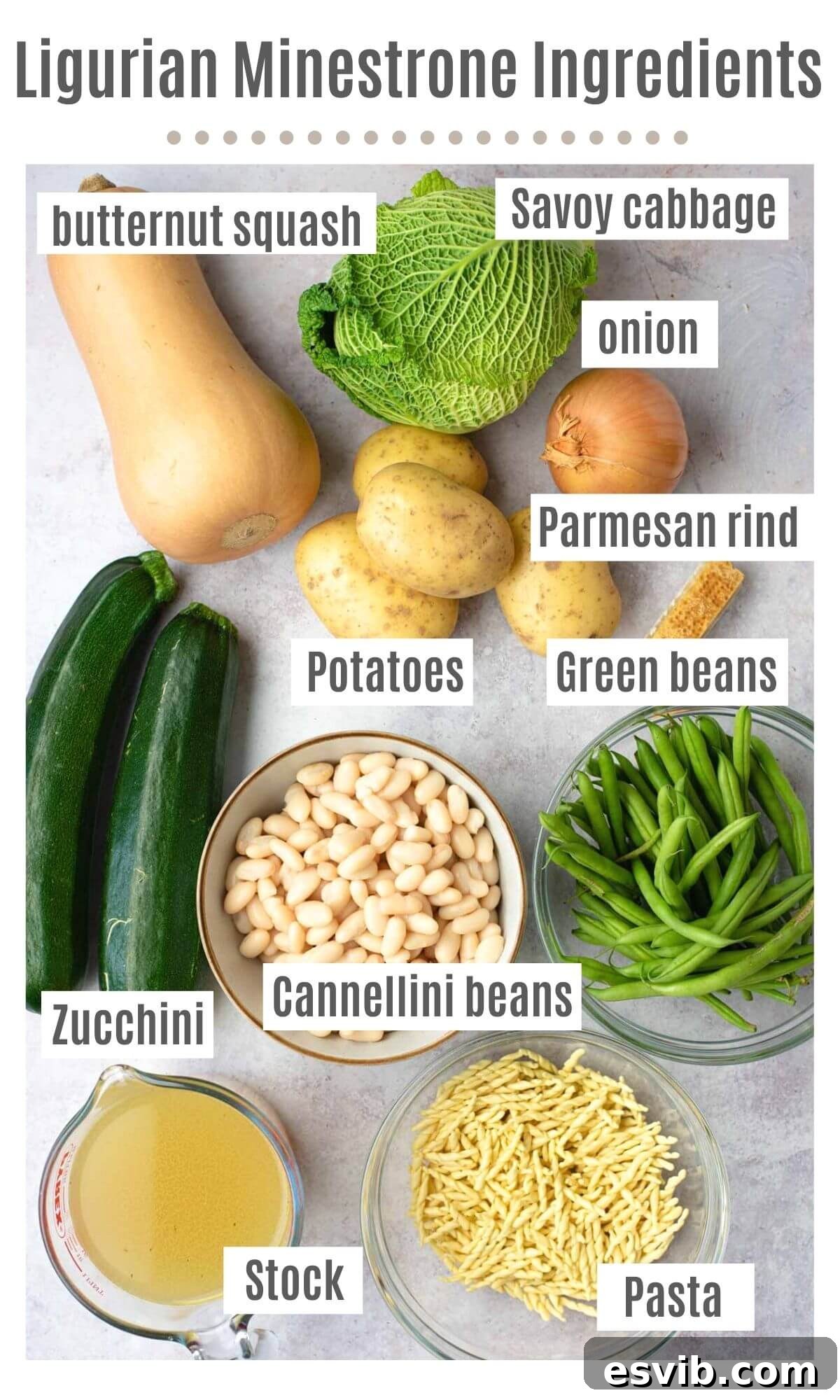
For the Minestrone Base:
- Onion: One large yellow onion, finely chopped. This aromatic forms the foundational base of our soup, slowly sautéed until soft and translucent to release its sweet, savory depth.
- Butternut Squash: Approximately one small butternut squash (yielding about 3 cups or 450g), carefully peeled, deseeded, and cut into uniform medium cubes. It adds natural sweetness, body, and a beautiful golden hue to the broth. Any variety of dense winter squash will work beautifully, or you can substitute with two medium carrots for a similar sweetness and color.
- Potatoes: Four medium potatoes (also about 3 cups or 450g), peeled and cut into medium-sized cubes. They contribute a comforting starchiness that gently thickens the soup and provides a satisfying texture.
- Zucchini: Two medium zucchini (also commonly known as courgettes), trimmed and either sliced into rounds or diced into cubes. They bring a delicate freshness and a subtle, pleasant bitterness that perfectly balances the sweetness of other vegetables. Eggplant (aubergine) is an excellent and traditional alternative.
- Green Beans: Two cups (approximately 180g) of fresh green beans, meticulously trimmed and cut into halves or thirds. This ensures they are easy to eat with a spoon and add a pleasant crisp-tender texture and vibrant green color to the medley.
- Cannellini Beans: Two cups (300g) of canned cannellini beans, thoroughly rinsed under cold water and drained. These provide essential plant-based protein, contribute to the soup’s heartiness, and add a creamy texture. Borlotti beans (cranberry beans) are another traditional and equally delicious option. (Please refer to our recipe notes below for detailed instructions if you prefer to use dried beans.)
- Savoy Cabbage: Three-quarters of a cup (250g) of thinly sliced savoy cabbage. Its distinct texture and slightly peppery flavor are a classic and essential component of authentic Ligurian Minestrone, adding wonderful complexity.
- Short Pasta: One and a half cups (150g) of any small, short pasta shape. Ditalini, elbow macaroni, stelline (tiny stars), or even small broken spaghetti pieces are perfect choices for absorbing the rich, flavorful broth and adding a delightful chewiness. Choose a shape that’s easily managed with a spoon.
- Parmesan Rind: One rind from a block of genuine Parmesan cheese (Parmigiano Reggiano). While optional, this is a secret ingredient that infuses the soup with incredible umami, savory depth, and a rich complexity as it slowly simmers. It’s a chef’s trick – I always freeze my Parmesan rinds for this exact purpose, ensuring I have them on hand for soups and stews!
- Stock: Seven cups (approximately 1.6 liters) of high-quality chicken or vegetable stock. Opt for a low-sodium stock to allow you precise control over the overall saltiness and seasoning of your finished soup.
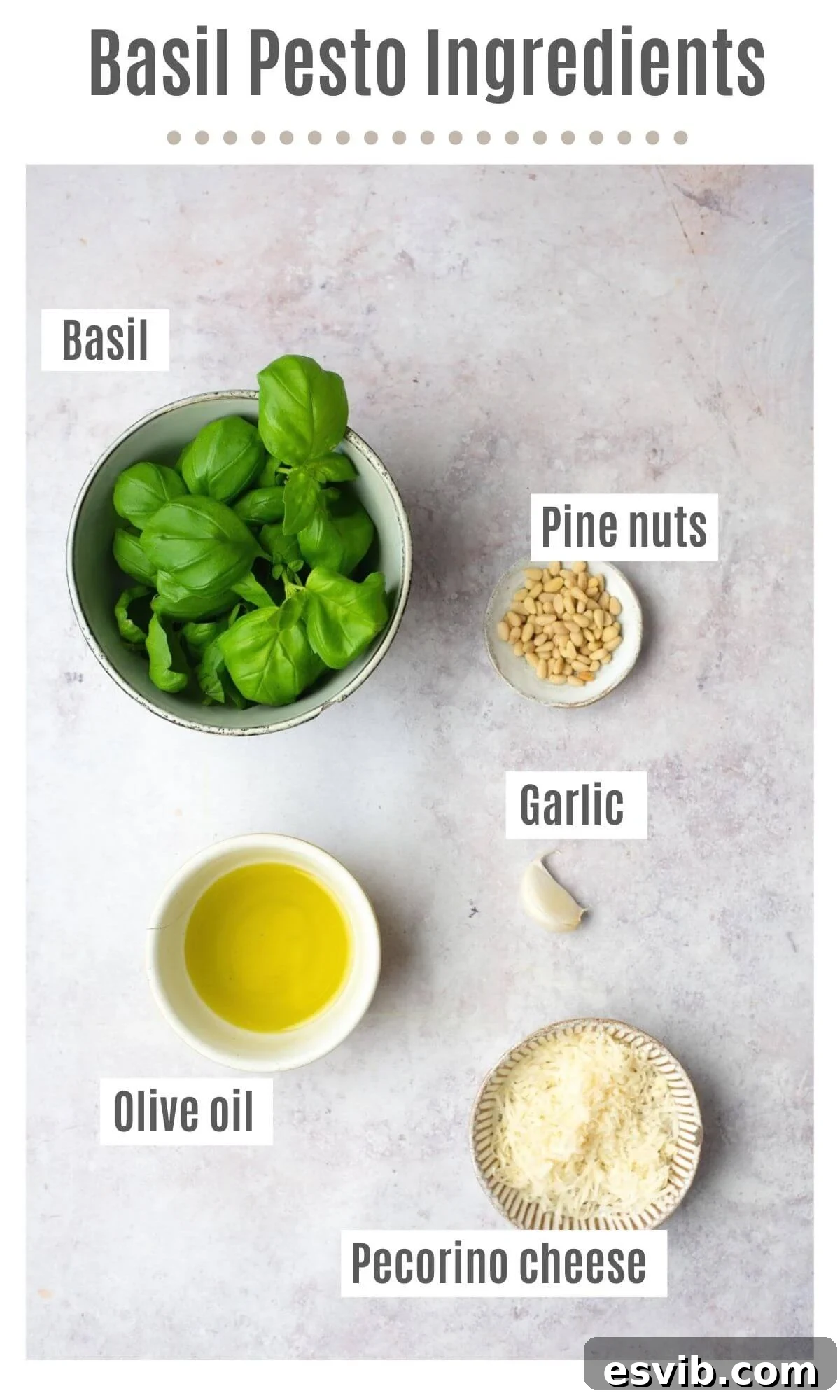
The Star of the Show: Homemade Genovese Pesto Ingredients:
While various store-bought pesto options are available, making your own Genovese pesto from scratch is an incredibly rewarding endeavor and yields a vastly superior flavor that is absolutely essential for achieving the authentic taste of this Ligurian Minestrone. The difference is truly remarkable!
- Fresh Basil: Two tightly packed cups (about 50g) of the freshest basil leaves you can possibly find. Look for vibrant, unblemished green leaves without any signs of bruising or wilting, as the quality and freshness of the basil directly impact the pesto’s overall flavor and color.
- Pine Nuts: Two tablespoons (30g) of high-quality pine nuts. For an even deeper, more complex nutty flavor, we recommend lightly toasting them in a dry pan for a few minutes before blending. Alternatively, walnuts, cashews, or even pistachios can be used, though they will impart a slightly different, yet still delicious, character to the pesto.
- Garlic: One small clove of fresh garlic, or half of a large one. The goal is a subtle hint of garlic that enhances, rather than overpowers, the basil. Adjust the amount according to your personal preference for garlic intensity.
- Pecorino Cheese: Two-thirds of a cup (40g) of freshly grated Pecorino Romano or Parmigiano Reggiano cheese, or a delightful combination of both for a balanced flavor. For a vegetarian version of the soup, it is crucial to ensure your chosen hard cheese is made without animal rennet.
- Olive Oil: One-third of a cup (80ml) of excellent quality extra virgin olive oil. The olive oil not only binds the pesto ingredients together but also contributes significantly to its rich, smooth texture and robust flavor, so choose the best you can afford.
- Salt: A small pinch of fine sea salt, to taste.
Step-by-Step Guide to Crafting Your Delicious Ligurian Minestrone
Follow these detailed and easy-to-understand steps to create a beautiful and wonderfully delicious pot of authentic Ligurian Minestrone Soup. We’ve included practical preparation tips and visual cues to guide you effortlessly through each stage of the cooking process.
Essential Preparation Tips for Efficiency!
- Chop Your Veggies Thoughtfully: Begin by finely chopping the onion to create a smooth, quick-cooking base. Then, meticulously cut all other vegetables – including the squash, potatoes, zucchini, green beans, and cabbage – into uniform, bite-sized pieces. This crucial step ensures not only even cooking throughout the soup but also makes every spoonful a delight to eat.
- Stock Prepared: Measure out your chicken or vegetable stock and have it readily available near your cooking station. This minimizes any interruptions during the cooking process and keeps things flowing smoothly.
- Pesto Ingredients Prepped: Measure out all your individual pesto ingredients and have them prepped and ready for quick blending. This ensures you can make the pesto swiftly just before serving, maximizing its freshness and vibrant flavor.
Making the Hearty Minestrone Base
Step 1: Build the Flavor Base and Begin Simmering. In a large, deep pot or a sturdy Dutch oven, add 1-2 tablespoons of high-quality extra virgin olive oil over medium heat. Add the finely chopped onion and sauté gently, stirring occasionally, until it becomes wonderfully soft and translucent, which typically takes about 2-3 minutes. This critical first step is where the foundational aromatic flavors of your soup truly begin to develop.
Next, introduce the harder, longer-cooking vegetables: carefully add the cubed butternut squash, diced zucchini, and cubed potatoes to the pot. Pour in 6.5 cups (1.6 litres) of your chosen stock and add a generous pinch of salt to begin seasoning the broth. If you are using it, now is the perfect time to add the Parmesan rind; it will slowly release its incredible umami and rich, savory notes as the soup gently simmers. Bring the entire mixture to a rolling boil, then immediately reduce the heat to low, cover the pot with a lid, and let it simmer for a full 25 minutes. This allows the root vegetables to become beautifully tender and for all the initial flavors to meld together wonderfully. (For visual guidance on this stage, please refer to photos 1-3 in the original visual guide provided.)
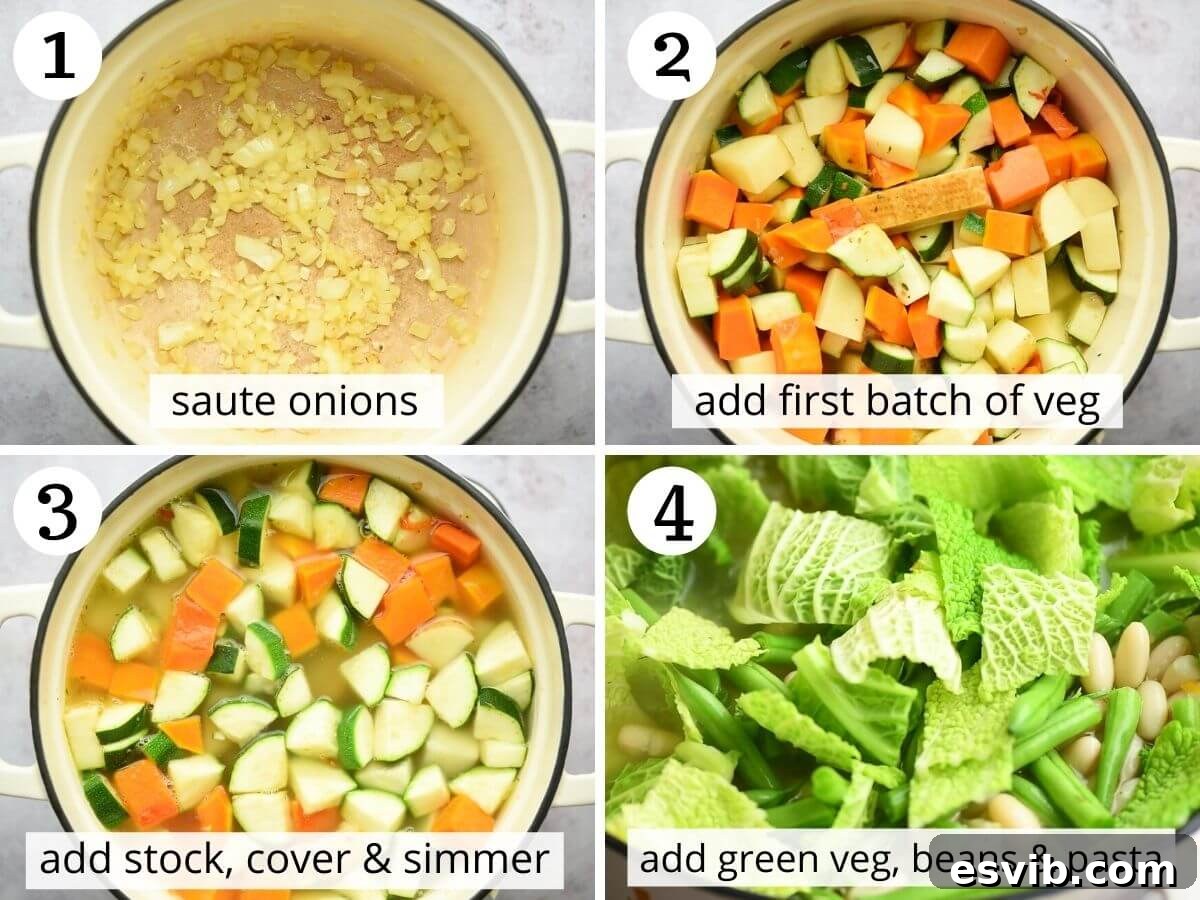
Step 2: Incorporate Remaining Vegetables and Pasta. After the initial 25 minutes of simmering, carefully uncover the pot. Now, add the thinly sliced savoy cabbage, the fresh green beans (cut into bite-sized pieces), and the thoroughly rinsed and drained canned cannellini beans. Stir all the new additions well to combine them with the simmering vegetables. At this point, add your chosen short pasta. Cover the pot again for a mere 5 minutes to allow the cabbage to wilt slightly and the beans to warm through thoroughly. Then, uncover the pot and continue to simmer gently for another 5-10 minutes, or until the pasta is perfectly al dente (meaning cooked through but still retaining a pleasant firmness to the bite). It is important to keep a close eye on the pasta during this stage to prevent it from becoming overcooked and mushy. (For visual reference on adding these ingredients, please refer to photo 4 in the original guide.)
Crafting the Vibrant Fresh Genovese Pesto
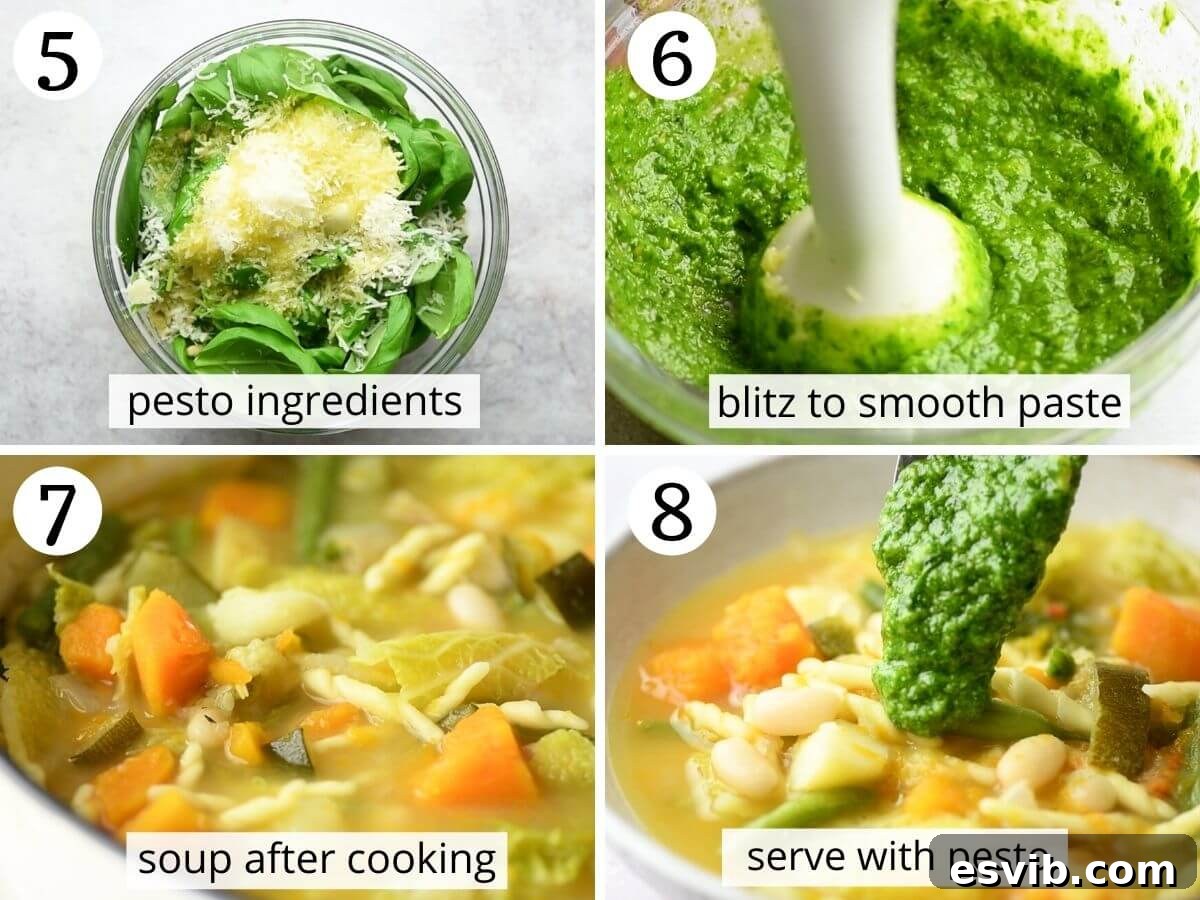
Step 3: Prepare the Authentic Pesto. While your minestrone finishes its final cooking stage, it’s time to prepare the star of the dish: the fresh Genovese pesto. In a suitable bowl, combine all the pesto ingredients: the vibrant fresh basil leaves, the lightly toasted pine nuts, the small clove of fresh garlic, the freshly grated Pecorino or Parmigiano Reggiano cheese, and the high-quality extra virgin olive oil. Using an immersion blender (a hand-held stick blender), carefully blitz the ingredients together until you achieve a wonderfully smooth, vibrant green paste. Alternatively, a food processor can be used for ease, or for the most traditional approach, a mortar and pestle will yield an exceptional texture. The key is to blend until smooth, but avoid over-blending, which can cause the basil to oxidize and lose its bright green color and delicate aroma. (For visual cues on pesto preparation, please refer to photos 5 & 6 in the original guide.)
Serving Your Authentic Ligurian Minestrone
Step 4: Final Seasoning and Presentation. Before serving, take a moment to taste the minestrone carefully and adjust the seasoning as needed. Add more salt if necessary to bring out all the beautiful flavors. Ladle the hot, aromatic soup into individual serving bowls. Crucially, top each bowl with a generous, heaped teaspoon of your freshly made basil pesto. Gently stir the pesto into the soup just before taking your first spoonful. This method is vital as it ensures the pesto retains its absolute freshest, most vibrant flavor and intense aroma, preventing its delicate notes from diminishing due to prolonged exposure to the hot liquid. Serve immediately and savor every delightful mouthful! (For inspiring serving suggestions, please refer to photos 7 & 8 in the original visual guide.)
Expert Tips & Frequently Asked Questions (FAQs) for Minestrone Perfection
Mastering the art of Ligurian Minestrone is straightforward with a few key insights and practical tips. These expert recommendations and frequently asked questions will help you achieve the best possible flavor, texture, and overall success with your soup, ensuring it becomes a beloved staple in your kitchen.
Top Tips for Minestrone Perfection
- Embrace Vegetable Versatility: Minestrone is inherently a celebration of seasonal produce and resourcefulness. Feel entirely free to use any leftover vegetables you happen to have on hand. Root vegetables like parsnips or turnips are excellent additions, as are heartier leafy greens such as fresh spinach or kale (add these towards the very end of the cooking time to retain their texture and vibrant color).
- Consistent Vegetable Chopping is Key: It is highly important to ensure all your vegetables are cut into roughly the same uniform, bite-sized pieces. This consistency is not just for aesthetic appeal; it promotes even cooking, preventing some vegetables from becoming mushy while others remain undercooked and hard. It also makes the soup much more pleasant and easy to eat with a spoon.
- Handle Pasta with Care – Timing is Crucial: Pasta, especially smaller shapes, will continue to absorb liquid and soften over time. To prevent it from becoming mushy and to maintain its ideal al dente texture, we strongly recommend only adding pasta to the portions of soup you plan to eat immediately. If you are preparing the soup for future leftovers, it’s best to cook the pasta separately and add it to individual bowls just before serving.
- The Magic of Parmesan Rind: Never underestimate the incredible flavor boost a discarded Parmesan rind can provide! It infuses the broth with a wonderful depth of umami and a subtle cheesy richness. If you don’t happen to have one, don’t worry, the soup will still be delicious, but it’s a fantastic trick to remember for future soups and stews.
- Storing Leftover Pesto Properly: If you find yourself with extra homemade pesto, it will keep beautifully. Simply transfer it to an airtight container, ensuring a thin layer of olive oil is drizzled on top before sealing. This prevents oxidation and helps maintain its vibrant green color and fresh flavor for up to 3 days in the refrigerator.
- Opt for Low-Sodium Stock: Always choose a low-sodium chicken or vegetable stock. This gives you complete control over the final seasoning of your soup. You can always add more salt to taste, but it’s impossible to remove it once it’s in, so starting with low-sodium gives you flexibility.
Your Minestrone Queries Answered
For optimal flavor and freshness, we recommend adding approximately one generous, heaped teaspoon of freshly made basil pesto to each individual bowl of soup just before you are about to eat it. It’s crucial not to add all the pesto directly to the main pot of soup, as its delicate flavors and vibrant color can easily diminish and oxidize over time when sitting in the hot liquid, losing its potency and brightness.
Absolutely, you can! We’ve successfully tested this recipe using both dried and canned cannellini beans, and both yield fantastic results. If you choose to opt for dried beans, remember that you must soak them overnight first (typically for a minimum of 12 hours) to properly rehydrate them. Once they are thoroughly soaked, add them to the pot at the same time you add the stock in Step 1, allowing them to cook until beautifully tender alongside the other vegetables.
Yes, this minestrone is inherently vegetarian by design. To ensure it is completely vegetarian, you simply need to make sure you use vegetable stock instead of chicken stock, and select a hard cheese (such as Pecorino or Parmigiano Reggiano) that is confirmed to be vegetarian-friendly (meaning it’s made without animal rennet) for your pesto. For a fully vegan version, you can either omit the cheese from the pesto entirely, or substitute it with nutritional yeast for a delicious, savory, cheesy flavor without any dairy.
Leftover Ligurian Minestrone will keep exceptionally well when stored in an airtight container in the refrigerator for up to 2 to 3 days. To reheat, gently warm the soup on the stovetop over medium heat, stirring occasionally, until it is piping hot throughout. Remember our tip about pasta: if you added pasta directly to the entire pot, it might be softer upon reheating, so consider adding fresh pasta to reheated portions for the best texture.
Yes, this is an excellent soup for freezing, making it perfect for meal prep! For optimal freshness and texture upon thawing, it’s best to freeze it on the same day it’s made. For the absolute best results, freeze the minestrone *before* adding the pasta. When you’re ready to enjoy it, simply thaw the soup, reheat it gently, and then cook and add fresh pasta just before serving. This prevents the pasta from becoming mushy and allows you to experience the soup as if it were freshly prepared.
A hearty, crusty bread is the quintessential accompaniment to soak up all the flavorful broth and complement the rich vegetables. Traditional choices that pair wonderfully include a good quality artisan loaf, authentic Italian ciabatta, or the famously salty and olive oil-rich Ligurian focaccia. Even a simple, fresh bread roll will work beautifully, providing the perfect textural contrast to the smooth, tender soup.
Explore More Delicious Italian Soup Recipes from Our Collection
If you’ve fallen in love with the comforting and authentic flavors of this Ligurian Minestrone, we wholeheartedly encourage you to explore other exquisite Italian soup recipes from our curated collection. Each offers a unique and delightful taste of Italy’s rich and diverse culinary heritage, perfect for expanding your Italian cooking repertoire:
- Pappa al Pomodoro (Rustic Italian Tomato Bread Soup)
- Carabaccia (Hearty Tuscan Onion Soup)
- Italian Lentil Soup (Zuppa di Lenticchie)
- Tuscan Chickpea Soup
- Tuscan Farro Soup with Beans
Concluding Thoughts: Savoring Italian Comfort, One Bowl at a Time
We sincerely hope you thoroughly enjoy the delightful journey of preparing and savoring this authentic Ligurian Minestrone Soup, complete with its vibrant and aromatic Genovese pesto. It stands as a beautiful testament to the power and elegance of simple, fresh ingredients coming together to create a profoundly satisfying and soul-warming meal. This recipe not only nourishes the body but also brings a cherished piece of Italy’s rustic charm and culinary tradition directly into your kitchen, inviting you to experience the true essence of Italian comfort food.
If you’ve tried this Ligurian Minestrone Soup or any other cherished recipe on our blog, we would be absolutely thrilled to hear from you! Please don’t hesitate to rate the recipe and generously share your experience, tips, or any delightful variations you discovered in the comments section below. Your feedback and stories truly mean the world to us! You can also FOLLOW US on FACEBOOK, INSTAGRAM, and PINTEREST for a continuous stream of culinary inspiration, beautiful food photography, and daily recipe ideas. And for a dose of deliciousness delivered straight to your inbox every week, don’t forget to sign up for our exclusive NEWSLETTER!
Step By Step Photos Above
Most of our recipes come with step by step photos, helpful tips and tricks to make it perfectly first time!
Ligurian Minestrone Soup with Pesto Recipe
By Emily
15
30
45
8 servings

Pin Recipe
Print Recipe
Ingredients
- 1 onion, finely chopped
- 1 small butternut squash (3 cups/450g), peeled and cubed
- 4 medium potatoes (3 cups/450g), cubed
- 2 cups green beans (180g), cut in halves or thirds
- 2 zucchini (courgette), sliced or diced
- ¾ cups savoy cabbage (250g), thinly sliced
- 2 cups canned cannellini beans (300g), rinsed and drained * see notes if using dried beans
- 1.5 cups short pasta (150g), small shapes like ditalini or elbow macaroni
- 1 parmesan rind (optional)
- 7 cups chicken or vegetable stock (1.6 litres)
Pesto ingredients
- 2 tightly packed cups fresh basil (50g)
- 2 tablespoons pine nuts (30g)
- 1 small clove garlic
- ⅔ cup freshly grated pecorino or Parmigiano Reggiano cheese (40g)
- ⅓ cup extra virgin olive oil (80ml)
- Salt, to season
Instructions
Prepare your ingredients
-
Finely chop the onion and cut all other vegetables into uniform bite-sized pieces. Ensure your stock is measured and ready.
To make the minestrone
-
Add 1-2 tablespoons of olive oil to a large, deep pot over medium heat. Add the finely chopped onion and sauté until soft and translucent (about 2-3 minutes).
-
Next, add the zucchini, butternut squash, and potatoes to the pot along with 6.5 cups (1.6 litres) of stock and a good pinch of salt. Add the parmesan rind if using. Bring to a boil, then reduce heat, cover the pot, and let it simmer for 25 minutes until vegetables are tender.
-
Uncover the pot and add the green beans, canned cannellini beans, sliced savoy cabbage, and short pasta. Cover again for 5 minutes to allow the cabbage to wilt. Then, uncover and simmer for another 5 minutes, or until the pasta is cooked al dente.
To make the pesto
-
Combine all the pesto ingredients (fresh basil, pine nuts, garlic, grated cheese, and olive oil) in a bowl. Blitz to a smooth paste using an immersion blender, food processor, or mortar and pestle.
To serve
-
Taste the soup for seasoning and adjust with salt as needed. Ladle the hot soup into bowls and top each serving with a heaped teaspoon of fresh basil pesto. Stir the pesto into the soup just before eating, and serve immediately.
Video Guide
For a visual guide on how to prepare this delicious Ligurian Minestrone, you can find a comprehensive video tutorial on our YouTube channel. (You may embed an iframe here if that’s within your content policy, for example: )
Recipe Notes
- If using dried beans: Ensure you soak the dried beans overnight (at least 12 hours) before cooking. Add them to the pot at the same time as the stock and other hard vegetables to ensure they cook thoroughly until tender.
- What vegetables to use: This is a highly adaptable soup! Feel free to use any seasonal vegetables you have on hand. Carrots, parsnips, kale, or spinach are all wonderful additions that can complement the existing flavors.
- Cutting your veggies: For even cooking and easy eating, cut all vegetables into roughly uniform, bite-sized pieces. This ensures consistency in texture and a pleasant eating experience.
- Adding pasta to your soup: Pasta will continue to absorb liquid and expand, becoming mushy if left in the soup for too long or reheated multiple times. For best texture, cook pasta separately and add it to individual portions just before serving, especially if you anticipate having leftovers.
- Storing pesto: Leftover fresh pesto can be stored in an airtight container in the refrigerator for up to 3 days. Drizzle a thin layer of olive oil on top before sealing to maintain its freshness and prevent browning from oxidation.
- Leftovers and freezing: Leftovers will keep well in the fridge for up to 2-3 days. This soup is excellent for freezing; for best results, freeze it on the same day it’s made and ideally *before* adding the pasta. Thaw and reheat, then cook fresh pasta when ready to serve.
Helpful Info for All Recipes on Our Site
- We consistently use high-quality extra virgin olive oil in all our recipes unless otherwise specified.
- For canned or jarred tomatoes (though not used in this recipe), we recommend Cirio or Mutti brands to achieve the best flavor and results.
- All vegetables are assumed to be medium-sized unless specifically stated otherwise in the ingredient list.
- All our recipes are thoroughly tested and developed using a fan (convection) oven for consistent results.
- Find out more about how nutrition information is calculated on our website.
- Discover our must-have Italian Pantry Staples to stock your kitchen.
- Explore our comprehensive guide to Essential Kitchen Tools for Italian Cooking.
Nutrition Information (per serving)
Carbohydrates: 47g |
Protein: 15g |
Fat: 13g |
Saturated Fat: 3g |
Polyunsaturated Fat: 2g |
Monounsaturated Fat: 7g |
Cholesterol: 3mg |
Sodium: 162mg |
Potassium: 1006mg |
Fiber: 7g |
Sugar: 5g |
Vitamin A: 6818IU |
Vitamin C: 38mg |
Calcium: 167mg |
Iron: 3mg
Nutrition information is automatically calculated and should only be used as an approximation.
Did you try this recipe?
Leave a comment below!