

Crispy Pan-Fried Pork Tenderloin with Aromatic Fennel Breadcrumbs
Prepare to elevate your dinner game with this incredibly simple yet profoundly delicious recipe for pan-fried pork tenderloin. Each tender slice is lovingly coated in a crisp crust of breadcrumbs infused with fragrant fennel seeds, pan-fried to golden perfection in butter, and finished with a bright drizzle of fresh lemon juice. This dish is a true family favorite, perfect for a speedy weeknight meal or a leisurely weekend spread, beautifully complemented by grilled vegetables and a vibrant salad.

Why You’ll Love This Fennel Breaded Pork Tenderloin Recipe
This breaded pork tenderloin has become a staple in our kitchen, and for good reason. It embodies everything you want in a meal: minimal fuss, maximum flavor, and satisfying textures. It’s the kind of comforting, yet elegant, dinner that perfectly fits a relaxed evening, perhaps alongside an array of delicious sides and a glass of your favorite wine.
The magic begins with the pork tenderloin itself. This lean cut is sliced, then gently pounded thin, transforming into quick-cooking cutlets. The real flavor star, however, is the breading. Fine breadcrumbs are generously mixed with fennel seeds, which impart a subtle yet distinctive anise-like aroma and taste, taking this dish beyond ordinary breaded pork.
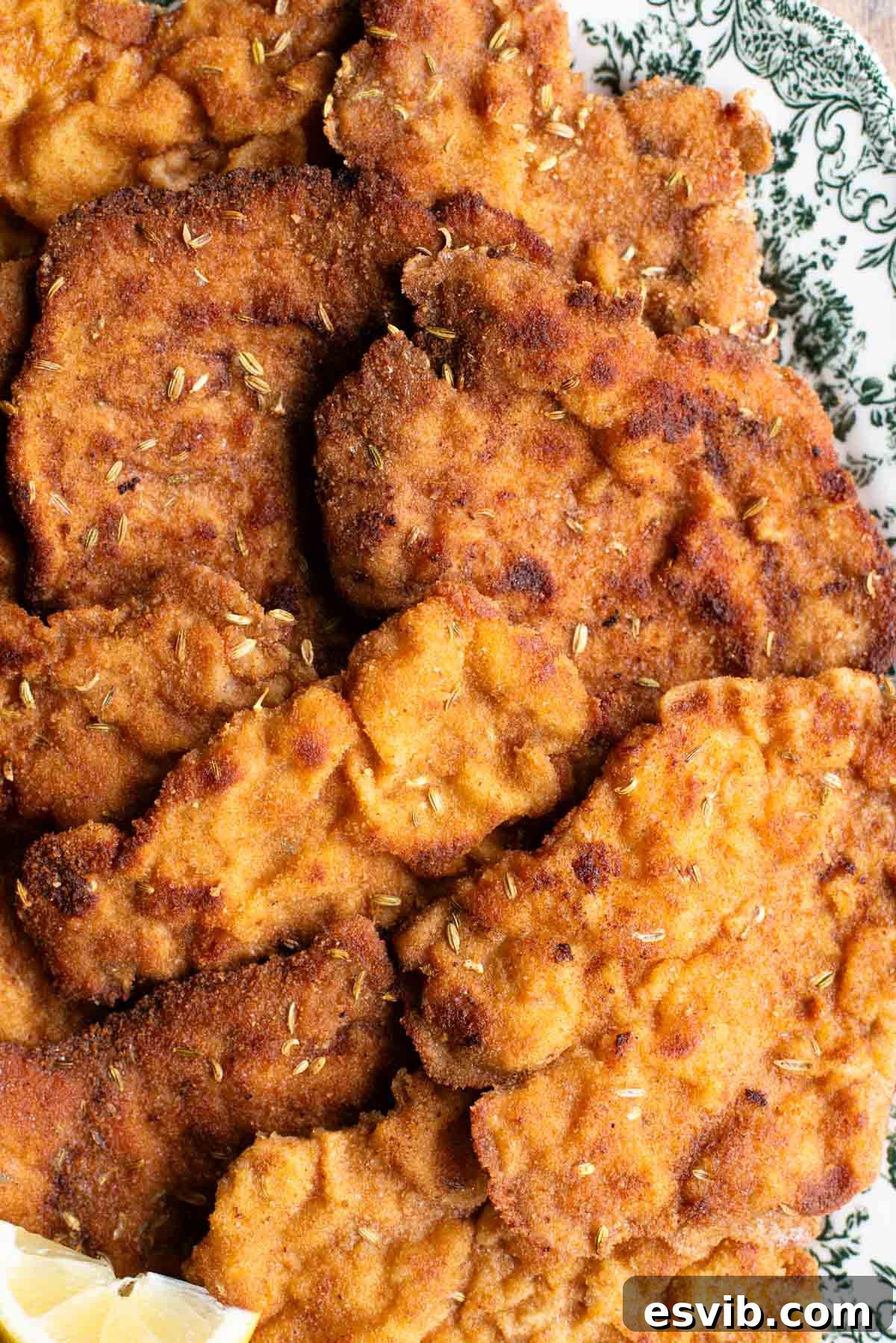
Frying the cutlets in butter creates an irresistible exterior: gloriously crisp and golden brown. Meanwhile, the thinly pounded pork cooks rapidly, ensuring that the inside remains incredibly tender and juicy. This quick cooking time is a huge advantage, making it an ideal choice when you need a delicious meal on the table without spending hours in the kitchen. Just a few minutes on each side is all it takes to achieve that perfect balance of crispy coating and succulent meat.
Beyond its fantastic taste and ease, this recipe is wonderfully versatile. While we adore serving it with a peppery arugula salad, creamy cannellini beans, and a medley of grilled vegetables, its simple elegance means it pairs well with almost any accompaniment. It’s a testament to how a few quality ingredients, prepared with care, can yield extraordinary results.
Essential Ingredients for Perfect Breaded Pork Tenderloin
Crafting this delightful pork dish requires just a handful of fresh ingredients, each playing a crucial role in delivering its incredible flavor and texture. Here’s a look at what you’ll need and why these components are key:
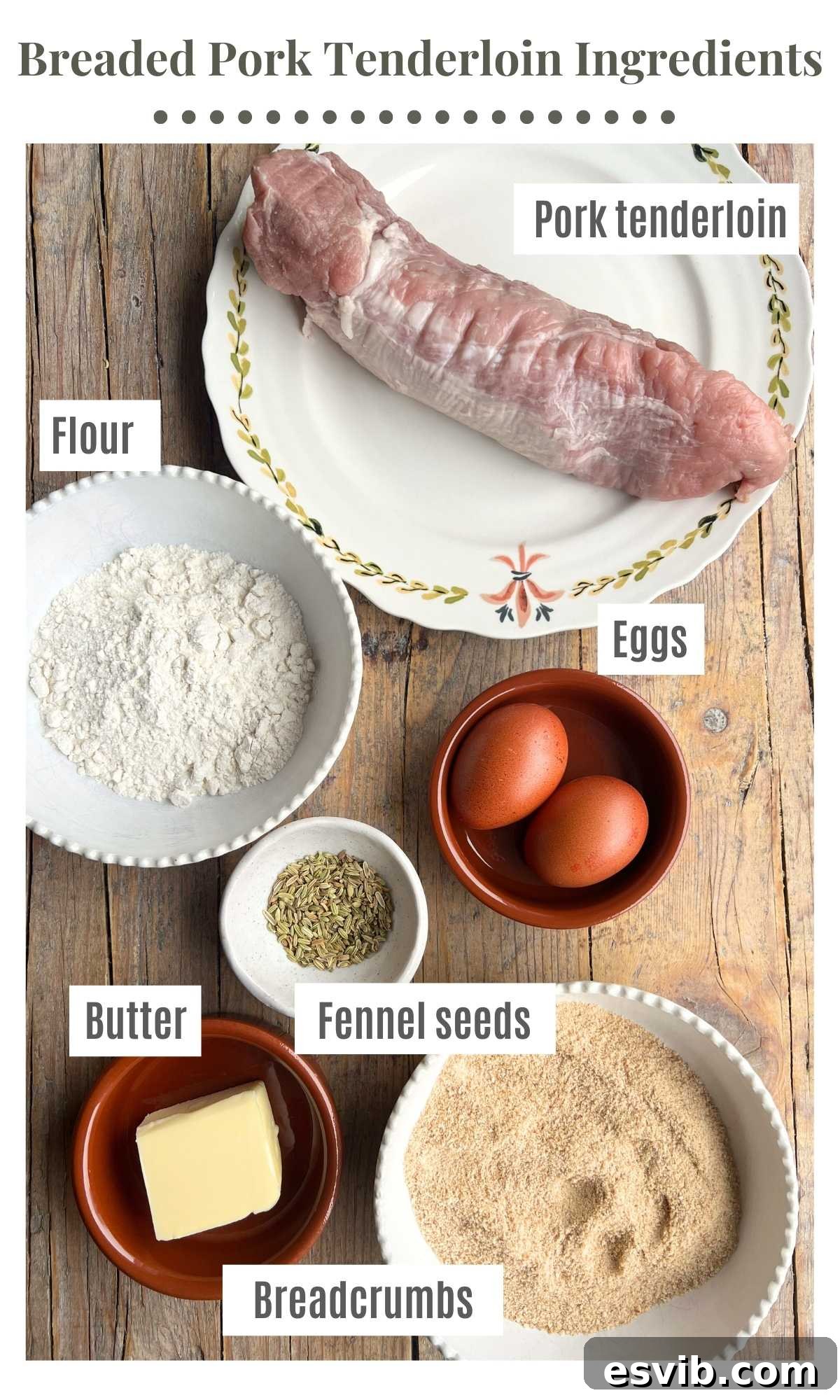
- Pork Tenderloin: The star of the show! We recommend a high-quality tenderloin for the best flavor and texture. This cut is lean and cooks quickly, staying wonderfully tender when prepared correctly.
- Fine Breadcrumbs: Essential for that coveted crispy crust. We prefer unseasoned, fine-textured breadcrumbs, like Italian Mulino Bianco, as they absorb flavors beautifully and create a delicate, even coating. If you can only find seasoned breadcrumbs, adjust salt in the recipe accordingly.
- Fennel Seeds: These are the secret weapon for an unforgettable flavor profile. Fennel seeds provide a warm, slightly sweet, and aromatic anise-like note that complements pork exceptionally well. If you’re not a fan of fennel or don’t have them on hand, dried oregano makes a fantastic alternative, offering a more classic Italian herb flavor.
- All-Purpose Flour: Used for the initial dredge, it helps create a dry surface on the pork, allowing the egg wash to adhere more effectively, which in turn helps the breadcrumbs stick for a perfect crust.
- Large Eggs: The binding agent! Whisked eggs create the necessary adhesive layer between the flour and the breadcrumbs, ensuring a robust and even coating.
- Unsalted Butter: For pan-frying. Butter provides a rich, nutty flavor that enhances the overall taste of the pork and helps achieve that beautiful golden-brown crispness. Using unsalted butter gives you better control over the salt content of your dish.
- Olive Oil: A drizzle of olive oil, combined with butter, helps to raise the smoke point of the butter, preventing it from burning too quickly while frying, ensuring a perfectly golden crust. Extra virgin olive oil is always preferred for its quality and flavor.
- Salt: A fundamental seasoning to bring out the natural flavors of the pork. We recommend sprinkling lightly on the pounded pork slices before breading.
- Fresh Lemon Wedges (Optional, but Highly Recommended): A squeeze of fresh lemon juice over the hot, fried pork tenderloin is a game-changer. It adds a bright, zesty tang that cuts through the richness of the butter and pork, elevating the entire dish. Don’t skip this if you can!
Step-by-Step Guide: Crafting Your Crispy Fennel Pork Tenderloin
Follow these detailed steps to ensure your breaded pork tenderloin turns out perfectly crispy on the outside and wonderfully tender on the inside, every single time. Visual aids are available to guide you through each stage of the process.
-
Prepare the Pork Tenderloin for Breading
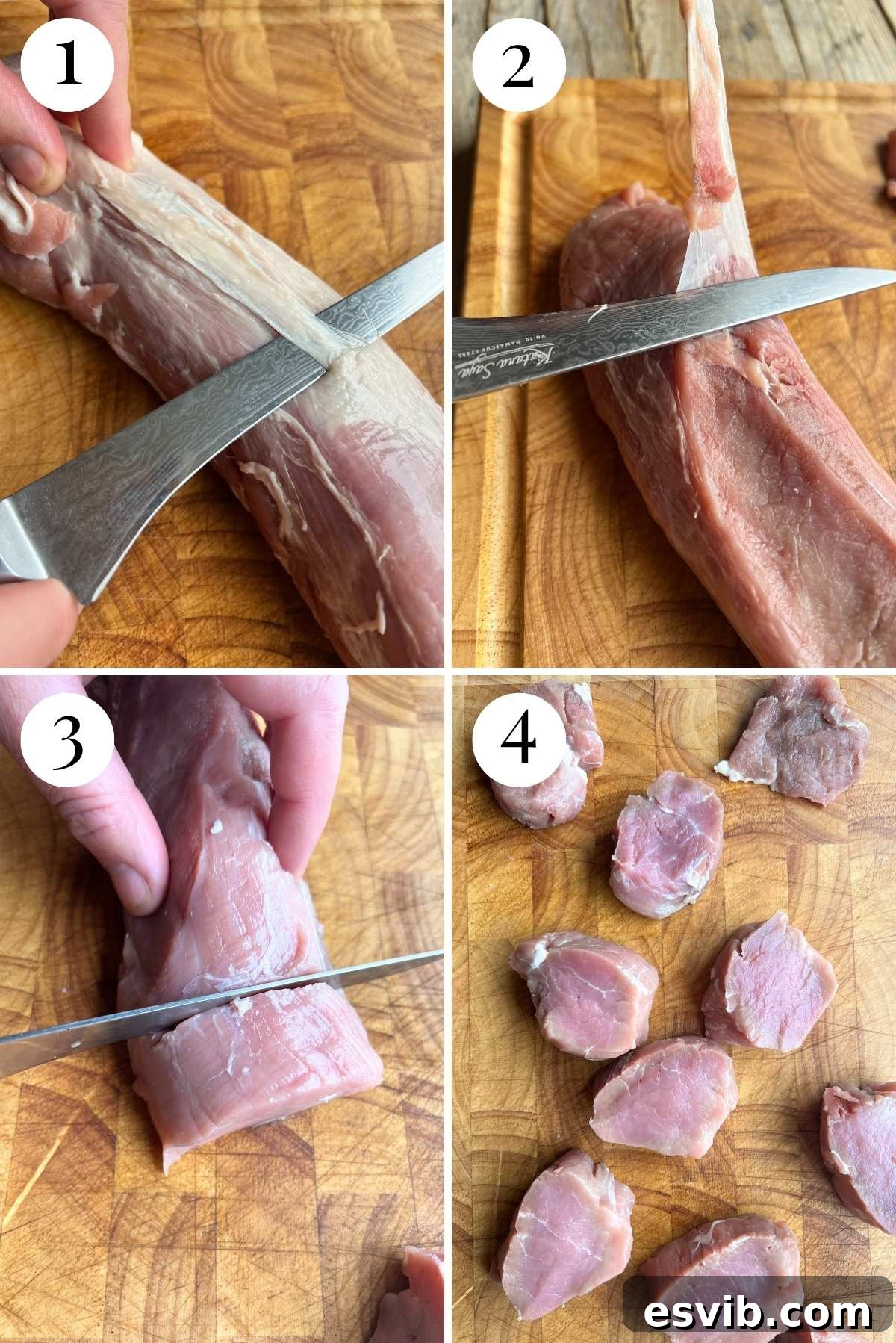
Step 1: Trim the Pork. Begin by carefully inspecting your pork tenderloin. Use a very sharp knife to trim away any visible silverskin or sinew from the exterior of the meat. Silverskin is a tough, silvery membrane that doesn’t break down during cooking and can make the pork chewy. Trim carefully to remove only the silverskin and avoid cutting away too much of the lean meat. (Refer to photos 1 and 2 in your visual guide for precise trimming techniques.)

Trimming and preparing the pork tenderloin. -
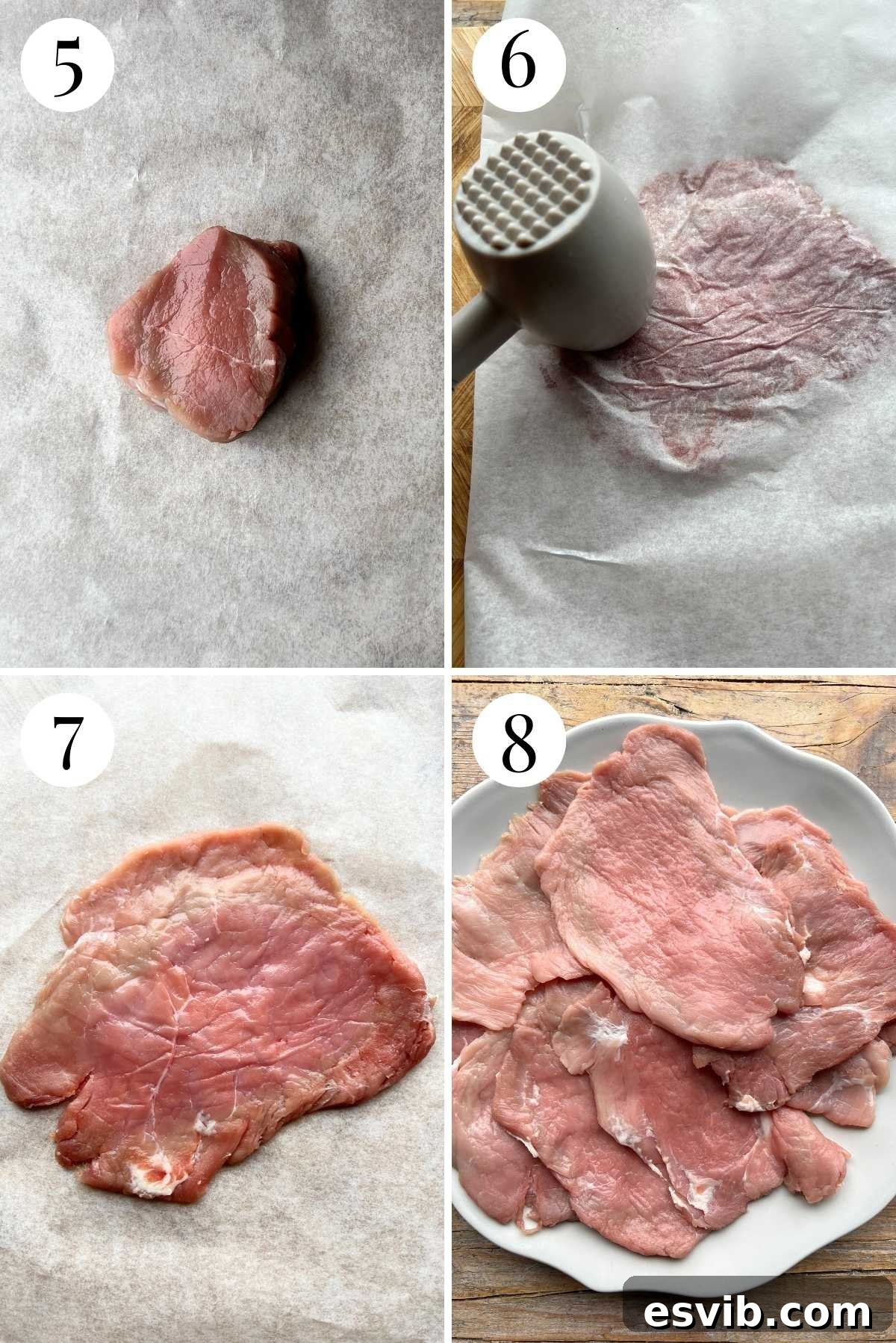
Step 2: Slice and Pound the Pork. Once trimmed, slice the pork tenderloin into thick, approximately 1-inch (2.5 cm) rounds. Next, place each slice, one at a time, between two sheets of baking parchment paper. Using a rolling pin or a meat mallet, firmly but gently pound each slice until it’s about 1cm (¼ inch) thick. The goal is to create uniformly thin cutlets that will cook quickly and evenly. You should yield around 8-10 slices from a standard tenderloin. Arrange the pounded slices on a plate and sprinkle them lightly with salt on both sides. This initial seasoning is crucial for flavor. (See photos 3-8 for a clear demonstration of slicing and pounding.)
Pounding pork tenderloin for even cooking. -
The Breading Process for Maximum Crispiness
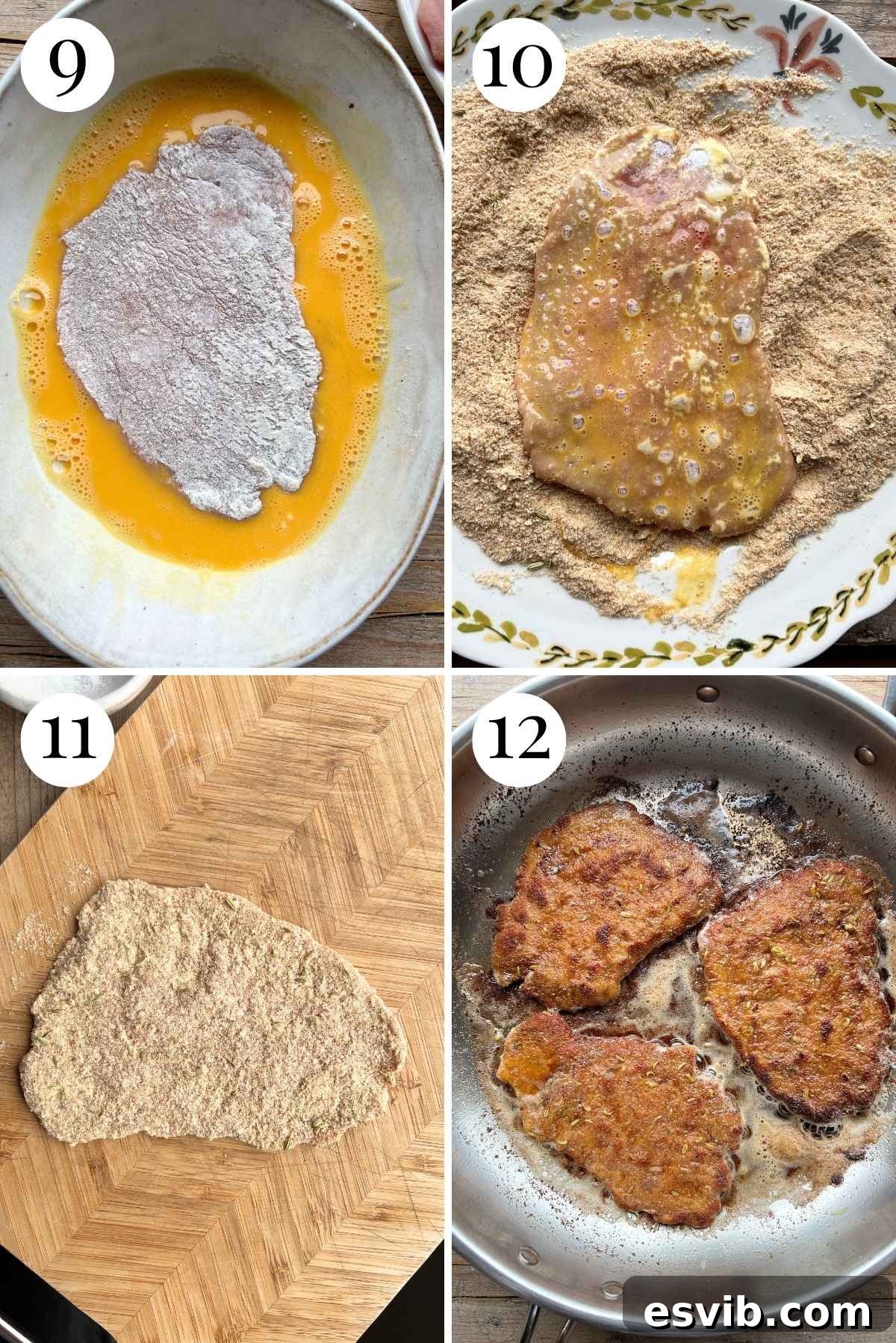
Step 3: Set Up Your Breading Station. Prepare three separate shallow dishes or plates for your breading station. In the first dish, place your all-purpose flour. In a second, wider bowl, whisk the two large eggs until well combined. In the third dish, combine the fine breadcrumbs with the tablespoon of fennel seeds and a pinch of salt. Mix them well to ensure the fennel seeds are evenly distributed. This “assembly line” approach makes the breading process efficient and clean. (Photos 9-11 illustrate the perfect breading station setup.)
The three-step breading process: flour, egg, breadcrumbs. -
Step 4: Bread Each Pork Slice. Take one pounded pork slice and dredge it thoroughly in the flour, shaking off any excess. Next, dip it into the whisked egg mixture, ensuring it’s completely coated. Finally, transfer it to the breadcrumb-fennel seed mixture, pressing gently to make sure the breadcrumbs adhere well to both sides. Place the breaded cutlet on a separate clean plate and repeat with the remaining pork slices until all are breaded.
-
Pan-Frying to Golden Perfection
Step 5: Fry the Pork Cutlets. Heat approximately one-third of the unsalted butter in a large, heavy-bottomed pan or skillet over medium-high heat. Add a small drizzle of olive oil alongside the butter to help prevent the butter from burning. Once the butter has melted and is frothy, carefully add a batch of breaded pork cutlets to the pan, ensuring not to overcrowd it. Cook for about 2 minutes on each side, or until they are beautifully golden brown and crispy. The thinness of the pork means it cooks very quickly, retaining its juiciness while the breading crisps.
-
Step 6: Finish and Serve. As each batch of pork is cooked, transfer the crispy cutlets to a plate lined with kitchen paper to absorb any excess oil. If the breadcrumbs in the pan start to brown too much between batches, quickly wipe the pan clean with a paper towel and add fresh butter and oil for the next batch. This ensures consistent browning and prevents any burnt flavors. Serve the pan-fried pork tenderloin immediately on warm plates, accompanied by fresh lemon wedges for squeezing. A burst of citrus brightens the rich flavors of the pork and butter wonderfully. (Observe the final dish in photo 12.)
Crispy pork cutlets, perfectly golden and ready to serve.
Perfect Pairings: Great Side Dishes for Your Pork Tenderloin
This versatile breaded pork tenderloin pairs beautifully with a wide array of side dishes. Here are some of our top recommendations to create a truly memorable meal:
Sides
Italian Roast Potatoes – Rosemary And Garlic
Crispy on the outside, fluffy on the inside, these aromatic potatoes are a hearty complement to the delicate pork.
Salads
Arugula Salad with Lemon and Parmesan
The peppery bite of arugula and the tang of lemon dressing offer a refreshing contrast to the rich pork.
Sides
Italian Green Beans In Tomato Sauce
Tender green beans simmered in a rich tomato sauce add a touch of rustic Italian comfort to your meal.
Sides
Fagioli all’uccelletto – Beans in Tomato Sauce
Creamy cannellini beans in a savory tomato and sage sauce provide a hearty and flavorful accompaniment.
Breaded Fennel Pork Tenderloin
By Emily
Prep time: 30 mins
Cook time: 20 mins
Total time: 50 mins
Yields: 4 – 6 servings (makes 8-10 slices)

Tender slices of pork tenderloin served in crispy fennel breadcrumbs, pan-fried in butter and drizzled with fresh lemon juice. This recipe has received a 5-star rating from 1 user.
Ingredients
- 600 g (1.3 lbs) pork tenderloin (fillet)
- All-purpose flour, for dredging
- 2 large eggs
- 150 g (1 heaped cup) fine breadcrumbs
- 1 tablespoon fennel seeds
- 80 g (2/3 stick) unsalted butter, for frying
- Olive oil
- Salt, to taste
- Lemon wedges, for serving (optional)
Instructions
Prepare the pork tenderloin
- Use a sharp knife to trim away any silverskin or sinew around the outside of the tenderloin. Trim it carefully so you don’t remove too much of the meat itself (a sharp knife helps).
- Cut the tenderloin into 1-inch-thick slices, then bash them 1 at a time between two sheets of baking parchment using a rolling pin or meat mallet until they are around 1cm (¼ inch) thick. You should have around 8-10 slices in total.
- Set them aside on a plate and sprinkle them lightly with salt.
Breading
- Set up your breading station with a plate of flour for dredging, a large bowl with 2 whisked eggs, and a plate of breadcrumbs mixed with 1 tablespoon of fennel seeds and a pinch of salt.
- One by one, dip each slice of pork in the flour, then egg, then breadcrumbs, pressing gently to ensure a good coating. Set them aside on a separate clean plate. Continue until all the slices have been breaded.
Frying
- Heat ⅓ of the butter with a drizzle of olive oil in a large pan over medium-high heat. Once the butter is frothy, carefully place a batch of pork cutlets into the pan. Fry for 2 minutes on each side until golden brown and crispy. Avoid overcrowding the pan to ensure even cooking and crispness.
- As each batch is cooked, set them aside on a plate lined with kitchen paper to drain any excess oil. You may need to wipe the pan clean between batches if any loose breadcrumbs start to burn, then add fresh butter and oil for the next batch.
- Serve the crispy breaded pork tenderloin immediately on plates with wedges of fresh lemon.
Notes & Tips
Flavour Variations: To experiment with different tastes, you can easily switch up the herbs and spices in the breadcrumbs. Consider adding dried oregano for an Italian classic, a pinch of chili flakes for a subtle kick, or even some smoked paprika for a warm, earthy note.
Leftovers and Storage: Any leftover breaded pork tenderloin will keep well in an airtight container in the fridge for up to 3 days. For reheating, we recommend a preheated oven (around 180°C/350°F) for 10-15 minutes until piping hot throughout and crispy again. You can also enjoy it cold, sliced thinly over a salad.
Achieving the Crispiest Crust: Ensure your oil and butter are hot enough before adding the pork, but not smoking. Also, do not overcrowd the pan; cook in batches if necessary to maintain an even temperature and allow for proper browning and crisping.
Pounding Technique: When pounding the pork, aim for an even thickness. This ensures all parts of the cutlet cook at the same rate, preventing some areas from drying out while others are still cooking.
Helpful Info for All Recipes
- I always use extra virgin olive oil in all of my recipes unless stated otherwise.
- When I use canned or jarred tomatoes of any kind, I always recommend Cirio or Mutti brands for the best results and flavor.
- All vegetables mentioned are medium-sized unless specified otherwise.
- All recipes are meticulously tested and developed using a fan (convection) oven.
- Find out more about how nutrition is calculated on our blog.
- Check out our must-have Italian Pantry Staples to stock your kitchen.
- You can also find all our Essential Kitchen Tools for Italian Cooking.
Nutrition
Calories: 429 kcal | Carbohydrates: 29 g | Protein: 42 g | Fat: 15 g | Saturated Fat: 5 g | Polyunsaturated Fat: 3 g | Monounsaturated Fat: 6 g | Trans Fat: 0.1 g | Cholesterol: 395 mg | Sodium: 395 mg | Potassium: 741 mg | Fiber: 2 g | Sugar: 3 g | Vitamin A: 412 IU | Vitamin C: 0.3 mg | Calcium: 134 mg | Iron: 4 mg
Nutrition information is automatically calculated and should only be used as an approximation.
Did you try this delicious Breaded Pork Tenderloin recipe? We’d love to hear from you! Please leave a comment below to let us know how it turned out. Your feedback is incredibly valuable!
For more delightful recipes and culinary inspiration, don’t forget to follow us on Facebook, Instagram, and Pinterest. You can also sign up for our Newsletter to get our latest recipes delivered straight to your inbox every week!