
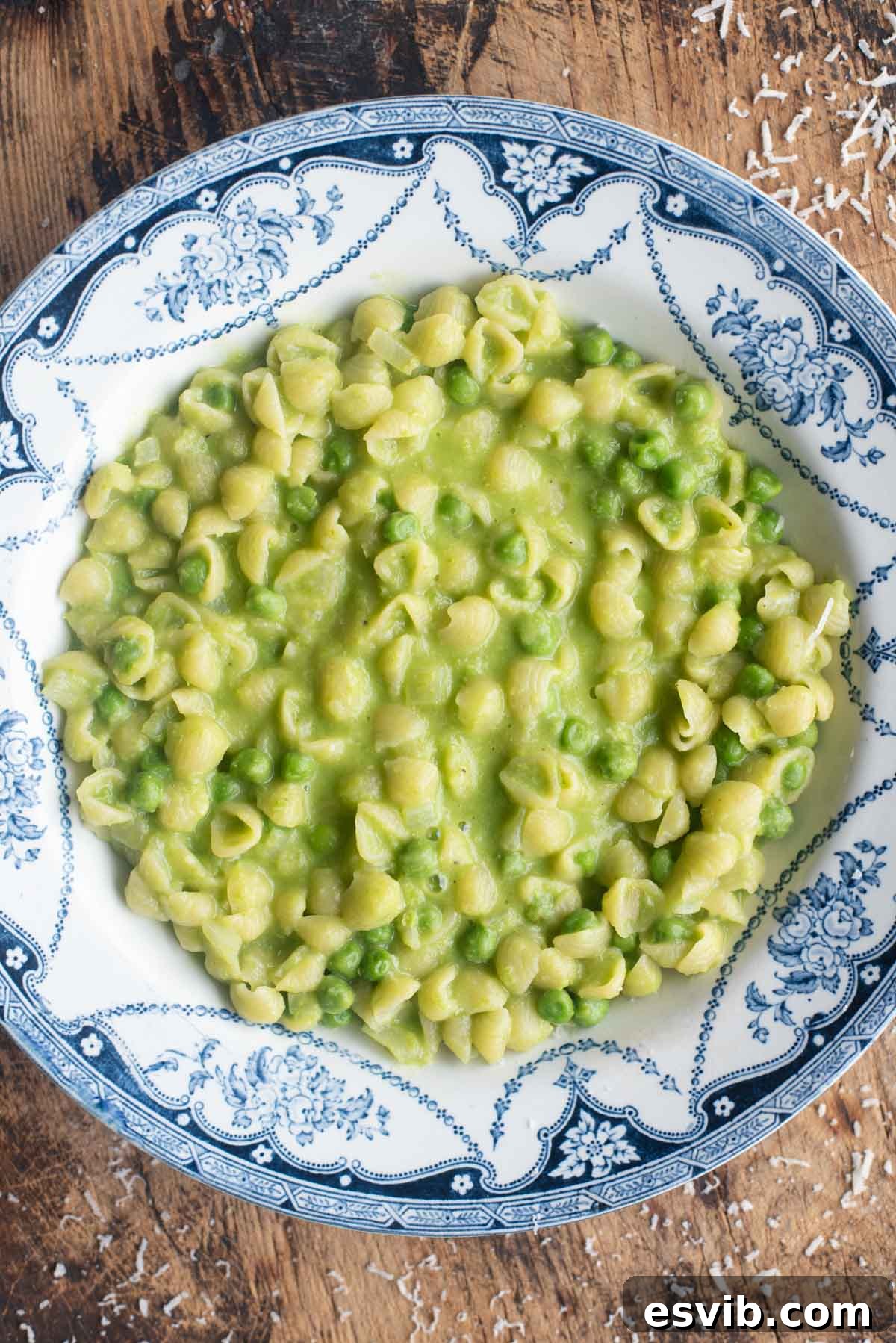
Pasta e Piselli is a quintessential Italian comfort food, celebrated for its incredible simplicity, creamy texture, and deeply satisfying flavor. This classic dish, translating literally to “pasta and peas,” is a testament to the magic that can happen with just a few humble ingredients. Featuring small pasta, sweet peas, and a generous sprinkle of Pecorino Romano cheese, it transforms into a rich, velvety masterpiece in under 30 minutes, making it the perfect solution for busy weeknights when you crave something wholesome and delicious.
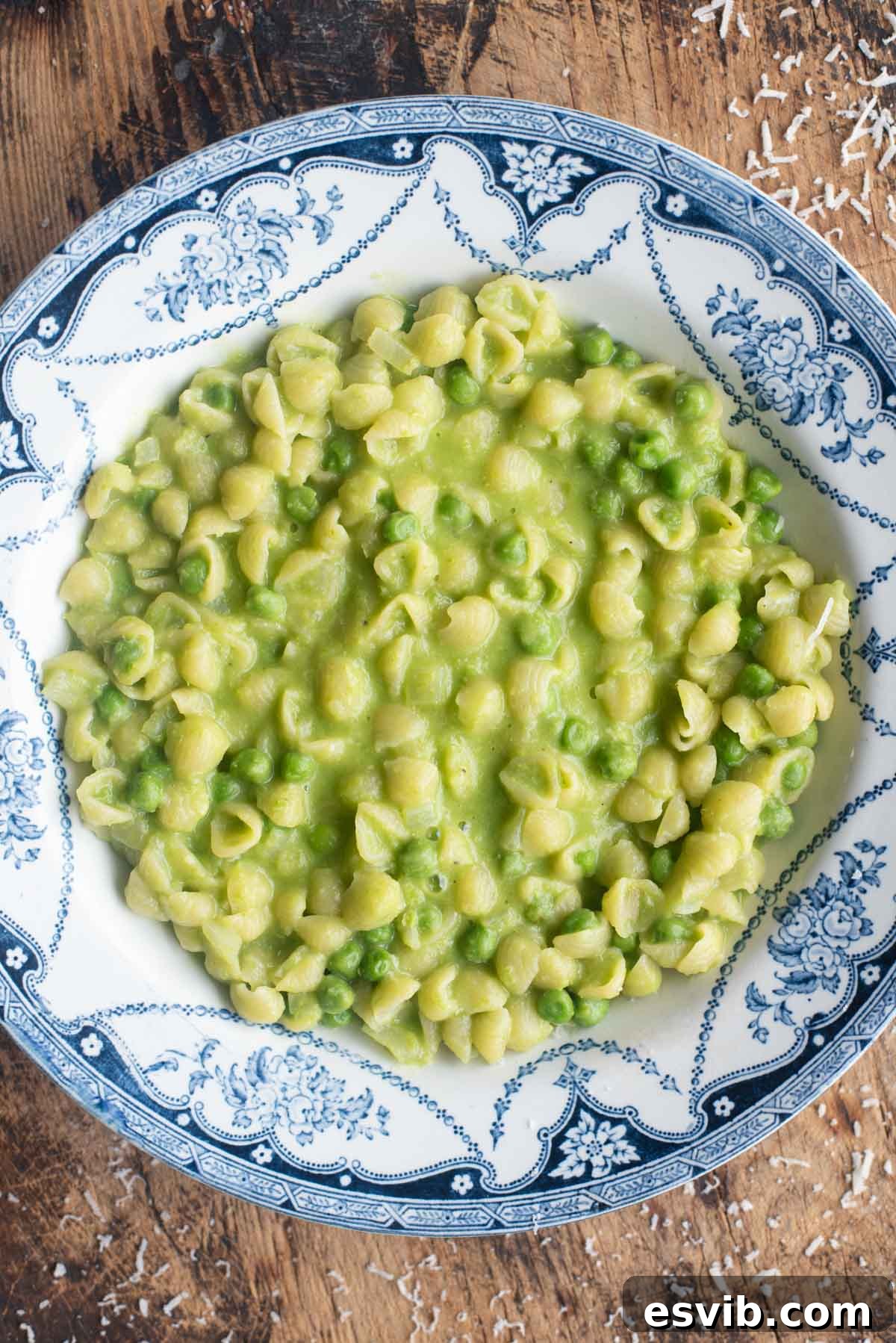
While some might be tempted to enhance this recipe with a multitude of herbs or a complex stock, the true beauty of Pasta e Piselli lies in its elegant simplicity. Trust us when we say, the traditional method, focusing on the natural sweetness of peas and the savory depth of Pecorino, delivers an absolutely delicious experience that needs no further embellishment. This dish embodies the spirit of “cucina povera,” or peasant cooking, where ingenuity and fresh, seasonal ingredients shine.
Much like its beloved cousins, Pasta e Fagioli (pasta and beans) or Pasta e Ceci (pasta and chickpeas), Pasta e Piselli can lean towards a soup-like consistency or be thick and saucy. Your preference dictates the final texture; we personally favor a luscious, thick sauce that clings beautifully to the pasta. However, keep in mind that this dish thickens rapidly as it cools, so it’s always advisable to err on the side of a looser consistency during cooking. While it’s an ideal recipe for fresh spring peas, the convenience of frozen peas means you can enjoy this delightful comfort food any time of the year!
Below, you’ll find the full recipe, complete with detailed ingredient notes, step-by-step instructions accompanied by photos, invaluable tips, creative variations, and frequently asked questions. For a full printable version of this delicious recipe, please scroll to the bottom.
Essential Ingredients for Perfect Pasta e Piselli
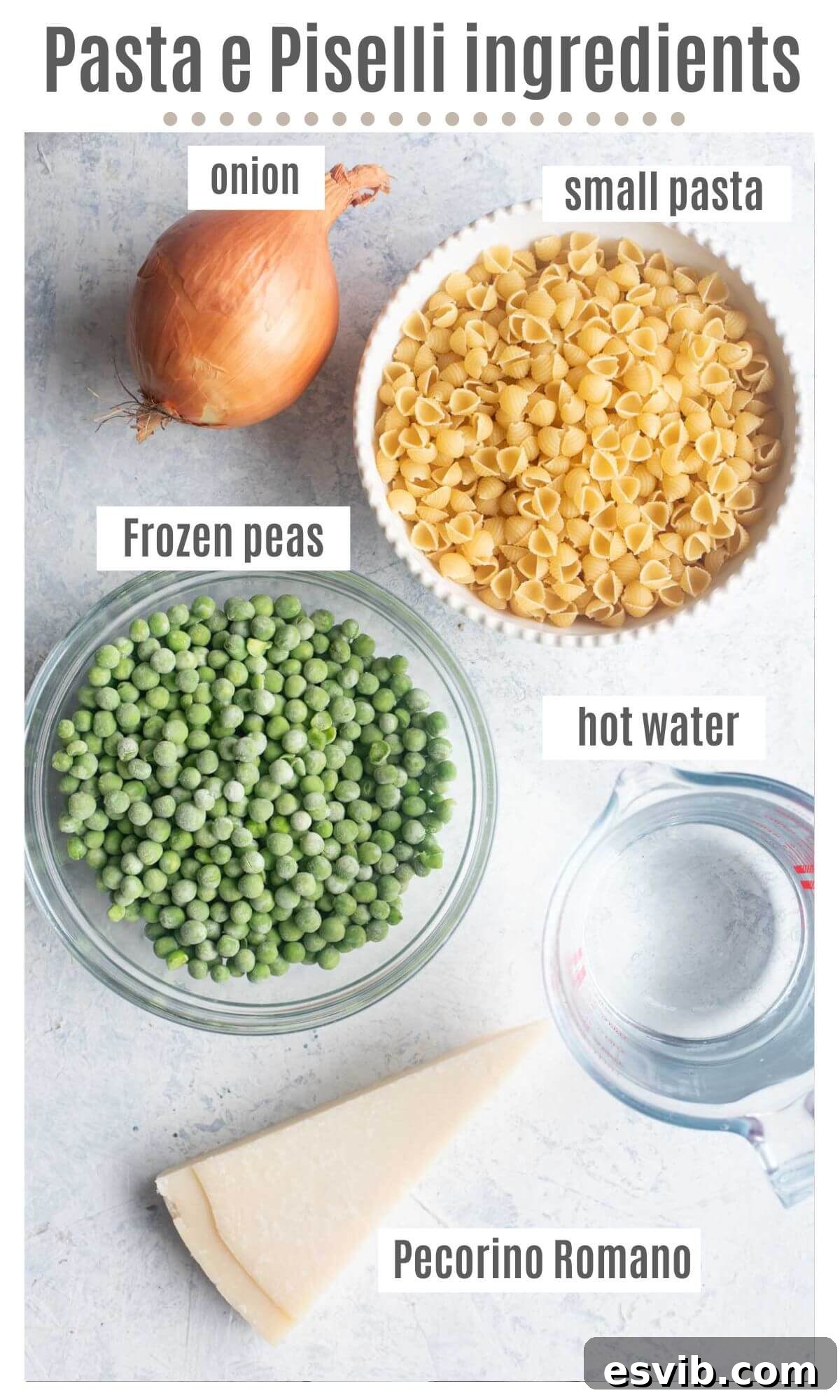
Crafting the perfect Pasta e Piselli begins with selecting high-quality, simple ingredients. Each component plays a vital role in building the dish’s signature flavor and comforting texture. Here’s a closer look at what you’ll need:
Ingredient Deep Dive & Smart Substitutions
- Frozen Peas – The Year-Round Star: While fresh peas are wonderful when in season, frozen peas are a fantastic and equally delicious alternative. They are often picked and frozen at their peak freshness, preserving their sweetness and nutrients. Plus, they are incredibly convenient and significantly more cost-effective. No need to thaw them before cooking; they go straight into the pan!
- Small Pasta Shapes – The Perfect Pairing: The key to Pasta e Piselli’s charm is a small pasta shape that harmonizes with the size of the peas. Traditional choices include Ditali, Ditalini, or Margheritini. These small shapes cook quickly and absorb the creamy sauce beautifully. Feel free to experiment with other small pasta varieties like orecchiette, stelline (star-shaped pasta), or even broken spaghetti, as long as they are bite-sized. For a gluten-free option, ensure you choose a small gluten-free pasta that holds its shape well.
- Hot Water – The Flavor Extractor: Starting with hot water, preferably boiled just before you begin cooking, significantly speeds up the cooking process. Using cold water is acceptable, but it will extend the total cooking time. The water also helps to create the starchy, creamy consistency as the pasta cooks directly in the sauce, releasing its starches. Some variations might use vegetable broth for added depth, but we find water perfectly highlights the natural pea and cheese flavors.
- Pecorino Romano Cheese – The Salty Soul: This sharp, salty sheep’s milk cheese is a non-negotiable for authentic Pasta e Piselli. Its robust flavor stands up wonderfully to the sweetness of the peas. Always opt for freshly grated Pecorino Romano for the best taste and texture; pre-grated cheeses often contain anti-caking agents that can affect melt and flavor. If Pecorino Romano is unavailable, a good quality Parmigiano Reggiano can be used as a substitute, though it will offer a milder, nuttier profile.
- Olive Oil – The Foundation: Extra virgin olive oil is crucial for sautéing the onion and forms the aromatic base of the dish. Choose a good quality olive oil for optimal flavor.
- Onion – The Aromatic Start: A finely chopped onion provides a subtle sweetness and aromatic foundation to the dish. Sautéing it gently until translucent ensures a smooth flavor without any harshness.
- Salt and Freshly Ground Black Pepper – The Enhancers: Simple seasonings are all that’s needed to bring out the best in the ingredients. Adjust to taste, remembering that Pecorino Romano is already quite salty.
Step-by-Step Guide to Crafting Creamy Pasta e Piselli
Follow these straightforward steps to create a truly comforting and authentic Pasta e Piselli. The process is designed for ease and efficiency, ensuring a delicious meal every time.
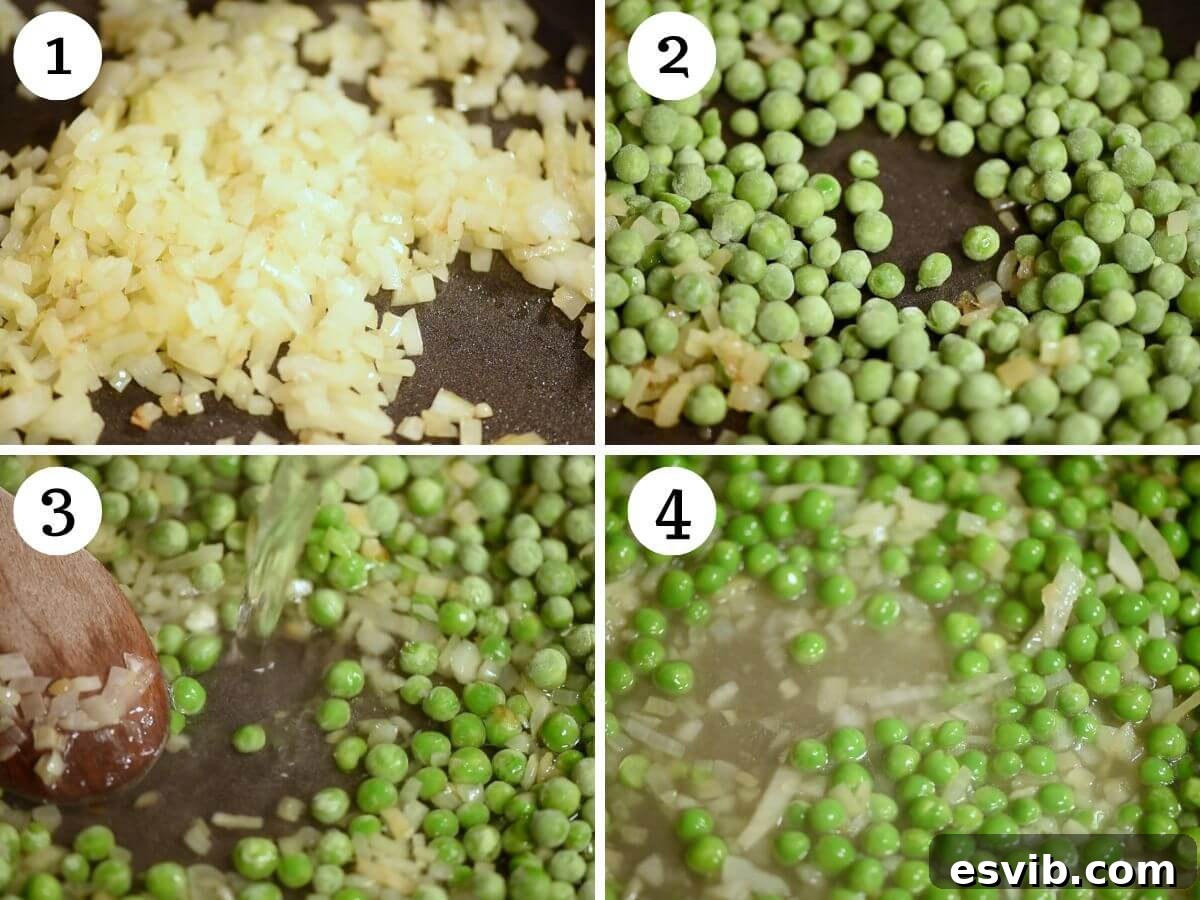
Step 1: Build the Flavor Base. Begin by adding 2 tablespoons of good quality olive oil to a large, deep pan or pot over medium heat. Add the finely chopped onion and sauté gently. Stir occasionally, allowing the onion to soften and become translucent without browning. This process usually takes about 5-7 minutes and is crucial for creating a sweet, aromatic foundation for your dish (photo 1).
Step 2: Cook the Peas. Once the onion is soft, add the frozen peas directly to the pan. Pour in approximately 200ml (3/4 cup) of hot water. Bring the mixture to a gentle simmer and cook for 1-2 minutes, just until the peas are tender and bright green. This quick simmer helps to release their natural sweetness and prepares them for the next step (photos 2-4).
Step 3: Create the Creamy Pea Puree. Remove just over half of the cooked peas from the pan and transfer them to a separate bowl. Add a small splash of additional water (about 1-2 tablespoons) to the peas in the bowl. Using an immersion blender, blitz the peas until they form a smooth, vibrant puree. This step is key to achieving the dish’s characteristic creamy texture without the need for actual cream. Return the pea puree back into the pan with the remaining whole peas (photos 5-7). If you don’t have an immersion blender, a regular blender or food processor will work, though you may need to add a little more water to help it blend smoothly.
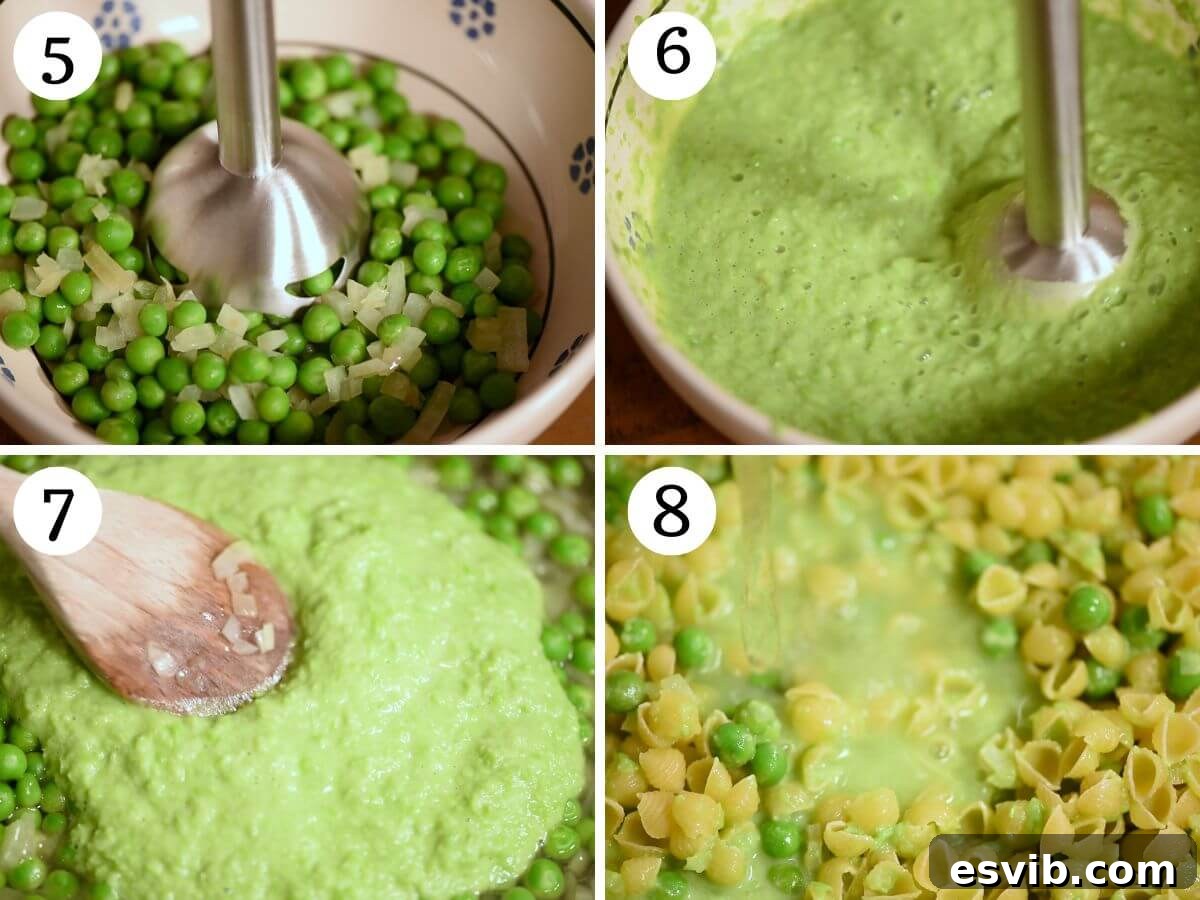
Step 4: Cook the Pasta. Add the small pasta shapes to the pan along with the remaining hot water and a generous pinch of salt and freshly ground black pepper. Stir well to combine all ingredients. Bring the mixture back to a simmer and cook, stirring frequently, until the pasta is al dente (cooked through but still firm to the bite). The pasta will cook directly in the pea mixture, absorbing the flavors and releasing its starches to thicken the sauce naturally. The sauce should develop a thick and creamy consistency. If at any point it becomes too thick, simply loosen it with an additional splash of hot water until it reaches your desired texture (photos 8 and 9).
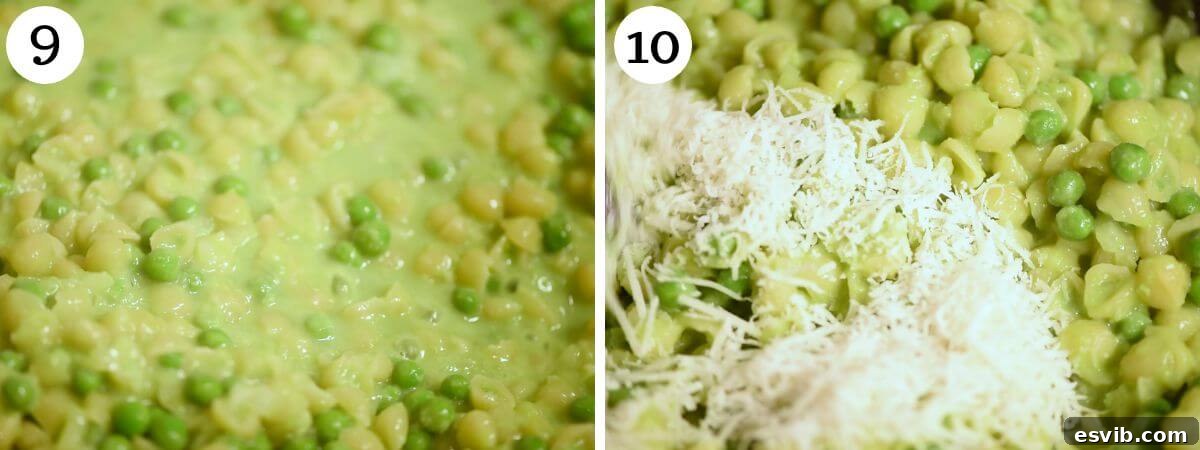
Step 5: Finish and Serve. Once the pasta is perfectly al dente and the sauce is creamy, turn off the heat. Stir in the freshly grated Pecorino Romano cheese until it melts into the sauce, creating an even richer and more luxurious finish. Taste and adjust seasoning if needed. Serve immediately in warm bowls, perhaps with an extra sprinkle of Pecorino Romano and a drizzle of good olive oil for garnish (photo 10).
Expert Tips & Frequently Asked Questions for Pasta e Piselli
Mastering Pasta e Piselli is easy with a few key insights. Here are our top tips and answers to common questions to ensure your dish is perfect every time.
- Choosing the Right Pasta Shape: The harmony of this dish hinges on using a small pasta shape. Opt for varieties like ditalini, margheritini, or even small elbow macaroni. The goal is for the pasta to be roughly the same size as the peas, ensuring a balanced bite and even distribution in the creamy sauce.
- Achieving Your Preferred Pasta Consistency: Pasta e Piselli is wonderfully versatile in terms of texture. You can enjoy it on the looser, more soupy side, perfect for spooning, or as a thicker, saucier dish where the pasta is heavily coated. It’s incredibly easy to adjust: simply add more hot water (or vegetable broth for added richness) a splash at a time until you reach your desired consistency. Remember, it will thicken as it cools, so aim for slightly looser than you think is ideal.
- Blending Techniques for Maximum Creaminess: An immersion blender is your best friend for quickly pureeing a portion of the peas directly in the pan, saving on cleanup. If you don’t have one, a regular upright blender or food processor works just as well. You might need to transfer the peas (and a bit more liquid) to the blender and then return the smooth puree to the pan. Blending helps create a naturally creamy sauce without any added dairy cream.
- Exciting Variations (While Honoring Simplicity): While the classic version is utterly perfect in its simplicity, there are a few thoughtful additions you can explore if you wish to personalize it.
- Garlic: A clove or two of minced garlic, sautéed with the onion, can add an extra layer of aroma and flavor.
- Pancetta or Guanciale: For meat-lovers, a small amount of diced pancetta or guanciale, rendered crispy before sautéing the onion, introduces a wonderful savory depth and texture.
- Fresh Herbs: A sprinkle of fresh mint or parsley at the end can brighten the flavors.
- Lemon Zest: A touch of finely grated lemon zest can add a delightful citrusy note, enhancing the freshness of the peas.
- Vegetable Broth: For a richer, more umami flavor profile, consider replacing some or all of the hot water with good quality vegetable broth.
However, for a truly authentic and minimalist experience, stick to the core ingredients – you won’t be disappointed!
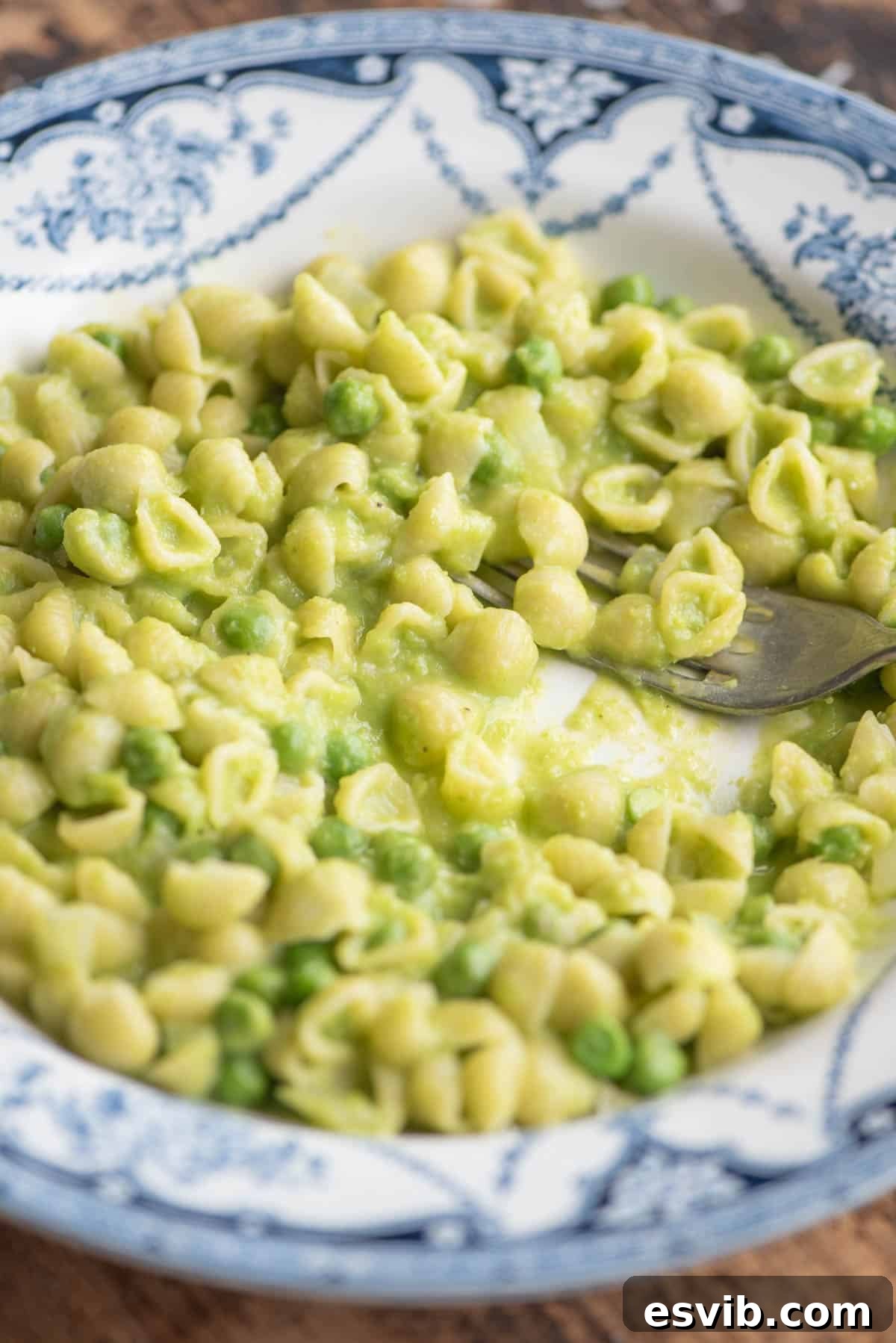
Pasta e Piselli is best enjoyed immediately upon cooking. As it cools, the pasta continues to absorb the sauce, causing it to thicken considerably. While leftovers can be stored in an airtight container in the refrigerator for 1-2 days, the texture will become much denser. When reheating, you’ll likely need to add a splash of hot water or broth to loosen it up and restore some of its original creaminess. Freezing is not recommended as the pasta can become mushy upon thawing.
Expand Your Palate: More Delicious Pasta Recipes to Try
If you’ve fallen in love with the simple elegance of Pasta e Piselli, you’ll surely enjoy exploring other Italian pasta dishes that celebrate fresh ingredients and comforting flavors. Here are a few more recipes that bring the taste of Italy to your kitchen:
More Comforting Pasta Dishes
Pasta
Pasta e Ceci (Pasta with Chickpeas)
Soups
Pasta Fagioli Soup – Pasta & Beans
Pasta
Creamy Tomato Pasta with Italian Sausage
Pasta
Tortellini alla Panna
We hope you thoroughly enjoy this Pasta e Piselli recipe! If you’ve tried it or any other recipe from our blog, please don’t hesitate to leave a comment below and share your experience. Your feedback is incredibly valuable to us! You can also connect with us on Facebook, Instagram, and Pinterest for more delicious inspiration, or sign up for our Newsletter to receive weekly updates and new recipes directly in your inbox.
Step By Step Photos Above
Most of our recipes come with step by step photos, helpful tips and tricks to make it perfectly first time and even video!
Pasta e Piselli (Pasta and Peas)
By Emily
10 minutes
20 minutes
30 minutes
4
servings
Pin
Ingredients
-
▢
1 large onion, finely chopped -
▢
2 cups (300g) frozen peas , (can also use fresh) -
▢
2 cups (250g) small pasta , such as ditalini or Margheritini -
▢
3 cups (700ml) hot water -
▢
½ heaped cup (50g) Pecorino Romano,, finely grated -
▢
Salt and pepper -
▢
2 tablespoons olive oil
Instructions
-
Add 2 tablespoons of olive oil to a large pan on a medium heat and add the onion. Saute the onion gently until soft and translucent.
-
Add the peas with about 200ml (3/4 cup) water and simmer for 1-2 minutes until the peas are cooked through.
-
Remove just over half of the peas to a bowl and add a splash of water. Blitz until smooth with an immersion blender then add it back to the pan.
-
Add the pasta with the remaining water and a good pinch of salt and pepper. Bring to a simmer and stir the pasta until al dente. The sauce should have a thick and creamy consistency but if it’s too thick you can loosen it with another splash of water.
-
Turn off the heat and stir in the grated Pecorino cheese and serve.
Notes
- Use a small pasta shape – it doesn’t matter what small shape you use but aim for one that’s similar size to the peas.
- Pasta consistency – you can serve Pasta e Piselli more on the soupy side or thick and saucy. It’s really easy to adjust the consistency by adding more water to your liking.
- Blending – I find it really easy to use an immersion blender but a regular blender will work just fine you just may need to add a little more water.
- Variations – I don’t like tinkering with this recipe because I absolutely love it just as it is but some like to add pancetta and/or garlic to their pasta and peas.
- Storage – Although Pasta e Piselli will keep in the fridge for 1-2 days it’s best served immediately as it thickens up as it cools. I don’t recommend freezing.
Helpful Info for All Recipes
- I always use extra virgin olive oil in all of my recipes unless stated otherwise.
- When I use canned or jarred tomatoes of any kind I always use Cirio or Mutti brands for the best results and flavour.
- All vegetables are medium sized unless stated otherwise.
- All recipes are tested and developed using a fan (convection) oven.
- Find out more about how nutrition is calculated.
- Check out our must have Italian Pantry Staples.
- You can also find all our Essential Kitchen Tools for Italian Cooking.
Nutrition
Calories:
414kcal
|
Carbohydrates:
60g
|
Protein:
16g
|
Fat:
12g
|
Saturated Fat:
3g
|
Polyunsaturated Fat:
1g
|
Monounsaturated Fat:
6g
|
Cholesterol:
13mg
|
Sodium:
167mg
|
Potassium:
373mg
|
Fiber:
7g
|
Sugar:
7g
|
Vitamin A:
626IU
|
Vitamin C:
32mg
|
Calcium:
177mg
|
Iron:
2mg
Nutrition information is automatically calculated, so should only be used as an approximation.
Did you try this recipe?
Leave a comment below!