
Authentic Sicilian Beef Involtini: A Palermitan Culinary Journey
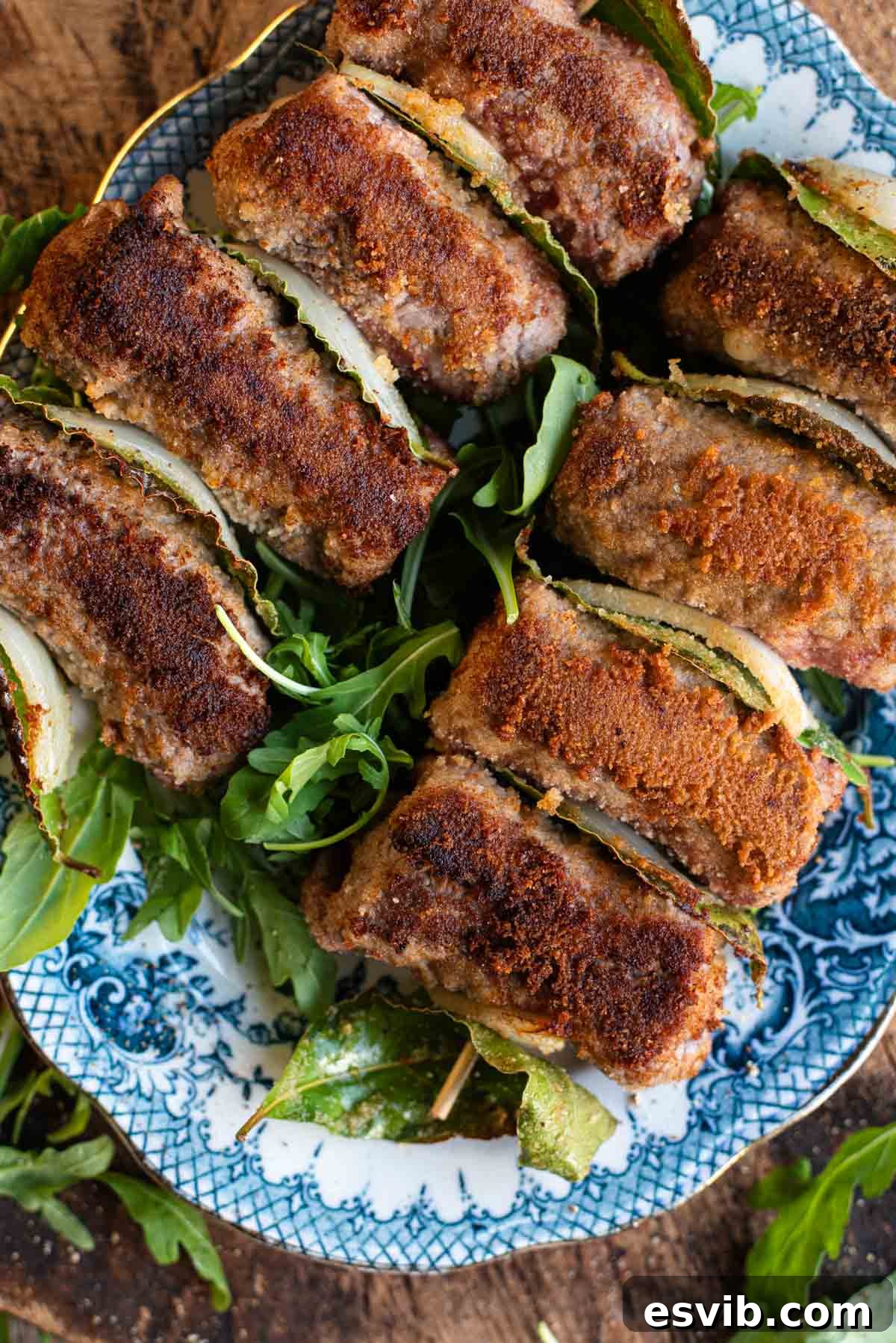
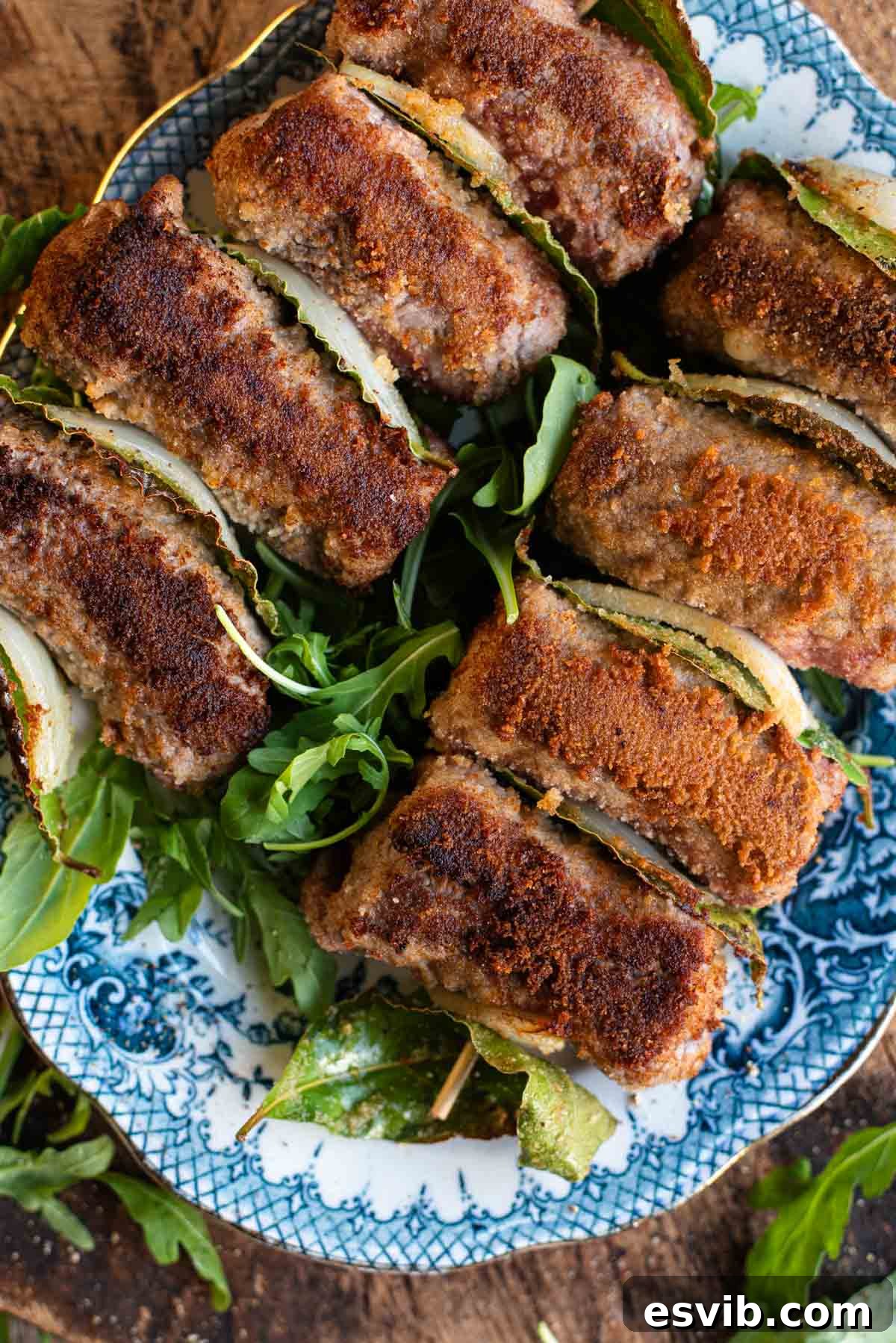
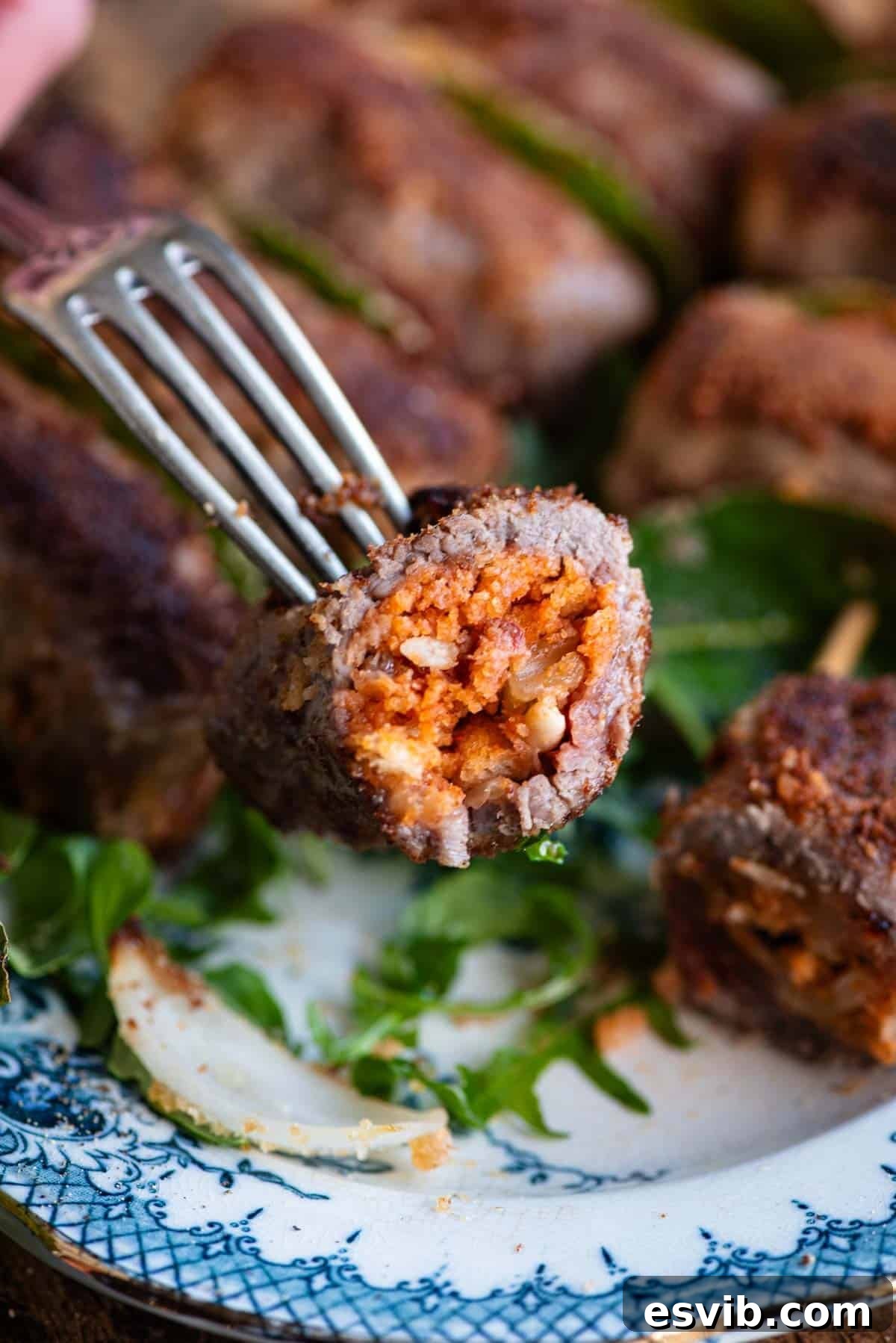
Embark on a culinary adventure to the heart of Sicily with our irresistible recipe for Sicilian Beef Involtini, also known as Involtini alla Palermitana. These savory beef rolls are a cherished staple of Palermitan cuisine, offering an exquisite blend of vibrant flavors and satisfying textures. Thin slices of tender beef are meticulously stuffed with a rich, aromatic filling of toasted breadcrumbs, sweet sun-dried tomatoes, juicy raisins, crunchy pine nuts, and sharp, tangy Caciocavallo cheese. Each involtino is then dusted in fine breadcrumbs and pan-fried to golden perfection, boasting a gloriously crispy exterior and a wonderfully moist, intensely flavorful interior. Served on skewers with fragrant fresh bay leaves and sweet slices of onion, this dish promises to transport your taste buds straight to the sunny, bustling streets of Palermo. Perfect as a show-stopping main course, these involtini pair beautifully with a vibrant vegetable side or a crisp, refreshing salad.
The Allure of Sicilian Cuisine: From Palermo’s Butcher Shops to Your Table
My recent journey through the captivating island of Sicily was, without exaggeration, a journey through pure food heaven. Every corner turned, every market explored, and every trattoria visited offered a new gastronomic revelation. I reveled in the irresistible crunch of classic arancini, savored the delicate sweetness of cannoli made by Nuns, delighted in the savory simplicity of Panelle (chickpea fritters), and couldn’t get enough of the comforting layers of Parmigiana di Melanzane. Yet, amidst this incredible tapestry of flavors, one particular delicacy shone brighter than the rest and firmly cemented its place in my culinary heart: the glorious Sicilian Involtini.
The bustling, vibrant markets of Palermo, in particular, were an absolute spectacle. I was captivated by the local butcher’s counters, proudly showcasing an array of about ten different varieties of these small, perfectly formed stuffed beef rolls. Each display was a testament to the island’s rich culinary heritage and the unique regional variations of this beloved dish. During our time there, we eagerly sampled four distinct types, each offering its own charm. However, the “Palermitana” style – the authentic recipe I am thrilled to share with you today – along with a decadent version featuring a cheesy pistachio and mortadella filling, quickly rose to the top as our undeniable favorites.
The moment I tasted these Palermitan involtini, I knew, without a shadow of a doubt, that I had to recreate this extraordinary recipe in my own kitchen. The harmonious blend of textures and the captivating dance of sweet and savory notes were truly beyond delicious. This particular recipe features thinly sliced, tender beef acting as a delicate wrapper for a truly remarkable filling. This stuffing is a symphony of flavors: perfectly toasted breadcrumbs provide a wonderful textural contrast, intensely sweet and savory sun-dried tomatoes add depth, plump, rehydrated raisins introduce a delightful, unexpected hint of fruitiness, crunchy pine nuts contribute a delicate nuttiness, and the semi-hard, slightly piquant Caciocavallo cheese melts beautifully to bind everything together.
What sets these Sicilian Beef Involtini apart further is their traditional presentation and cooking method. Each roll is carefully threaded onto skewers, interspersed with aromatic fresh bay leaves and sweet, succulent slices of onion. As the involtini cook, these additional elements infuse the beef with their distinctive, fragrant aromas, elevating the entire dish. These savory parcels are incredibly versatile, making them ideal for a hearty family dinner, a sophisticated lunch, or an impressive dish for entertaining guests. Whether you serve them with a crisp, peppery salad or a comforting side of roasted vegetables (be sure to check out our recommendations below!), these involtini promise a truly authentic and deeply satisfying taste of Sicilian home cooking. Get ready to indulge in a dish that embodies the very soul of Palermo!
Recipe: Involtini alla Palermitana (Sicilian Beef Involtini)
Prep Time: 40 mins
Cook Time: 25 mins
Total Time: 1 hr 5 mins
Servings: 4 – 6 servings
This comprehensive recipe provides a detailed, step-by-step guide to creating the most incredible Sicilian Beef Involtini right in your own kitchen. Our expert tips and precise instructions are designed to ensure perfect results every single time, even for novice cooks. These authentic Palermitan beef rolls are meticulously prepared, dusted in a delicate layer of breadcrumbs, and then pan-fried until they achieve a gloriously crispy, deeply golden-brown exterior, perfectly contrasting with their tender, juicy, and richly flavored filling. Prepare yourself for an unforgettable dining experience that captures the true essence of Sicilian culinary tradition.
Essential Ingredients for Authentic Sicilian Involtini
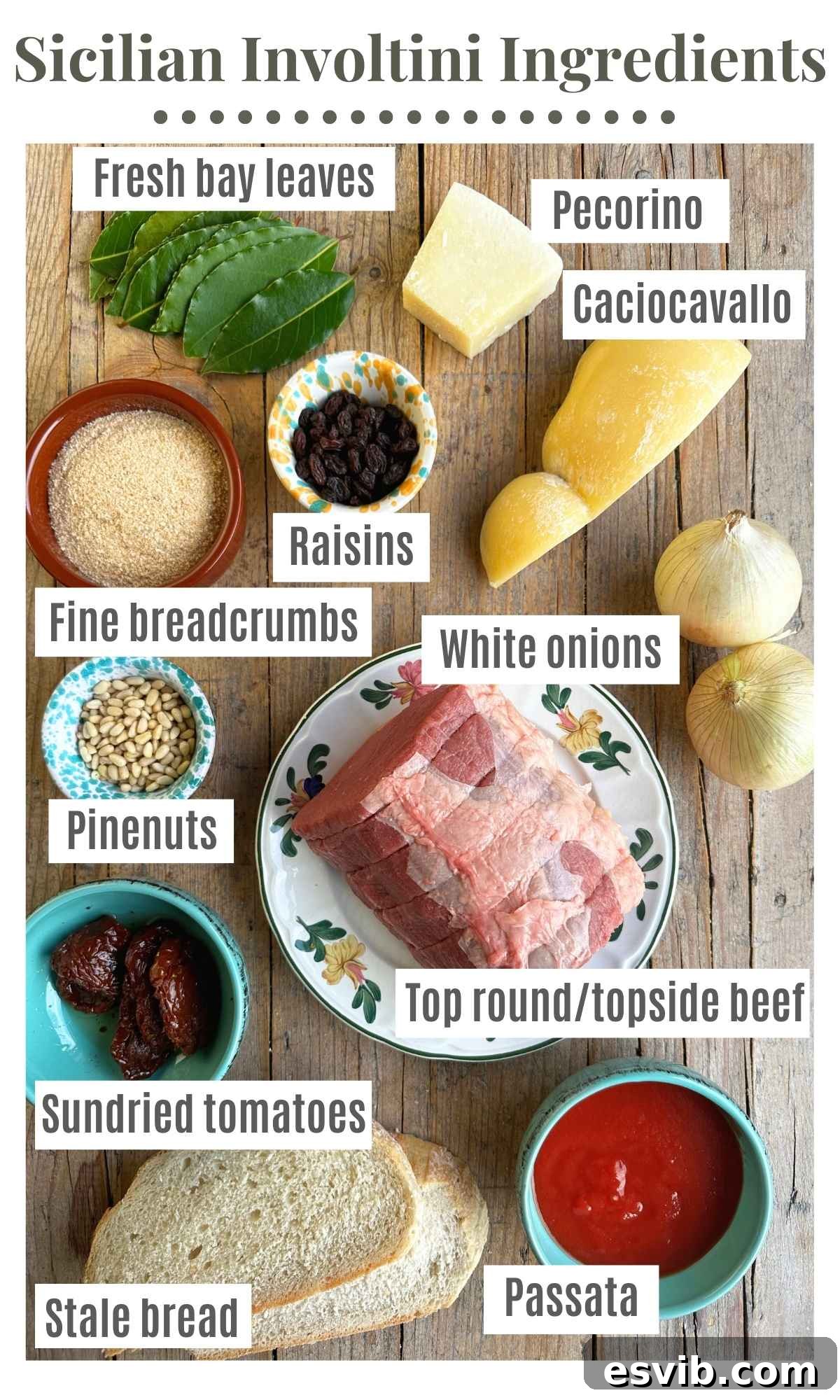
The foundation of truly exceptional Sicilian Beef Involtini lies in the quality and specific selection of its ingredients. Each component plays a vital role in building the unique flavor profile that makes this dish so beloved in Palermo. While we understand that some ingredients might require substitutions, understanding their original purpose will empower you to make informed choices and achieve the most authentic and delicious results possible. Pay close attention to these details, as they collectively contribute to the magic of this traditional Palermitan specialty.
Ingredient Notes and Expert Substitutions for Best Results
- Beef: For the most tender and flavorful involtini, we highly recommend using a whole piece of **beef top round** or **topside**. These cuts are lean but become incredibly succulent when skillfully pounded thin. Ideally, ask your butcher to slice the beef for you into thin, uniform pieces, approximately 1/4 inch (0.6 cm) thick. You’ll need roughly 16 slices in total to accommodate the serving size. If you start with a whole roast, carefully trim away any visible sinew or silverskin, then slice it thinly against the grain. Crucially, each slice must be pounded until it’s about half its original thickness; this not only ensures tenderness but also makes the rolls pliable and easy to work with. For a slightly milder and more traditional flavor profile often found in Italy, high-quality veal can also be used as an excellent alternative.
- Breadcrumbs – The Dual Role for Perfect Texture: This recipe ingeniously employs two distinct types of breadcrumbs, each serving a specific purpose to achieve the optimal texture and crust:
- For the Filling: We strongly advocate for using **stale, crusty bread** (such as day-old Italian sourdough or a rustic baguette) blitzed into coarse breadcrumbs using a food processor. Stale bread, with its reduced moisture content, excels at absorbing the rich, savory flavors from the tomato and onion mixture. This absorption creates a wonderfully moist yet not soggy filling, adding substance and authenticity.
- For Dusting: For the exterior coating, opt for **store-bought fine, unseasoned breadcrumbs**. Their consistent and extremely fine texture ensures an even, delicate coating that adheres beautifully to the beef. When pan-fried, these fine crumbs crisp up into that irresistible golden-brown crust, delivering a satisfying crunch with every bite.
- Caciocavallo Cheese: This magnificent semi-hard, stretched-curd cheese is a true hallmark of southern Italian, and particularly Sicilian, cuisine. It offers a complex flavor profile that is subtly piquant, distinctly nutty, and deeply savory, melting into a creamy consistency within the involtini. If authentic Caciocavallo proves challenging to source in your area, excellent and recommended alternatives include **provolone** (especially a sharp, aged provolone for a more robust flavor), creamy **Fontina**, or even a good quality **Manchego** (though Spanish in origin, its texture and rich, nutty flavor can surprisingly complement this dish effectively).
- Raisins: The inclusion of raisins in a savory beef dish might initially surprise some, but it is a classic and essential Sicilian touch! These little gems provide a delicate, natural sweetness and a pleasant chewiness that beautifully balances the savory richness of the beef and cheese. Soaking them in hot water beforehand is a non-negotiable step; it fully rehydrates them, making them plump, juicy, and even more succulent, enhancing their contribution to the filling’s overall complexity.
- Sun-Dried Tomatoes: These concentrated powerhouses of flavor deliver an intense burst of sweet, tangy, and umami depth to the involtini filling. For the best flavor and texture, select oil-packed sun-dried tomatoes, ensuring you drain them thoroughly before finely chopping them. Their robust taste is crucial for this recipe.
- Pine Nuts: A small but mighty addition, toasted pine nuts contribute a delicate, buttery crunch and a distinct, aromatic nuttiness. Their presence elevates the filling’s texture and complements the other rich ingredients perfectly.
- Fresh Bay Leaves: For truly authentic flavor, fresh bay leaves are indispensable. They infuse the involtini with a subtle, complex, and aromatic herbal note as the dish cooks, distinguishing it from versions made with dried leaves. Fresh bay leaves are also pliable enough to be threaded onto skewers, which is essential for the traditional presentation. Dried bay leaves, being brittle and significantly less fragrant, are not suitable for skewering and will not impart the same depth of flavor. If fresh bay leaves are absolutely unavailable, you can omit them or, if baking, carefully tuck a few dried leaves among the involtini on the baking tray (though expect a much milder aroma).
- Passata (Tomato Purée US): This smooth, finely sieved tomato purée forms a light yet incredibly flavorful base for the breadcrumb mixture. It ensures the filling remains moist and rich without becoming overly saucy or overpowering the delicate balance of the other ingredients.
- Pecorino Cheese: A cornerstone of Italian cooking, this sharp, salty sheep’s milk cheese adds another layer of complexity, piquant flavor, and savory depth to the filling. When finely grated, it distributes evenly throughout the mixture, ensuring a burst of intense flavor in every bite.
- Extra Virgin Olive Oil: As with all exceptional Italian cuisine, the quality of your olive oil is paramount. Use a high-quality extra virgin olive oil for both sautéing the onion and lightly brushing the involtini before breading. Its fruity, robust notes are essential for enhancing the overall flavor profile of the dish.
Kitchen Equipment Needed
- 4 Skewers (metal or wooden, approximately 8-10 inches long)
- Food Processor (for making breadcrumbs)
- Large Mixing Bowl (for the filling)
- Medium Sauté Pan (for onion and tomato base)
- Large Skillet or Frying Pan (for pan-frying involtini)
- Meat Mallet (or a heavy rolling pin)
- Plastic wrap or parchment paper (for pounding beef)
Full Ingredient List
- 900g (2 lbs) Beef top round or topside, meticulously cut into 16 thin slices (approximately 1/4 inch / 0.6 cm thick) – Alternatively, high-quality veal can be used for a slightly different flavor.
- 2 white onions: 1 finely chopped for the filling, and 1 cut into thin wedges for skewering.
- 200g (7oz) stale, crusty bread, cut into slices (to be processed into coarse breadcrumbs for the filling).
- 60g (2oz) Caciocavallo cheese, precisely cut into small cubes – Provolone is an excellent substitute if Caciocavallo is unavailable.
- 140g (1/2 cup) Passata (smooth tomato purée US), for the savory base.
- 40g (1/2 cup) Pecorino cheese, finely grated, for a salty, pungent kick.
- 30g (1/4 cup) raisins, to be soaked in hot/warm water until plump.
- 30g (3 tablespoons) pine nuts, for a delicate crunch and nutty flavor.
- 50g sun-dried tomatoes (approximately 5-6 tomatoes), drained if oil-packed, and cut into thin strips.
- Salt and freshly ground black pepper, generously to taste, to season each component.
- Fine breadcrumbs, specifically for dusting the exterior of the involtini before frying.
- 20 fresh bay leaves (see notes above regarding fresh vs. dried leaves).
- High-quality extra virgin olive oil, for sautéing and cooking.
Step-by-Step Guide to Crafting Perfect Sicilian Beef Involtini
This detailed guide provides all the instructions and expert tips you need to prepare exquisite Sicilian Beef Involtini, ensuring a successful and delicious outcome with every step.
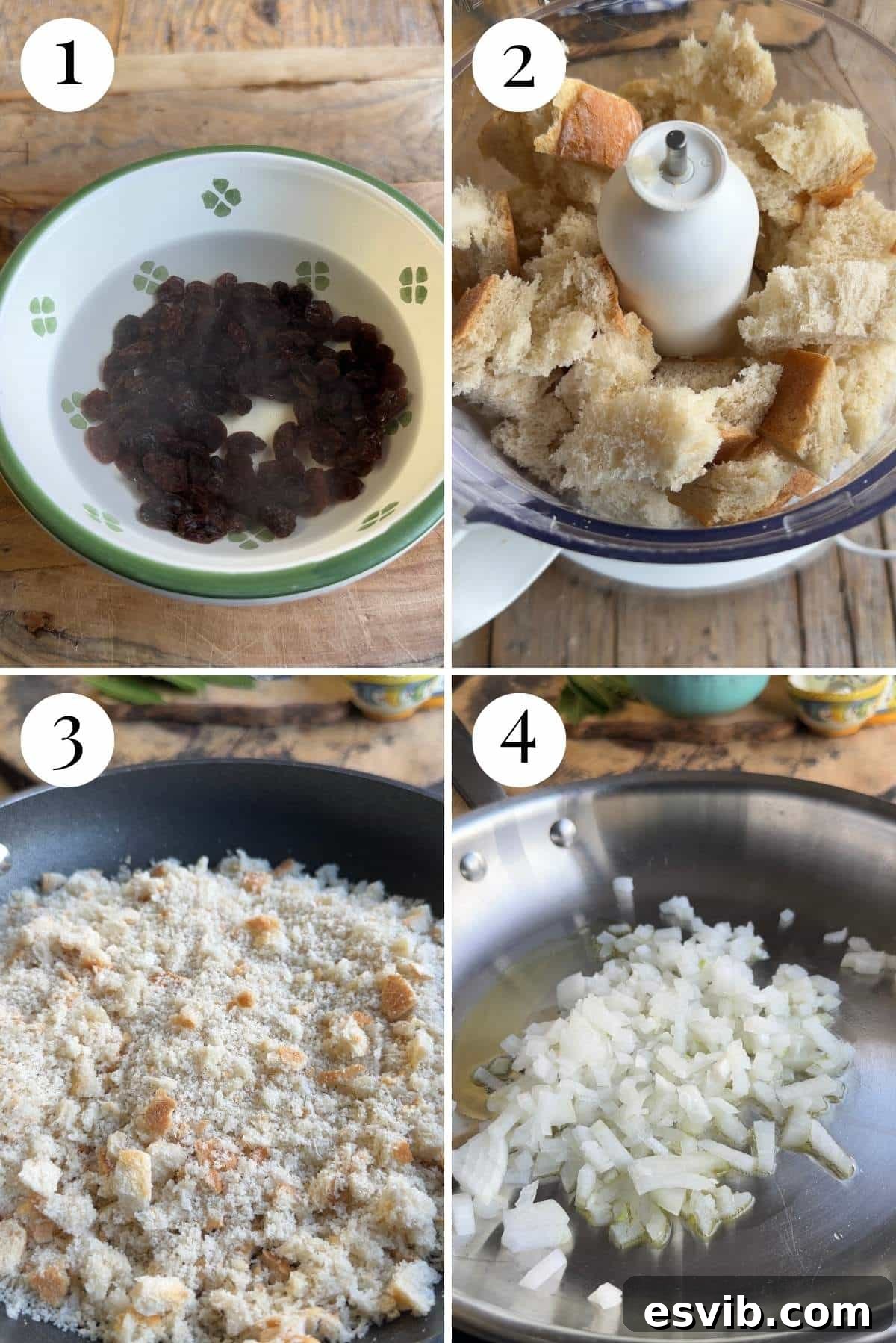
- Rehydrate the Raisins: Begin by placing your measured raisins in a small heatproof bowl. Pour enough hot or warm water over them to fully submerge. Allow them to soak for a minimum of 10-15 minutes while you proceed with the initial preparation steps. This crucial step ensures the raisins become plump and juicy, contributing a delightful, subtle sweetness and tender texture to the filling.
- Prepare and Toast Filling Breadcrumbs: Take your stale bread slices and tear them into manageable pieces. Place these pieces into a food processor and pulse until fine breadcrumbs form. Transfer these freshly made breadcrumbs to a large, dry skillet or frying pan. Toast them over medium heat, stirring continuously, until they achieve a light golden hue and become wonderfully crispy. This toasting process significantly deepens their flavor and texture, ensuring the filling is robust and never soggy. Once toasted, immediately remove them from the pan and set them aside to cool completely.
- Sauté Onion and Develop the Tomato Base: Finely chop one of your white onions. In a medium pan or skillet, heat 1-2 tablespoons of extra virgin olive oil over medium heat until it shimmers. Add the finely chopped onion and sauté gently, stirring occasionally, until it becomes soft, translucent, and fragrant – typically about 5-7 minutes. Be careful not to let it brown too much. Next, stir in the Passata (tomato purée) and season generously with a pinch of salt and freshly ground black pepper. Allow this mixture to gently simmer for another 2-3 minutes, stirring to combine the flavors. This creates a savory, aromatic base for your filling. Remove the pan from the heat and set aside to cool slightly.
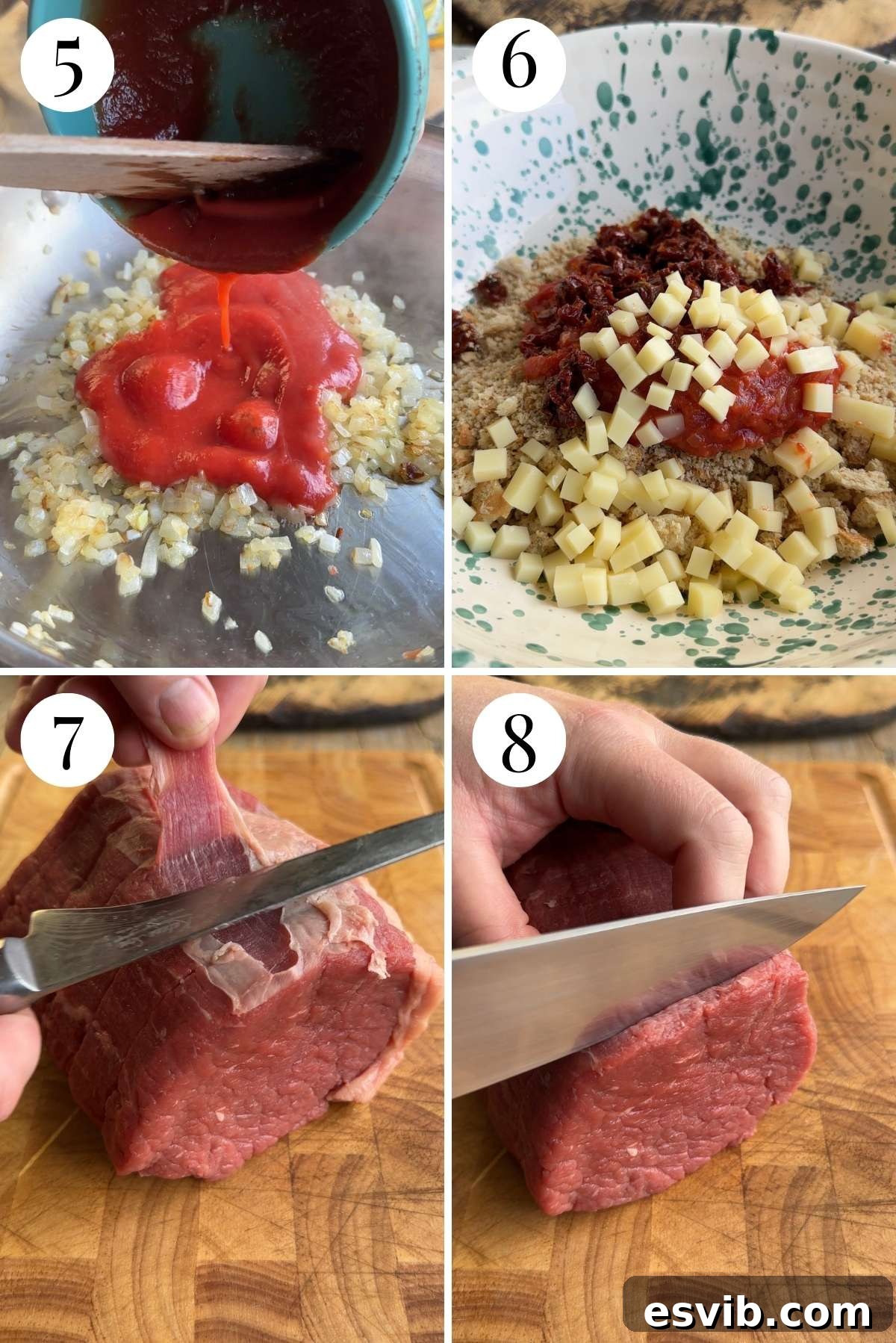
- Assemble the Flavorful Involtini Filling: In a large mixing bowl, combine the cooled toasted breadcrumbs with the sautéed tomato and onion mixture. To this, add the finely chopped sun-dried tomatoes, the fragrant pine nuts, the cubed Caciocavallo cheese (or provolone), and the finely grated Pecorino cheese. Now, drain the soaked raisins thoroughly, making sure to squeeze out any excess liquid, and add them to the bowl. Mix all these ingredients vigorously, ideally with your hands, until they are thoroughly combined and evenly distributed throughout the mixture. The filling should be cohesive enough to hold its shape when pressed.
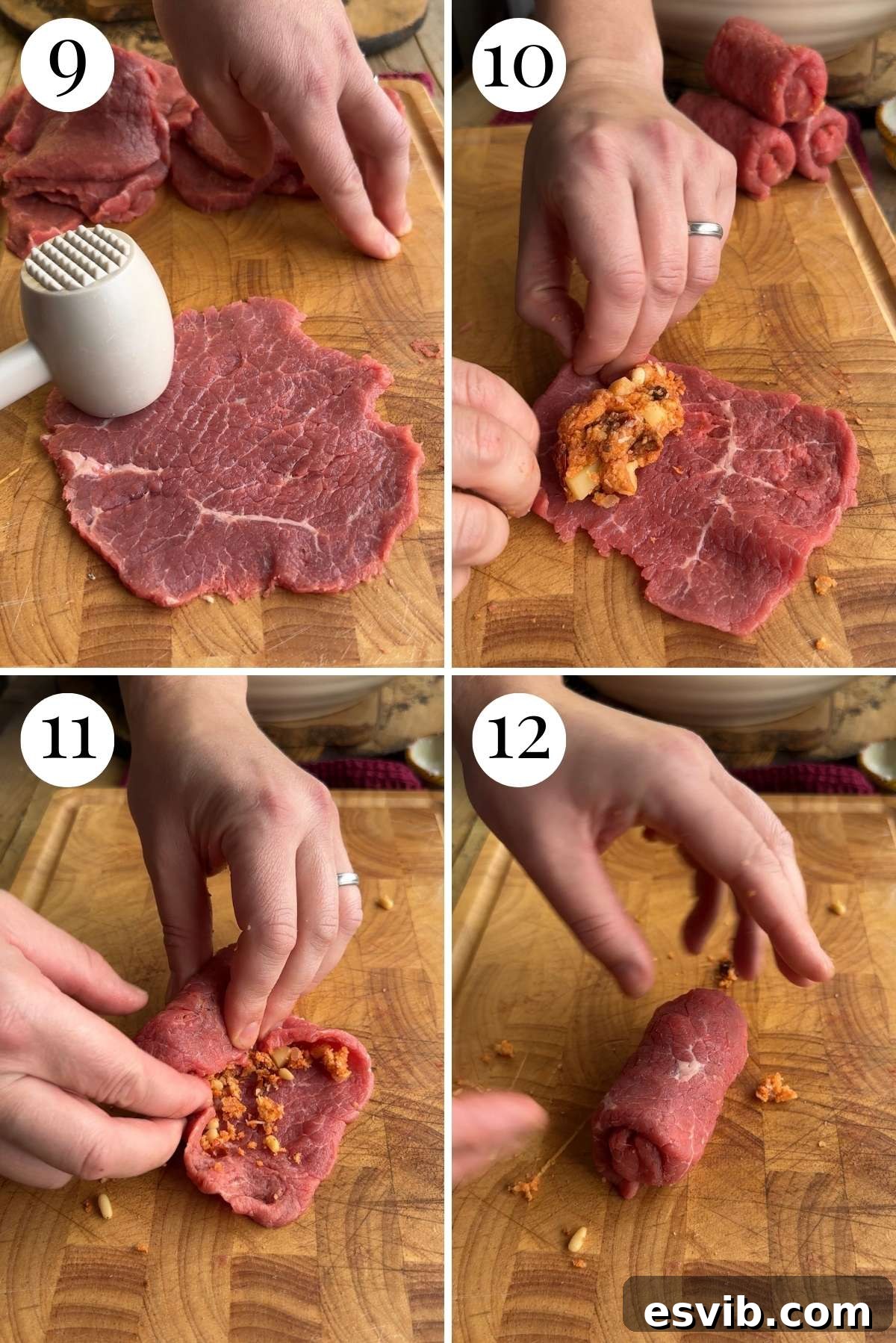
- Prepare and Pound the Beef Slices: If your beef is not already thinly sliced by your butcher, meticulously trim any visible sinew or silverskin. Carefully cut the beef against the grain into slices that are approximately 1/4 inch (0.6 cm) thick. For optimal tenderness and ease of rolling, place each beef slice between two pieces of plastic wrap or parchment paper. Using a meat mallet or the flat side of a heavy rolling pin, gently but firmly pound the slices until they are about half their original thickness. Aim for uniform slices, each roughly 5-6 inches (12-15 cm) long, creating a tender, pliable canvas for your involtini.
- Stuff and Roll Each Involtino: Take about 2 tablespoons of the prepared filling and, by gently squeezing it in your hand, form it into a compact, croquette-like shape. Place this portion of filling at one end of a pounded beef slice. Carefully begin to roll the beef slice tightly over the filling, ensuring you tuck in the sides as you go. This technique fully encloses the filling, creating a neat, cylindrical involtino that will maintain its shape during cooking. Repeat this stuffing and rolling process with the remaining beef slices and filling until all 16 involtini are perfectly formed.
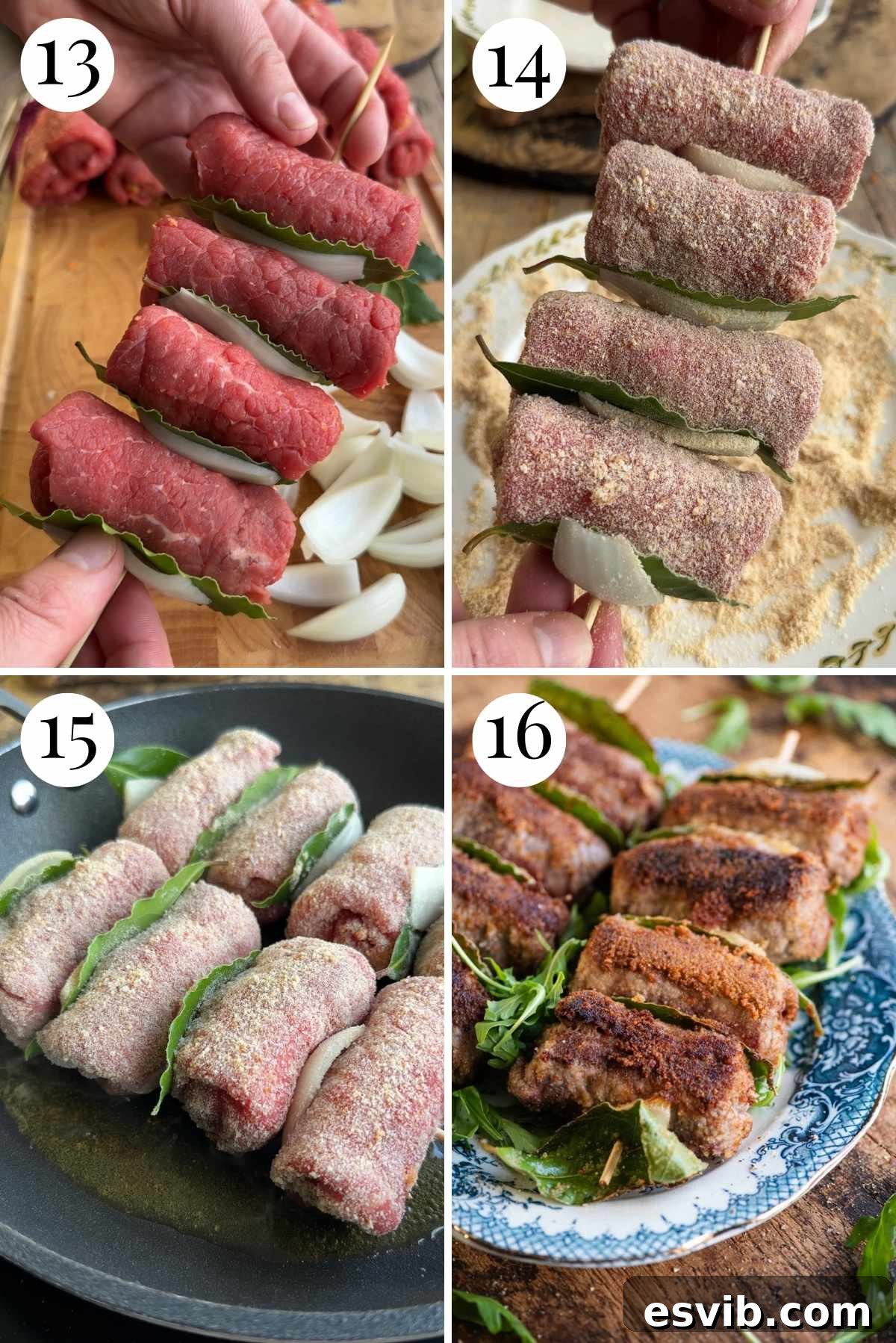
- Skewer the Involtini: Prepare your four skewers. Carefully thread four of the prepared involtini onto each skewer. For an authentic presentation and added flavor, place one fresh bay leaf and one thin slice (wedge) of the remaining white onion in between each involtino on the skewer. The bay leaves will infuse a subtle, aromatic herbal note, while the onion slices will gently caramelize, adding depth and helping to keep the beef moist during cooking.
- Crumb and Pan-Fry to Golden Perfection: Lightly brush each skewered involtino with a thin, even layer of extra virgin olive oil. This step is crucial as it helps the breadcrumbs adhere and contributes to a richer, crispier crust. Next, evenly dust the involtini in fine, store-bought breadcrumbs, ensuring they are fully and uniformly coated. Heat 2-3 tablespoons of olive oil in a large skillet or frying pan over medium heat until the oil is shimmering hot. Carefully place the involtini skewers in the hot pan and fry them for approximately 4 minutes on each side, turning them gently to ensure even browning. To achieve an irresistibly crispy crust all around, stand the skewers on their sides and brown the ends of the involtini for about 30-60 seconds each. Once they are golden-brown, crispy, and cooked through, remove them from the pan and serve immediately to enjoy their exquisite flavor and texture.
- Alternative Cooking Method (Baking): If you prefer a slightly lighter preparation or wish to bake your involtini, you can still achieve fantastic results. First, briefly brown the involtini in a pan for 1-2 minutes on each side. This step is important to develop some initial color and crispness. Then, carefully transfer them to a baking tray and bake in a pre-heated oven at 180°C (350°F) for approximately 10 minutes, or until they are fully cooked through and wonderfully tender. This method offers a delicious, slightly less indulgent alternative while still delivering great flavor.
Expert Tips and Recipe Notes for Success
To ensure your Sicilian Beef Involtini turn out perfectly every time and to address common questions, here are some invaluable tips and notes:
- Note on Bay Leaves – Fresh is Best: For involtini threaded on skewers, fresh bay leaves are an absolute must. Their natural flexibility allows them to be easily pierced and secured on the skewers, and their vibrant, aromatic oils infuse the beef beautifully during cooking. Dried bay leaves, in contrast, are brittle and will crumble when pierced; they also possess a significantly milder fragrance. If fresh bay leaves are genuinely unavailable, you can choose to omit them from the skewers entirely. Alternatively, if you are using the baking method, you could tuck a few dried bay leaves around the involtini on the baking tray, though the flavor contribution will be much more subtle.
- Cheese Alternatives for Caciocavallo: While Caciocavallo cheese is traditional and contributes a unique, slightly piquant flavor, it might be challenging to find depending on your location. Excellent alternatives that offer a similar semi-hard texture and complementary flavor profile include good quality **provolone** (especially a sharp or aged variety for more character), mild and creamy **Fontina**, or even the distinctively nutty Spanish **Manchego** cheese. Choose a cheese that melts well and has a robust, savory flavor.
- Make-Ahead Preparation: These Sicilian Beef Involtini are a fantastic dish for advance preparation, making them ideal for entertaining or busy weeknights! You can prepare and meticulously roll the involtini up to 1-2 days ahead of time. Once formed, arrange them neatly in an airtight container or on a platter covered with plastic wrap, and store them in the refrigerator. It is crucial, however, to **not dust them in breadcrumbs** until just before you are ready to cook them, as the breading can become soggy. Before frying or baking, allow the involtini to sit at room temperature for about 15-20 minutes for more even cooking.
- Storing and Reheating Leftovers: Any leftover cooked involtini will keep exceptionally well in an airtight container in the refrigerator for 2-3 days. To reheat them while best preserving their crispy exterior, place them on a baking tray and warm them in a preheated oven at 190°C (375°F) for approximately 10 minutes, or until they are thoroughly heated through. This method is superior to microwave reheating, which can make the breading soft.
- Achieving the Perfect Beef Thickness: The key to tender, easy-to-eat involtini lies in uniformly thin beef slices. Pounding the beef to about half its original thickness ensures it cooks quickly, remains incredibly tender, and allows for a pleasant bite. Aim for consistent thinness across all slices to guarantee even cooking and a harmonious texture in every roll.
- Don’t Skimp on Quality Olive Oil: As is often the case with authentic Italian recipes, the quality of your extra virgin olive oil significantly impacts the final taste. Invest in a good quality, flavorful olive oil for both sautéing the onion base and lightly brushing the involtini before they are coated in breadcrumbs and pan-fried. Its fruity, nuanced notes will elevate the entire dish.
Delicious Sides to Complement Your Sicilian Involtini
Choosing the perfect accompaniment can transform your Sicilian Beef Involtini meal into an unforgettable culinary experience. The rich, savory flavors of the involtini call for sides that offer balance, freshness, and complementary textures. Here are some fantastic side dish ideas, ranging from rustic Italian classics to light, vibrant salads, designed to perfectly enhance your main course:
- Hearty & Classic Italian Sides:
- Italian Roast Potatoes: A perennial favorite, Italian roast potatoes are typically seasoned with fragrant herbs like rosemary and garlic, then roasted until they achieve a gloriously golden, crispy exterior and a wonderfully fluffy interior. Their robust flavor and satisfying texture make them an ideal and comforting pairing, creating a complete and deeply satisfying meal alongside your beef rolls.
- Polenta: Creamy polenta, either plain or enriched with a touch of butter and Parmesan, offers a smooth, comforting base that beautifully soaks up any pan juices from the involtini.
- Risotto al Funghi (Mushroom Risotto): For a more indulgent meal, a rich and earthy mushroom risotto provides a luxurious and flavorful side, perfectly complementing the beef.
- Fresh & Vibrant Green Vegetables: To skillfully balance the inherent richness of the involtini, a simple yet flavorful green vegetable is an absolute must.
- Green Beans with Tomato Sauce: Fresh Italian green beans, gently sautéed and then tossed with a light, flavorful tomato sauce, offer a delightful touch of acidity and vibrant freshness that cuts through the richness.
- Sautéed Broccolini: Tender-crisp sautéed broccolini, perhaps lightly seasoned with chili flakes and garlic, provides a pleasantly bitter contrast and a lovely textural bite that works beautifully.
- Garlic Spinach: A quick sauté of fresh spinach with aromatic garlic and a squeeze of fresh lemon juice adds a healthy, vibrant, and slightly acidic element that brightens the entire plate.
- Crisp & Refreshing Salads for a Lighter Touch: If you are serving involtini for a lighter lunch or simply prefer a fresher accompaniment, a crisp, invigorating salad is an excellent choice.
- Arugula/Rocket Salad: A simple yet effective arugula (rocket) salad, lightly dressed with high-quality extra virgin olive oil, a squeeze of fresh lemon juice, and a sprinkle of freshly ground black pepper, offers a wonderfully peppery bite that skillfully cuts through the richness of the beef.
- Classic Caprese Salad: A timeless Caprese salad, featuring ripe, juicy tomatoes, creamy fresh mozzarella, and aromatic basil leaves, all drizzled with a rich balsamic glaze, provides a burst of fresh, harmonious Italian flavors.
- Sicilian Fennel and Orange Salad: For a truly authentic and uniquely Sicilian twist, a vibrant fennel and orange salad offers bright, refreshing anise-like flavors and a delightful citrusy note that cleanses the palate beautifully.
Frequently Asked Questions about Sicilian Involtini
The terms “Involtini” and “Spiedini” are often used interchangeably, particularly within Sicilian culinary context, but they technically refer to different aspects of the dish. “Involtini” (derived from the Italian verb “involtare,” meaning to wrap or roll up) specifically denotes small bites of food, which can be meat, fish, or even vegetables, that are rolled around a filling. “Spiedini” (from “spiedo,” meaning spit or skewer) refers to food that is cooked on skewers. For this particular recipe, as the beef rolls (involtini) are traditionally threaded onto skewers for cooking, both terms can accurately describe the dish, with “Involtini” focusing on the preparation of the rolled parcel and “Spiedini” highlighting the method of cooking on a skewer.
Absolutely! While beef (or veal, as we mentioned) is the traditional choice for Palermitan involtini, the concept of “involtini” is wonderfully versatile and adaptable across Italian cuisine. You can certainly experiment with other thinly sliced meats such as tender chicken breast, lean pork cutlets, or even delicate fish fillets like swordfish or tuna to create different and equally delicious variations. When substituting the meat, it’s also a great opportunity to adapt the filling to complement the new protein, incorporating various cheeses, herbs, and vegetables that pair well with your chosen main ingredient.
Yes, cooked Sicilian Beef Involtini can be frozen, though they are always best enjoyed fresh or reheated from the refrigerator. If you wish to freeze them, allow the cooked involtini to cool completely to room temperature. Then, wrap each individual involtino tightly in plastic wrap to prevent freezer burn, and place them in a freezer-safe bag or an airtight container. They can be safely frozen for up to 2-3 months. To reheat, it’s best to thaw them overnight in the refrigerator first, and then warm them in a preheated oven (as instructed for leftovers) to help retain their texture and flavor.
For a classic and harmonious pairing, we highly recommend considering a medium-bodied red wine from Sicily. Excellent choices include a robust Nero d’Avola or a nuanced Cerasuolo di Vittoria. These Sicilian reds typically offer delightful fruit-forward notes, balanced acidity, and soft, approachable tannins that beautifully complement the rich beef and the savory, complex filling of the involtini without overpowering the dish. If you prefer white wine, a structured Sicilian white such as a Grillo or Catarratto can also work wonderfully, especially if it possesses a good body and interesting aromatic complexity to stand up to the flavors.
More Sicilian Recipes to Inspire Your Kitchen
Sides
Peperoni Ammollicati (Peppers and Breadcrumbs)
Salads
Insalata Pantesca (Sicilian Potato Salad)
Italian Desserts
Pistachio Tiramisu
Sides
Sicilian Fennel and Orange Salad
Helpful Information for All Recipes
Here are some general tips and practices we follow in our kitchen, applicable to many of our recipes, including this one:
- I consistently use high-quality **extra virgin olive oil** in all of my recipes unless explicitly stated otherwise. Opting for cold-pressed varieties ensures superior flavor and authenticity in Italian cooking.
- When any recipe calls for canned or jarred tomatoes, of any kind, I exclusively use **Cirio or Mutti brands**. Their consistent quality, vibrant color, and rich, authentic tomato flavor yield the absolute best results.
- All vegetables specified in our recipes are considered **medium-sized** unless explicitly stated otherwise. This helps ensure consistent yields and accurate cooking times across preparations.
- All recipes featured on this blog are meticulously tested and developed using a **fan (convection) oven**. Therefore, cooking times and temperatures are optimized for this type of appliance. If you are using a conventional oven, slight adjustments to cooking time or temperature may be necessary.
- We believe in transparency. You can find out more about how our nutrition information is calculated, providing helpful dietary insights based on approximations.
- To fully equip your kitchen for authentic Italian cooking, explore our essential guide to Italian Pantry Staples, ensuring you have the core ingredients on hand.
- Furthermore, discover all our recommended Essential Kitchen Tools for Italian Cooking, designed to streamline your culinary process and enhance your Italian creations.
Nutrition Information
Please note: The nutrition information provided below is automatically calculated and should be used as an approximation. Actual values may vary based on specific ingredient brands, preparation methods, and portion sizes.
Calories: 778 kcal | Carbohydrates: 47g | Protein: 60g | Fat: 41g | Saturated Fat: 17g | Polyunsaturated Fat: 6g | Monounsaturated Fat: 17g | Trans Fat: 2g | Cholesterol: 177mg | Sodium: 677mg | Potassium: 1625mg | Fiber: 6g | Sugar: 12g | Vitamin A: 526IU | Vitamin C: 13mg | Calcium: 361mg | Iron: 9mg