
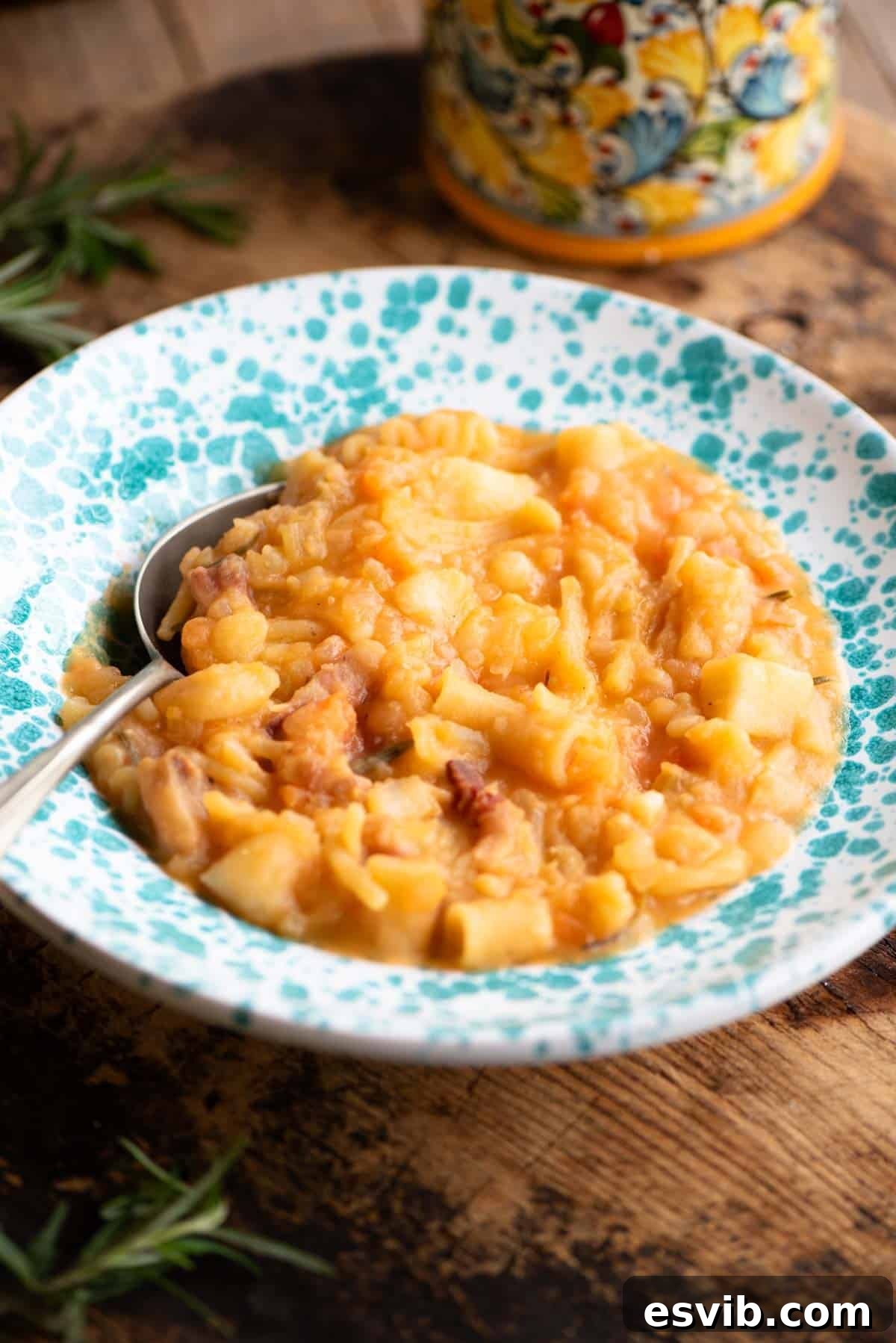
Pasta e Patate alla Napoletana: A Taste of Naples in Every Spoonful
Pasta e Patate alla Napoletana is more than just a dish; it’s an embrace from the heart of Naples. This glorious and comforting Italian classic masterfully combines humble ingredients like succulent guanciale, vibrant vegetables, fragrant rosemary, tender potatoes, and of course, pasta, into a hearty stew that bursts with beautiful, rustic flavor. Surprisingly simple to prepare, this dish promises a deeply satisfying experience, perfect for any season.
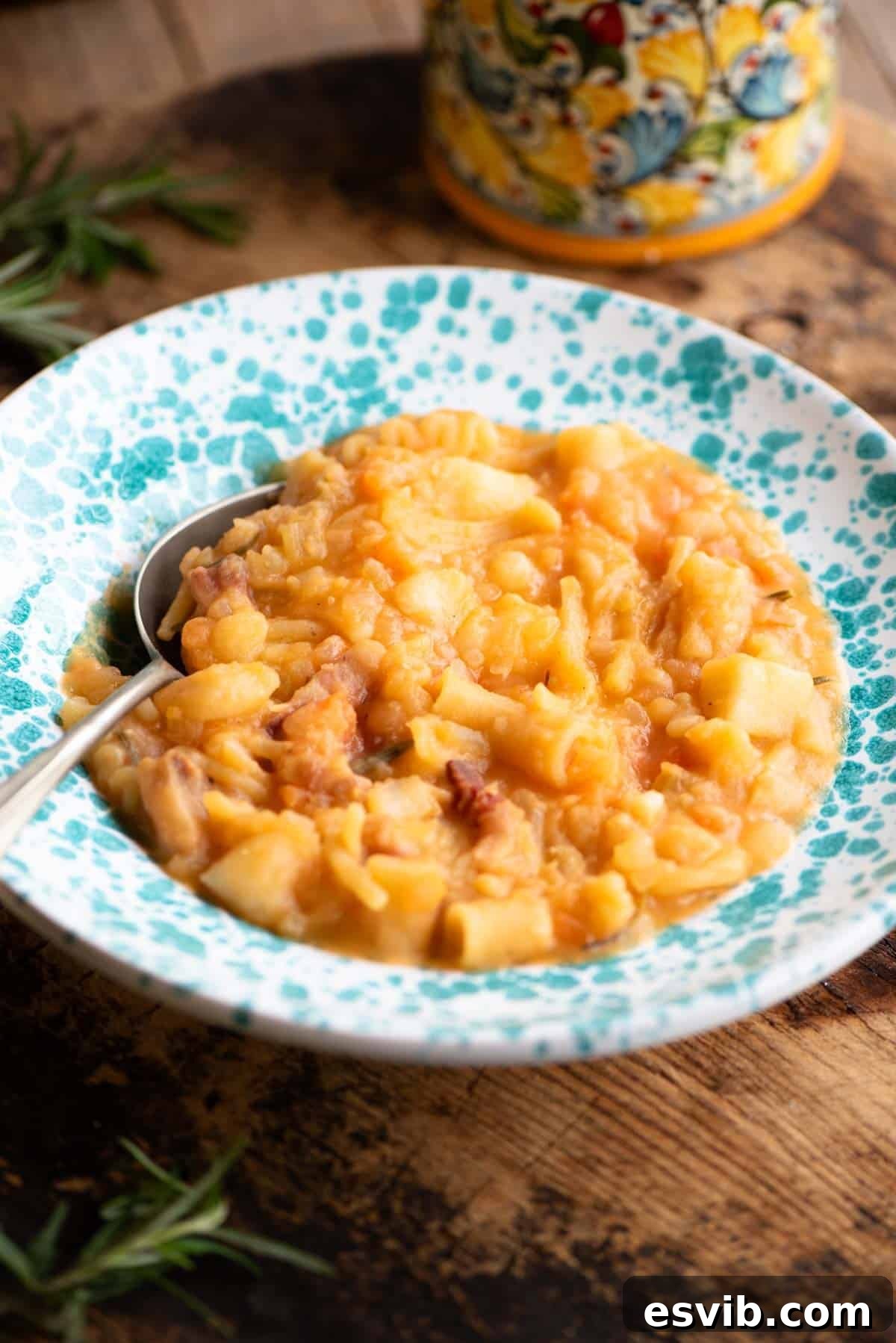
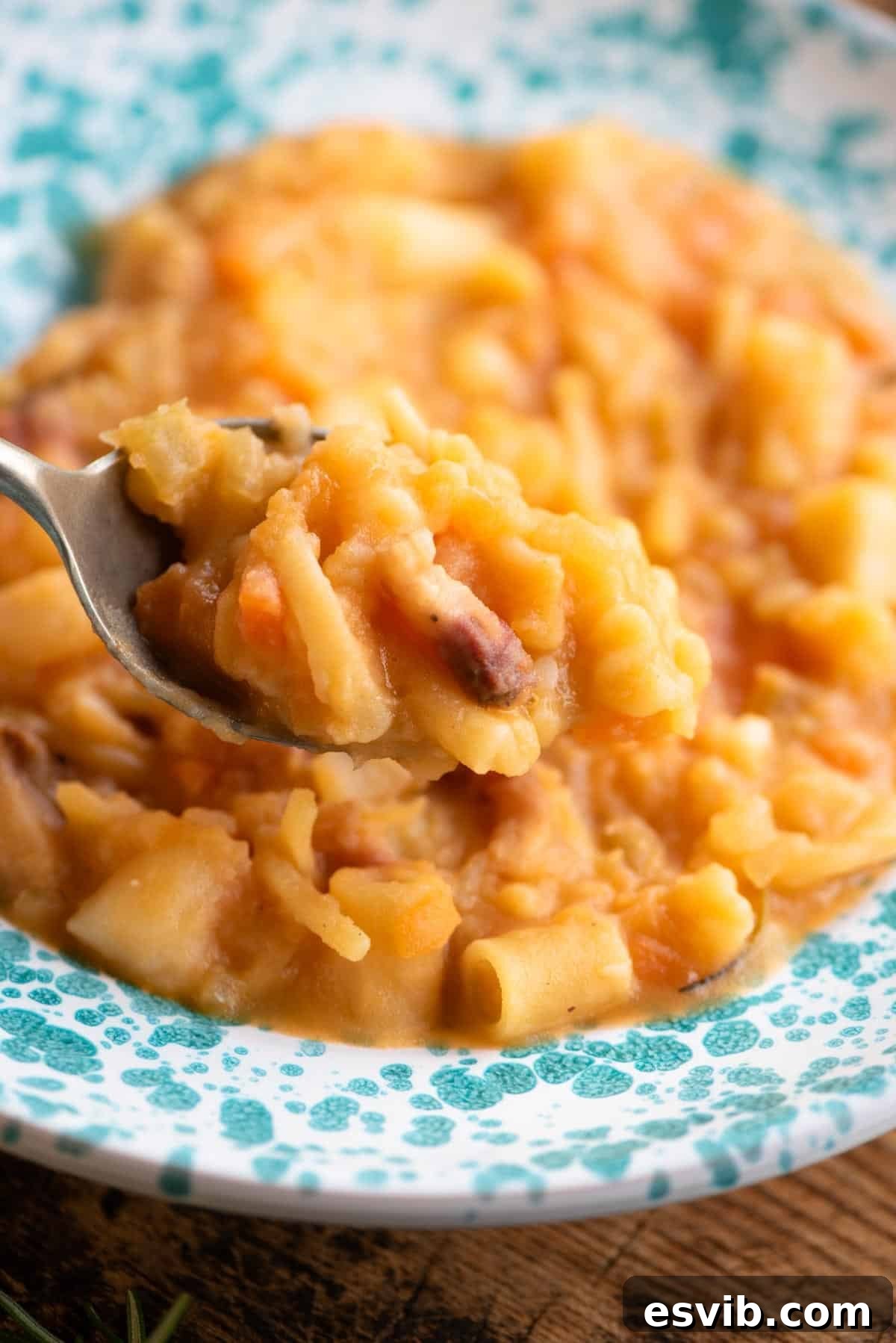
You might raise an eyebrow at the idea of combining two carbohydrate powerhouses like pasta and potatoes, but trust us when we say this Neapolitan gem is unbelievably delicious. This ingenious pairing is a testament to Italy’s “cucina povera” philosophy, where simple, readily available ingredients are transformed into culinary masterpieces. The potatoes break down slightly during cooking, releasing their starch to create a naturally thick, creamy sauce that beautifully coats every piece of pasta. It’s a technique we’ve explored before in other delightful combinations, such as our renowned Trofie al Pesto Genovese with Potatoes and Green Beans, proving that double the carbs can indeed mean double the goodness!
The Heart of the Dish: Key Ingredients and Their Secrets
Traditionally, Pasta e Patate would feature ‘lardo’, a type of cured pig fat that imparts an incredible depth of flavor. While absolutely delicious, I often opt for guanciale, cured pork jowl, for its rich fat and robust flavor profile. Both are fantastic choices, but if neither is readily available, high-quality pancetta can serve as a worthy substitute, providing that essential savory base. The fat from these cured meats renders down, infusing the entire dish with an unparalleled richness that truly defines this Neapolitan classic.
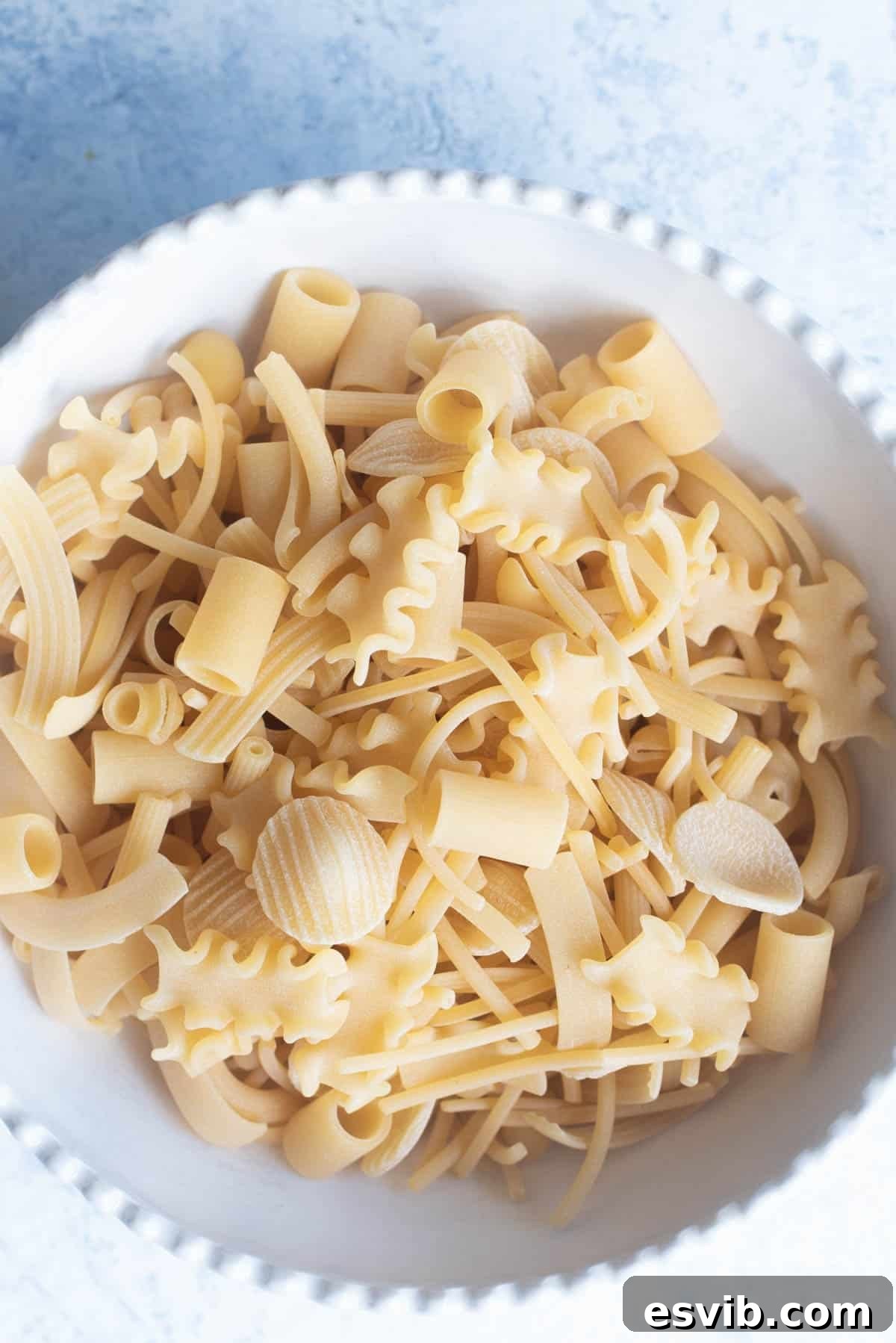
Another hallmark of this recipe is the use of ‘pasta mista’. This translates to “mixed pasta” and traditionally refers to a collection of various small pasta shapes, often leftover pieces from different pasta boxes. Think orecchiette, broken linguine or spaghetti, malfalda corta, or even small tubes like ditali. This eclectic mix adds wonderful texture and charm to the dish, making each spoonful a delightful surprise. If you can’t find specific ‘pasta mista’, don’t hesitate to use any small pasta shapes you have on hand, such as ditali, which we also use for our comforting Pasta e Fagioli soup.
Below, you’ll find the complete recipe, including detailed notes on ingredients, step-by-step photos, essential tips, and suggested variations. For a full printable version of the recipe, simply scroll to the bottom or click the recipe link.
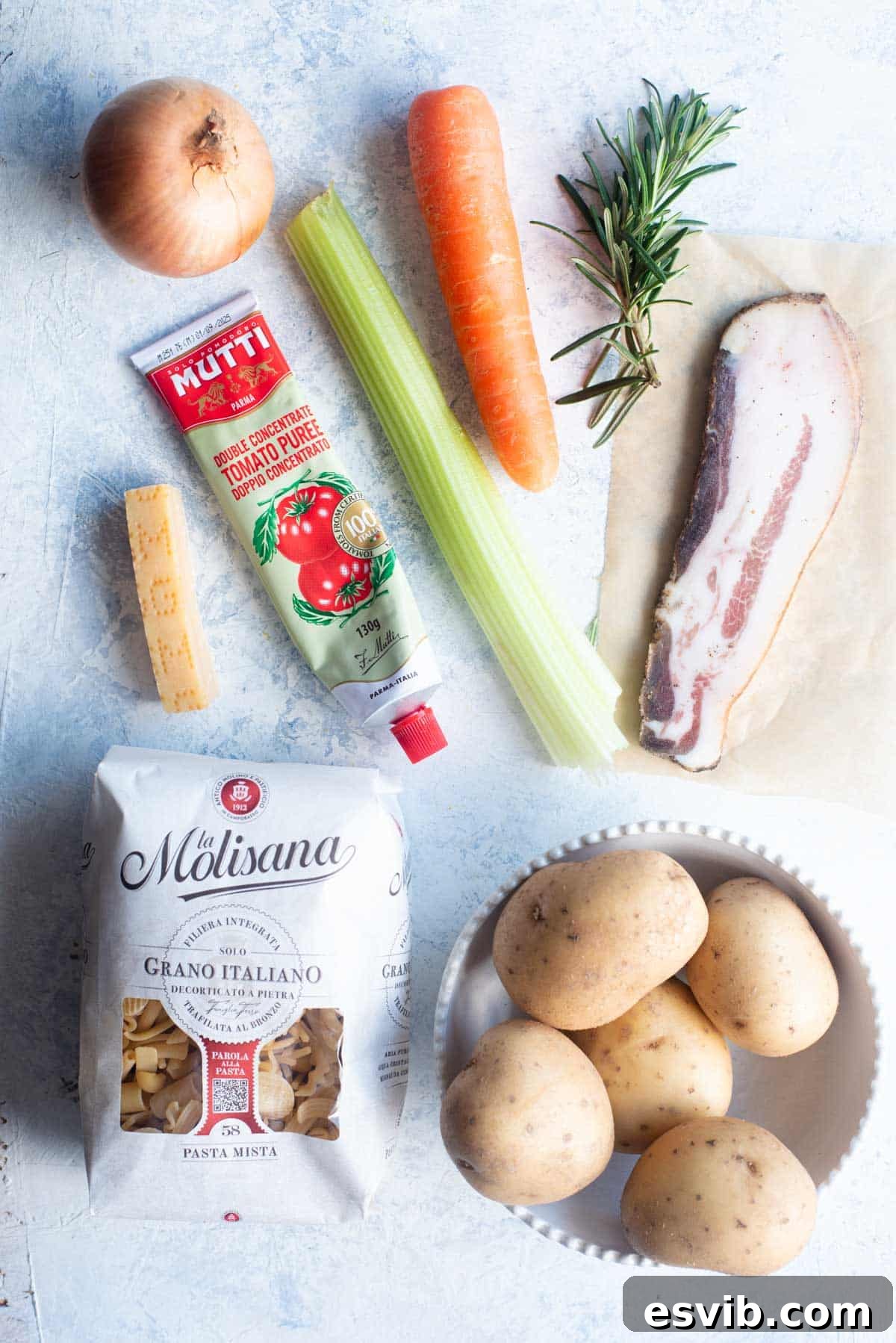
Ingredients for Authentic Pasta e Patate
Ingredient Notes and Expert Substitutions
- Guanciale: As mentioned, this cured pork jowl provides a distinct richness. Historically, lardo (cured pork fat) was common. Both are superb. For a widely accessible alternative, use good quality pancetta, ensuring it’s thick-cut for the best rendering.
- Soffritto: The aromatic base of finely chopped carrot, celery, and onion. Aim for roughly equal amounts of each to build a balanced foundation of flavor. This trio is fundamental to many Italian dishes, slowly sautéed to release their sweetness. For more on this essential technique, see our guide on how to make soffritto.
- Potatoes: Starchy varieties are ideal here, as they break down beautifully, contributing to the dish’s signature creamy texture. Peel and chop them into medium cubes so they cook evenly and integrate well with the pasta. Russet or Yukon Gold potatoes are excellent choices.
- Rosemary: Fresh rosemary is non-negotiable for this recipe. Its pungent, piney notes are essential to the authentic Neapolitan flavor profile. Dried rosemary simply doesn’t deliver the same vibrant aroma and taste.
- Tomato Paste: This concentrated tomato flavor adds a subtle sweetness and depth, enhancing the richness of the stew. You can omit it if preferred or substitute with a small amount of passata (tomato puree) for a slightly lighter tomato presence.
- Pasta: Embrace the tradition of ‘pasta mista’ by using odds and ends of small pasta shapes. This prevents waste and adds unique texture. If you prefer to buy a specific shape, Ditali, broken spaghetti, or any other small tubular or short pasta will work wonderfully. The key is small shapes that can easily blend into the stew.
Step-by-Step Instructions: Crafting Your Neapolitan Masterpiece
Creating Pasta e Patate is a rewarding culinary journey. Follow these steps for a perfect, comforting bowl.
Visual Guide and Detailed Method
Step 1: Prepare the Guanciale and Soffritto. Begin by carefully cutting the tough rind (skin) off the guanciale. Trim away any dark, black seasoning, then cut the guanciale into small strips or cubes. Set it aside. Next, finely chop the carrot, celery, and onion – the essential trio for your soffritto. Consistency in chopping ensures even cooking and a smooth flavor base.
Step 2: Render the Guanciale and Sauté the Soffritto. Place a large, heavy-bottomed pot over a medium-low heat. Add the prepared guanciale and sauté gently. The goal is to slowly render out its fat, allowing it to become lightly golden and crispy without burning. This process usually takes about 5-8 minutes. Once the guanciale has rendered, add the finely chopped soffritto (carrot, celery, and onion) to the pot. Stir it into the fragrant guanciale fat, ensuring all vegetables are coated. Continue to sauté the vegetables, stirring occasionally, until they become soft, translucent, and slightly sweet (this typically takes 5-10 minutes). This slow cooking extracts maximum flavor.
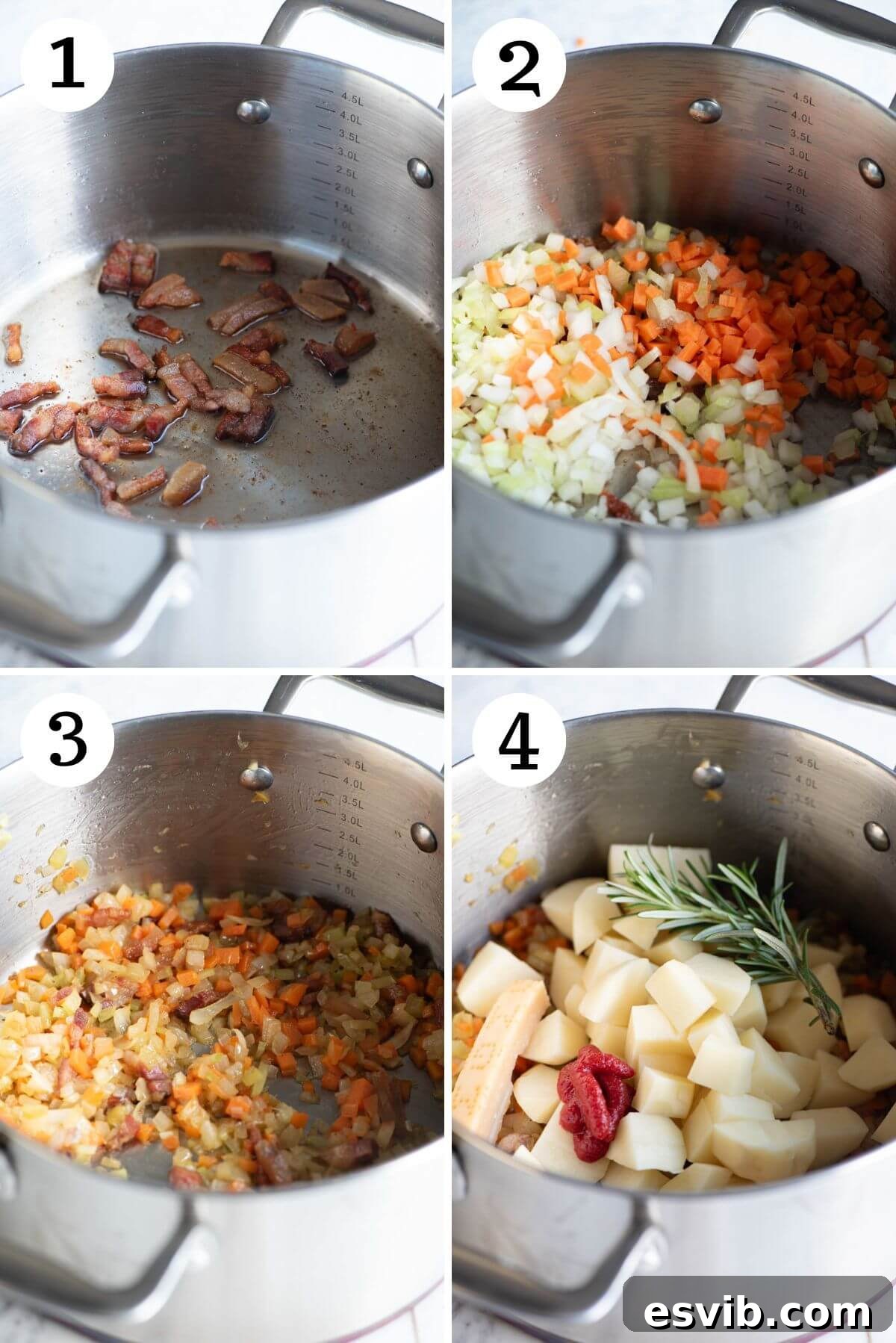
Step 3: Add Potatoes and Simmer. Now, add the peeled and cubed potatoes to the pot, along with the fresh rosemary sprig, the Parmigiano Reggiano rind (which will melt into the sauce, adding umami), and the tomato paste. Stir everything together thoroughly to combine. Season with a good pinch of salt and freshly ground black pepper. Pour in 600ml (approximately 2.5 cups) of water. Stir again, bring the mixture to a gentle simmer, then reduce the heat to low and cover the pot. Allow the potatoes to simmer undisturbed for 30 minutes, giving them time to soften and release their starches, which will begin to thicken the broth.
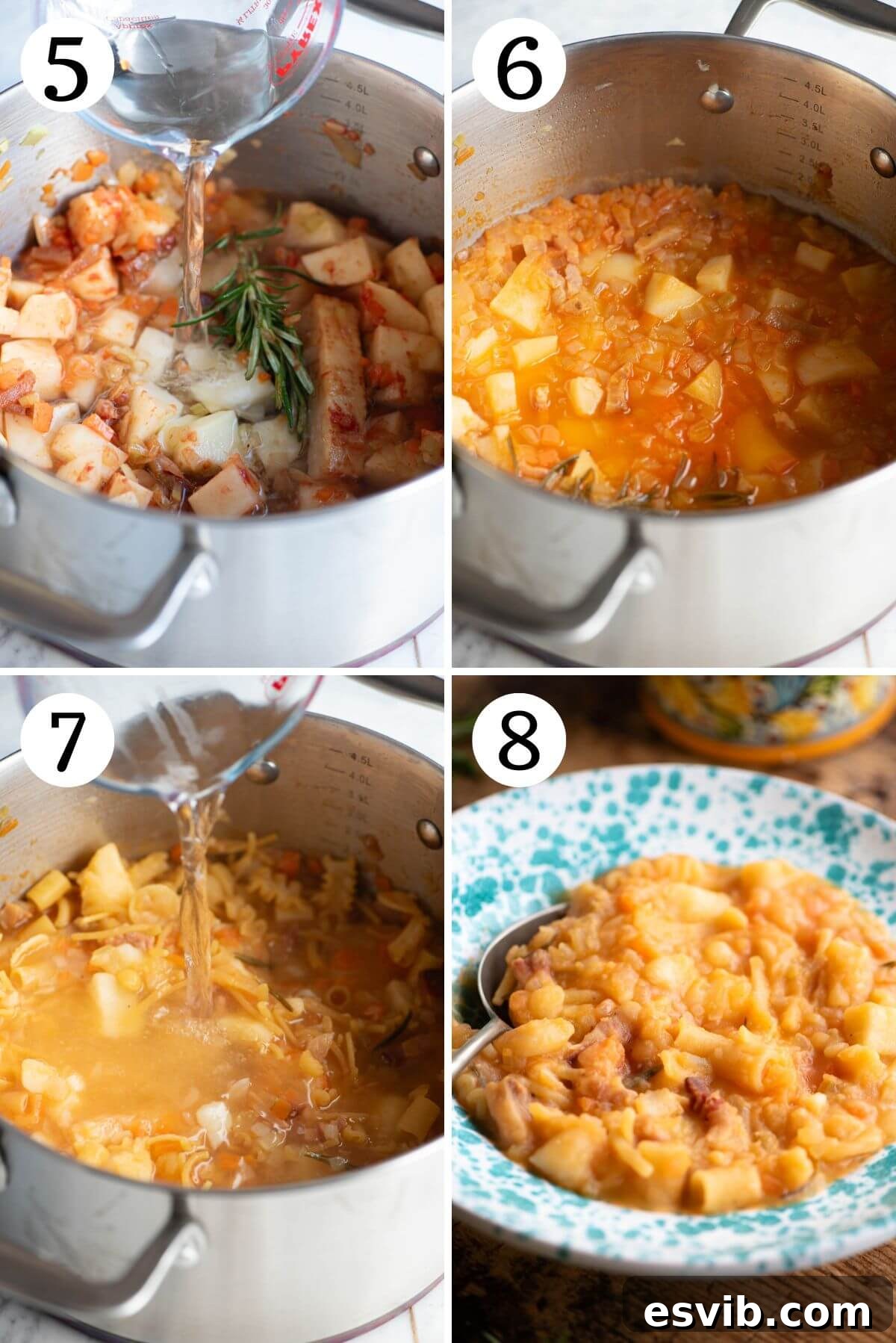
Step 4: Incorporate Pasta and Finish Cooking. After 30 minutes, remove the lid from the pot. Add the pasta mista and an additional 200ml (approximately 1 cup) of water. Stir well to ensure the pasta is submerged and doesn’t stick together. Bring the mixture back to a simmer and cook, uncovered, until the largest pieces of pasta are al dente. This typically takes about 8-12 minutes, depending on your pasta type. It’s important to stir the pot occasionally throughout this stage, as the starches from the pasta and potatoes can cause the mixture to stick to the bottom. The sauce will continue to thicken as the pasta cooks and absorbs liquid, creating that wonderfully creamy consistency.
Step 5: Serve and Enjoy. Once the pasta is perfectly al dente and the sauce has reached your desired consistency, remove the Parmigiano rind and the rosemary sprig (if you wish). Serve the Pasta e Patate hot in bowls, traditionally finished with a generous grind of fresh black pepper, and optionally, a drizzle of high-quality extra virgin olive oil and some grated Parmigiano Reggiano cheese for an extra layer of flavor.
Expert Recipe Tips and Frequently Asked Questions
- Mastering Guanciale Cooking: The secret to delicious guanciale is low and slow heat. Avoid cooking it on a high heat, as it will burn quickly and become bitter. You want it to achieve a beautiful light golden-brown color as its fat slowly melts and infuses the entire dish with flavor. Patience is key here.
- Achieving Perfect Consistency: Pasta e Patate uniquely bridges the gap between a saucy pasta dish and a hearty soup. Both the pasta and potatoes are starches that eagerly absorb liquid and release their own starches, which naturally thickens the sauce or broth. The result should be a rich, creamy, and spoonable consistency. You can easily adjust this to your liking by adding more hot water or broth a little at a time until you reach your preferred texture.
- Seasoning Wisely: Remember that cured meats like guanciale and pancetta can be heavily seasoned, with salt levels varying between brands. I highly recommend adding only a small pinch of salt initially when you add the potatoes. Taste the dish towards the end of cooking, and then adjust the seasoning as needed, adding more salt and pepper to suit your preference.
- Serving Suggestions: While a complete meal on its own, Pasta e Patate pairs wonderfully with a simple green salad dressed with vinaigrette to cut through the richness. A slice of crusty bread is also perfect for mopping up every last drop of the delicious sauce.
- Boosting Flavor: For an extra layer of flavor, consider adding a dried chili flake or two with the soffritto for a subtle kick, or a splash of white wine to deglaze the pot after rendering the guanciale, before adding the vegetables.
How long does Pasta e Patate last?
Once prepared, Pasta e Patate alla Napoletana can be stored in an airtight container in the refrigerator for up to 2 days. The pasta and potatoes will continue to absorb liquid and thicken, so it’s best enjoyed fresh, but leftovers are still delicious.
How do you reheat Pasta e Patate?
To reheat, gently warm the dish on the stove over low heat. You will almost certainly need to add a splash of water or broth to loosen the consistency and bring it back to its original spoonable texture, as it will thicken considerably in the fridge. Stir frequently to prevent sticking. You can also bake leftovers in a small oven-safe dish, perhaps topped with a little mozzarella for a different take.
More Delicious Italian Comfort Food Recipes to Try
If you loved the rustic charm of Pasta e Patate, you’ll surely enjoy these other comforting pasta and soup dishes from our kitchen. Each recipe brings a unique taste of Italy to your table.
Pasta
Pasta e Piselli (Pasta with Peas)
Pasta
Pasta e Ceci (Pasta with Chickpeas)
Pasta
Genovese Sauce – La Genovese Napoletana
Soups
Pasta Fagioli Soup – Pasta & Beans
If you’ve tried this delightful Pasta e Patate alla Napoletana recipe or any other recipe from our blog, please don’t hesitate to rate the recipe and share your experience in the comments below – we absolutely love hearing from you! You can also follow us on Facebook, Instagram, and Pinterest for more culinary inspiration, or sign up for our Newsletter to receive our delicious new recipes every week!
Step-by-Step Photos and Tips Available Above
Most of our recipes include detailed step-by-step photos, helpful tips, and tricks to ensure perfect results the very first time!
Pasta e Patate alla Napoletana (Neapolitan Pasta and Potatoes)
By Emily
Print Recipe
Want to save this recipe? Enter your email below to get it sent straight to your inbox, plus new recipes from us every week!
Ingredients
- 3.5 oz (100g) Guanciale (can also use good quality pancetta)
- 1 large carrot, finely chopped
- 1 large celery stalk, finely chopped
- 1 large onion, finely chopped
- 1.3 lbs (600g) starchy potatoes, peeled and cut into medium cubes
- 1 sprig fresh rosemary
- 1 Parmigiano Reggiano rind (optional, for flavor)
- 1 tablespoon tomato paste
- 7 oz (200g) pasta mista (mixed small shapes)
- 3.5 cups (800ml) water
- Salt and freshly ground black pepper, to taste
- Extra virgin olive oil and grated Parmigiano Reggiano for serving (optional)
Instructions
- Cut the tough rind (skin) off the guanciale and trim off any black seasoning. Cut the guanciale into strips or small cubes and set aside. Finely chop the carrot, celery, and onion for your soffritto.
- Add the guanciale to a large pot on a medium-low heat. Sauté until lightly golden and the fat has rendered (about 5-8 minutes). Add the finely chopped soffritto (carrot, celery, and onion) and stir into the guanciale fat. Sauté the vegetables until soft and translucent (5-10 minutes).
- Add the peeled and cubed potatoes, the fresh rosemary sprig, the Parmigiano Reggiano rind (if using), and the tomato paste. Stir to combine all ingredients. Season with a good pinch of salt and pepper. Pour in 600ml (2.5 cups) of water. Stir again, bring to a gentle simmer, then turn down the heat to low and cover. Simmer the potatoes for 30 minutes.
- After 30 minutes, uncover the pot and add the pasta mista along with another 200ml (1 cup) of water. Stir well and bring back to a simmer. Cook until the largest pieces of pasta are al dente. Make sure to stir the pot occasionally to prevent the pasta from sticking to the bottom as the starches thicken the sauce.
- Remove the Parmigiano rind and rosemary sprig (if desired). Serve hot in bowls, traditionally with a generous grind of fresh black pepper. You can also add a drizzle of extra virgin olive oil and a sprinkle of grated Parmigiano Reggiano cheese, if desired.
Notes
- Cooking Guanciale: Always cook guanciale on a medium-low heat to render the fat slowly and prevent burning, which can lead to bitterness.
- Consistency Control: The dish naturally thickens due to potato and pasta starches. Add more water or broth if you prefer a looser consistency when serving or reheating.
- Seasoning: Cured meats are salty. Add initial salt sparingly, then taste and adjust at the end.
- Leftovers: Store in the fridge for up to 2 days. Reheat on the stove with a splash of water. Leftovers can also be baked with mozzarella on top for a delightful gratin.
- Water Measurements: The recipe’s water measurements (600ml and 200ml) are precise for the desired consistency. The cup conversions are approximate but will not significantly impact the final result.
Helpful Info for All Our Recipes
- Unless specified otherwise, we always use high-quality extra virgin olive oil in all our recipes.
- For canned or jarred tomatoes, we highly recommend Cirio or Mutti brands for their superior flavor and consistency.
- All vegetables are assumed to be medium-sized unless otherwise noted in the recipe.
- All our recipes are tested and developed using a fan (convection) oven.
- Find out more about how nutrition is calculated on our website.
- Explore our essential Italian Pantry Staples to stock your kitchen.
- Discover our must-have Essential Kitchen Tools for Italian Cooking.
Nutrition
Carbohydrates: 69g |
Protein: 13g |
Fat: 20g |
Saturated Fat: 7g |
Polyunsaturated Fat: 0.4g |
Monounsaturated Fat: 0.1g |
Cholesterol: 27mg |
Sodium: 293mg |
Potassium: 926mg |
Fiber: 6g |
Sugar: 6g |
Vitamin A: 3144IU |
Vitamin C: 34mg |
Calcium: 57mg |
Iron: 2mg
Nutrition information is automatically calculated and should only be used as an approximation.
Did you try this recipe?
Leave a comment below and share your experience!