
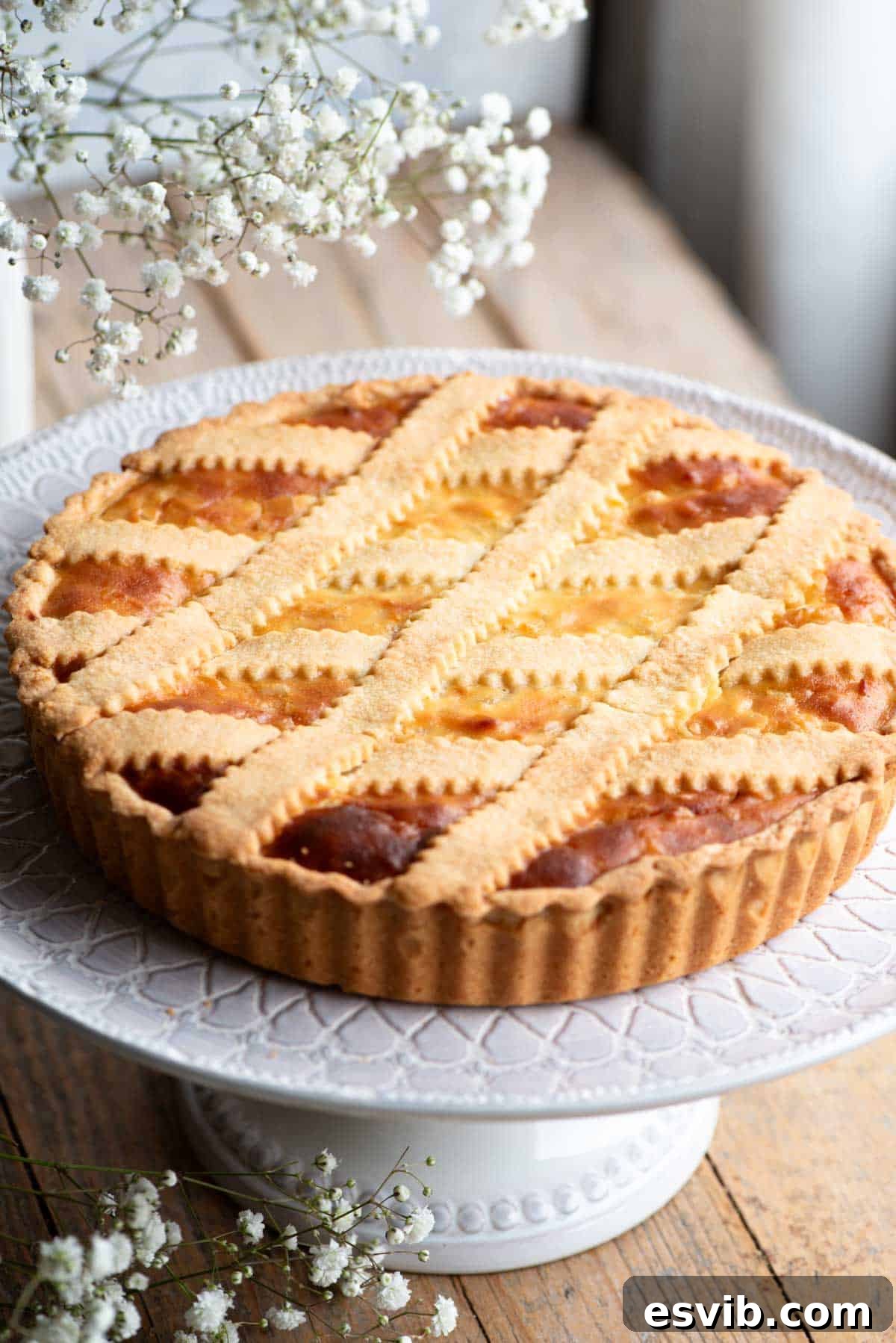
Pastiera Napoletana: A Fragrant Tradition for Your Easter Table
Pastiera Napoletana is more than just a dessert; it’s a beloved symbol of Easter in Naples and across Italy. This traditional sweet pie boasts a truly beautiful and aromatic filling, crafted from unique ingredients like *Grano Cotto* (cooked wheat berries), luxurious ricotta cheese, vibrant candied citrus fruits, and the delicate perfume of orange blossom water. Every bite offers a sublime blend of textures and flavors, making it an unforgettable culinary experience.
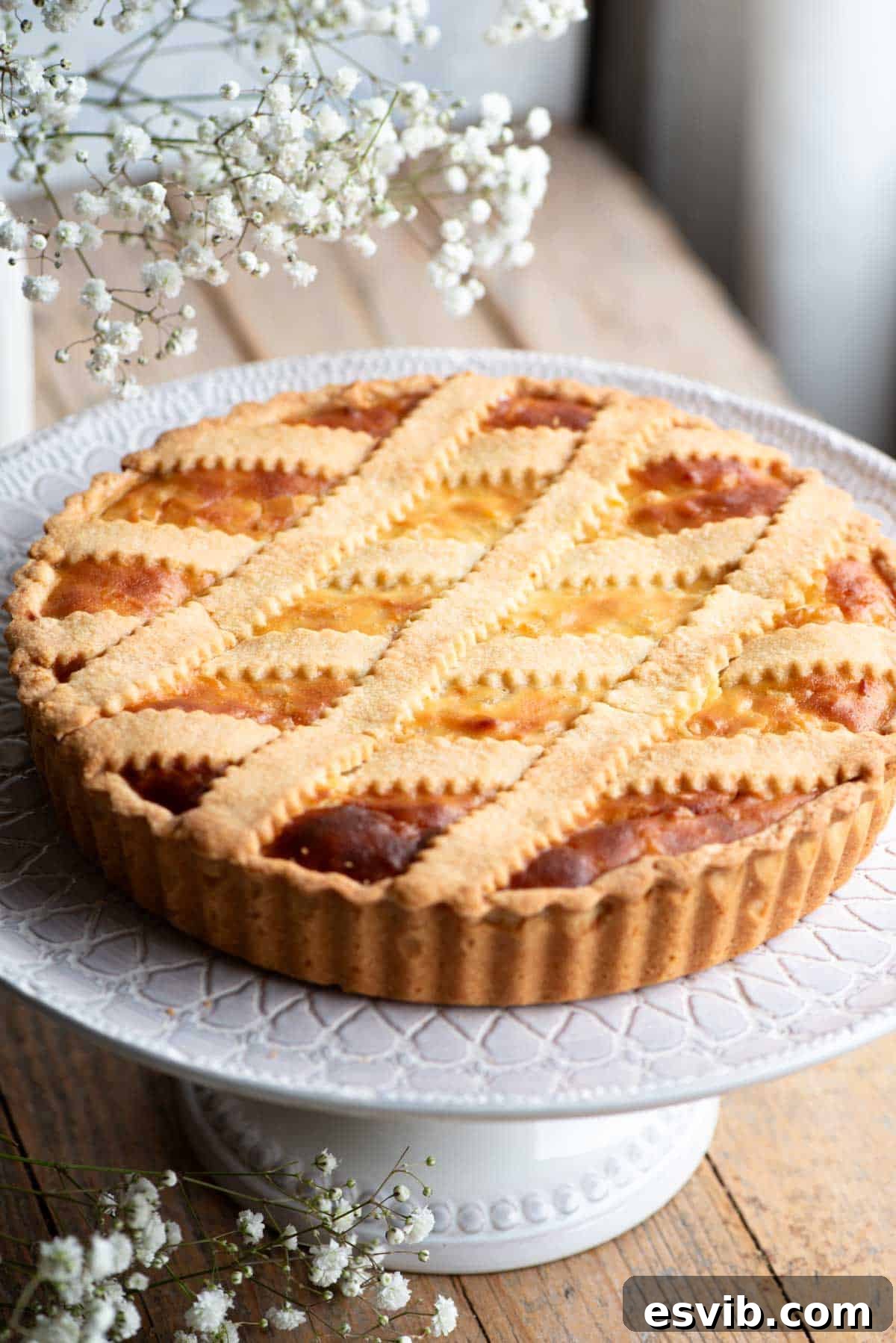
For those who have yet to experience the magic of Pastiera Napoletana, we wholeheartedly encourage you to try it. And for seasoned enthusiasts, you already know that Easter wouldn’t be complete without this cherished dessert gracing your table. Its reputation is well-deserved, inspiring countless families to bake it year after year.
In Naples, the presence of La Pastiera is non-negotiable for Easter. Its cultural significance runs deep, intertwining with centuries of tradition and celebration. Consequently, *pasticcerie* (pastry shops) throughout Italy proudly feature this iconic Easter treat during the spring season, a testament to its widespread appeal and importance.
A distinctive ingredient sets Pastiera Napoletana apart: *Grano Cotto*. This unique component refers to cooked wheat berries, typically sold in jars. While readily available in Italian supermarkets, especially in the lead-up to Easter, those outside Italy might need to seek it out in specialized Italian food stores or order it online. It forms the tender, slightly chewy foundation of the pie’s exquisite filling, contributing a unique texture that differentiates Pastiera from other ricotta-based desserts.
The heart of the Pastiera lies in its rich, creamy filling. The cooked wheat berries are lovingly combined with fresh ricotta, a hint of warm cinnamon, fragrant vanilla, a colorful medley of candied fruit, and the essential touch of orange blossom water. This harmonious blend culminates in a filling that is both profoundly fragrant and delicately creamy, offering a complex yet comforting flavor profile that is truly irresistible.
While the creation of La Pastiera involves several distinct steps, don’t be daunted. Each stage is relatively straightforward and approachable, requiring primarily a dash of patience and a love for traditional Italian baking. The effort is immensely rewarding, yielding a masterpiece that captures the essence of an Italian Easter.
Beyond its role as a festive dessert, Pastiera makes a delightful start to Easter morning. Imagine pairing a slice of this aromatic pie with a steaming cappuccino – a perfect Neapolitan welcome to the holiday. *Buona Pasqua*!
Essential Ingredient Notes and Helpful Substitutions
Crafting the perfect Pastiera Napoletana begins with understanding its core ingredients. Here’s a closer look at what you’ll need and how to navigate potential substitutions to ensure success.
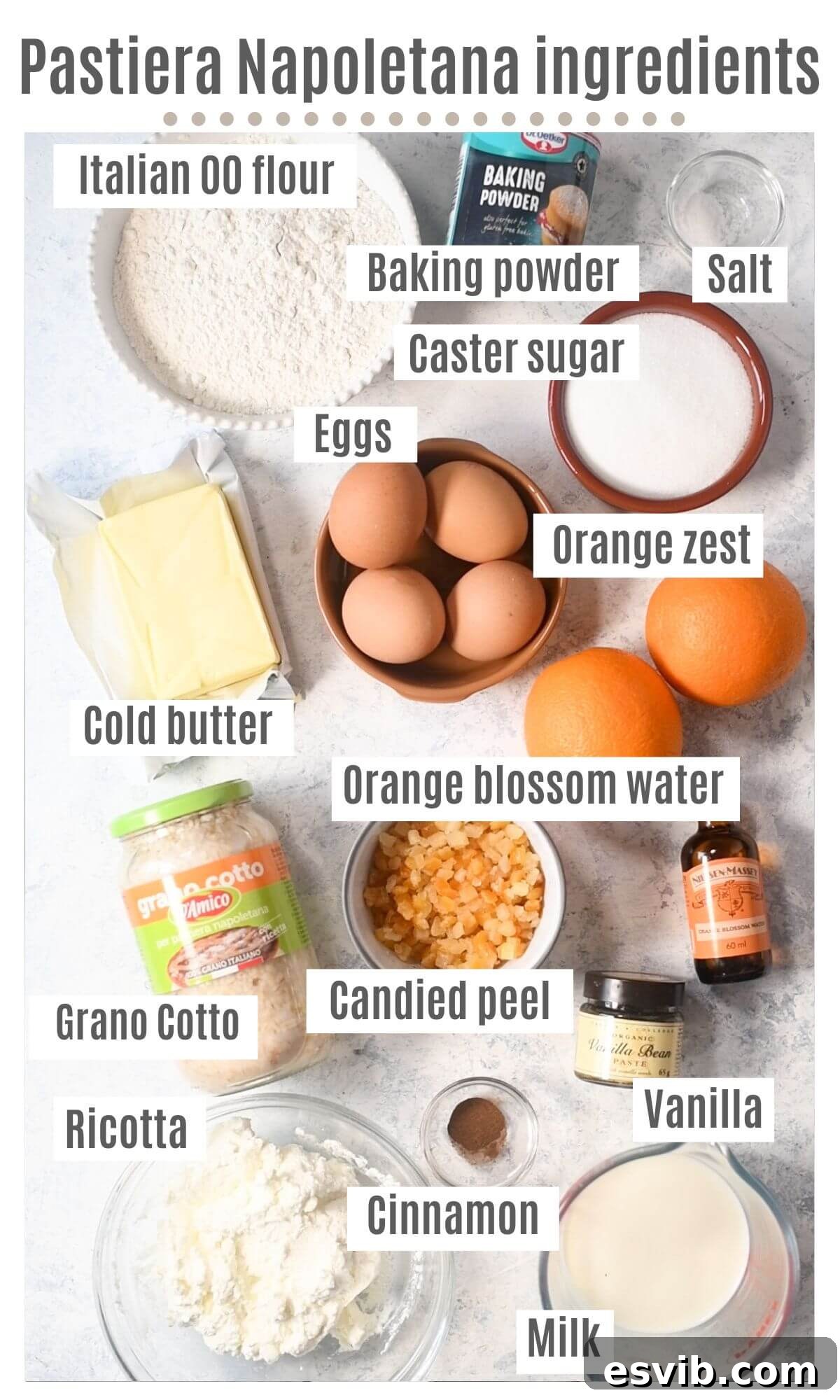
- Pasta Frolla (Sweet Shortcrust Pastry): Our recipe utilizes a classic *pasta frolla* for its tender, crumbly texture. We recommend preparing it in a food processor for speed and ease. The crucial tip here is to use very cold butter, straight from the fridge. Cold butter ensures a flaky crust and prevents the pastry from becoming tough. If you prefer to make it by hand, ensure you work quickly to keep the butter from warming too much.
- Grano Cotto (Cooked Wheat Berries): As previously mentioned, this is a defining ingredient. *Grano Cotto* provides a unique texture that is essential to an authentic Pastiera. It’s often found in jars and can be sourced online or in Italian specialty food stores, particularly during the Easter season. Do not omit this ingredient, as it gives the pie its characteristic body and slight chewiness.
- Ricotta: Quality ricotta is vital for a creamy, ethereal filling. The most important step for the ricotta is thorough draining. Excess moisture can lead to a watery filling and potentially a soggy bottom crust. We suggest draining it in a sieve over a bowl in the refrigerator for at least 24 hours to achieve the ideal consistency.
- Orange Blossom Water: This aromatic essence imparts Pastiera with its signature delicate floral scent and flavor. It can sometimes be challenging to locate. Check Italian markets or Middle Eastern grocery stores. If you struggle to find it, a good quality orange extract can be used in the same quantity, or you can omit it if necessary, though the pie’s flavor profile will be subtly different.
- Candied Citrus: Traditionally, Pastiera features a mix of candied citron (*cedro*) and candied orange. Candied citron can be elusive, so a combination of candied orange and/or lemon is a perfectly acceptable and delicious substitute. Ensure your candied fruit is finely diced to distribute evenly throughout the filling.
- Sugar: For most desserts, including Pastiera, we favor caster sugar due to its fine texture, which allows it to dissolve more quickly and create a smoother filling. However, granulated sugar can also be used effectively.
Expert Preparation Tips for a Flawless Pastiera
A little planning goes a long way when making Pastiera Napoletana. Follow these essential tips to ensure a smooth baking process and the most flavorful results.
- The Traditional Easter Timeline: For the most authentic and deeply flavored Pastiera, tradition dictates it be made on Good Friday to be savored on Easter Sunday. The flavors of the pie truly meld and deepen over time, achieving a more profound richness after a day or two. Therefore, if you begin preparing your ricotta and pastry on Thursday, and assemble and bake the Pastiera on Good Friday, it will be absolutely perfect for your Easter Sunday celebrations. This allows all the aromatic essences to fully develop.
- Drain the Ricotta in Advance: This is a critical step for a creamy, well-structured filling. Ricotta naturally holds a lot of moisture, which can make your pie soggy. To prevent this, drain the ricotta for a minimum of 24 hours. Place it in a fine-mesh sieve set over a bowl and keep it in the refrigerator. Overnight draining is acceptable, but a full 24 hours is ideal for optimal results.
- Prepare the Pastry Ahead: Similar to the ricotta, making the *Pasta Frolla* a day in advance can significantly streamline your baking process. After shaping it into a disc, wrap it tightly in plastic wrap and store it in the refrigerator. Remember to remove it from the fridge about 30 minutes before you plan to roll it out. This allows the butter to soften slightly, making the pastry more pliable and easier to work with without becoming too warm.
Step-by-Step Guide: Crafting Your Pastiera Napoletana
Follow our detailed visual guide below, accompanied by step-by-step photos, to help you master this classic recipe. For the complete written recipe with all our top tips, scroll down to the full recipe card.
Preparing the Perfect Pasta Frolla (Sweet Shortcrust Pastry)
To begin your Pastiera, start with the *pasta frolla*. In a food processor, combine the flour, sugar, pinch of salt, baking powder, and cold butter. Pulse these ingredients together until the butter is thoroughly broken down and the mixture resembles coarse breadcrumbs. This technique ensures that the butter remains cold and evenly distributed, which is key to a tender crust.
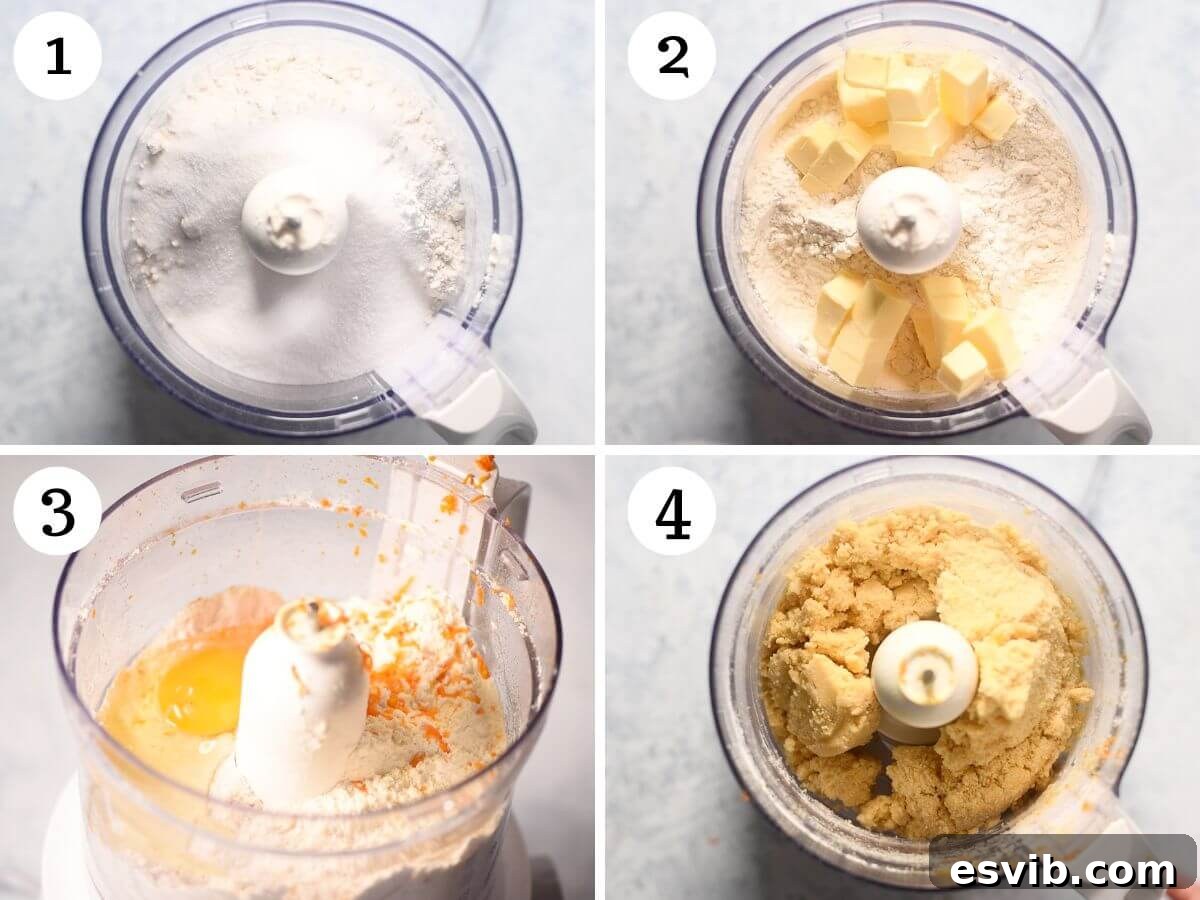
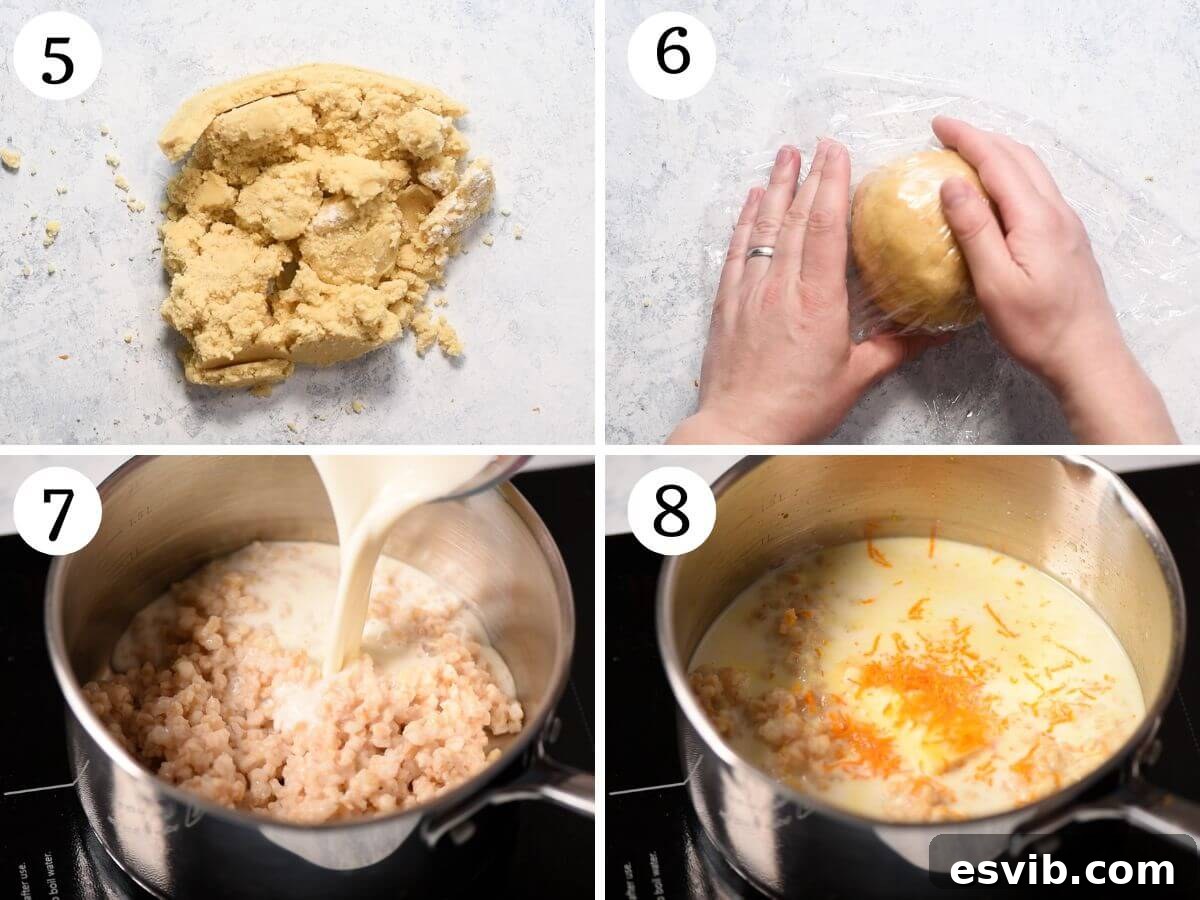
Next, add the large egg and the fragrant grated orange zest to the food processor. Continue to blitz the mixture until the pastry ingredients come together and form a cohesive clump. Be careful not to overmix at this stage. Once the pastry has formed, turn it out onto a lightly floured work surface. Gently shape it into a ball, then flatten it slightly to create a disc. Wrap the pastry disc tightly in plastic wrap and chill it in the refrigerator for at least 1 hour. This resting period is crucial for the gluten to relax and the butter to firm up, making the pastry easier to roll.
Crafting the Aromatic Grano Cotto Mixture
The unique texture of Pastiera comes from the *Grano Cotto* mixture. To prepare this, place the cooked wheat berries (*grano cotto*), milk, butter, more grated orange zest (to enhance the citrus notes), and sugar into a saucepan. Set the saucepan over a medium-low heat, allowing the ingredients to gently warm and meld together.
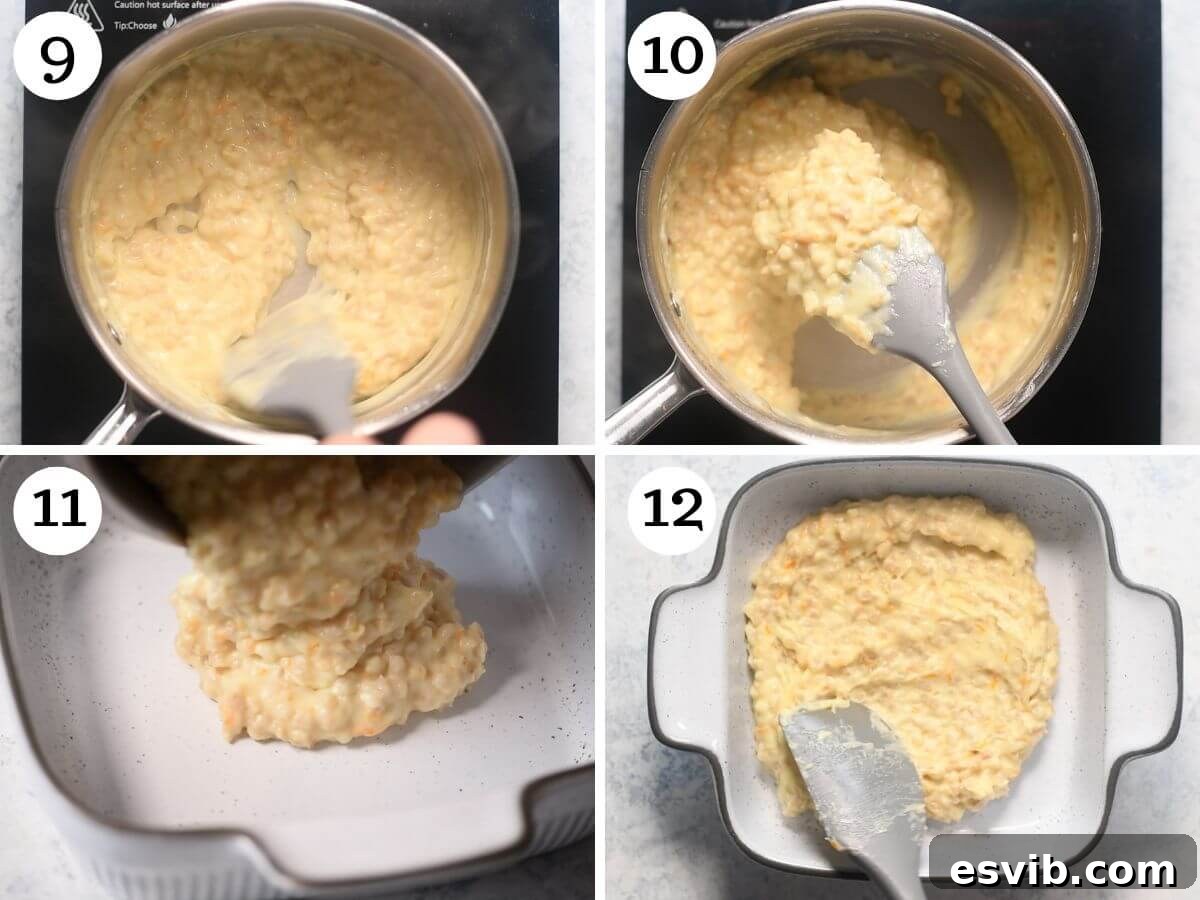
Continue to cook this mixture for approximately 20-25 minutes, stirring consistently with a wooden spoon. The goal is to achieve a thick, creamy consistency where the wheat berries are fully infused with the milk, butter, and orange flavors. Once it reaches this desired richness, remove it from the heat. To cool it down quickly and prevent further cooking, spread the warm mixture out evenly in a baking dish or on a tray. Ensure it cools completely to room temperature before combining it with the ricotta filling.
Preparing the Creamy Ricotta Filling
Now, for the luxurious ricotta filling. In a large mixing bowl, combine the well-drained ricotta cheese with the sugar. Whisk these two ingredients together using a hand whisk until the mixture is smooth, combined, and wonderfully creamy. This ensures a light and airy texture. Next, add the warm spices: cinnamon, vanilla (paste or extract), and the essential orange blossom water. Crack in the eggs and whisk everything together thoroughly until all components are fully incorporated and the filling is uniform. Finally, fold in the candied fruit, stirring gently to ensure it’s evenly distributed throughout the rich filling.
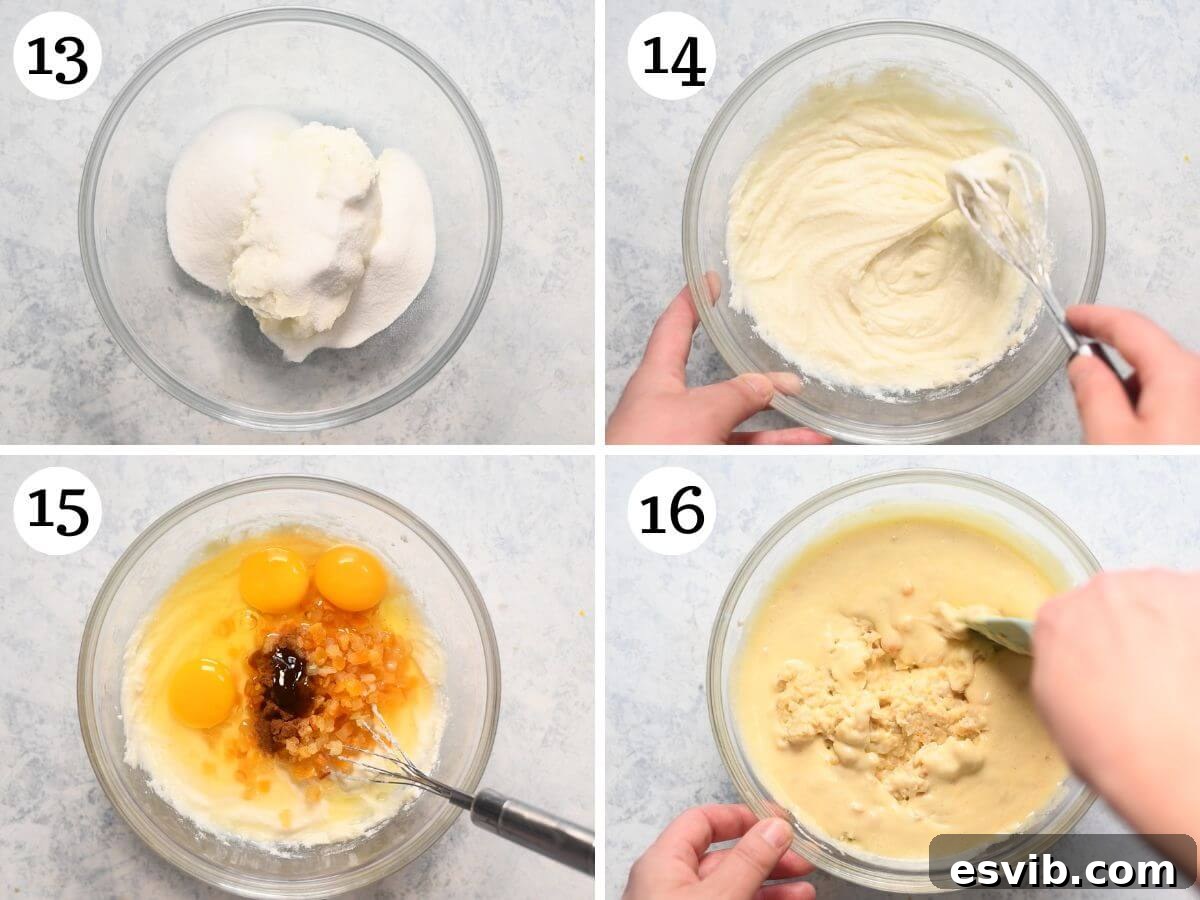
Once the ricotta filling is ready, place it in the fridge to keep it cool and firm. It’s crucial that the *Grano Cotto* mixture is completely cold before you combine it with the ricotta. Once the wheat berry mixture has cooled entirely, gently fold it into the chilled ricotta mixture. This prevents the heat from cooking the eggs in the ricotta or altering its texture, ensuring a perfect, smooth consistency for your pie.
Assembling Your Traditional Pastiera Napoletana
With all your components prepared, it’s time for assembly. Remove the *Pasta Frolla* from the refrigerator about 30 minutes before you plan to roll it out. This allows it to soften slightly, making it more pliable and easier to handle without cracking.
Pre-heat your oven to 350°F (180°C). Lightly dust your work surface and rolling pin with flour. Roll out the chilled *pasta frolla* until it is approximately 3mm thick. Aim for a circular shape slightly larger than your tart tin to allow for overhang.
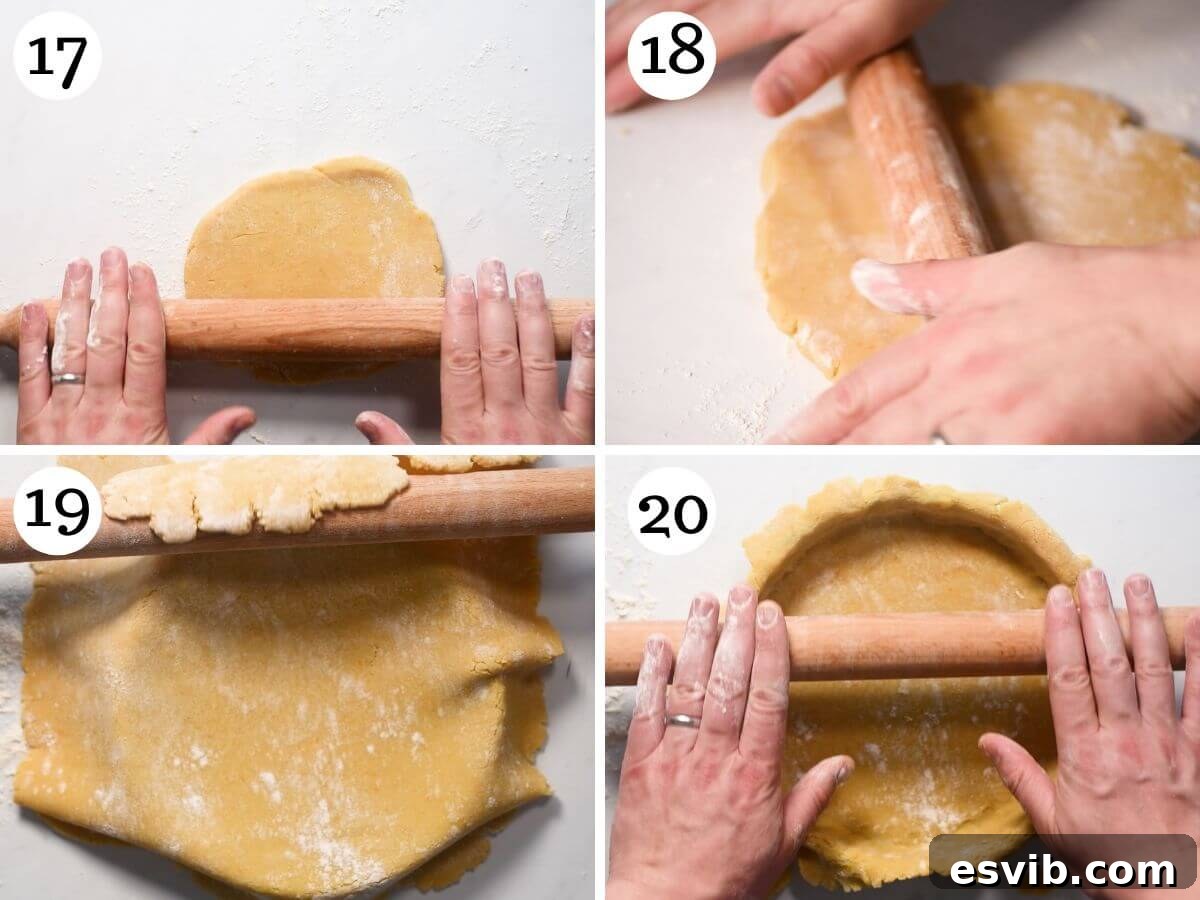
Expert Rolling Tip: When rolling out the pastry, a useful technique is to roll it a couple of times, then gently turn the pastry 90 degrees, dusting the work surface with flour again if needed. Repeat this process until the pastry reaches your desired thickness and size. This prevents the pastry from sticking to the surface and ensures an even roll. Once rolled, use your rolling pin to carefully transfer the pastry over your tart tin. Gently press it into the tin, ensuring it fits snugly into the base and sides. Fold in the excess pastry around the edges, then roll your rolling pin over the top of the tin to cleanly cut off the edges, creating a neat rim.
Gather the leftover pastry and gently form it back into a ball. Lightly dust it with a little more flour and roll it out again. Using a fluted pasta wheel or a pizza cutter, cut out 7 uniform strips. These strips will form the traditional lattice topping of your Pastiera.
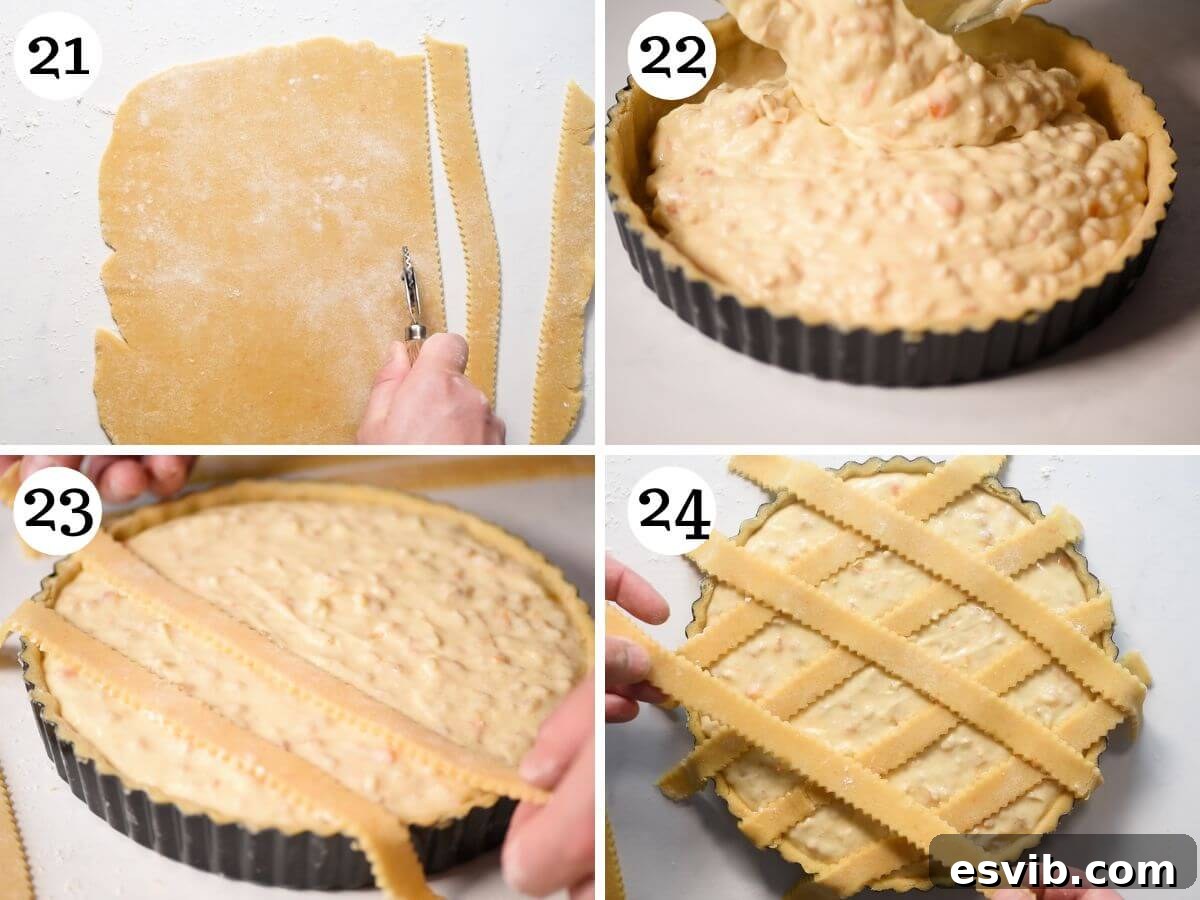
Carefully pour the creamy *Grano Cotto* and ricotta filling into the pastry-lined tart tin, smoothing the top with a spatula. Arrange the pastry strips over the filling to create the classic diamond lattice pattern. Traditionally, this involves placing 4 strips across the bottom and then weaving the remaining 3 strips over the top to form the intricate design. This lattice not only adds to the pie’s beauty but also allows the filling to cook evenly and the fragrant steam to escape.
Place the assembled Pastiera on a baking tray to catch any potential drips and ensure even baking. Bake it in the pre-heated oven for approximately 1 hour, or until the top crust achieves a beautiful golden-brown hue and the filling is set. The pie should look invitingly rich and deeply colored.
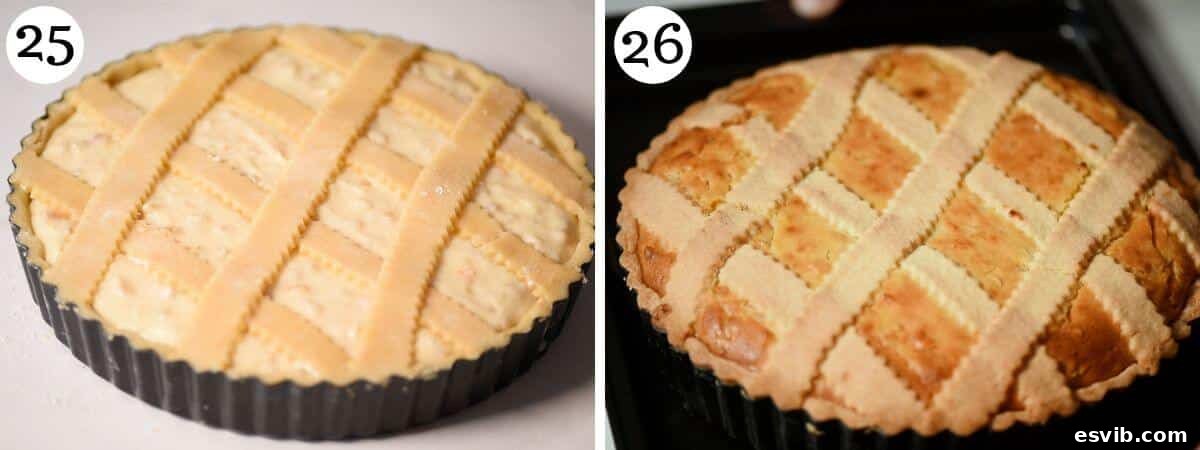
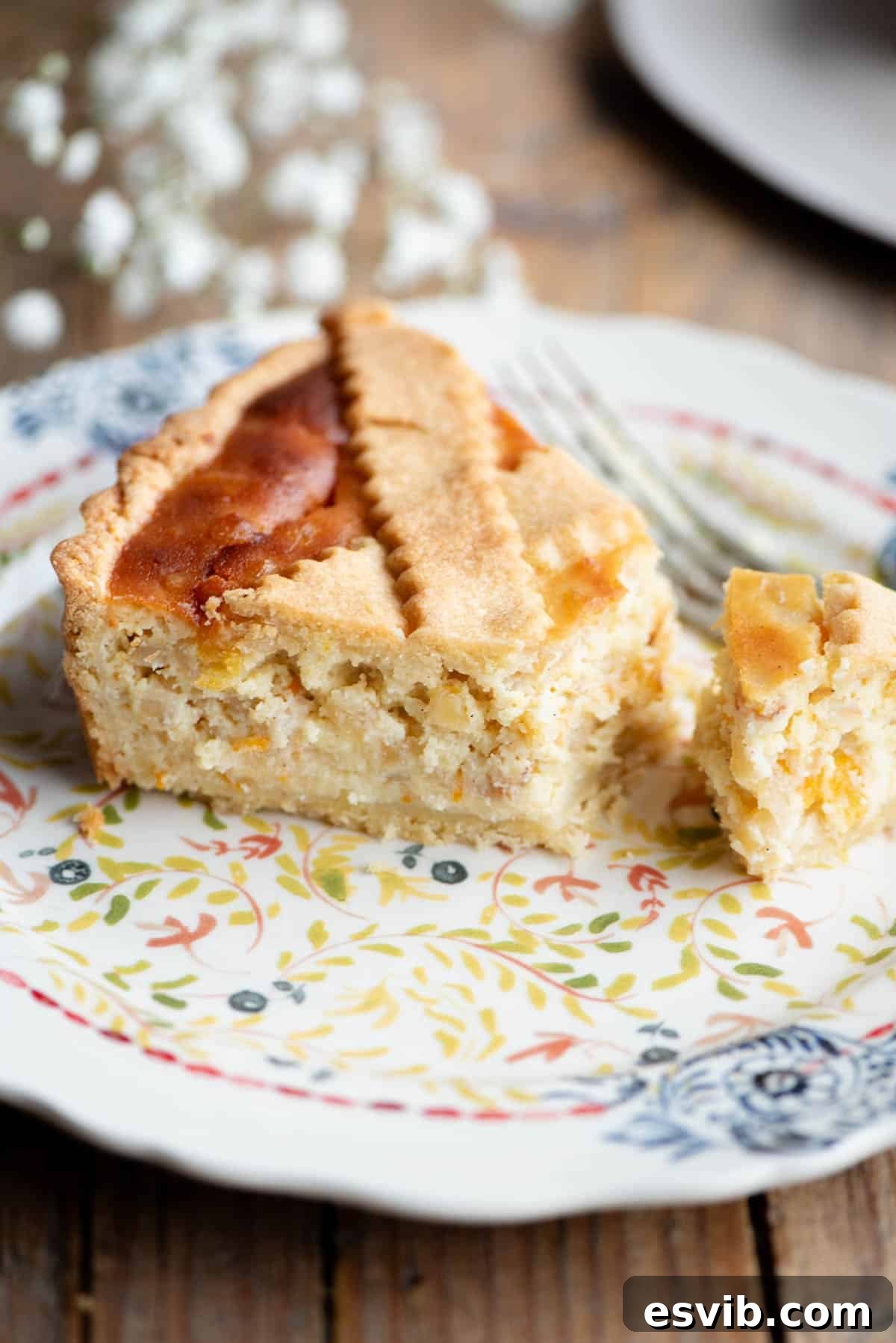
Once baked, remove the Pastiera from the oven and allow it to cool completely in the tart tin. This is crucial as the filling needs time to firm up properly. Only once it’s fully cooled should you carefully remove it from the tin. Pastiera Napoletana famously improves with age; it is best enjoyed 1 to 3 days after it’s made, as the flavors deepen and meld beautifully. Transfer the cooled pie to the fridge for storage until you are ready to serve. For the best taste and texture, allow it to come to room temperature for about an hour before slicing and serving. This enhances its aromatic qualities.
Fun Fact: The Symbolic Lattice!
The traditional lattice (7 strips) – The distinctive criss-cross pattern atop Pastiera Napoletana is traditionally formed with 7 pastry strips (4 placed on the bottom layer, and 3 woven over the top). Many fascinating myths and legends surround this specific number. One popular theory suggests that the 7 strips represent the 7 ancient streets of Naples, tying the dessert deeply to the city’s rich history and culture. It’s a sweet nod to tradition woven into every pie!
More Authentic Italian Easter Recipes to Explore
If you’ve fallen in love with Pastiera Napoletana, you’ll adore these other traditional Italian Easter dishes. From savory pies to sweet breads, complete your festive feast with these inspiring recipes:
Antipasti
Torta Pasqualina (Spinach & Ricotta Egg Pie)
A beautiful savory pie with flaky pastry and a rich, layered filling, perfect for Easter brunch or a light lunch.
Antipasti
Pizza Rustica (Italian Easter Pie)
A robust and satisfying savory pie, packed with cheeses and cured meats, making it a delicious highlight of any Easter spread.
Pasta
Italian Lamb Lasagna with Pecorino Bechamel
A rich and comforting main course, this lamb lasagna features a creamy Pecorino béchamel sauce, perfect for a festive meal.
Italian Desserts
Italian Easter Bread (Pane di Pasqua)
A beautifully braided sweet bread, often decorated with colored eggs, that is both symbolic and delicious for your Easter table.
If you’ve tried this delightful Pastiera Napoletana recipe or any other recipe from our blog, we would love to hear from you! Don’t forget to rate the recipe and share your experience in the comments section below. Your feedback is invaluable to us! You can also connect with us and discover more of our delicious culinary creations by following us on Facebook, Instagram, and Pinterest. For weekly recipe inspiration delivered straight to your inbox, consider signing up for our Newsletter.
Step-by-Step Photos Available Above
Most of our recipes include detailed step-by-step photos, helpful tips, and tricks to ensure perfect results on your first attempt!
Pastiera Napoletana Recipe
By Emily
40 mins
1 hr 20 mins
2 hrs
4 hrs
10 servings
Print Recipe
Pastiera Napoletana is a traditional sweet Easter pie from Naples. It has the most beautiful and fragrant filling made from Grano Cotto (wheat berries), ricotta, candied citrus fruits and orange blossom water. This recipe guides you through creating this iconic Italian dessert with ease.
Equipment
- 9-inch tart tin with a loose bottom
- Food Processor (for pastry)
- Saucepan
- Large Mixing Bowl
- Hand Whisk
- Rolling Pin
- Fluted Pasta Wheel or Pizza Cutter
Ingredients
For the Pasta Frolla (Pastry)
- 250 g (2 cups spooned and leveled) Italian 00 flour or all-purpose flour
- 80 g (1/2 cup) caster sugar (granulated sugar can also be used)
- ¼ teaspoon baking powder
- 120 g (8.5 tablespoons) cold unsalted butter, cut into cubes
- 1 large egg
- Zest of 1 orange
- Pinch of salt
For the Ricotta Filling
- 400 g (2 cups) ricotta, well-drained
- 150 g (3/4 cup) caster sugar (granulated sugar can also be used)
- 1 pinch cinnamon
- 1 teaspoon vanilla bean paste (or extract)
- 1 teaspoon orange blossom water (see notes for substitutions)
- 100 g (3/4 cups) candied fruit (mixed citrus, orange, or lemon)
- 3 large eggs
For the Grano Cotto Mixture
- 290 g (1.5 cups) Grano Cotto (cooked wheat berries)
- 200 ml (1/2 cup plus 1/3 cup, 6.7 fl oz) whole milk
- 25 g (2 tablespoons) butter
- Zest of 1 orange
- 1 tablespoon caster sugar
Instructions
Preparation Steps
- Ensure the ricotta is well-drained for at least 24 hours to remove any excess moisture. Place it in a sieve over a bowl in the fridge. This is critical for the pie’s texture.
To Make the Pasta Frolla (Pastry)
- In a food processor, combine the flour, sugar, salt, baking powder, and cold, cubed butter. Blitz until the butter is fully incorporated and the mixture resembles fine breadcrumbs.
- Add the egg and grated orange zest to the food processor. Continue to blitz until the pastry comes together to form a cohesive ball. Turn the pastry out onto a lightly floured work surface, gently shape it into a disc, and wrap it in plastic wrap. Chill in the fridge for at least 1 hour.
To Make the Grano Cotto Mixture
- Place the grano cotto, milk, butter, grated orange zest, and sugar in a saucepan over medium-low heat.
- Cook the mixture for approximately 20-25 minutes, stirring continuously with a wooden spoon, until it becomes thick and creamy.
- Once the mixture is ready, spread it out thinly in a baking dish or on a tray to cool completely to room temperature.
To Make the Ricotta Filling
- In a large mixing bowl, combine the well-drained ricotta and sugar. Whisk with a hand whisk until the mixture is smooth and creamy.
- Add the cinnamon, vanilla, orange blossom water, and eggs. Whisk all the ingredients together until thoroughly combined. Stir in the candied fruit.
- Place the ricotta filling in the fridge. Once the grano cotto mixture is completely cold, gently fold it into the chilled ricotta mixture.
Assemble and Bake the Pastiera
- Remove the Pasta Frolla from the fridge about 30 minutes before using to allow it to soften slightly and become more pliable.
- Pre-heat your oven to 350°F (180°C). Lightly dust your work surface and a rolling pin with flour. Roll out the pasta frolla until it is about 3mm thick.
Tip: To prevent sticking, roll the pastry a couple of times, then turn it 90 degrees and re-dust your surface with flour. Repeat until the desired size is reached. - Using the rolling pin to help, carefully transfer the pastry over your 9-inch tart tin. Gently press it into the tin, ensuring it lines the bottom and sides evenly. Roll the rolling pin over the top of the tin to cleanly cut off any excess pastry edges.
- Gather the leftover pastry and form it back into a ball. Roll it out again with a little flour. Use a fluted pasta wheel or pizza cutter to cut out 7 uniform strips for the pie’s lattice topping.
- Pour the prepared filling into the pastry-lined tart tin, spreading it evenly. Arrange the 7 pastry strips over the filling to create a traditional diamond lattice pattern (typically 4 strips on the bottom layer, and 3 strips woven over the top).
- Place the Pastiera on a baking tray and bake in the pre-heated oven for 50-60 minutes, or until the top crust is beautifully browned and the filling is set.
- Remove the Pastiera from the oven and allow it to cool completely in the tart tin. This is essential for the filling to firm up. Once fully cooled, carefully remove it from the tin. Pastiera is best eaten 1-3 days after it’s made, as the flavors develop. Store it in the fridge until ready to serve, and bring it to room temperature for about an hour before slicing.
Video Tutorial
Watch our video tutorial to see each step of making Pastiera Napoletana come to life, ensuring you master this traditional Easter pie with confidence.
Watch the Pastiera Napoletana Video Recipe Here
Notes and Expert Tips
- Pasta Frolla – The Art of the Crumbly Crust: Italian sweet shortcrust pastry is known for its delicate, crumbly texture. Don’t worry if the pastry breaks or tears slightly as you’re assembling the Pastiera; it’s quite forgiving! You can easily patch it up, and after baking, the imperfections will be virtually invisible. The key to this texture is avoiding overworking (kneading) the dough, which can develop gluten and lead to a tough crust. Similarly, be mindful not to add too much extra flour during rolling for the same reason.
- Orange Blossom Water – A Delicate Balance: While integral to Pastiera’s signature aroma, orange blossom water can be potent. Many traditional recipes call for a full tablespoon, which some may find overwhelming. If you’re making Pastiera for the first time, we recommend starting with less, as specified in this recipe, and then adjusting the amount in future batches to suit your personal preference. It’s easier to add more next time than to remove it!
- Prepping in Advance – Your Time-Saving Secret: Given the multiple stages involved in making La Pastiera, smart preparation can save you a lot of time and stress on baking day. We highly recommend preparing your Pasta Frolla and thoroughly draining your ricotta cheese a full day in advance. This allows the flavors to develop in the pastry and ensures the ricotta reaches its ideal, firm consistency.
- Storage – Savoring the Flavors: Once baked and completely cooled, Pastiera Napoletana keeps exceptionally well. Transfer the pie to the refrigerator, where it will remain fresh and delicious for 4-5 days. In fact, its flavors often deepen and become more harmonious after a day or two, making it an ideal make-ahead dessert for Easter festivities.
Helpful Info for All Our Recipes
- We consistently use extra virgin olive oil in all our recipes unless explicitly stated otherwise, for superior flavor and quality.
- For canned or jarred tomatoes of any variety, we exclusively recommend Cirio or Mutti brands. Their consistent quality ensures the best results and authentic Italian flavor in your dishes.
- Unless specified, all vegetables referenced in our recipes are of medium size.
- All recipes featured on our blog are meticulously tested and developed using a fan (convection) oven.
- Find out more about how nutrition is calculated for our recipes.
- Explore our curated list of must-have Italian Pantry Staples to stock your kitchen.
- Discover all our Essential Kitchen Tools for Italian Cooking to equip your culinary space.
Nutrition Information
Calories:
527kcal
|
Carbohydrates:
74g
|
Protein:
14g
|
Fat:
20g
|
Saturated Fat:
12g
|
Polyunsaturated Fat:
1g
|
Monounsaturated Fat:
5g
|
Trans Fat:
0.5g
|
Cholesterol:
126mg
|
Sodium:
179mg
|
Potassium:
131mg
|
Fiber:
5g
|
Sugar:
30g
|
Vitamin A:
686IU
|
Vitamin C:
0.2mg
|
Calcium:
159mg
|
Iron:
3mg
Nutrition information is automatically calculated and should be used as an approximation only.
Did you try this recipe?
Leave a comment below! We love hearing from you!