
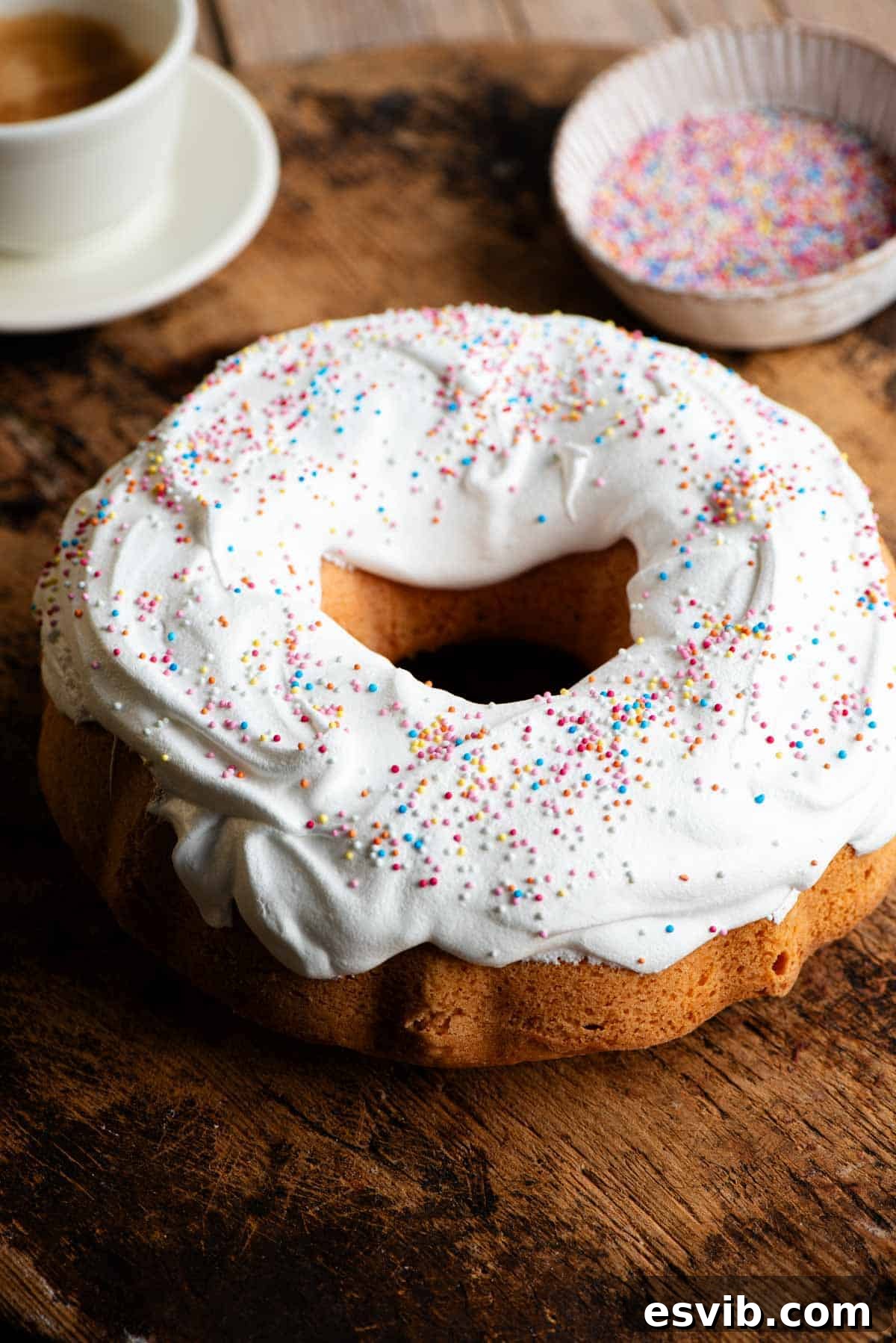
Ciaramicola: The Iconic Pink Italian Easter Bundt Cake from Perugia
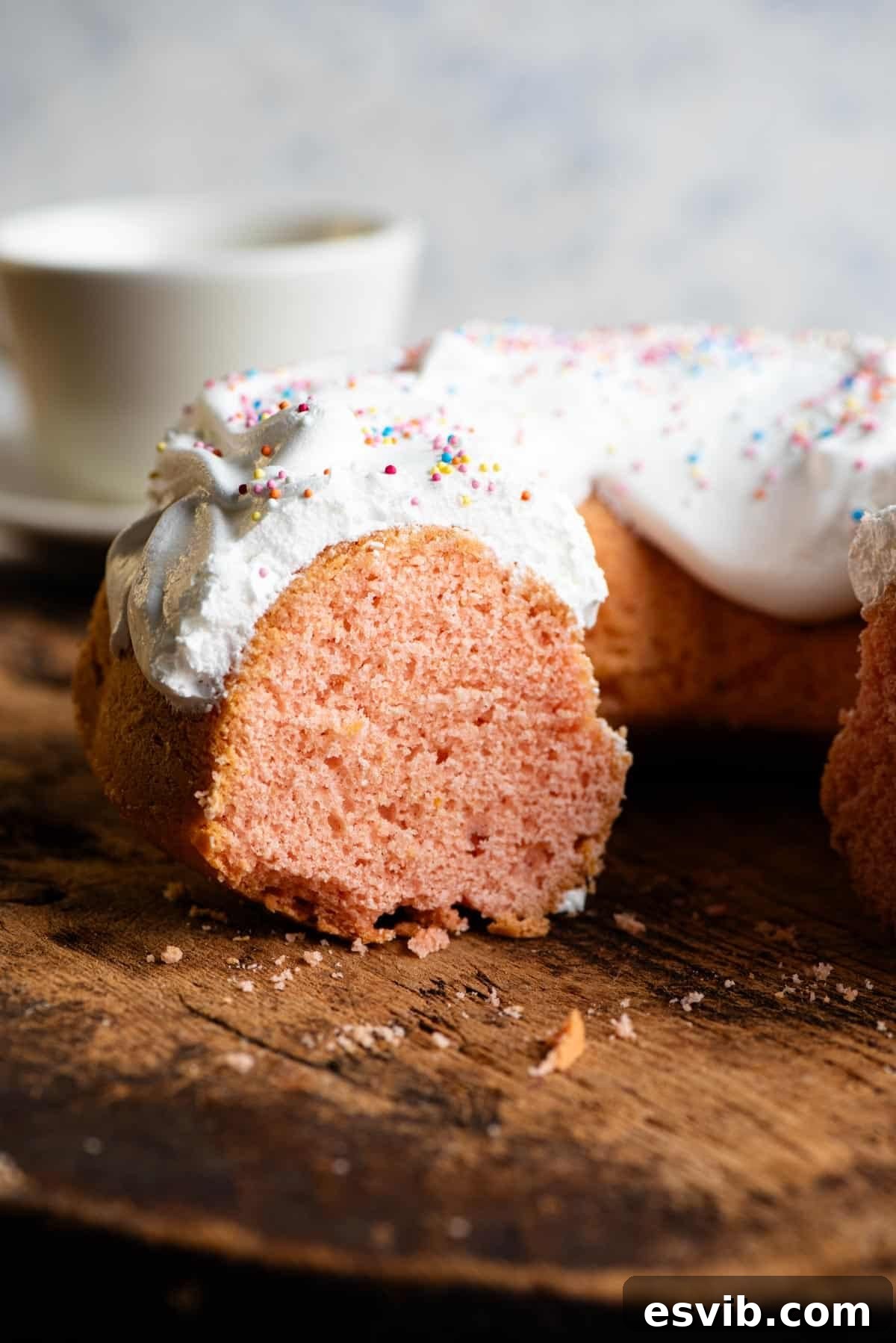
Step into the enchanting culinary traditions of Italy with Ciaramicola, a truly spectacular Italian Easter cake hailing from the picturesque city of Perugia in Umbria. This exquisite dessert is renowned for its strikingly vibrant pink sponge, a hue achieved through a special Italian liqueur, and is elegantly crowned with a cloud of whipped meringue and colorful sprinkles. More than just a cake, Ciaramicola is a showstopping centerpiece, ideal for Easter festivities and any joyous celebration that calls for a touch of Italian charm and unique flavor.
Table of Contents
- Ciaramicola: History and Symbolism
- Alchermes: The Secret to Ciaramicola’s Charm
- Alchermes Alternatives and Spice Enhancements
- Ingredients for Ciaramicola
- Visual Walk-Through of the Ciaramicola Recipe
- Top Tips for a Perfect Ciaramicola
- More Italian Easter Desserts to Try
- Full Ciaramicola Recipe
Ciaramicola: A Cake Steeped in History and Symbolism
There’s a special joy in uncovering regional Italian recipes that remain relatively unknown outside their local origins. Much like the rich, flourless Torta Barozzi, the festive Cuccia, or the spiced Panpepato, Ciaramicola (pronounced chee-ara-mee-ko-la) is a treasure from the heart of Umbria.
This magnificent cake is a traditional Easter dessert uniquely tied to Perugia, the capital city of Umbria. Its captivating pink and white colors are not just for aesthetics; they proudly symbolize Perugia’s historic coat of arms, making every slice a taste of local heritage. The vibrant pink represents the city’s red griffin on a white background, while the meringue topping signifies the white elements, intertwining culinary art with civic pride.
Alchermes: The Secret to Ciaramicola’s Charm
The defining element of Ciaramicola, giving it both its stunning bright pink hue and its distinctive, aromatic flavor, is Alchermes. This ancient, intensely red liqueur boasts a heritage dating back to the Renaissance. Its complex profile is crafted from a unique blend of rose water, warm cinnamon, exotic cardamom, and fragrant cloves. Alchermes is a cornerstone in several traditional Italian desserts, including the delightful Zuppa Inglese (Italian Trifle) and the dome-shaped Zuccotto, each benefiting from its vibrant color and intricate spice notes.
While Alchermes is an indispensable ingredient for authentic Ciaramicola, it can sometimes be a challenge to find outside of Italy. For those fortunate enough, procuring it locally is ideal. However, if Alchermes proves elusive, don’t despair! We offer practical suggestions below for suitable substitutions, allowing you to recreate the spirit of this magnificent cake. You might even consider embarking on a culinary adventure by attempting to make your own Alchermes at home with this helpful tutorial.
Traditionally, Ciaramicola carried a profound symbolic meaning: it was a token of love. Young women in Perugia would lovingly bake this pink cake as a gift for their fiancés during Easter, a heartfelt gesture celebrating their bond. This beautiful story adds an extra layer of sweetness to the cake. With its rich history, symbolic colors, and exquisite taste, Ciaramicola is truly perfect for celebrating Easter, or indeed, any special occasion that calls for a heartfelt, show-stopping dessert.
Ingredients for Ciaramicola: Crafting the Perfect Pink Sponge
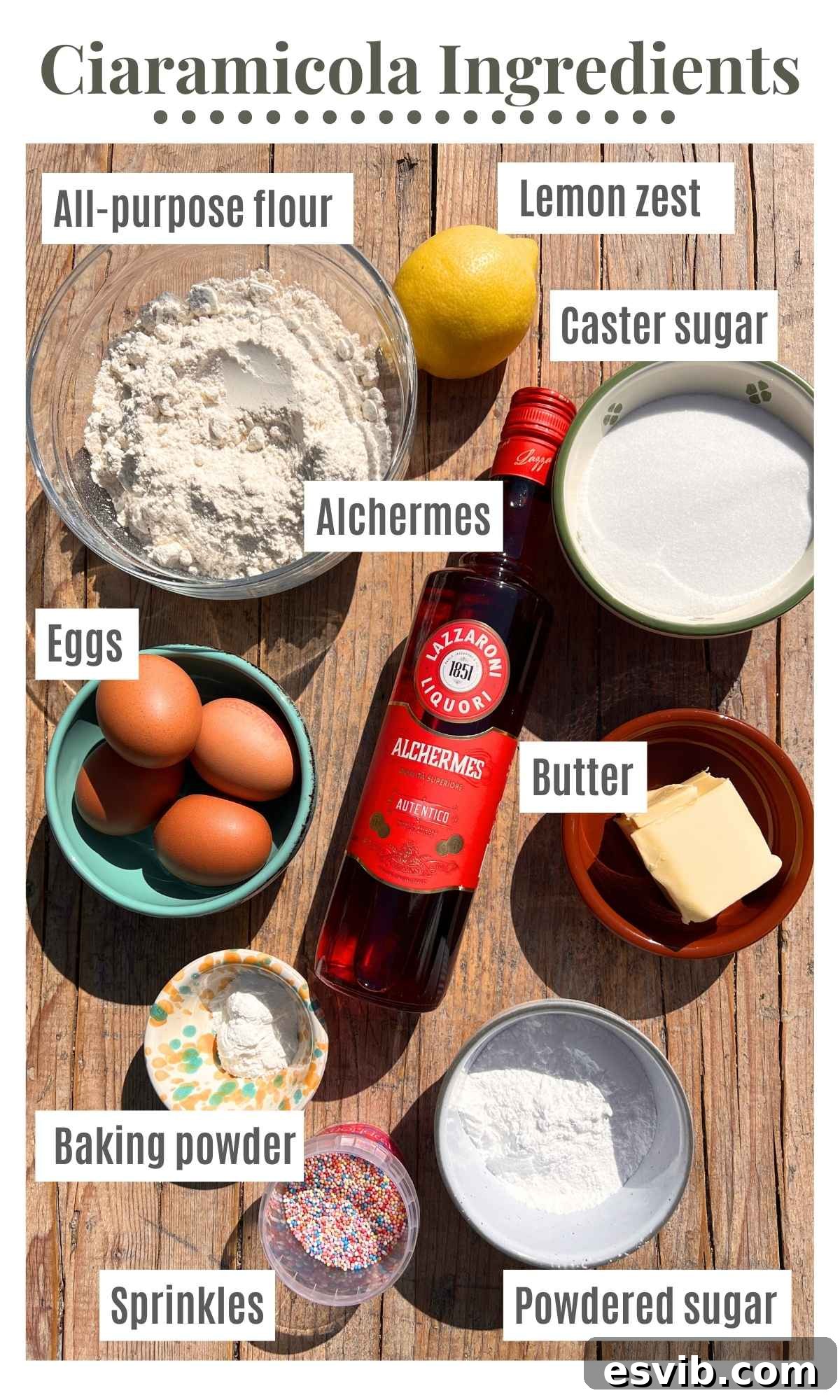
Alchermes Alternatives and Spice Enhancements
If finding Alchermes proves difficult, these alternatives can help you achieve a delicious Ciaramicola, though some may require additional coloring for the signature pink hue:
- Juice plus alcohol: For a flavor profile closer to Alchermes, combine 1/4 cup (60ml) of cranberry or pomegranate juice with 1/4 cup (60ml) of a complementary alcohol. Good choices include rum for warmth, Marsala for a rich wine note, Vin Santo for a sweeter touch, or Grand Marnier for a subtle orange zest. While this blend offers a delightful taste, be aware that fruit juices alone may not provide the intense pink color of Alchermes, so you might need to add a few drops of red food coloring to achieve Ciaramicola’s iconic shade.
- No alcohol option: For a non-alcoholic version, simply use 1/2 cup (125ml) of cranberry or pomegranate juice. Alternatively, milk can be a neutral liquid replacement if the vibrant pink color isn’t your primary concern. Remember, food coloring will be essential for the authentic appearance with these options.
- Replicating Alchermes spices: To capture the aromatic complexity of Alchermes even when using a liquid substitute, enhance your cake batter with a precise blend of spices. Add 1/4 teaspoon of ground cinnamon and a tiny 1/8 teaspoon (or a generous pinch) of each: ground cloves, ground cardamom, ground nutmeg, and ground coriander. These spices, when added to the flour, will infuse your Ciaramicola with an authentic, warm, and fragrant depth.
Visual Walk-Through of the Ciaramicola Recipe
Our step-by-step photos below offer a clear visual guide to the Ciaramicola baking process. For the complete, detailed instructions, please refer to the recipe card further down this page.
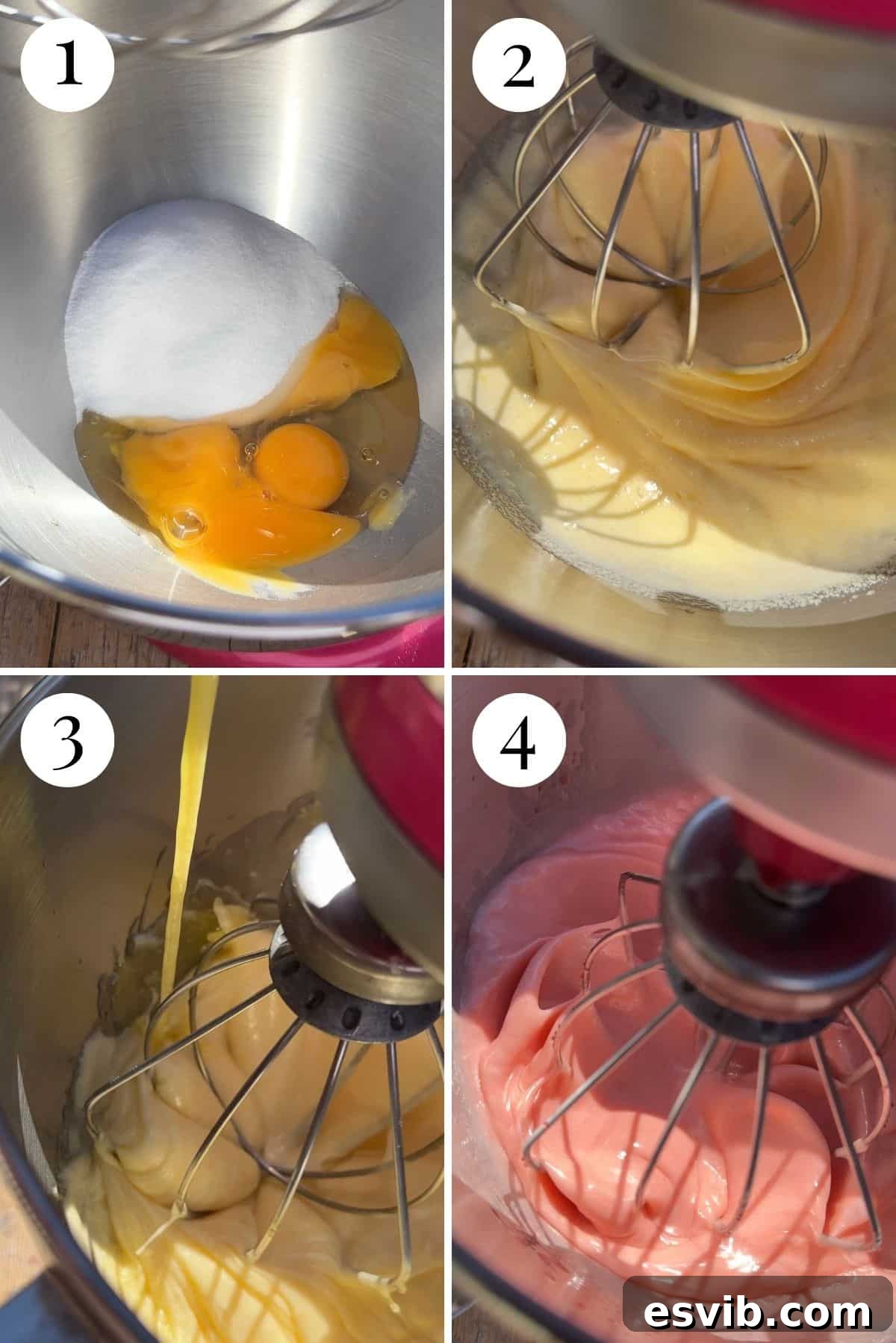
Step 1: Preparing the Cake Batter Base – In a stand mixer, whisk together the eggs and sugar until the mixture becomes wonderfully thick and pale, exhibiting a creamy, voluminous consistency. This aeration is crucial for a light sponge. (See photos 1 and 2 for visual reference).
Step 2: Infusing Flavor and Moisture – Gradually pour in the melted butter and the vibrant Alchermes liqueur (or your chosen substitute) into the egg mixture while mixing on a low speed. Once fully incorporated, add the fragrant lemon zest, gently folding it in to distribute its citrusy notes throughout the batter. (Refer to photos 3 and 4 for guidance).
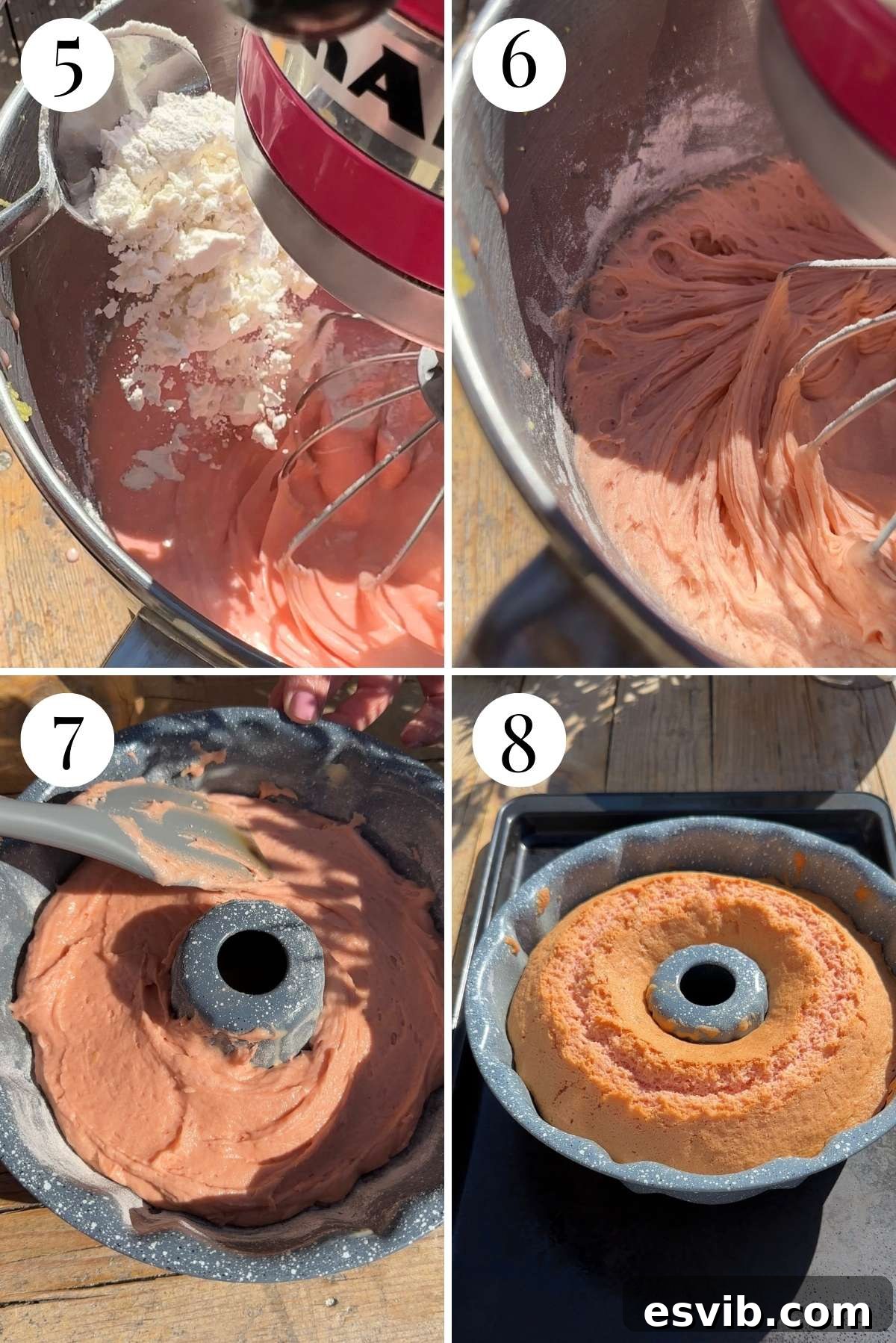
Step 3: Combining Dry Ingredients – In a separate bowl, whisk together the all-purpose flour, baking powder, and a pinch of salt. Gradually add this dry mixture to the wet batter, one spoonful at a time, mixing on a medium speed until a smooth, uniform cake batter forms. Be careful not to overmix, which can lead to a tough cake. (As shown in photos 5 and 6).
Step 4: Baking the Cake – Gently spoon the prepared batter into your meticulously greased bundt pan, ensuring it’s evenly distributed and the top is smoothed out. Bake in your preheated oven at 180°C (350°F) for approximately 30-35 minutes, or until a wooden skewer inserted into the center comes out clean, indicating the cake is perfectly baked. (Visualize this process in photos 7 and 8).
Step 5: Preparing the Meringue Topping – About 10 minutes before the cake is ready to come out of the oven, take the 2 reserved egg whites and add them to a thoroughly clean stand mixer bowl (ensure no trace of grease). Whisk on a medium speed until the whites become frothy and opaque. Then, gradually add the caster sugar and powdered sugar, a spoonful at a time, while continuing to whisk. Increase the speed to medium-high and whisk until the meringue is thick, forms stiff, glossy peaks, and holds its shape beautifully. (See photos 9 and 10 for the ideal meringue consistency).
Step 6: Cooling and Unmolding – As soon as you remove the baked Ciaramicola from the oven, immediately reduce the oven temperature to 100°C (210°F). To expedite cooling, you can leave the oven door ajar for about 5 minutes. While the cake is still warm, carefully place a cooling rack over the bundt pan and invert it to release the cake onto the rack. Remove the bundt pan, then place the cooling rack (with the cake) onto a baking tray. This setup makes it easy to transfer the cake back to the oven. (Photo 11 illustrates the unmolding process).
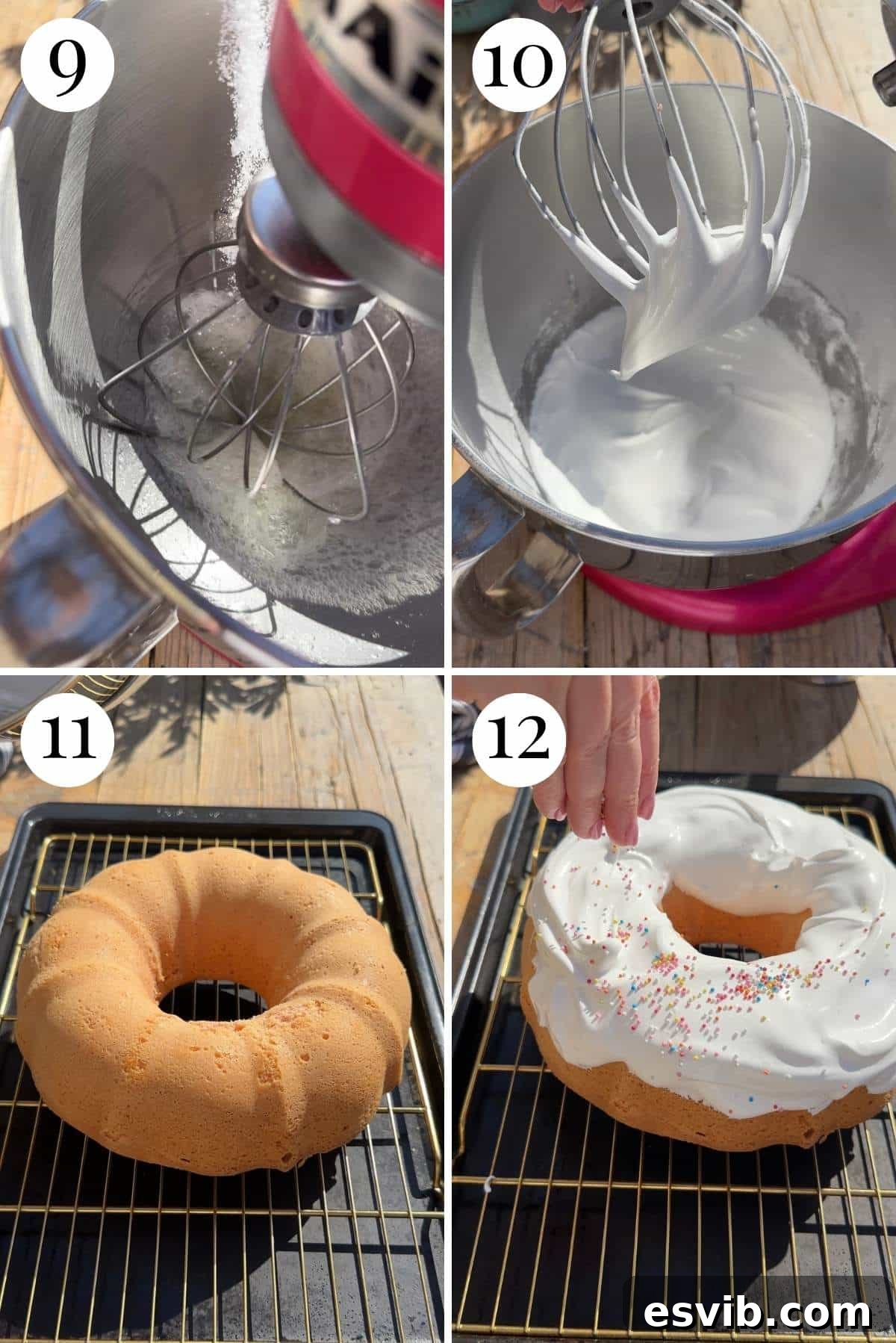
Step 7: Final Bake for Meringue – Generously top the warm Ciaramicola with the freshly whipped meringue, ensuring a beautiful, even coating. Liberally dust the meringue with an array of colorful sprinkles. Once the oven has reached the lower temperature of 100°C (210°F), return the cake to the oven for an additional 15 minutes. This gentle bake will set the meringue, giving it a delicate, slightly crisp exterior while keeping it soft and marshmallow-like inside. (Photo 12 captures the finished cake before its final bake).
Top Tips for a Perfect Ciaramicola
Achieving a flawless Ciaramicola is simple with a few expert tips:
- Master the Bundt Pan: The intricate design of a bundt pan requires careful preparation. Always opt for a high-quality non-stick bundt pan if possible. Crucially, grease it generously and thoroughly with softened butter, ensuring every crevice is coated. Follow this by dusting the entire interior with a thin layer of all-purpose flour, tapping out any excess. This double-layer coating is your best defense against sticking and guarantees that your beautifully detailed cake will release effortlessly.
- Rapid Oven Cooling: After the main baking phase, when you need to lower the oven temperature significantly for the meringue, speed is of the essence. To help your oven cool down quickly, open the oven door fully for about 5 minutes. This rapid ventilation prevents the meringue from over-browning or collapsing due to residual high heat, ensuring it bakes evenly and sets beautifully.
- Don’t Overmix the Batter: When adding the dry ingredients (flour, baking powder, salt) to the wet mixture, mix just until combined. Overmixing develops the gluten in the flour, which can lead to a tough, dense cake. A light, fluffy sponge is key to Ciaramicola’s charm.
- Room Temperature Ingredients: Ensure your eggs and butter are at room temperature before you begin. This allows them to emulsify better, creating a smoother, more uniform batter and a lighter, more even cake crumb.
- Patience is Key for Cooling: Although you unmold the cake while warm to prevent sticking, allow it to cool completely on the rack before slicing and serving. This allows the cake’s structure to set fully, preventing it from crumbling when cut.
More Italian Easter Desserts to Try
Italian Desserts
Zuccotto (Sponge Cake with Ricotta Filling)
Italian Easter Recipes
Pastiera Napoletana
Italian Desserts
Italian Easter Bread (Pane di Pasqua)
Italian Desserts
Zuppa Inglese (Italian Trifle)
We hope you enjoy baking and savoring this magnificent Ciaramicola Easter Cake. If you’ve tried this recipe or any other on our blog, please don’t forget to rate the recipe and share your experience in the comments section below – we truly value your feedback! You can also follow us on Facebook, Instagram, and Pinterest, or simply sign up for our Newsletter to receive more of our delectable Italian recipes directly in your inbox.
Step By Step Photos Above
Most of our recipes come with step by step photos, helpful tips and tricks to make it perfectly first time and even video!
Ciaramicola (Italian Easter Bundt Cake)
Rated 3 out of 5 stars based on 1 vote.
By Emily
20
50
1
10
12 servings

Equipment
-
9 inch bundt cake pan (non stick recommended)
-
Cooling rack
-
Stand mixer with whisk attachment or electric hand whisk
Ingredients
- 280 g all purpose flour, (approximately 2 cups, spooned and levelled)
- 150 g (3/4 cup) granulated sugar
- 2 large eggs + 2 egg yolks (reserve the whites for the topping)
- 125ml (1/2 cup) Alchermes liqueur (see notes for substitution options)
- 100 g (7 tablespoons) unsalted butter, melted (plus extra for greasing the pan)
- 2 teaspoons baking powder
- Zest of 1 lemon (preferably organic)
Topping
- 2 egg whites (reserved from above)
- 50 g (1/4 cup) caster sugar (superfine sugar)
- 50 g (1/4 cup) powdered sugar (also known as icing sugar or confectioners’ sugar)
- Sprinkles, for topping (use colorful ones for a festive look)
Instructions
-
Prepare the Oven and Pan: Pre-heat your oven to 180°C (350°F) using a static heat setting. Take your bundt pan and thoroughly grease its entire interior with softened butter, ensuring you get into all the nooks and crannies. Lightly dust the greased pan with all-purpose flour, then invert it and tap out any excess flour. This crucial step prevents the cake from sticking.
-
Whisk Eggs and Sugar: In the bowl of a stand mixer fitted with a whisk attachment (or using an electric hand whisk in a large bowl), combine the 2 whole eggs and the 2 egg yolks (remember to reserve the 2 egg whites for the meringue topping later). Add the 150g (3/4 cup) of granulated sugar. Whisk on a medium speed for about 5-7 minutes until the mixture is thick, pale in color, and has significantly increased in volume. It should reach a “ribbon stage” where it leaves a distinct trail when the whisk is lifted.
-
Incorporate Wet Ingredients: With the mixer on a low speed, slowly pour in the 100g (7 tablespoons) of melted butter. Once it’s almost fully incorporated, add the 125ml (1/2 cup) of Alchermes liqueur (or your chosen substitute, referring to the notes section for alternatives). Mix until just combined.
-
Add Lemon Zest and Dry Ingredients: Once the wet ingredients are well-mixed, stir in the zest of 1 lemon. In a separate bowl, combine the 280g (2 cups) of all-purpose flour with the 2 teaspoons of baking powder and a pinch of salt. Gradually add this dry mixture to the cake batter, a spoonful at a time, mixing on medium speed until a smooth, uniform batter forms. Be careful not to overmix, as this can make the cake tough.
-
Bake the Cake: Carefully pour the finished batter into your meticulously prepared bundt pan. Use a spatula to smooth out the surface evenly. Place the pan on the middle shelf of your preheated oven and bake for 30-35 minutes. To check for doneness, insert a wooden skewer or toothpick into the center of the cake; it should come out clean.
-
Prepare the Meringue: Approximately 10 minutes before the cake is due to finish baking, begin preparing the meringue. Add the 2 reserved egg whites to a clean stand mixer bowl (ensure no grease is present, as it can prevent the whites from stiffening). Whisk the egg whites on a medium speed until they become white and frothy. Then, gradually add the 50g (1/4 cup) of caster sugar and the 50g (1/4 cup) of powdered sugar, a spoonful at a time, until fully combined. Continue to whisk on a medium-high speed until the meringue is thick, stiff, and beautifully shiny, forming firm peaks.
-
Cool the Oven: As soon as you remove the baked cake from the oven, immediately reduce the oven temperature to 100°C (210°F). For faster cooling, open the oven door for about 5 minutes.
-
Unmold the Cake: While the cake is still warm from the oven, place a cooling rack directly on top of the bundt pan. Carefully and confidently turn the pan upside down to release the cake onto the cooling rack. Gently lift and remove the bundt pan. Then, place the cooling rack with the cake onto a baking tray, which will make it easier to transfer back into the oven.
-
Top and Finish Bake: Generously cover the warm cake with the freshly whipped meringue, spreading it evenly. Then, liberally dust the meringue with your chosen colorful sprinkles. Once the oven has reached the lower temperature, return the cake (on its cooling rack and baking tray) to the oven for an additional 15 minutes to gently set the meringue.
-
Cool Before Serving: Remove the Ciaramicola from the oven. Allow it to cool completely on the cooling rack before attempting to slice and serve. This allows the cake’s structure to fully set, ensuring clean slices and the best texture.
Notes
- To mimic the flavor profile and achieve a similar alcohol content as Alchermes, combine 1/4 cup (60ml) of either cranberry or pomegranate juice with 1/4 cup (60ml) of an alcoholic beverage like rum, Marsala wine, Vin Santo, or Grand Marnier. Please be aware that while these juices contribute a lovely tartness, they will not naturally impart the intense pink color of authentic Alchermes. To attain Ciaramicola’s characteristic vibrant pink, you will need to add a few drops of red food coloring to the liquid mixture before incorporating it into the batter.
- For those who wish to include the unique spice notes found in Alchermes, even with a liquid substitute, add 1/4 teaspoon of ground cinnamon along with a very small 1/8 teaspoon (or a generous pinch) of each: ground cloves, ground nutmeg, ground coriander, and ground cardamom. These spices should be whisked together with your flour mixture before adding it to the wet ingredients.
- Alternatively, for a simple non-alcoholic liquid replacement, you can just use milk. In this case, red food coloring will be essential for the signature pink sponge.
Storage Instructions:
To maintain the freshness and delicate texture of your Ciaramicola, store the cake at room temperature. A large mixing bowl inverted over the cake works perfectly to keep it covered and protected from air. It will remain delicious for up to 2 days. While you can store it in the refrigerator, the cake’s texture is often best preserved at room temperature.
Helpful Info for All Recipes
- I always use extra virgin olive oil in all of my recipes unless stated otherwise. Its robust flavor enhances many Italian dishes.
- When I use canned or jarred tomatoes of any kind, I consistently choose Cirio or Mutti brands for their exceptional quality, rich flavor, and consistent results.
- All vegetables are considered medium-sized unless specifically stated otherwise in the ingredient list.
- All recipes featured on this blog are carefully tested and developed using a fan (convection) oven, which may affect baking times and temperatures if you are using a conventional oven.
- Find out more about how nutrition information is calculated on our site, as it should always be used as an approximation.
- Explore our essential guide to Italian Pantry Staples to stock your kitchen like an Italian nonna.
- You can also find all our recommended Essential Kitchen Tools for Italian Cooking to equip your culinary space.
Nutrition
Calories: 254kcal
|
Carbohydrates: 40g
|
Protein: 4g
|
Fat: 8g
|
Saturated Fat: 5g
|
Polyunsaturated Fat: 0.5g
|
Monounsaturated Fat: 2g
|
Trans Fat: 0.3g
|
Cholesterol: 45mg
|
Sodium: 145mg
|
Potassium: 55mg
|
Fiber: 1g
|
Sugar: 22g
|
Vitamin A: 248IU
|
Calcium: 50mg
|
Iron: 1mg
Nutrition information is automatically calculated and should only be used as an approximation. Individual results may vary.