
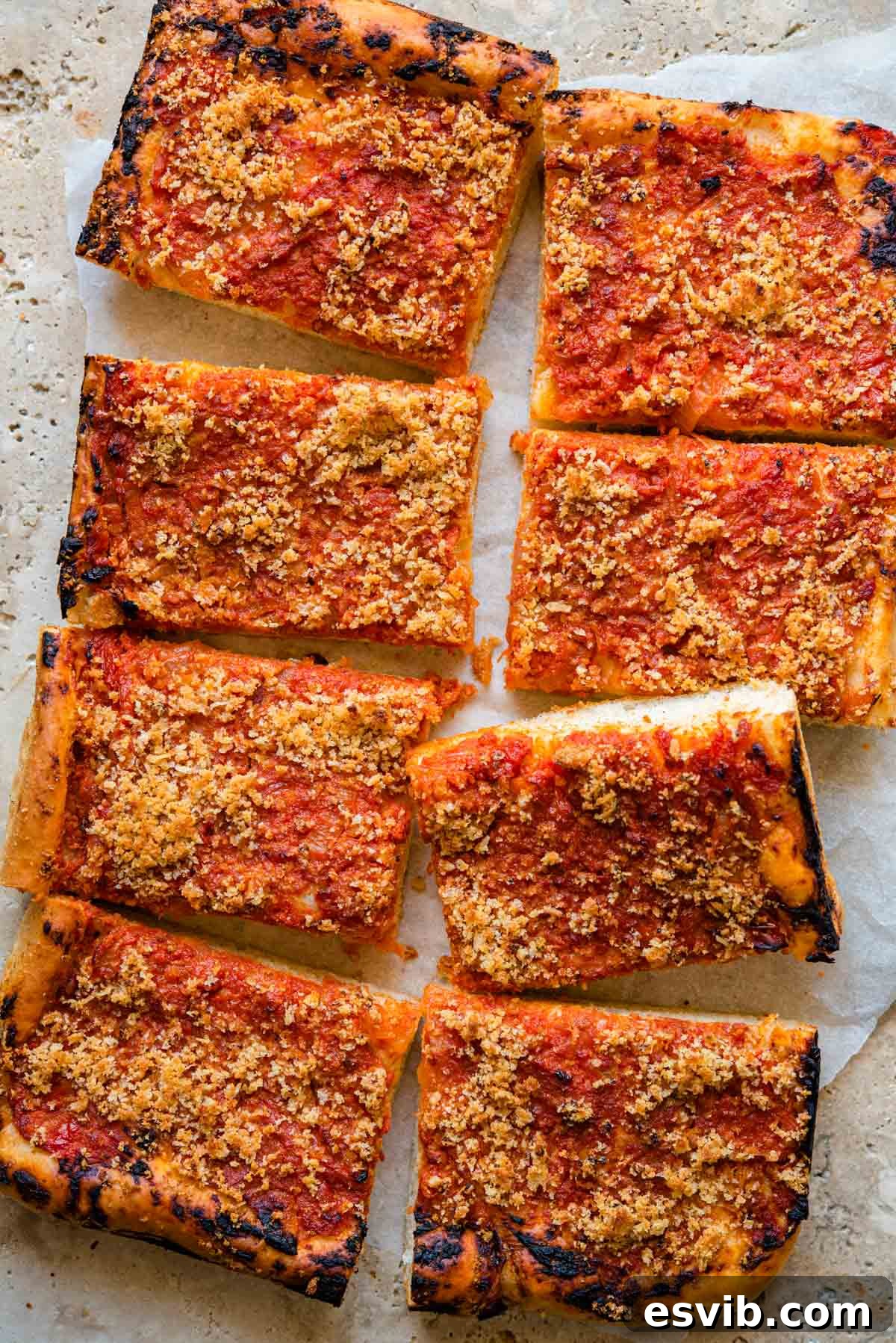
Authentic Sicilian Pizza (Lo Sfincione): Your Guide to a Classic Italian Street Food
Sicilian Pizza, famously known as Lo Sfincione, offers a culinary experience distinct from other Italian pizza styles. This traditional delicacy features a wonderfully thick, incredibly soft, and airy rectangular crust, generously adorned with a rich, flavorful tomato sauce. The sauce is a masterpiece in itself, infused with slowly caramelized onions and pungent anchovies, all crowned with a golden, crunchy breadcrumb topping. Embark on a journey to bring the vibrant flavors of Sicilian street food right into your home with our easy-to-follow, comprehensive guide, complete with detailed step-by-step photos and a video tutorial.
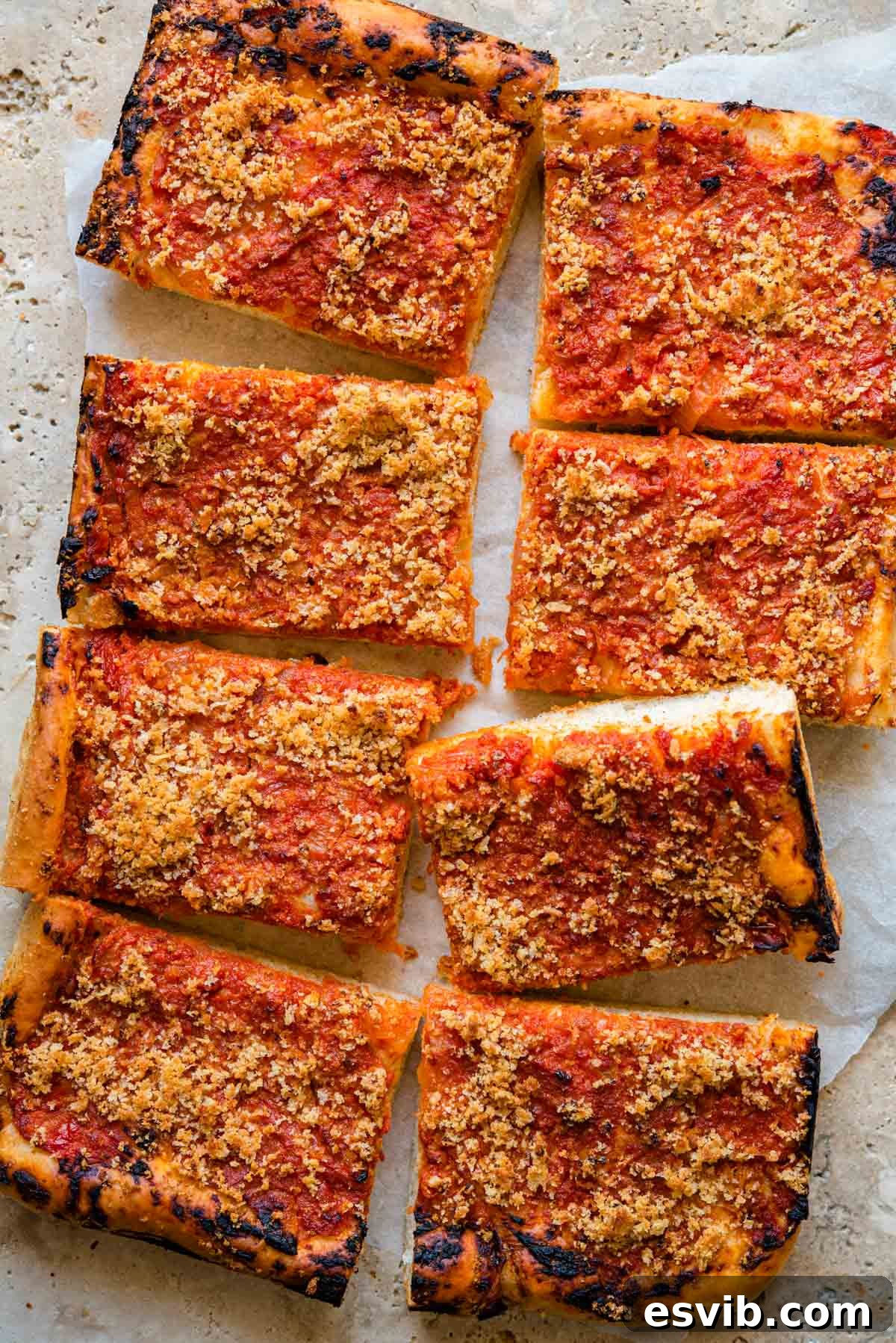
If you’ve yet to experience the unique pleasure of Sicilian pizza, prepare to discover a truly exceptional culinary delight. Forget what you think you know about pizza; Sfincione redefines the genre, offering a depth of flavor and a textural experience that is utterly unforgettable.
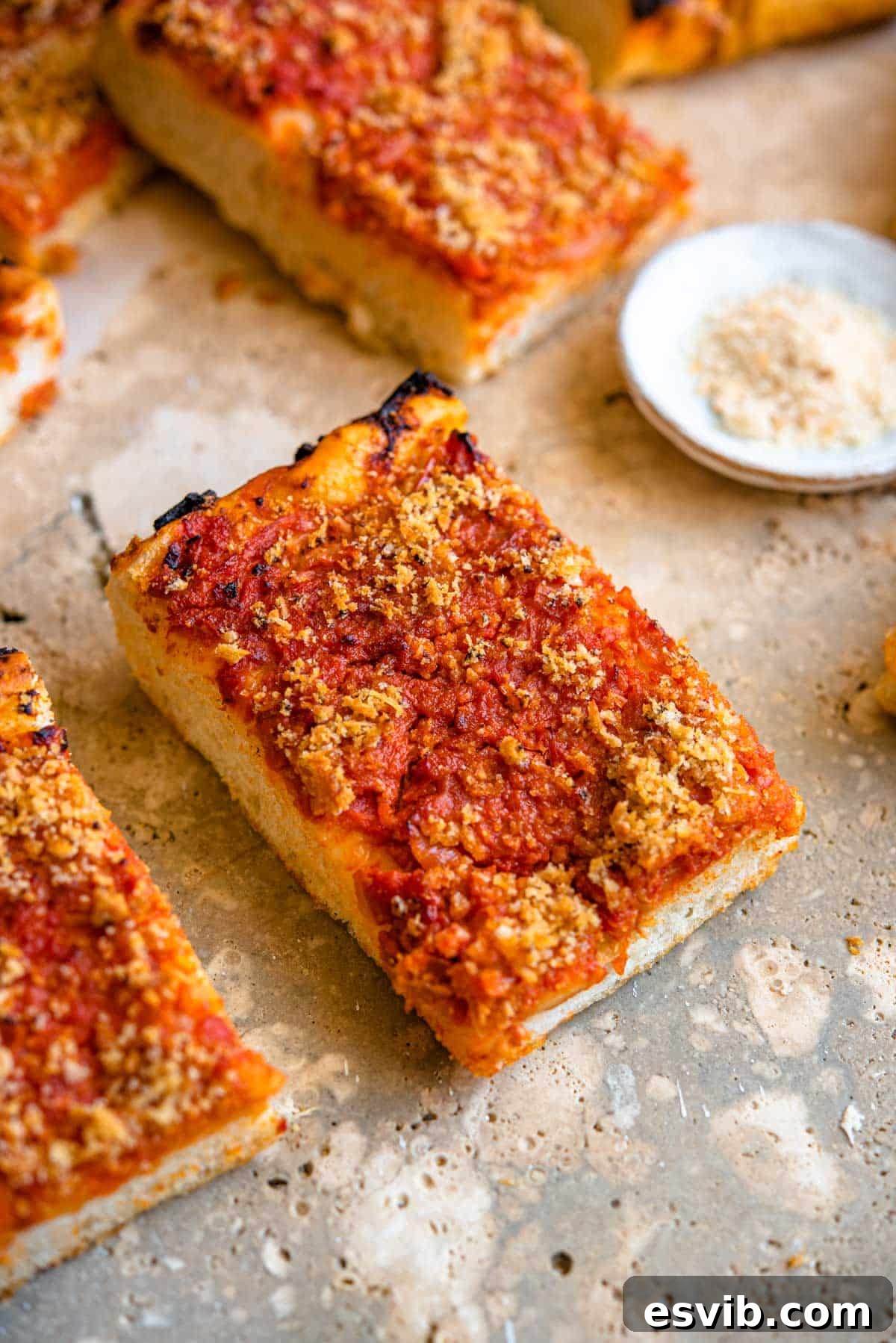
The crust of Sicilian pizza stands apart, boasting a substantial thickness reminiscent of a light and airy focaccia. Baked to perfection in a rectangular baking tray, this robust base provides the ideal foundation for its extraordinary toppings. The true soul of Sfincione lies in its utterly amazing tomato sauce.
Crafted with care, the sauce is a symphony of flavors: sweet, slow-cooked caramelized onions, a generous amount of anchovies that melt seamlessly into the mixture providing a deep umami richness (don’t worry, it won’t taste overly fishy!), and traditional caciocavallo cheese. This opulent sauce is then spread thickly over the soft, pillowy pizza crust, creating a harmonious balance with the substantial base. The final flourish comes from a sprinkling of crunchy breadcrumbs and fragrant dried oregano, adding a delightful textural contrast and aromatic complexity.
The result? Pure pizza heaven! Each bite is a journey through layers of flavor and texture, from the airy crust to the savory sauce and the satisfying crunch of the topping.
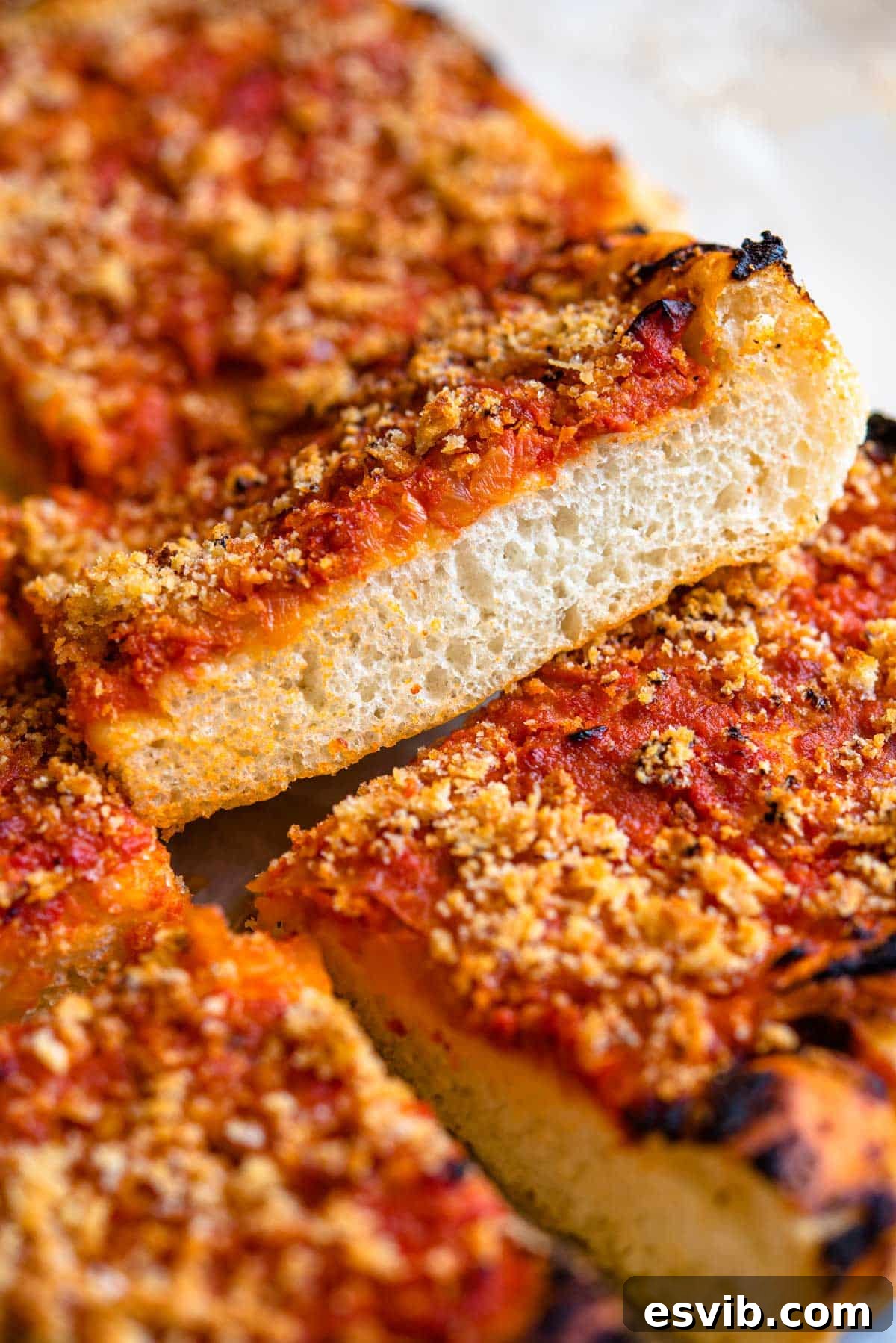
Fun Fact: The name “Sfincione” originates from the Latin word “Sfincia,” meaning “sponge.” This perfectly describes the pizza’s characteristic thick, light, and airy base, which truly absorbs the flavors of the toppings. Observe the captivating photo below, illustrating the remarkable thick, spongy texture of this iconic crust!
Sicilian Pizza vs. Regular Pizza: The Distinctive Qualities of Sfincione
When most people think of Italian pizza, two primary styles often come to mind: the classic Neapolitan pizza with its characteristic puffy, charred outer crust, and the popular thin and crispy crust varieties. However, Sicilian pizza, or Sfincione, carves its own unique niche, offering a profoundly different experience. Here are the key distinctions that make it so truly special and beloved:
- No Outer Border: A Topping Paradise – Unlike typical pizzas where a border is intentionally left around the edge, Sfincione embraces its toppings wholeheartedly. The rich sauce and delightful ingredients are spread right to the very edge of the dough, ensuring every single bite is bursting with flavor, from corner to corner. This generous topping distribution is a signature of its street food heritage.
- The Double Proof: Achieving Ultimate Lightness – While most standard pizza doughs undergo a single proofing process in a bowl after kneading, Sicilian pizza dough is a commitment to ultimate airiness. It is proved not once, but twice. The second proof takes place directly in the large rectangular baking tray, with the toppings already applied. This crucial second rise allows the dough to develop an incredibly thick, yet wonderfully light and sponge-like crust, a hallmark of authentic Sfincione. This extended proofing time is essential for its signature texture, creating a delightful contrast between its airy interior and slightly crispy exterior.
- Traditional Cheese: Caciocavallo Reigns Supreme – A defining characteristic of traditional Sfincione is the absence of mozzarella. Instead, it proudly features caciocavallo cheese. This unique, teardrop-shaped cheese, often made from cow’s or sheep’s milk, is either skillfully mixed directly into the rich tomato sauce, or occasionally sprinkled onto the pizza base before the sauce is applied. Its distinctive flavor profile adds depth and authenticity that mozzarella, while delicious, simply cannot replicate for this particular dish.
- A Luxurious Layer of Sauce: Perfectly Paired with a Thick Crust – The conventional wisdom for pizza often dictates a thin layer of sauce to keep the crust crisp. Sfincione, however, confidently defies this rule. Given its robust, thick crust, a similarly generous layer of thick, rich sauce is not only appropriate but necessary. This ensures that each bite is perfectly balanced, with the substantial base providing ample structure for the abundant, flavorful sauce without making the overall texture too wet or heavy.
- The Signature Topping: Crunchy Breadcrumbs and Aromatic Oregano – Sfincione’s crown jewel is its unique topping of crunchy breadcrumbs combined with fragrant dried oregano. This simple yet brilliant addition provides an irresistible textural contrast to the soft crust and smooth sauce, delivering a satisfying crunch and an aromatic finish that makes this pizza truly unforgettable. It’s a subtle yet essential component that elevates the entire experience.
What If I Can’t Find Caciocavallo Cheese? Suitable Substitutes
Caciocavallo is a semi-hard, stretched-curd cheese, traditionally shaped like a teardrop, and produced from either cow’s or sheep’s milk. Its flavor is unique, offering a mild, slightly piquant, and nutty taste that perfectly complements the robust flavors of Sfincione. You’ll often find it in well-stocked Italian delis or specialty cheese shops, especially those specializing in Southern Italian imports.
However, if caciocavallo proves elusive in your area, fear not! There are excellent substitutes that will still allow you to create a delicious and authentic-tasting Sicilian pizza. The flavor profile is quite similar to aged provolone cheese, making it a fantastic and widely available alternative. Opt for provolone piccante for a closer match to caciocavallo’s slight sharpness and complex notes.
Other wonderful cheese options that perform admirably in Sfincione include: unsmoked scamorza (which shares a similar texture and melting quality, offering a delicate smoky hint if available smoked, though unsmoked is closer to caciocavallo), a good quality semi-hard pecorino (which will introduce a saltier, tangier note, especially if made from sheep’s milk, adding a delightful zest), or even a mild gouda for a creamy, slightly sweet undertone that complements the savory sauce. Each of these cheeses will contribute to the rich and satisfying character of your homemade Sfincione, ensuring a delightful result even without the traditional option.
How to Make Sicilian Pizza (Lo Sfincione) – A Step-by-Step Guide
Crafting authentic Sicilian pizza at home is a rewarding experience that, while requiring a bit of patience for the proofing, is straightforward and truly enjoyable. Follow these detailed steps to achieve a perfect, spongy crust and a rich, flavorful topping that will transport you straight to the streets of Palermo.
1. Prepare the Dough for its First Proof
To begin, combine the dry ingredients for the dough. Add the 00 flour to a large mixing bowl. Then, carefully add the sugar, salt, and fast-action yeast. It’s crucial to ensure that the yeast does not come into direct contact with the salt initially, as salt can inhibit yeast activity, potentially hindering your dough’s rise (photo 1). Stir these dried ingredients thoroughly to combine them evenly. Next, create a generous well in the center of your flour mixture. Pour in the warm water (ensure it’s lukewarm, not hot, to avoid killing the yeast) and olive oil into this well (photo 2).
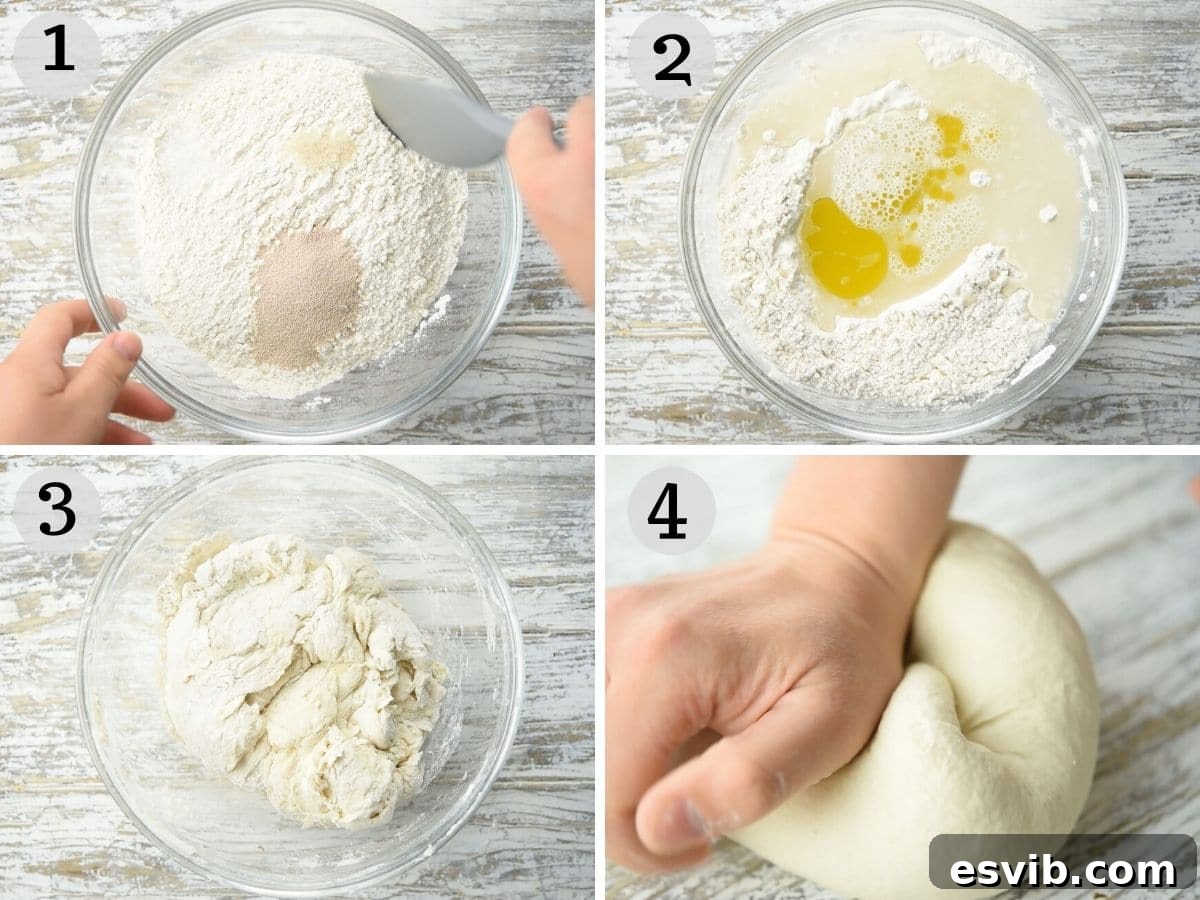
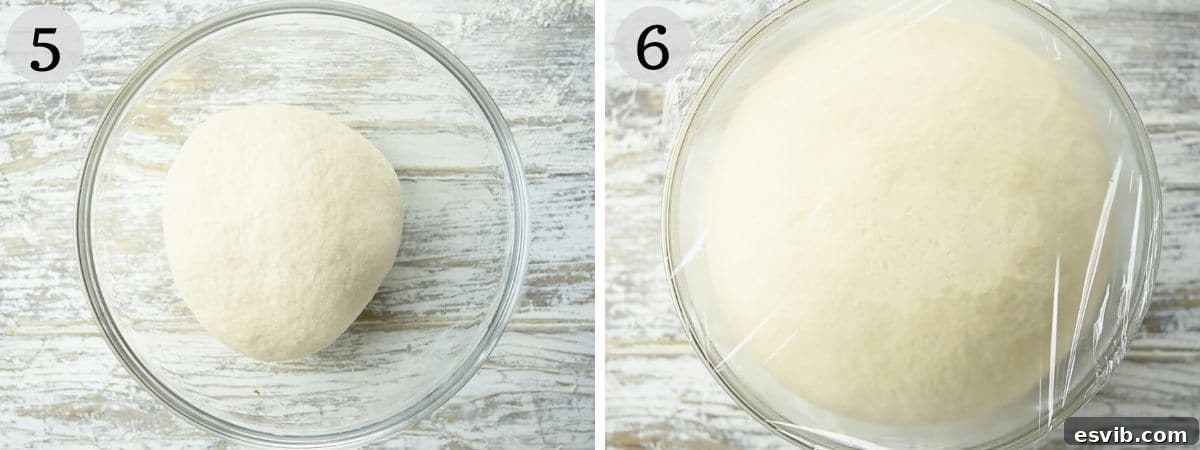
Stir the mixture with a wooden spoon or your hands until a cohesive, shaggy dough begins to form. Once it comes together, transfer the dough onto a clean work surface that has been lightly dusted with flour. Knead the dough vigorously for about 10 minutes. This process is essential for developing the gluten, which gives Sfincione its signature chewy-yet-airy structure. You’re looking for a smooth, elastic texture that springs back when gently pressed. After kneading, shape the dough into a ball and place it into a clean bowl that has been lightly greased with a little olive oil. This prevents sticking and promotes a good rise. Cover the bowl tightly with plastic wrap and let it prove in a warm, draft-free place for approximately 3 hours, or until it has visibly tripled in size (photos 3-6). This lengthy first proof is vital for developing both the unique flavor and the characteristic airy texture of Sfincione.
2. Craft the Flavorful Tomato and Anchovy Sauce
While your dough is happily proofing, it’s the perfect time to prepare the heart of your Sfincione – the rich, aromatic sauce. Heat 1 tablespoon of olive oil in a large pan or skillet over a medium heat. Add the thinly sliced white onion and sauté it slowly. The key here is patience; cook the onion gently until it becomes wonderfully soft, translucent, and slightly caramelized, which usually takes between 5 to 10 minutes. This slow cooking brings out the natural sweetness of the onions, forming a crucial flavor base. Once the onion is perfectly softened, add the salted anchovies to the pan. Stir them in, gently breaking them up with your spoon as they cook. The anchovies will practically melt into the onions, infusing the mixture with a deep, savory umami flavor, rather than a strong fishy taste – they are a secret weapon for depth! Continue to sauté the onions and anchovies together for another 5 minutes, allowing their flavors to meld beautifully (photos 7 & 8).
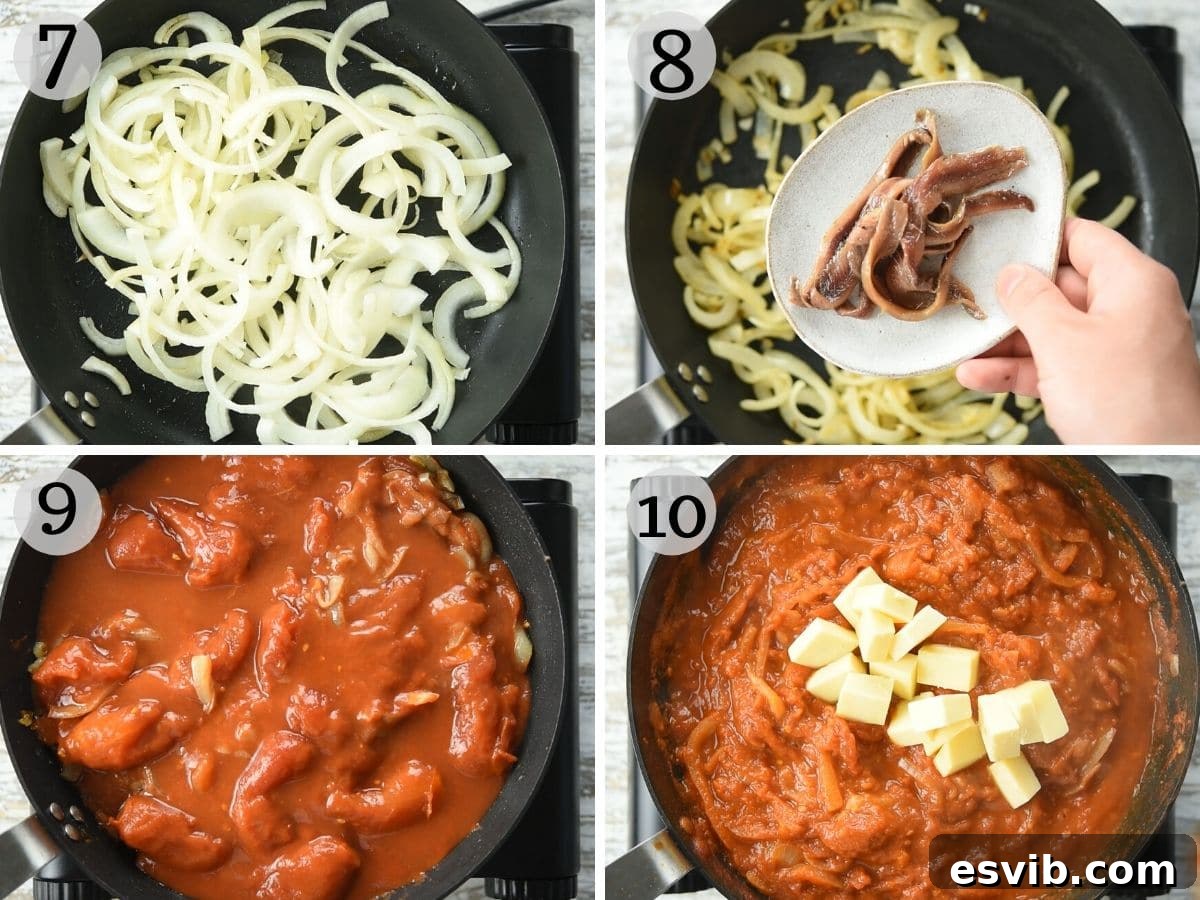
Next, pour in the canned plum tomatoes (or your chosen substitute like pureed or chopped tomatoes). Bring the sauce to a gentle simmer and let it cook for 15 minutes, allowing the tomato flavors to deepen and the sauce to thicken slightly. Stir occasionally to prevent sticking (photo 9). Finally, add the cubed caciocavallo cheese (or your chosen substitute) along with a pinch of salt and pepper to taste. Continue to cook the sauce for an additional 10 minutes, stirring occasionally, until the cheese has melted and integrated into the sauce, creating a rich, creamy consistency. Once cooked, remove the sauce from the heat and set it aside to cool completely. A cooled sauce prevents the dough from becoming soggy during the second proof, ensuring a crispier base (photo 10 & 11).
3. Shape the Dough and Apply the Sauce for the Second Proof
Once your dough has completed its impressive first rise, gently tip it out onto a clean, lightly floured work surface. The dough will be very airy, so handle it carefully. Divide the dough into two equal halves, as this recipe generously yields two delicious Sicilian pizzas. Take one half of the dough and, using your hands or a rolling pin, gently stretch or roll it out into a rectangle. Aim for a shape and size large enough to comfortably fit your 13×9 inch baking tray (or whatever deep baking tray you are using). The dough should be approximately ½ inch thick at this stage, maintaining its soft, pillowy texture (photo 12).
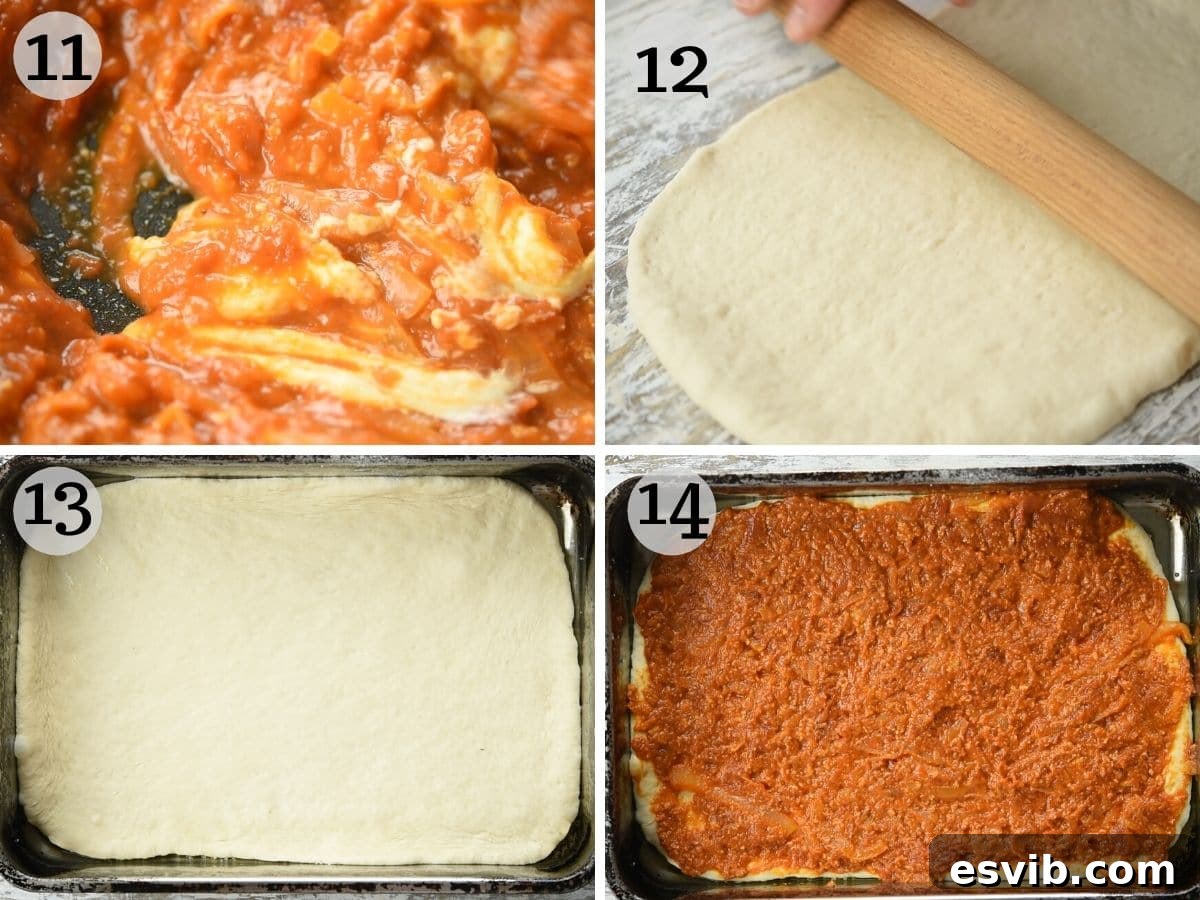
Lightly grease your chosen baking tray generously with olive oil; this will prevent sticking and contribute to a golden, flavorful crust. Carefully transfer the rolled dough into the prepared tray, gently pressing it out to fit the corners and edges without tearing it. Now, spoon half of your cooled, prepared sauce over the dough, ensuring you spread it out right to the edges – remember, Sfincione traditionally doesn’t have an outer crust! Repeat this entire process with the second half of the dough and sauce for your second pizza (photos 13 & 14).
Once both pizzas are assembled in their trays, cover them loosely with plastic wrap. Leave them to prove for a second time for at least two hours, or until the dough has doubled significantly in size within the tray and looks very puffy (photo 15). This critical second proof is what gives Sfincione its iconic, super thick, light, and airy texture, truly making it sponge-like and irresistible.
4. The Final Touches and Baking
As the second proofing nears completion, pre-heat your oven to its highest possible temperature, ideally around 450°F / 230°C. A very hot oven is key to achieving that perfect crust with a slightly crisp bottom and a beautifully cooked interior. In a small bowl, prepare the signature breadcrumb topping: mix together the breadcrumbs, freshly grated pecorino (or parmesan) cheese, dried oregano, and a teaspoon of olive oil. This mixture will toast beautifully in the oven, adding a fantastic aroma and a crucial textural crunch. Once the pizzas have finished their second proof, gently sprinkle this delightful breadcrumb mixture evenly over the top of each pizza (photo 16).
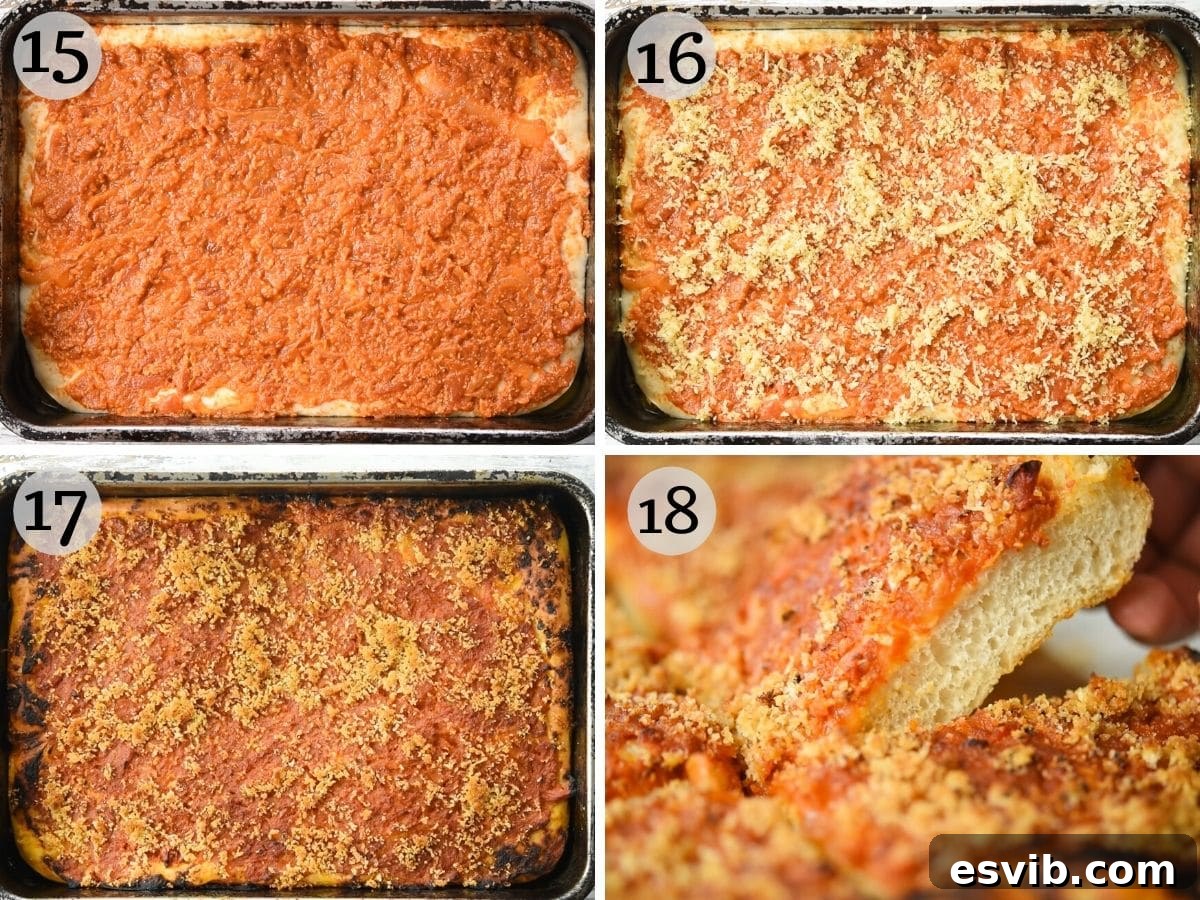
Carefully transfer the pizzas to your pre-heated oven. Bake for approximately 25-30 minutes, or until the crust is golden brown, the toppings are bubbling, and the breadcrumbs are toasted and fragrant. Keep a close eye on them to prevent over-browning. Once baked, remove the pizzas from the oven and allow them to rest in their trays for 5 minutes before cutting. This short resting period allows the crust to set, the cheese to firm up slightly, and the flavors to settle, making it easier to slice and ensuring a more enjoyable texture. Cut into generous square or rectangular slices, embodying the traditional street food style, and serve immediately, savoring the authentic taste of Sicily with every bite (photos 17 & 18).
Other Variations and Topping Ideas for Your Sfincione
While the traditional Sfincione recipe is undeniably perfect in its classic form, like any beloved pizza, it also offers a fantastic canvas for creative adaptations and personal preferences. After you’ve savored the authentic version and understand its unique balance, feel free to experiment with these delightful topping ideas to customize your Sicilian pizza and make it your own:
- Seafood Delight: A combination of canned tuna (flaked), briny capers, and a scattering of smoked scamorza cheese (if you enjoy a smoky note) offers a wonderful depth of flavor, reminiscent of coastal Sicilian cuisine.
- Classic Anchovy Love (Amplified): For those who truly appreciate the umami kick, consider adding extra whole anchovy fillets on top of the sauce before baking, along with more capers. A touch of mozzarella can also be added here for extra gooeyness, creating a vibrant Pizza Napoli inspired profile, though departing from strict Sfincione tradition.
- Hearty Cured Meats: Elevate your Sfincione with slices of your favorite Italian cured meats such as spicy salami, prosciutto cotto (cooked ham), or even crumbled Italian sausage (cooked beforehand) for a robust and satisfying element.
- Artisan Cheese Pairings: Explore the world of Italian cheeses beyond caciocavallo. Creamy Gorgonzola (used sparingly to avoid overpowering) and earthy Taleggio are exceptional choices that melt beautifully and provide rich, complex flavors. A blend of a few different cheeses can also be exquisite.
- Briny Olives: A scattering of black or green olives, especially robust Kalamata or buttery Castelvetrano olives, adds a delightful saltiness, tang, and fruity note that pairs wonderfully with the tomato base.
- Vibrant Vegetables: Incorporate your favorite Mediterranean vegetables for added freshness and texture. Marinated artichoke hearts, sweet sun-dried tomatoes (chopped), thinly sliced bell peppers (red, yellow, or orange), or even roasted eggplant pieces can all be delicious additions.
How to Store Leftover Dough, Sauce, or Pizza for Future Enjoyment
This recipe is designed to generously yield two substantial Sicilian pizzas, ensuring you have enough to share or to enjoy later. Should you find yourself with more dough or sauce than you need for a single baking session, or even leftover cooked pizza, fret not! Sfincione components store beautifully, allowing you to easily prepare future meals and minimize waste.
- Freezing Leftover Dough: If you only wish to bake one pizza, simply cut the risen dough in half. Roll one half into a tight ball, wrap it securely in plastic wrap, and then place it in an airtight freezer-safe bag. It can be frozen for up to 3 months. When ready to use, thaw it in the refrigerator overnight, then let it come to room temperature (about 1-2 hours) and proceed with the second proof as outlined in the recipe.
- Saving Excess Sauce: The rich tomato and anchovy sauce is also highly freezer-friendly. Any leftover sauce can be stored in an airtight container and frozen for up to 3 months. Thaw it in the refrigerator, then gently reheat on the stovetop before spreading it onto your freshly prepared dough. Making a larger batch of sauce is an excellent strategy for meal prepping, ensuring a quick and delicious Sfincione is always within reach!
- Storing Cooked Sfincione: If you have slices of baked Sicilian pizza remaining, store them in an airtight container in the refrigerator for 1-2 days. To reheat, a toaster oven or conventional oven at 350°F (175°C) for 10-15 minutes will crisp up the crust beautifully. For longer storage, individual slices can be wrapped securely and frozen. To reheat from frozen, simply place the slices directly into a pre-heated oven (around 375°F / 190°C) until thoroughly heated through and the crust is crisp again, typically 15-20 minutes.
Top Tips for Making Perfect Lo Sfincione (Sicilian Pizza)
Achieving the perfect Sfincione is all about paying attention to a few key details and embracing the traditional methods. Master these tips, and you’ll be baking incredible Sicilian pizza every time, impressing friends and family with your authentic creation:
- Patience with Proofing is Key: The extensive proofing process is non-negotiable for Sfincione’s signature thick, light, and airy texture. Ensure the dough visibly triples in size during its first proof in the bowl. The second rise in the baking tray, with toppings on, should also be allowed a full 1-2 hours until visibly doubled. Rushing this step will result in a denser, less authentic crust.
- Handle Dough Gently: Once the dough has risen for the second time in the tray, it will be full of air. Be careful not to deflate it when adding the breadcrumb topping and transferring it to the oven. Gentle handling preserves all that precious trapped air.
- Maximize Oven Temperature: For the best results and a properly baked crust, preheat your oven to its highest possible temperature, ideally around 450°F / 230°C. High heat ensures a quick bake, a crispy bottom, and a beautifully cooked, golden crust without drying out the toppings.
- Recipe Yield: Remember, this recipe makes enough dough and sauce for two generous 13×9 inch pizzas. This is perfect for feeding a crowd or for meal prepping. If you only need one pizza, easily freeze half of the dough and sauce for a convenient future pizza night!
- Choose the Right Baking Tray: Use a deep baking tray with sides at least 3 inches tall to comfortably accommodate the thick, rising dough. A standard 13×9 inch (approximately 33×23 cm) tray is ideal, allowing the dough to rise properly without spilling over.
- The Importance of Resting: After baking, remove the pizza from the oven and allow it to rest in its tray for 5 minutes before cutting into slices. This short resting period allows the internal structure to stabilize, prevents the toppings from sliding off, and makes for cleaner, easier slicing.
- Quality Tomatoes Matter: For the sauce, the quality of your tomatoes makes a significant difference. You can use high-quality canned plum tomatoes (crushed by hand for texture), finely chopped canned tomatoes, or a smooth passata (pureed tomatoes). Opt for reputable brands like Cirio or Mutti for superior flavor and color.
- Caciocavallo Alternatives: If traditional caciocavallo cheese is hard to find, don’t let that deter you! Excellent substitutes include aged provolone (especially provolone piccante for a bit of sharpness), semi-hard pecorino, unsmoked scamorza, or a mild gouda. Each will impart a lovely flavor to your Sfincione.
- Adapt Tray Size: If you don’t have a specific 13×9 inch baking tray, any deep baking tray you possess will work. The key is to ensure that the dough is spread to about ½ inch thick in the tray before the crucial second proof. This ensures the correct crust thickness and airy texture, regardless of the exact dimensions of your pan.
Additionally, if you’re passionate about making homemade pizza and wish to deepen your understanding and skills, we encourage you to explore our insightful guides on selecting the best flour to use and identifying the essential tools for crafting all types of homemade pizza. These resources are invaluable for elevating your pizza-making skills to the next level and ensuring every pizza night is a resounding success!
More Irresistible Italian Pizza Recipes to Explore
If you’ve fallen in love with the art of Italian pizza making, there’s a whole world of flavors waiting to be discovered beyond the delightful Sfincione. Expand your repertoire and explore the diverse culinary landscape of Italy with these other fantastic Italian pizza recipes from our collection:
- Anchovy Pizza with Capers (Pizza Napoli): A salty, savory classic bursting with Mediterranean flavors, showcasing the bold taste of anchovies and capers on a traditional thin crust.
- Cheesy Potato Pizza With Thyme: A comforting and surprisingly delicious vegetarian option. Thinly sliced potatoes, rich cheese, and aromatic thyme create a uniquely satisfying pizza experience.
- Quattro Stagioni Pizza – Four Seasons Pizza: A visually stunning and flavor-packed pizza divided into four distinct sections, each representing a season with its own unique toppings.
- Basil Pesto Pizza with Mozzarella & Roasted Tomatoes: Fresh, vibrant, and aromatic, this pizza is perfect for summer days, combining the bright flavors of pesto, creamy mozzarella, and sweet roasted tomatoes.
- The Best Basic Pizza Dough Recipe: Your foundational guide for mastering traditional, versatile pizza crusts that serve as the perfect base for countless toppings and styles.
- Instant Pizza Dough – No Rise No Yeast: A revolutionary quick-fix for thin and crispy pizzas when time is of the essence, proving that delicious homemade pizza can be achieved even on busy weeknights.
We truly hope you enjoyed making this Authentic Sicilian Pizza (Lo Sfincione) Recipe. Your feedback is invaluable to us, so please be sure to leave a comment below and let us know how your culinary adventure turned out. We love hearing from you! For more delectable recipes, traditional Italian cooking insights, and inspiring kitchen tips, you can also FOLLOW US on FACEBOOK, INSTAGRAM, and PINTEREST. Join our growing community of food lovers and discover a world of delicious food and exciting kitchen exploits!
Authentic Sicilian Pizza Sfincione Recipe Card
Step-by-Step Photos and Video Tutorial Available Above
This recipe includes detailed step-by-step photos, helpful tips, and a video tutorial to ensure perfect results every time.
Recipe Details
- Recipe Name: Authentic Sicilian Pizza Sfincione
- Author: Emily
- Prep Time: 5 hours (includes proofing time)
- Cook Time: 30 minutes
- Total Time: 5 hours 30 minutes
- Yields: 16 thick slices (making 2 pizzas)
Equipment
- 2 baking trays (13×9 inch / approx. 33×23 cm)
- Large mixing bowl
- Large pan or skillet
- Plastic wrap
Ingredients
For the Dough
- 4 cups 00 flour (500g)
- 1 ⅓ cup lukewarm water (320ml)
- 2 tsp fast-action yeast (7g)
- 2 tbsp olive oil, plus extra for greasing
- ½ tsp sugar
- ½ tsp salt
For the Sauce
- 1 tbsp olive oil
- 1 white onion, thinly sliced
- 7-8 salted anchovies
- 28 oz canned plum tomatoes (800g), can also use pureed tomatoes or canned chopped tomatoes
- ½ cup caciocavallo cheese, cubed (100g) – can also use aged provolone, pecorino, unsmoked scamorza, or mild gouda
- Salt and pepper, to taste
Breadcrumb Topping
- ¼ cup breadcrumbs (30g)
- ¼ cup freshly grated pecorino or parmesan (30g)
- 1 tsp dried oregano
- 1 tsp olive oil
Instructions
- In a large mixing bowl, add the flour, sugar, salt, and yeast, making sure to not place the yeast directly on the salt.
- Stir to combine the dried ingredients, then make a well in the center and add the warm water and olive oil.
- Stir to form a dough, then tip out onto a clean work surface lightly dusted with flour. Knead the dough for 10 minutes until smooth and elastic.
- Place the kneaded dough in a clean bowl lightly greased with a little olive oil. Cover with plastic wrap and leave to proof for around 3 hours or until tripled in size.
- Meanwhile, make the sauce: Add 1 tbsp olive oil to a large pan or skillet on a medium heat.
- Add the sliced onion and sauté slowly until soft and translucent (5-10 minutes). Once soft, add the anchovies and stir, breaking them up as they cook. Sauté the onions and anchovies for 5 minutes.
- Add the tomatoes and simmer the sauce for 15 minutes.
- Next, add the cubed cheese with a pinch of salt and pepper and continue to cook the sauce for another 10 minutes. Set aside to cool completely.
- After the dough has risen, tip it out onto a clean work surface lightly dusted with flour and divide into two. Roll each half of dough out into a rectangle big enough to fit a 13×9 inch baking tray; it should be around ½ inch thick.
- Lightly grease two 13×9 inch baking trays with olive oil and place a dough rectangle in each tray. Top each with half of the prepared sauce, making sure to spread it out to the edges.
- Cover both trays with plastic wrap and leave to proof for a second time for two hours or until doubled in size.
- Pre-heat the oven to 450°F / 230°C.
- In a small bowl, mix the breadcrumbs, grated pecorino (or parmesan), dried oregano, and 1 tsp olive oil. Sprinkle this mixture over each pizza.
- Bake in the oven for 25-30 minutes. Let rest for 5 minutes after baking, then cut into slices and serve.
Video Tutorial
For a visual guide demonstrating each step of making Sicilian Pizza Sfincione, please refer to the video embedded earlier in the article content.
Notes
- Make sure to let the dough prove for long enough. It needs to triple in size with the first prove, then rise again in the baking tray for at least 1-2 hours. This will ensure your crust is thick and light.
- When you move the dough to the baking tray to prove, add the toppings at the same time so you don’t knock any air out later.
- Bake this pizza at the highest temperature your oven will go for best results!
- This recipe makes enough dough and toppings for two pizzas, so if you don’t want to use it all, you can freeze half the dough and sauce.
- Make sure your baking tray has tall edges, at least 3 inches tall.
- After baking, let the pizza rest for 5 minutes before cutting.
- You can use chopped or plum canned tomatoes or passata (pureed tomatoes) to make the sauce.
- If you can’t find caciocavallo cheese, you can use aged provolone, pecorino, unsmoked scamorza, or a mild gouda.
- If you don’t have a 13×9 inch baking tray, you can use any deep baking tray you have; just make sure the dough is around 1/2 inch thick in the tray before the second prove.
Helpful Info for All Recipes
- I always use extra virgin olive oil in all of my recipes unless stated otherwise.
- When I use canned or jarred tomatoes of any kind I always use Cirio or Mutti brands for the best results and flavor.
- All vegetables are medium sized unless stated otherwise.
- All recipes are tested and developed using a fan (convection) oven.
- Find out more about how nutrition is calculated.
- Check out our must-have Italian Pantry Staples.
- You can also find all our Essential Kitchen Tools for Italian Cooking.
Nutrition Facts (per serving)
Nutrition information is automatically calculated and should be used as an approximation. Individual results may vary based on ingredients and preparation.
- Calories: 236 kcal
- Carbohydrates: 39g
- Protein: 10g
- Fat: 6g
- Saturated Fat: 2g
- Cholesterol: 5mg
- Sodium: 222mg
- Potassium: 345mg
- Fiber: 1g
- Sugar: 2g
- Vitamin A: 107 IU
- Vitamin C: 5mg
- Calcium: 90mg
- Iron: 2mg
Leave a comment below!