
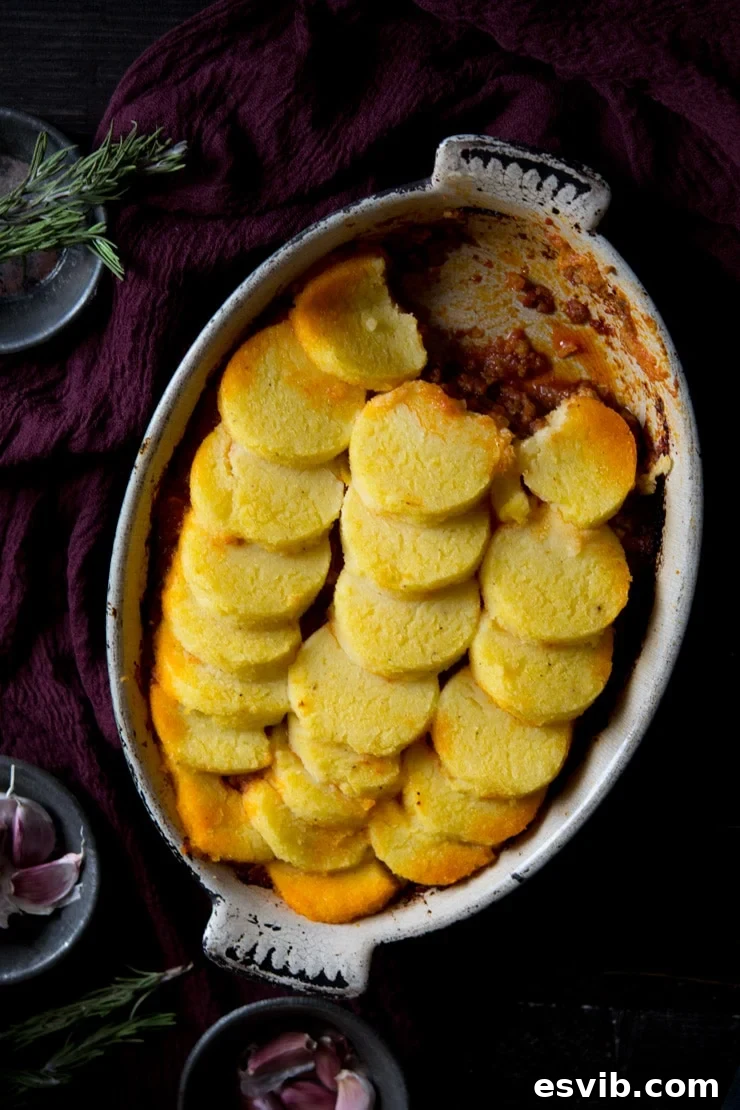
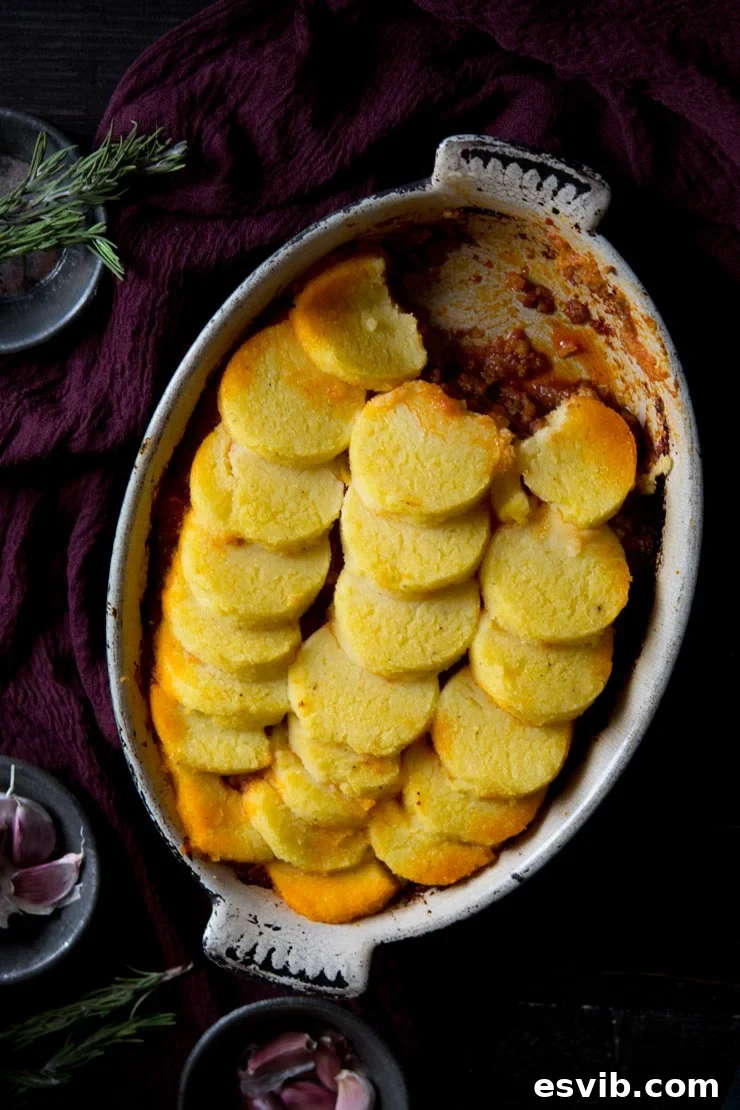
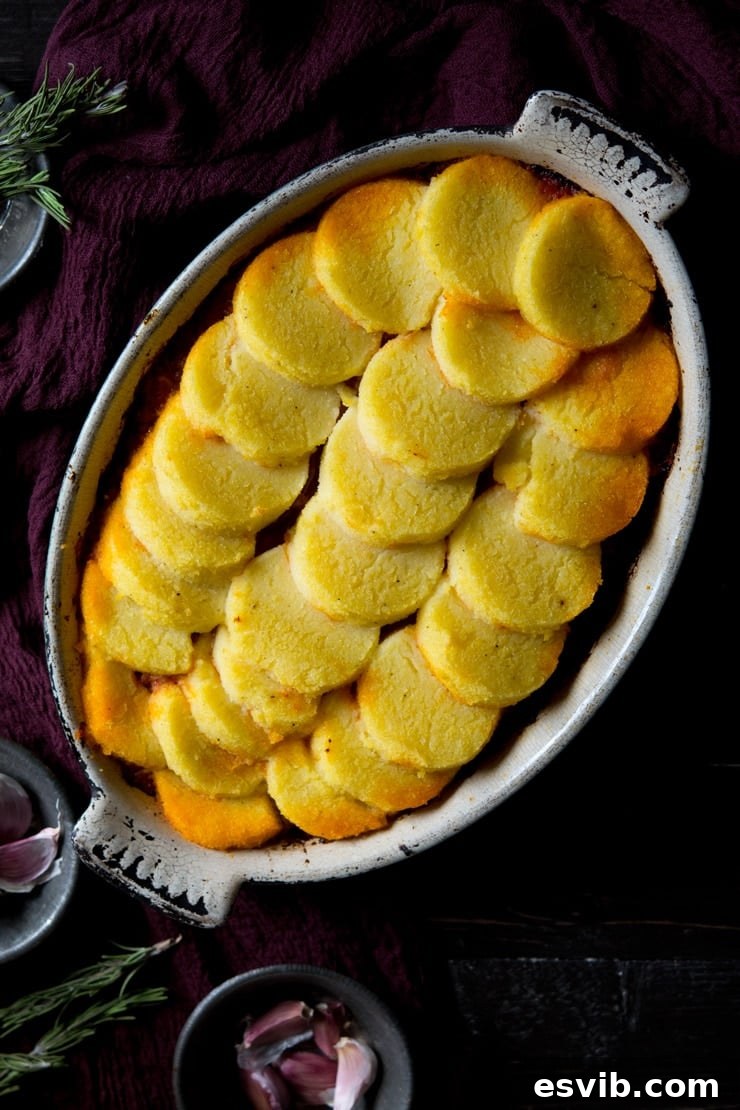
Welcome to the epitome of winter comfort food: a magnificent Baked Polenta with Beef and Sausage Ragu. This dish isn’t just a meal; it’s a warm embrace on a chilly evening, a culinary masterpiece that combines the rustic charm of slow-cooked Italian ragu with the smooth, creamy indulgence of baked polenta. Imagine a rich, deeply flavored sauce brimming with tender beef and savory Italian sausage, generously crowned with golden polenta that bakes to a delightful crispness on top while remaining impossibly soft and yielding underneath. It’s the kind of hearty, satisfying fare that truly makes a house feel like a home, especially during the colder months.
As the days grow shorter and the temperatures drop, our cravings naturally turn to dishes that offer both profound warmth and exceptional flavor. Polenta, a beloved staple in Northern Italian cuisine, is incredibly versatile and surprisingly easy to prepare. It can be served creamy and flowing, akin to mashed potatoes, or it can be allowed to set and then sliced, grilled, or baked, as we do in this exceptional recipe. This baking method not only adds a beautiful textural contrast with its crispy top but also ensures the polenta infuses with the robust, slow-cooked flavors of the simmering ragu beneath, creating a harmonious and utterly delicious experience.
The Art of Slow Cooking: Crafting the Perfect Beef and Sausage Ragu
The true heart of this extraordinary comfort food dish lies in its slow-simmered ragu. A genuine Italian ragu is more than just a meat sauce; it’s a testament to patience, an act of culinary love that, when given time, rewards you with layers of unparalleled depth and richness. Our particular version combines the robust texture and flavor of ground beef with the distinctive savory notes of Italian sausage, resulting in a robust, complex, and incredibly satisfying base for our baked polenta.
The journey to an exquisite ragu begins with the “soffritto” – an aromatic foundation made from finely diced carrots, onions, and celery. Gently sautéing this trio in high-quality olive oil allows their natural sugars to caramelize and release their sweet, earthy fragrances. This crucial initial step forms the flavorful bedrock upon which the entire ragu is meticulously built, setting the stage for the rich flavors to come.
Choosing Your Ingredients for an Authentic Ragu
- Beef Mince: For optimal flavor and moisture, opt for good quality ground beef, ideally with an 80/20 lean-to-fat ratio. The fat will render down slowly, adding invaluable richness to your sauce.
- Italian Sausages: To capture an authentic Italian flavor profile, select mild or sweet Italian sausages. It’s essential to remove their casings and crumble the meat directly into the pan. If you enjoy a little heat, spicy Italian sausages can be a fantastic alternative, but consider how their spice will complement the mildness of the polenta.
- Fresh Vegetables: Carrots, onions, and celery are the non-negotiable components of the soffritto. Finely chopping them ensures they melt seamlessly into the sauce, providing a delicate yet profound flavor background without chunky textures.
- Garlic: Freshly minced garlic is indispensable, adding an aromatic depth that is fundamental to Italian cooking.
- Red Wine: A dry red wine, such as Sangiovese, Merlot, or Cabernet Sauvignon, is perfect for deglazing the pan. Its acidity helps to lift the browned bits from the bottom of the pan, while its complex notes add profound layers of flavor as it reduces and concentrates.
- Passata/Pureed Tomatoes: High-quality passata (strained tomatoes) or pureed tomatoes are key for a smooth, concentrated tomato base. Seek out reputable Italian brands for the best, most authentic tomato flavor.
- Seasoning: Simple sea salt and freshly ground black pepper are all that’s needed to enhance and balance the natural flavors of these superb ingredients.
- Olive Oil: Always use a good quality extra virgin olive oil to start your soffritto and build flavor.
Step-by-Step Guide to Making the Perfect Beef and Sausage Ragu
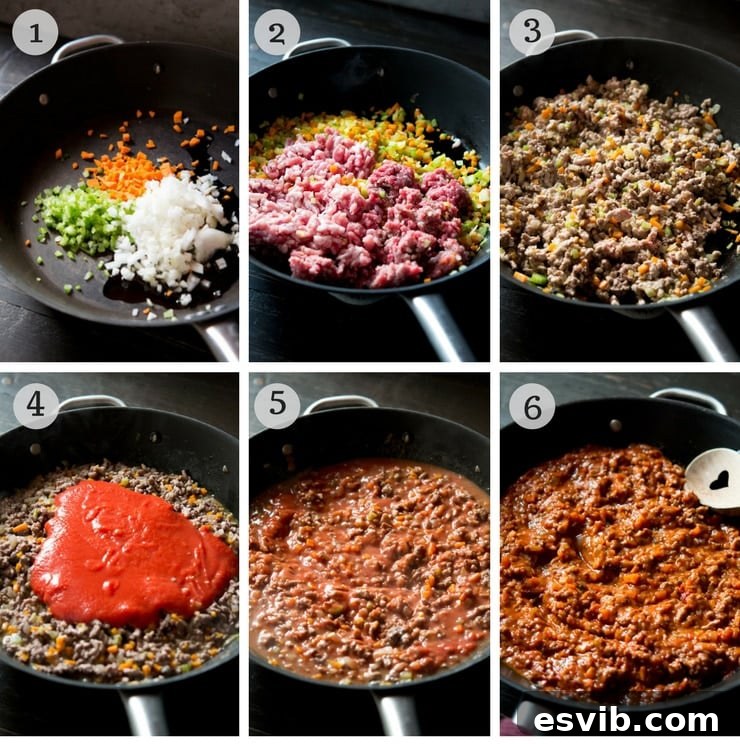
Creating this rich ragu is not just cooking; it’s a rewarding culinary journey. Begin by meticulously preparing your vegetables: finely chop the carrot, onion, and celery into small, uniform pieces. In a large, heavy-bottomed pan or Dutch oven (the kind that holds heat well), warm a tablespoon of quality olive oil over medium heat. Add the chopped carrot, onion, and celery (reserving the garlic for a later stage) and sauté them gently. The objective here is not to brown the vegetables, but to soften them slowly for approximately 6-7 minutes until they become translucent and tender. This patient cooking process is crucial as it coaxes out their natural sugars, contributing a subtle sweetness that balances the robust meat flavors of the ragu.
Next, introduce the ground beef and the Italian sausage meat (ensure casings are removed and meat is crumbled) into the pan, along with the freshly minced garlic. Break up the meat with a wooden spoon as it cooks, ensuring it browns thoroughly on all sides. This browning step is absolutely vital for developing deep, umami-rich flavors through the Maillard reaction. If the sausages release an excessive amount of fat, don’t hesitate to spoon out some of the excess; this prevents the ragu from becoming overly greasy and allows its true flavors to shine.
Once the meat is beautifully browned and fragrant, it’s time for the magical step of deglazing. Pour in the red wine and immediately use your wooden spoon to scrape up any delicious browned bits – known as “fond” – that are stuck to the bottom of the pan. These bits are packed with concentrated flavor. Allow the wine to simmer vigorously until it has reduced by approximately half. This process concentrates its rich flavor and effectively cooks off the alcohol, leaving behind only the exquisite essence of the wine. Finally, stir in the passata or pureed tomatoes, adding a couple of tablespoons of water to adjust consistency, along with a generous pinch of salt and freshly ground black pepper. Stir everything until all ingredients are thoroughly combined and evenly distributed.
Cover the pan tightly and let the ragu simmer gently over very low heat for a substantial period, typically 1.5 to 2 hours. This extended, slow cooking is what truly transforms a collection of ingredients into a complex, velvety, and deeply satisfying ragu. It allows all the distinct flavors to meld together beautifully and the meats to become incredibly tender, almost melting in your mouth. Throughout this simmering period, check the ragu occasionally and if the sauce reduces too much and becomes excessively thick, simply add a little extra water to achieve your desired consistency. Remember, the longer it simmers, the more profound and harmonious the flavor becomes.
The Creamy Companion: Mastering Baked Polenta
While your rich beef and sausage ragu is luxuriating on the stove, slowly developing its magnificent flavors, it’s the opportune moment to prepare the creamy polenta that will form the crown of your baked dish. Polenta, derived from finely ground cornmeal, offers a delightful and versatile canvas for savory accompaniments. For this particular baked version, our aim is to achieve a smooth, yet firm polenta that can be effortlessly cut into shapes and elegantly arranged atop the ragu. This approach creates a stunning, gratin-style finish, adding both visual appeal and a delicious textural contrast to the final masterpiece.
Choosing the Right Polenta for Baking
“Fast action” or instant polenta is an excellent choice for its convenience, significantly reducing the cooking time without compromising on quality or texture. It delivers a smooth and creamy result swiftly. However, for those with more time and a desire for a traditional experience, coarser or medium-ground polenta can certainly be used. Be aware that traditional polenta will require a longer cooking duration and more frequent, consistent stirring to achieve that characteristic creamy, lump-free texture. Regardless of your choice, always ensure you’re using a good quality cornmeal for the best possible flavor and consistency. The quality of your ingredients truly makes a difference in such a seemingly simple component.
Step-by-Step Guide to Making Perfect Baked Polenta
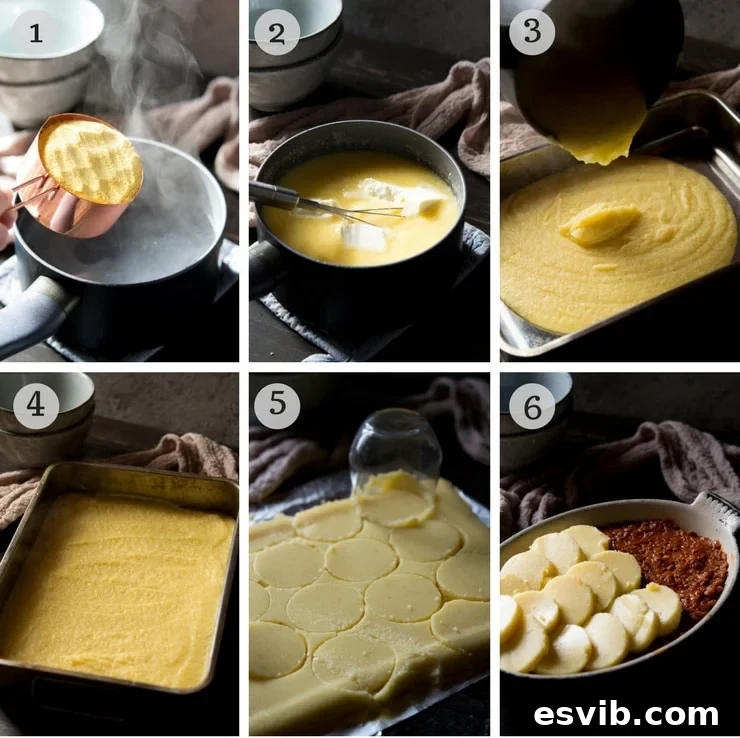
To begin your polenta preparation, bring 4 cups (or 1 liter) of water to a vigorous rolling boil in a large, sturdy saucepan. It’s crucial to season the water adequately from the start; add a generous pinch of salt to enhance the polenta’s flavor. Once the water is enthusiastically boiling, gradually pour the polenta into the water in a slow, steady stream. Simultaneously, whisk constantly and vigorously to prevent any lumps from forming. This continuous whisking is paramount for achieving a perfectly smooth, uniform, and creamy consistency.
After the polenta has been incorporated, reduce the heat to medium-low and continue stirring diligently. You’ll observe the polenta gradually thickening and transforming into a smooth, cohesive mass. This process typically takes around 5-10 minutes for fast-action polenta, but may take longer for coarser varieties. Once it reaches your desired thick and creamy consistency, remove the saucepan from the heat.
Now comes the indulgent part: stir in the butter and the freshly grated Parmesan cheese. Continue stirring until both the butter has completely melted and the Parmesan is thoroughly incorporated, creating a luscious, rich mixture. The butter imparts a wonderful richness and silky smoothness, while the Parmesan contributes a delightful salty, umami depth that elevates the polenta. Taste the polenta and don’t hesitate to adjust the seasoning with more salt or pepper if needed. Perfectly seasoned polenta is vital, as it acts as a savory counterpoint to the robust ragu.
To prepare the polenta for its baked destiny, pour the creamy mixture evenly onto a large baking tray or a shallow dish. Use an offset spatula or the back of a spoon to smooth the surface to an even thickness, ideally about 1/2 to 3/4 inch (1-2 cm). This ensures even baking and easy cutting. Allow the polenta to cool completely at room temperature, then transfer it to the refrigerator. Chilling the polenta is a critical step; it allows the mixture to firm up sufficiently, making it effortless to cut into your desired shapes once the ragu is ready for assembly.
Assembling and Baking Your Comfort Food Masterpiece
With the ragu having completed its long, flavorful simmer and the polenta now beautifully firmed up in the refrigerator, it’s time to bring these two magnificent components together for their grand finale. Begin by preheating your oven to 180°C (350°F) or Gas Mark 4. This ensures your oven is at the optimal temperature for a perfect bake.
Carefully transfer the bubbling, aromatic hot ragu into a large, oven-safe baking dish. The rich, savory aroma filling your kitchen at this stage is truly one of the joys of slow cooking! Retrieve the chilled, firm polenta from the refrigerator. Now for the creative part: you can use a round cookie cutter or the rim of a small glass to cut out elegant polenta rounds, or simply use a sharp knife to cut it into neat strips or squares. Arrange these polenta pieces artfully and evenly over the surface of the ragu in the baking dish. The aim is to create a delightful, golden crust over the ragu as it bakes.
Place the assembled baking dish into your preheated oven and let it bake for approximately 30 minutes. During this time, a wonderful transformation will occur: the polenta will develop a beautiful golden-brown and slightly crunchy crust on top, while remaining wonderfully soft, creamy, and tender on the inside. Beneath this golden blanket, the ragu will be hot and bubbling, its flavors intensified and melded even further by the oven’s consistent heat. Once baked to perfection, carefully remove the dish from the oven and allow it to cool for about 5 minutes before serving. This brief resting period is important as it allows the dish to set slightly and prevents the ragu from being excessively hot, ensuring every spoonful is pure bliss.
Serving Suggestions and Delicious Variations
This spectacular Baked Polenta with Beef and Sausage Ragu is a complete and incredibly satisfying meal that stands proudly on its own. However, a final flourish can always enhance the experience. Consider a generous sprinkle of fresh chopped parsley or basil just before serving; the vibrant green herbs not only add a pop of color but also a burst of fresh, aromatic flavor that beautifully cuts through the richness of the dish. For those who can never have enough cheese, a final grating of high-quality Parmesan cheese is always a welcome and indulgent addition.
To create a perfectly balanced meal, you might consider pairing this hearty dish with a simple, crisp side salad. A light vinaigrette dressing on mixed greens will provide a refreshing counterpoint, cutting through the richness of the ragu and polenta. And for the ultimate experience, don’t forget a crusty loaf of Italian bread – it’s perfect for soaking up every last drop of that delectable ragu.
Recipe Variations to Delight Your Palate:
- Vegetarian Indulgence: For a delightful meat-free version, replace the beef and sausage with a robust mix of finely chopped mushrooms (cremini, shiitake, or even dried porcini reconstituted), protein-rich lentils, and diced bell peppers. Ensure you still build that essential flavorful soffritto base to maintain the ragu’s depth.
- Exploring Different Meats: Feel free to experiment with ground veal or pork, either as a substitute for or in addition to the beef. Ground lamb could also offer a unique and wonderfully rich flavor profile, adding an unexpected twist.
- Herb Enhancements: To add an extra layer of aromatic complexity, include a bay leaf or a sprig of fresh rosemary to the ragu while it simmers. Remember to remove these before serving to avoid overpowering the dish.
- Cheesy Polenta Alternatives: While Parmesan is a classic and highly recommended choice, don’t shy away from incorporating other fantastic melting cheeses into your polenta. Fontina, taleggio, or even a sharp cheddar can offer a distinct and equally delicious twist.
- Adding a Spicy Kick: If you’re a lover of heat, consider adding a pinch of red pepper flakes to the ragu along with the garlic. This will introduce a subtle warmth that enhances the savory flavors.
Why This is the Ultimate Winter Comfort Food
Beyond its exquisite taste, this dish embodies everything we cherish about winter comfort food. It’s wonderfully hearty without being overly heavy, profoundly flavorful, and incredibly warming from the inside out. The enchanting process of slow-cooking the ragu fills your entire home with tantalizing aromas, creating an atmosphere of anticipation and coziness that is almost as satisfying as the meal itself. The delightful contrast of the crispy, golden baked polenta top and the tender, saucy ragu beneath creates a truly memorable and satisfying dining experience. It’s perfectly suited for a comforting family dinner, an inviting gathering with friends, or simply as a well-deserved treat for yourself on a particularly cold day.
A fantastic tip for busy cooks is to prepare the ragu in advance. Ragu, like many slow-cooked dishes, often tastes even better the next day, as the flavors have more time to deepen and meld together, achieving a greater complexity. Simply prepare the ragu, allow it to cool completely, and then store it in an airtight container in the refrigerator for up to 3-4 days, or freeze it for longer storage. When you’re ready to enjoy, simply reheat the ragu, prepare the fresh polenta, assemble the dish, and bake. This makes entertaining or weeknight dinners a breeze, allowing you to enjoy this magnificent dish with minimal last-minute effort.
More Hearty Comfort Food Meals To Try:
- Pizzoccheri pasta with potatoes and cabbage
- Hearty Tuscan Farro Soup with Beans
- Broccoli Rabe Ricotta Gnudi with Parmesan Cream Sauce
- Classic Parmigiana di Melanzane (Eggplant Parmigiana)
- Rustic Tuscan Bean Stew with Sausages
We genuinely hope you enjoy the delightful process of creating and savoring this incredible Baked Polenta with Beef and Sausage Ragu. It’s a dish truly made to be shared and relished. If you try this recipe, or any other delightful dishes from our blog, please don’t hesitate to rate it and share your experience in the comments section below. Your valuable feedback means the world to us and helps other home cooks discover new favorites!
Stay connected with our culinary adventures and discover even more delicious recipes and cooking tips by following us on FACEBOOK, TWITTER, INSTAGRAM, and PINTEREST. We love sharing our passion for food with our wonderful community of food enthusiasts!
Recipe: Baked Polenta with Beef and Sausage Ragu
A rich and flavourful beef and sausage ragu topped with creamy polenta and baked in the oven. A delicious comfort food dish to keep you warm this winter.
Prep time: 20 mins | Cook time: 2 hrs | Total time: 2 hrs 20 mins
Servings: 4-6 people
Ingredients
For the ragu
- 1 carrot, finely chopped
- 1 onion, finely chopped
- 1 stalk celery, finely chopped
- 2 garlic cloves, minced
- 15 oz (430g) beef mince
- 2 Italian sausages (not spicy), casings removed
- 3 1/4 cups (750g) pureed tomatoes/passata
- 1/2 cup (125ml) red wine
- Salt and pepper, to season
- 1 tbsp of olive oil
For the polenta
- 1 cup (165g) fast action polenta
- 4 cups (1 litre) water
- Salt, to taste
- 1.7 oz (50g) butter
- 1 tbsp parmesan, freshly grated
Instructions
- Finely chop the carrot, onion, celery, and garlic. Add everything apart from the garlic to a large pan with the olive oil and sauté gently for around 6-7 minutes until the vegetables are soft but not browned.
- Add the beef mince, sausage meat (removed from their skins), and garlic to the pan. Brown the meat, breaking it up with a spoon. If a lot of fat comes out of the sausages, spoon some of the excess out.
- Once browned, add the red wine and let it reduce by half, scraping up any browned bits from the bottom of the pan.
- Then, add the passata/pureed tomatoes with a couple of tablespoons of water, and a good pinch of salt and pepper. Stir the ragu so everything is combined.
- Cover the pan and let it simmer gently for 1 and a half to 2 hours. If the sauce reduces too much, top it up with a little water.
- While the ragu is simmering, make the polenta. Bring 4 cups (1 liter) of water to a boil, adding a good pinch of salt.
- Pour the polenta into the boiling water whilst constantly stirring with a whisk to prevent lumps. Turn the heat down to medium/low and keep stirring until the polenta becomes thick and smooth (approx. 5-10 minutes for fast-action polenta).
- Turn off the heat and add the butter and freshly grated Parmesan cheese. Stir until melted and combined. Check for seasoning and add more salt or pepper if needed.
- Pour the polenta onto a large baking tray or shallow dish and smooth it out to an even thickness. Let it cool, then place it in the fridge until the ragu is ready and firm.
- When the ragu is ready, preheat the oven to 180°C/350°F/Gas Mark 4.
- Transfer the ragu to a large oven-safe baking dish. Remove the firmed polenta from the fridge and cut out rounds using a cookie cutter or glass, or cut it into strips.
- Arrange the polenta pieces on top of the ragu in the baking dish.
- Bake in the preheated oven for 30 minutes, or until the polenta is slightly crunchy and golden on top and the ragu is bubbling.
- Let the dish cool for 5 minutes before serving. Enjoy your hearty comfort food!
Helpful Info for All Recipes
- I always use extra virgin olive oil in all of my recipes unless stated otherwise.
- When I use canned or jarred tomatoes of any kind, I always use Cirio or Mutti brands for the best results and flavor.
- All vegetables are medium sized unless stated otherwise.
- All recipes are tested and developed using a fan (convection) oven.
- Find out more about how nutrition is calculated.
- Check out our must-have Italian Pantry Staples.
- You can also find all our Essential Kitchen Tools for Italian Cooking.
Nutrition Information
Calories: 400kcal
Nutrition information is automatically calculated and should only be used as an approximation.
Did you try this recipe?
Leave a comment below!