
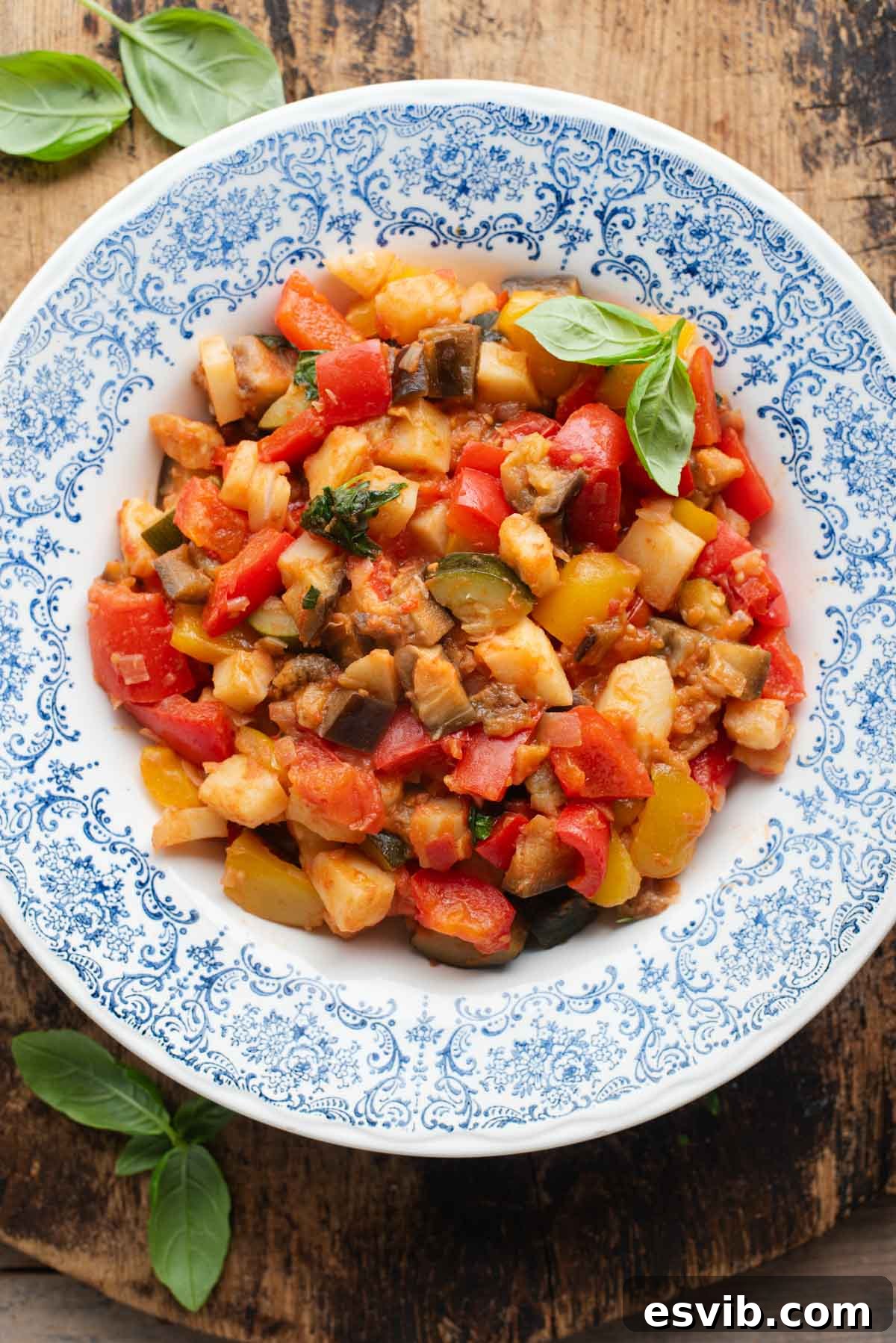
Ciambotta, a vibrant and flavorful Southern Italian vegetable stew, is a culinary masterpiece that encapsulates the essence of summer. Bursting with fresh zucchini, tender eggplant, sweet bell peppers, and ripe tomatoes, it offers a symphony of textures and tastes. This light yet hearty, exceptionally healthy, and utterly delicious dish is a testament to Italy’s rich culinary heritage, focusing on simple, seasonal ingredients brought to life with aromatic garlic and fresh basil.
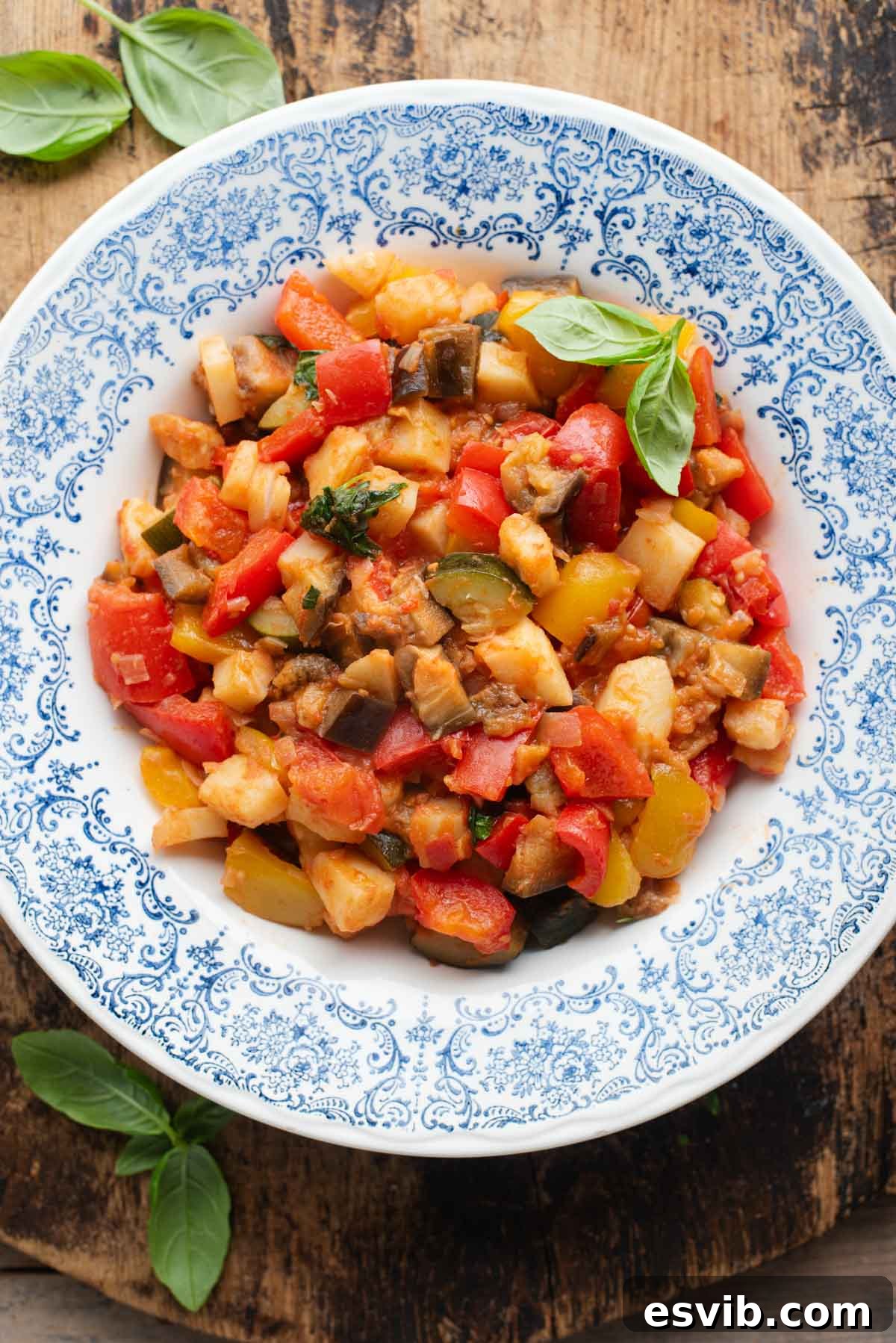
What is Ciambotta? An Authentic Southern Italian Delight
Often hailed as Italy’s answer to Ratatouille, Ciambotta (also known by regional variations such as Cianfotta, Giambotta, or Ciabotta) is a traditional vegetable stew deeply rooted in the gastronomic traditions of Southern Italy. It’s a dish born from necessity and resourcefulness, where humble summer garden vegetables are transformed into a sublime stew. While the concept of stewed vegetables might seem universal, Ciambotta stands out for its unique flavor profile, typically less herb-heavy than its French counterpart and often featuring potatoes for added body and a distinctive creamy texture.
This rustic dish is a staple in regions like Campania, Calabria, Basilicata, and Puglia, where sun-drenched fertile lands yield an abundance of fresh produce. Each region, and even each family, often has its own cherished version, adapting the core recipe to local availability and personal preference. This adaptability is part of Ciambotta’s charm, making it a truly versatile dish that celebrates the bounty of the season.
At its heart, Ciambotta is a celebration of peak summer vegetables. The stew features a medley of garden-fresh ingredients, gently simmered with garlic, ripe tomatoes, and fragrant basil. This slow cooking process allows the individual flavors of the vegetables to meld beautifully, creating a harmonious and comforting dish that’s both vibrant and deeply satisfying. It’s a testament to simple cooking, where high-quality ingredients are allowed to shine without elaborate techniques.
Why Ciambotta Deserves a Spot on Your Summer Menu
Ciambotta is more than just a stew; it’s a versatile and wholesome dish perfect for myriad occasions. Its inherently light yet nourishing qualities make it an ideal choice for warm weather, offering a healthy alternative to heavier meals without sacrificing flavor or substance. Here are a few compelling reasons why this Southern Italian gem should be a regular feature in your kitchen:
- A Feast of Freshness: Ciambotta is designed to showcase the freshest summer produce. Using vegetables at their peak ripeness ensures the most vibrant flavors and nutritional benefits.
- Remarkably Healthy: Packed with nutrient-rich vegetables, this stew is naturally low in calories and high in vitamins, minerals, and fiber. It’s a fantastic way to incorporate more plant-based goodness into your diet.
- Incredibly Versatile: Like many traditional Italian dishes, Ciambotta is forgiving and adaptable. You can easily adjust it to suit your taste, use whatever seasonal vegetables you have on hand, or even add protein like beef or sausage for a heartier meal, though the vegetarian version is equally satisfying.
- Light Yet Satisfying: Despite being primarily vegetable-based, the inclusion of potatoes gives Ciambotta a comforting heartiness. It feels substantial without being heavy, making it perfect as a main course or a substantial side.
- Easy to Prepare: With straightforward steps and minimal fuss, Ciambotta is surprisingly simple to make. It’s an excellent option for both novice cooks and seasoned chefs looking for a delicious and unfussy recipe.
- Great for Meal Prep: Ciambotta tastes even better the next day as the flavors continue to meld. It stores well in the refrigerator, making it an excellent choice for batch cooking and healthy lunches throughout the week.
- Naturally Gluten-Free and Vegetarian: This recipe is naturally gluten-free and can easily be made vegan by ensuring no animal products are used in its preparation (which is typically the case for the vegetable-only version).
Explore the full recipe below, including detailed notes on ingredients, step-by-step photographs, and helpful tips for variations. For the printable recipe, simply scroll to the bottom of the page or click the link provided.
Unveiling the Key Ingredients for Perfect Ciambotta
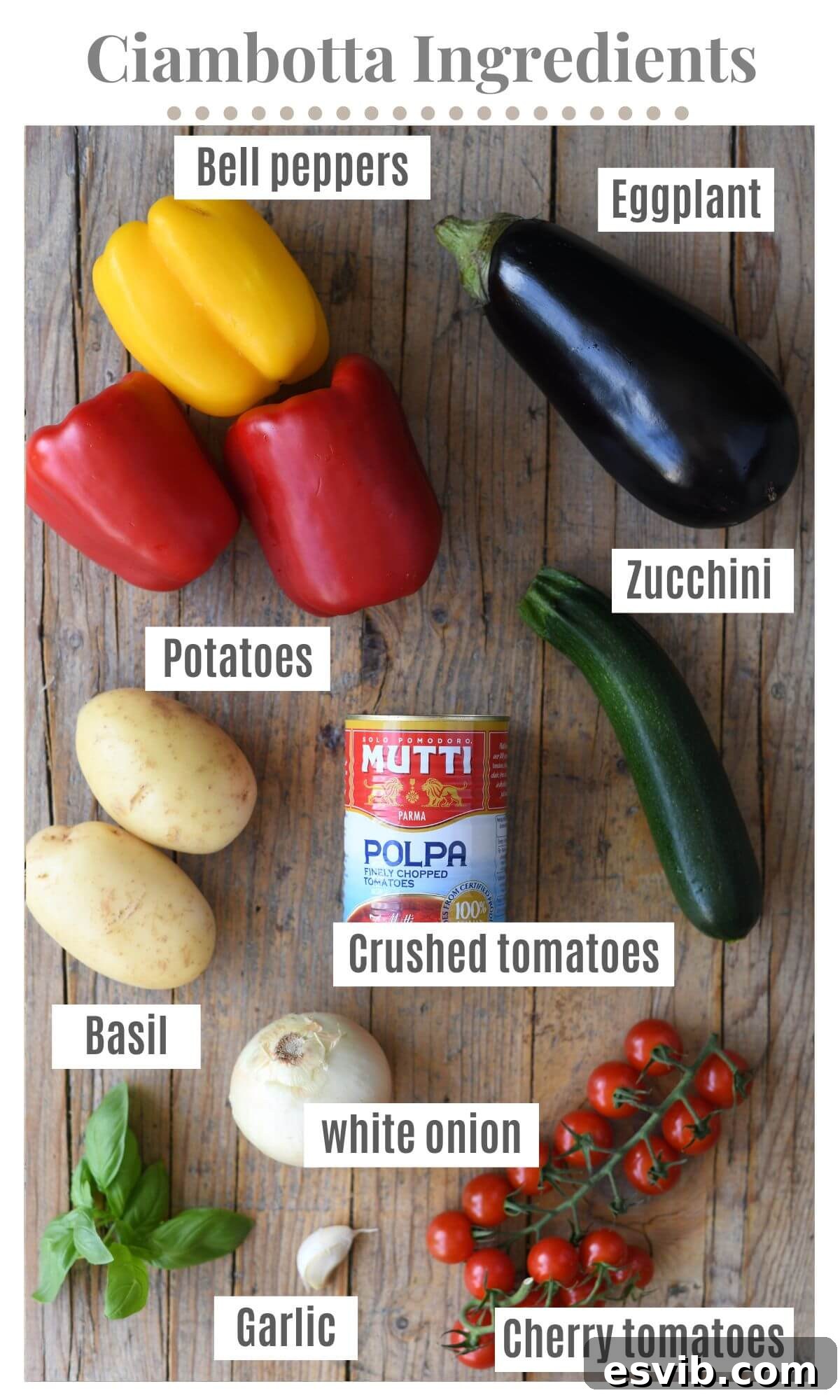
The secret to an exceptional Ciambotta lies in selecting the freshest, highest-quality ingredients. This dish truly celebrates seasonal produce, so aim for vegetables that are firm, colorful, and free from blemishes. Below, we outline the essential components and offer some helpful notes on how to choose and prepare them:
Ingredient Notes and Expert Tips
- Onion: You can opt for either white or brown onion. While we prefer a finely chopped onion for a smoother integration into the stew, some traditional versions embrace a chunkier cut for added texture. Choose an onion that is firm and heavy for its size.
- Bell Peppers: Our recipe suggests using two red and one yellow bell pepper for a beautiful color contrast and balanced sweetness. However, feel free to use any combination of colors you prefer, or simply use what’s readily available. Green bell peppers add a slightly more robust, less sweet flavor, while orange peppers offer a milder sweetness. Ensure they are firm and crisp.
- Zucchini and Eggplant (Courgette & Aubergine): These summer staples form the backbone of Ciambotta. Select zucchini and eggplant that are firm to the touch, heavy for their size, and have smooth, glossy skins without any soft spots or bruises. For eggplant, some cooks choose to salt it beforehand to draw out bitterness and excess moisture, but with modern varieties, this step is often optional.
- Tomatoes (Fresh): We’ve opted for sweet cherry tomatoes, which burst with flavor when cooked. However, any fresh, ripe tomatoes you enjoy will work beautifully. Consider using vine-ripened, Roma, or even heirloom tomatoes for varying nuances of sweetness and acidity. The key is ripeness for maximum flavor.
- Crushed Tomatoes (Polpa) or Passata (Tomato Purée): These provide the rich, savory base for the stew. Crushed tomatoes offer a slightly chunkier texture, while passata delivers a smoother sauce. Both work well, so choose based on your desired consistency. High-quality canned tomatoes make a significant difference in the overall taste.
- Potatoes: Adding potatoes is a common Southern Italian touch, contributing to the stew’s hearty nature and helping to thicken the sauce. Opt for waxy or all-purpose potatoes that hold their shape well when cooked.
- Garlic: Fresh garlic is indispensable for authentic Italian flavor. Use a whole, peeled clove to infuse the olive oil, or finely mince it for a more intense aroma throughout the stew.
- Fresh Basil: This aromatic herb is the perfect finish, adding a fragrant, peppery-sweet note that brightens the entire dish. Always add basil at the end of cooking to preserve its delicate flavor.
- Extra Virgin Olive Oil: As with all Italian cooking, a good quality extra virgin olive oil is crucial. It forms the base for sautéing and adds a rich, fruity depth to the stew.
Crafting Your Ciambotta: A Step-by-Step Culinary Journey
Making Ciambotta is a delightful process that transforms simple vegetables into a dish brimming with complexity and flavor. Follow these detailed steps to create a perfect Southern Italian vegetable stew in your own kitchen.
- Prepare the Aromatics: Begin by finely chopping your chosen onion. In a large, heavy-bottomed pan or Dutch oven, heat 2 tablespoons of high-quality extra virgin olive oil over medium-low heat. Add the chopped onion and a whole, peeled garlic clove. Sauté gently, stirring occasionally, until the onion becomes translucent and softened, releasing its sweet aroma but without browning. This slow sautéing is key to building a flavorful foundation.
- Incorporate the Potatoes: While the onion and garlic are slowly cooking, peel and chop the medium potatoes into roughly 1-inch (2.5 cm) cubes. Add the cubed potatoes to the pan with the sautéed onions. Stir well to coat the potatoes in the olive oil and aromatics. Continue to sauté the potatoes and onions for approximately 10 minutes, allowing the potatoes to begin softening and developing a slight crust, while you prepare the remaining vegetables.
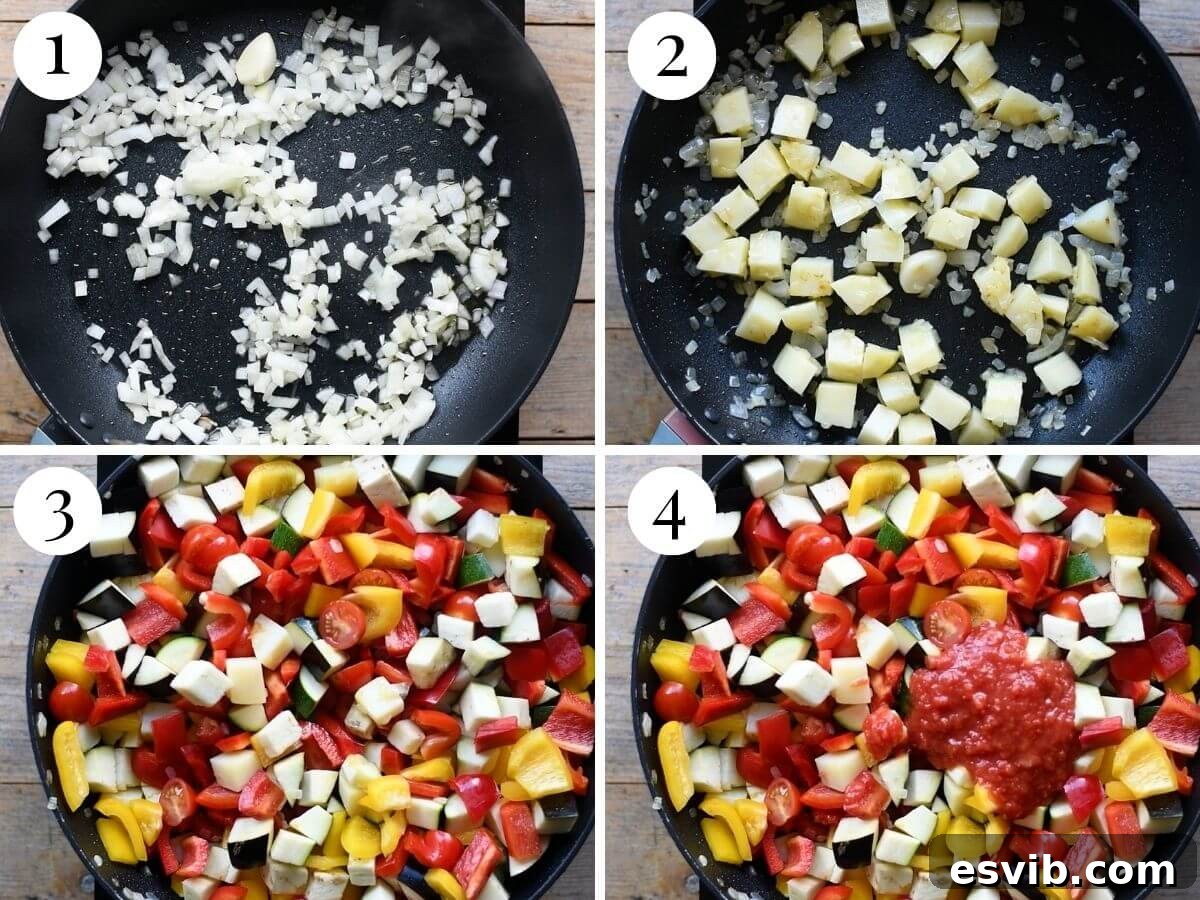
- Prepare the Remaining Vegetables: Now, turn your attention to the zucchini, eggplant, and bell peppers. Cut these vegetables into medium-sized cubes, aiming for pieces that are roughly the same size as your potatoes. This ensures even cooking and a pleasing consistency in the final stew. If using cherry tomatoes, cut them in half.
- Combine and Simmer: Add all the chopped zucchini, eggplant, and bell peppers to the pan with the potatoes and onions. Drizzle over an additional 1 tablespoon of olive oil. Season generously with a good pinch of salt (you can always adjust later). Stir everything together to ensure all the vegetables are lightly coated. Pour in the crushed tomatoes (or passata) and the water. Stir gently, then cover the pan with a lid and bring the mixture to a gentle simmer. Reduce the heat to low and let it cook for 20 minutes, allowing the vegetables to soften and their flavors to meld.
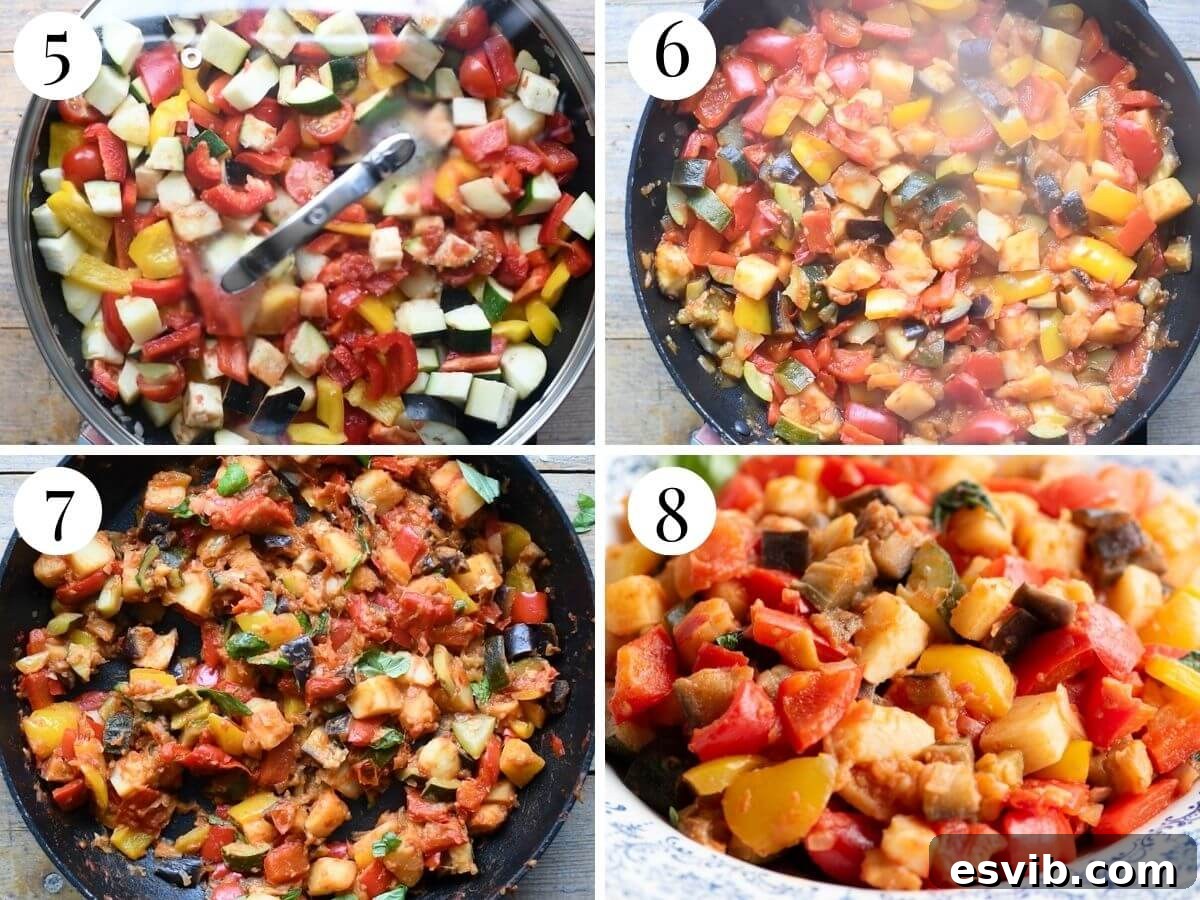
- Uncover and Reduce: After 20 minutes, remove the lid from the pan. The vegetables should be tender, and some liquid will have been released. Continue to cook for another 15 minutes on low heat, uncovered. This step allows some of the excess moisture to evaporate, concentrating the flavors and thickening the stew slightly.
- Finish and Serve: Once the Ciambotta has reached your desired consistency, turn off the heat. Stir in a generous handful of freshly torn basil leaves. Taste the stew and adjust the seasoning with more salt if needed. Serve warm or at room temperature, allowing the vibrant flavors to shine.
Essential Tips for Ciambotta Perfection
While Ciambotta is a forgiving dish, a few key tips can elevate your stew from good to truly exceptional. These insights will help you achieve the perfect balance of flavors and textures, making your Ciambotta a memorable experience.
- Embrace Adaptability: The beauty of Ciambotta lies in its flexibility. While following the core recipe is a great starting point, feel free to adapt it to your preferences or what’s in season. You might prefer more tomatoes, fewer bell peppers, or even include other vegetables like green beans, artichokes, or fennel. Experimentation is encouraged once you understand the basic flavor profile.
- Achieving the Ideal Consistency: Ciambotta is traditionally not overly saucy; it has a rich, slightly thickened texture from the stewed vegetables. The amount of liquid will naturally vary depending on the water content released from your vegetables. If you find the stew too watery, simply increase the heat slightly and simmer uncovered for a few extra minutes until the liquid reduces to your liking. Conversely, if you prefer a saucier stew, add a little more crushed tomatoes or a splash of vegetable broth.
- Quality of Ingredients is Paramount: Since Ciambotta focuses on fresh vegetables, the quality of your produce directly impacts the final flavor. Opt for ripe, seasonal vegetables from your local market whenever possible. High-quality extra virgin olive oil and good canned tomatoes also make a noticeable difference.
- Uniformity in Chopping: To ensure even cooking, try to chop all your vegetables (potatoes, zucchini, eggplant, bell peppers) into roughly the same medium-sized cubes. This consistency allows everything to become tender at the same rate.
- Don’t Rush the Sauté: The initial sautéing of onions and potatoes is crucial for building a deep flavor base. Cook them slowly over medium-low heat until tender and slightly golden. This step extracts sweetness from the onions and begins the softening process for the potatoes.
- Seasoning Throughout: Don’t forget to season with salt at various stages of cooking. A pinch of salt when adding the vegetables, and a final taste test before serving, ensures the flavors are well-balanced and vibrant.
- Adding Herbs: While fresh basil is traditional and essential, you can also experiment with a pinch of fresh oregano or a sprig of thyme added during the simmering stage for additional aromatic depth. Remember to remove hardy herb stems before serving.
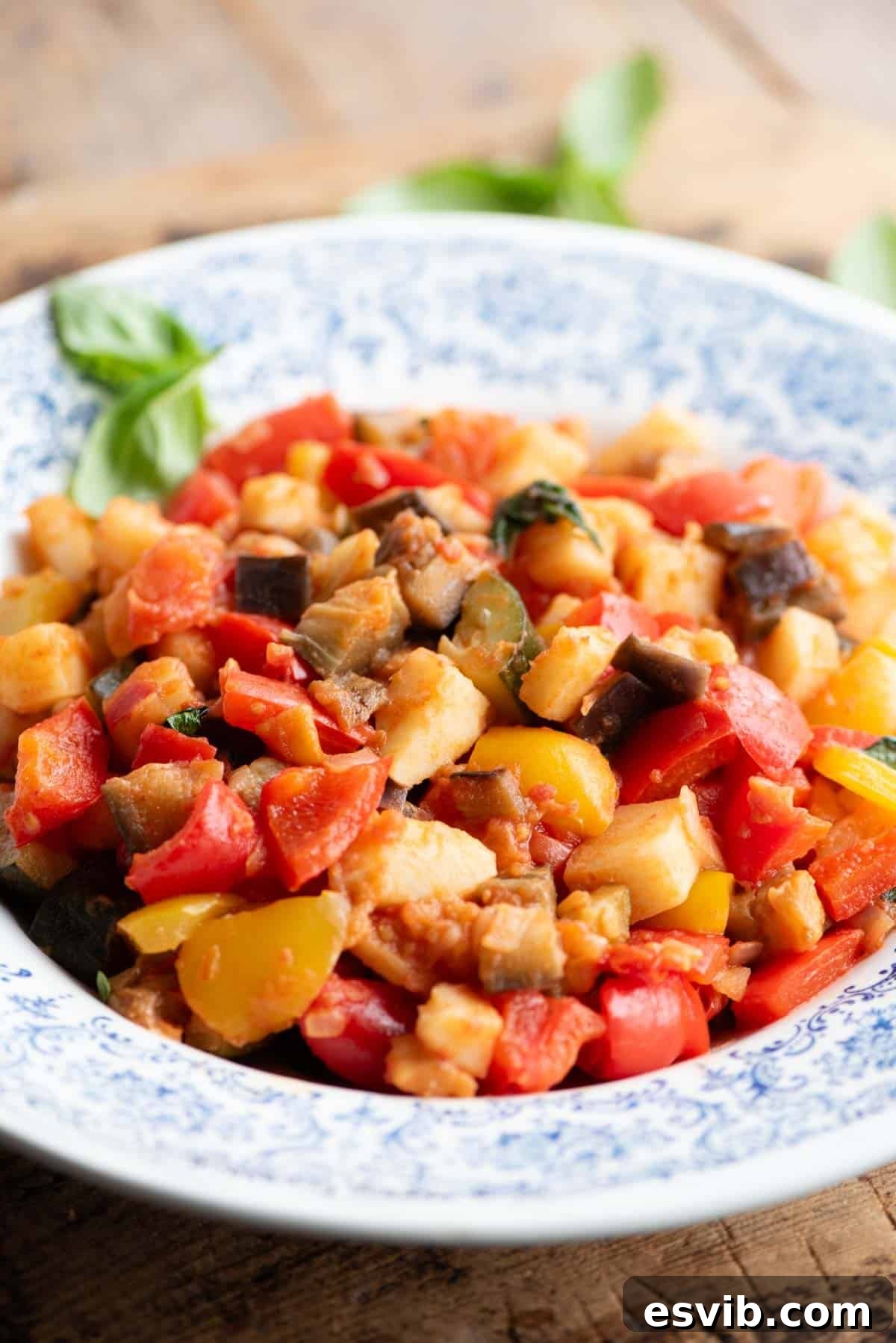
Serving Suggestions for Your Delicious Ciambotta
Ciambotta’s versatility extends beautifully to how it can be served. Whether you enjoy it as a light main course or a flavorful accompaniment, this stew adapts perfectly to various meals. It’s delicious served warm, allowing the rich flavors to be fully appreciated, or at room temperature, which is especially refreshing on a hot summer day.
Here are some popular ways to enjoy this vibrant Italian vegetable stew:
- As a Hearty Vegetarian Main: Served on its own with a drizzle of extra virgin olive oil and a sprinkle of fresh basil, Ciambotta makes for a wonderfully satisfying and healthy vegetarian meal. Pair it with a simple green salad for a complete and light dinner.
- Alongside Grilled Meats or Fish: Ciambotta is an outstanding side dish for almost any grilled protein. Its fresh, bright flavors beautifully complement the smokiness of grilled chicken, pork, or beef. We frequently serve it with chicken spiedini, marinated grilled pork tenderloin, or flaky grilled salmon or white fish.
- As a Traditional Antipasto: In Southern Italy, Ciambotta is often presented as an antipasto (starter). Serve it in small portions with slices of crusty, toasted Italian bread or crostini. The bread is perfect for soaking up every last drop of the flavorful sauce. You can even rub the toasted bread with a raw garlic clove before serving for an extra kick.
- With Pasta or Grains: For a more substantial meal, Ciambotta can be tossed with short pasta shapes or served over a bed of quinoa or couscous, allowing the grains to absorb the wonderful vegetable flavors.
- Topped with Cheese: A sprinkle of freshly grated Parmigiano Reggiano or Pecorino Romano before serving adds a delightful salty, umami depth that complements the sweetness of the vegetables. For a vegan option, nutritional yeast can offer a cheesy flavor.
- As a Sandwich Filling: Leftover Ciambotta makes a fantastic filling for crusty bread rolls, perhaps with a slice of provolone cheese, for a unique and flavorful sandwich.
More Delightful Italian Side Dishes to Explore
If you love the vibrant flavors and fresh ingredients of Ciambotta, you’ll surely enjoy these other traditional Italian side dishes, perfect for complementing any meal or serving as a light course on their own:
Sides
Pipi e Patati (Calabrian Peppers and Potatoes)
Sides
Peperoni Ammollicati (Peppers and Breadcrumbs)
Sides
Italian Green Beans In Tomato Sauce
Sides
Baked Spinach Balls with Parmigiano Cream
We hope you enjoy this delicious Ciambotta recipe! If you’ve tried it, please consider leaving a comment below to share your experience. We love hearing from you! You can also connect with us and discover more delicious recipes by following us on Facebook, Instagram, and Pinterest, or by signing up for our Newsletter.
Step-by-step photos are available above in the article.
Ciambotta (Stewed Italian Summer Vegetables)
By Emily
Ingredients
- 1 white onion
- 1 zucchini (courgette)
- 1 eggplant (aubergine)
- 3 bell peppers (e.g., 2 red, 1 yellow)
- 2 medium potatoes (about 350g/12.3oz)
- 1 garlic clove
- 4.5 oz (125g) cherry tomatoes (about 15 tomatoes)
- 5 tablespoons Crushed tomatoes or Passata
- 1/2 cup (125ml) water
- small handful Fresh basil
- 3 tablespoons Olive oil
- salt, to taste
Instructions
- Finely chop the onion and add it to a large pan with 2 tablespoons of olive oil and a whole peeled garlic clove. Sauté the onion on a medium-low heat until translucent.
- Meanwhile, peel and chop the potatoes into medium-sized cubes and add them to the onion. Stir then let them sauté on medium-low for about 10 minutes while you cut the rest of the vegetables.
- Cut the zucchini, eggplant, and bell peppers into medium-sized pieces, roughly the same size as the potatoes. Halve the cherry tomatoes.
- Add all the chopped zucchini, eggplant, bell peppers, and cherry tomatoes to the pan with the potatoes. Drizzle over another 1 tablespoon of olive oil. Add a good pinch of salt, stir, then add the crushed tomatoes and water.
- Cover with a lid and let it simmer for 20 minutes until the veggies are soft. Uncover the pan and turn the heat to low; cook for another 15 minutes uncovered to allow the sauce to reduce slightly.
- Once ready, turn off the heat and stir in freshly torn basil leaves. Taste for seasoning and add more salt if needed. Serve warm or at room temperature.
Notes
- Adapting the recipe: With recipes like this, we always recommend making it as close to the written recipe as you can initially, then adapting it to your own preference. For example, you might decide to add more tomato, fewer bell peppers, or adjust it to whatever seasonal vegetables you have on hand.
- Consistency: Ciambotta is not overly saucy, but its consistency will vary depending on how much water is released from the vegetables. If you need to reduce the liquid, just turn up the heat and simmer the vegetables until it has reduced. In contrast, if you prefer it on the saucier side, you can add more crushed or fresh tomatoes, or a splash of vegetable broth.
- Storage: Ciambotta will keep well in an airtight container in the fridge for up to 3 days. It can be reheated gently on the stovetop or in the microwave, or enjoyed at room temperature.
- Serving sizes: The listed serving size is based on serving Ciambotta as a side dish.
Helpful Info for All Recipes
- I always use extra virgin olive oil in all of my recipes unless stated otherwise.
- When I use canned or jarred tomatoes of any kind, I always use Cirio or Mutti brands for the best results and flavor.
- All vegetables are medium-sized unless stated otherwise.
- All recipes are tested and developed using a fan (convection) oven.
- Find out more about how nutrition is calculated.
- Check out our must-have Italian Pantry Staples.
- You can also find all our Essential Kitchen Tools for Italian Cooking.
Nutrition
Nutrition information is automatically calculated and should only be used as an approximation.