
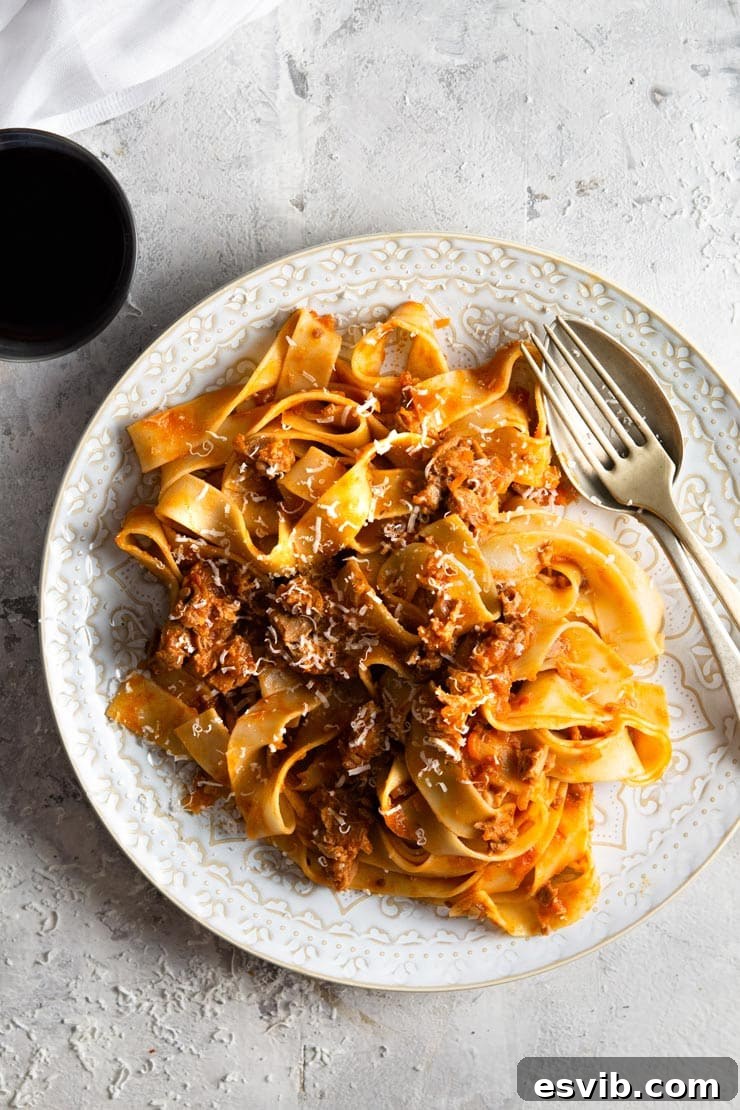
Venetian Duck Ragu with Pappardelle: An Authentic Italian Comfort Food Masterpiece
Prepare to embark on a culinary journey to the heart of Venice with this exquisite Duck Ragu. It’s a dish that effortlessly blends the rustic charm of Italian cooking with a touch of elegance, creating a meal that is both deeply comforting and impressively flavorful. Crafted with tender duck, simmered in a rich sauce infused with the warming spices of cinnamon, bright notes of orange, and the depth of white wine and tomatoes, this ragu is perfectly tossed with broad, silky pappardelle pasta. While it possesses a festive aura, making it ideal for special occasions, its heartwarming nature ensures it can be savored and enjoyed throughout the year. Simple to prepare but unforgettable in taste, it’s a dish guaranteed to leave a lasting impression on anyone who tries it.
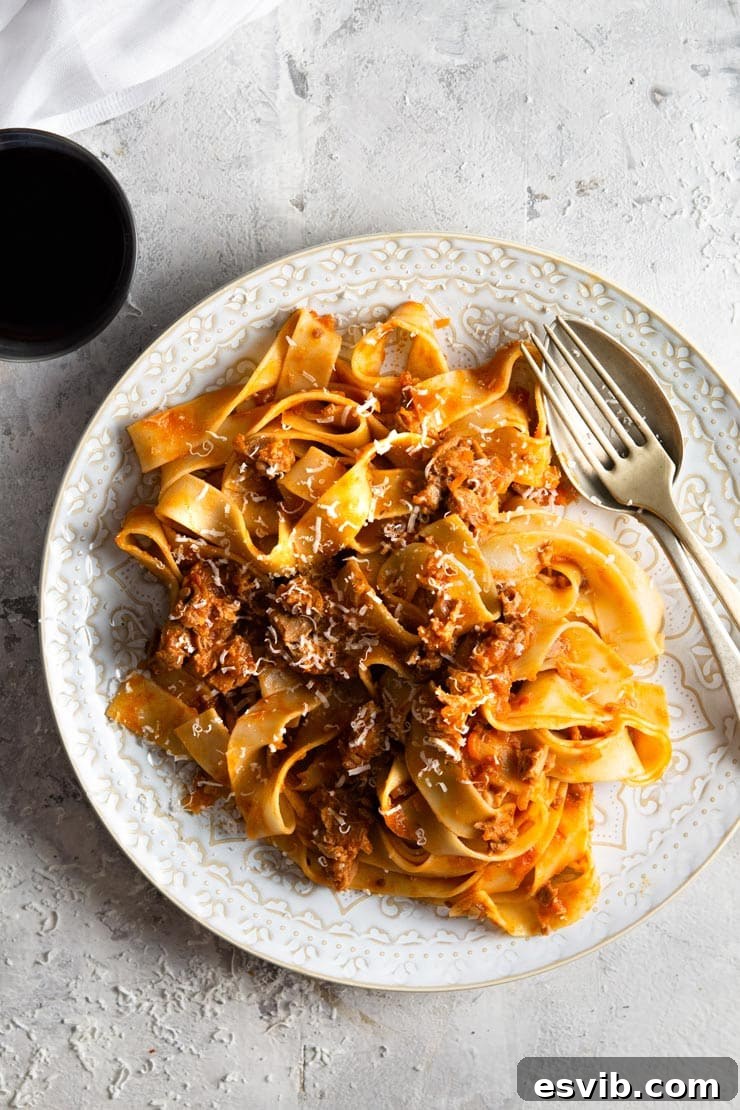
The Allure of Venetian Cuisine: A Symphony of Flavors
Venetian cuisine holds a special place in the vast tapestry of Italian food, often distinguished by its unique historical influences. Unlike some other Italian regions that rely heavily on herbs like basil and oregano, Venice, with its rich history as a trading port, embraced an array of exotic spices. This historical connection to the East introduced flavors like cinnamon and orange into traditional dishes, creating a distinctive profile that sets Venetian recipes apart. This duck ragu is a prime example, where these subtle, warming spices elevate the dish beyond what you might typically expect from Italian fare.
The addition of cinnamon in particular is a signature Venetian touch, offering an unexpected yet harmonious complement to the rich duck meat without making the dish overtly sweet. It’s a delicate hint, a whisper of something extraordinary, that truly enhances the natural savory notes and complexity of the ragu. The bright, zesty essence of orange further cuts through the richness, adding a refreshing counterpoint that ties all the robust flavors together beautifully. This combination results in a ragu that feels luxurious and deeply satisfying, yet surprisingly balanced.
Understanding Duck: Its Flavor Profile and Culinary Versatility
Duck meat is a gourmet delight, celebrated for its robust flavor and rich texture. Often described as having a strong yet not overpowering taste, it carries a subtle “gamey” undertone that is distinct from other poultry. Although it is a dark meat, it differs from beef, presenting a flavor profile closer to the dark meat of chicken or turkey, but with an intensified richness and a hint of natural sweetness. This makes duck an incredibly versatile ingredient, capable of transforming into a multitude of exquisite dishes, from crispy roasted duck to delicate pâtés.
In this Venetian ragu, the duck truly shines. Its inherent richness is perfectly suited for slow-cooking, allowing the meat to tenderize beautifully and absorb the intricate flavors of the sauce. As the duck simmers over several hours, its fat renders, contributing to the silky texture and profound depth of the ragu. This process not only makes the duck incredibly succulent but also infuses the entire sauce with a savory foundation that is simply unmatched. It’s this deep, satisfying flavor that makes duck ragu a true standout and a personal favorite.
Why Pappardelle is the Perfect Companion for Ragu
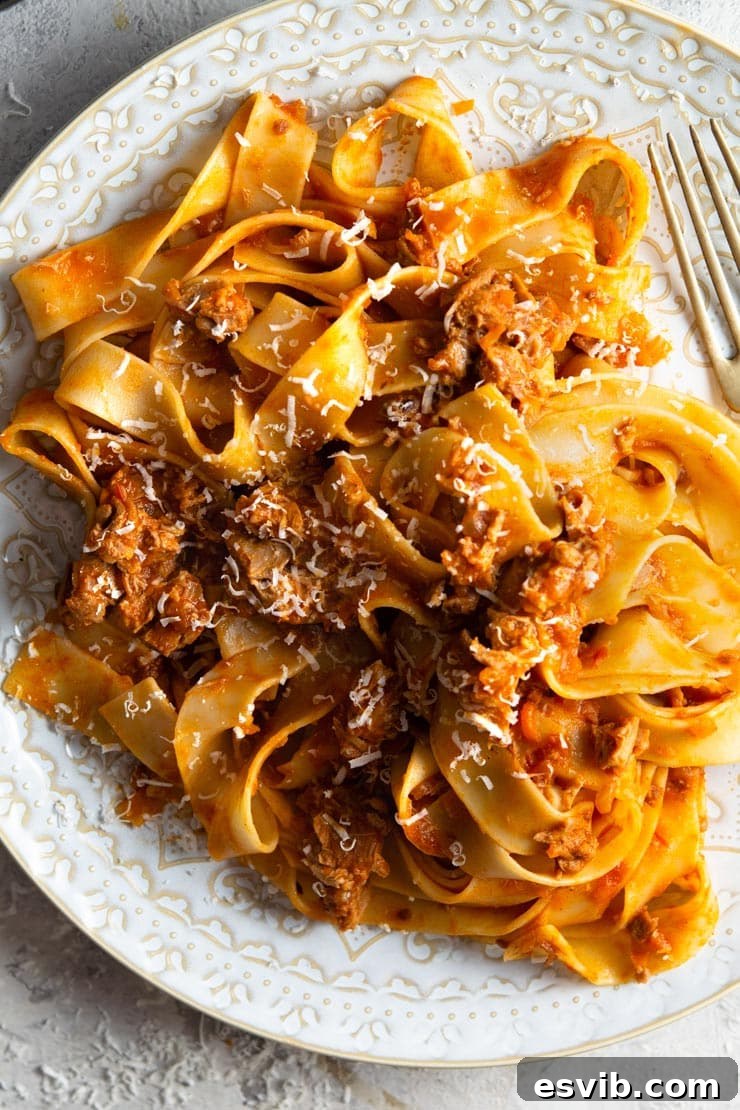
While various pasta shapes can be served with a rich ragu, pappardelle stands out as the traditional and unequivocally best choice for this Venetian Duck Ragu. These broad, flat ribbons of pasta, originating from Tuscany but beloved across Italy, boast a substantial surface area and a slightly coarse texture. This design is not accidental; it’s meticulously crafted to capture and hold onto every drop of the luxurious, thick sauce, ensuring that each mouthful is a perfect blend of pasta and ragu.
The silkiness of pappardelle, whether freshly made or store-bought, provides a delightful textural contrast to the tender, shredded duck meat. Its robust structure prevents it from becoming overwhelmed by the rich sauce, allowing it to act as a sturdy vehicle for all the incredible flavors. Beyond pappardelle, other wide, flat pastas like **tagliatelle** or even substantial tube shapes like **rigatoni** or **pici** can also work wonderfully. However, for an authentic Venetian experience and maximum sauce-coating potential, pappardelle remains the top recommendation. You can easily find high-quality dried pappardelle in most supermarkets, or elevate your dish further by making your own homemade pasta dough.
Crafting the Ragu: A Symphony of Ingredients and Techniques
Making this Venetian Duck Ragu is a labor of love that rewards patience with an explosion of flavor. The process begins by honoring the duck itself, ensuring its skin is beautifully crisp and its flavors are locked in. The magic then unfolds as simple, fresh ingredients are layered and slow-cooked to perfection.
Key Ingredients for an Unforgettable Ragu:
- Duck Legs: The star of the show. Duck legs are ideal for slow cooking as they become incredibly tender and flavorful.
- Aromatic Vegetables (Soffritto): Finely chopped carrots, onions, and celery form the classic Italian flavor base. Sautéing these slowly is crucial for building depth.
- Cinnamon: A signature Venetian spice that adds a subtle warmth and complexity, enhancing the duck’s natural flavor without making the dish taste sweet.
- Orange Zest and Juice: Provides a bright, zesty counterpoint to the rich duck, lifting the overall flavor profile.
- White Wine: Used to deglaze the pan, adding acidity and depth to the sauce. Choose a dry white wine that you would enjoy drinking.
- Pureed Tomatoes (Passata) & Tomato Paste: These form the rich, concentrated tomato base of the ragu, providing sweetness and body.
- Chicken Stock: The liquid base for the sauce, enriching it with savory notes. Opt for a good quality stock, homemade if possible.
- Olive Oil, Salt, Pepper, Bay Leaf: Essential seasonings and fats to bring out the best in all ingredients.
How To Make Venetian Duck Ragu – A Step-by-Step Culinary Journey
Creating this rich Venetian Duck Ragu is a straightforward process, demanding mostly patience as the flavors meld and deepen over time. Follow these steps for a truly exceptional result:
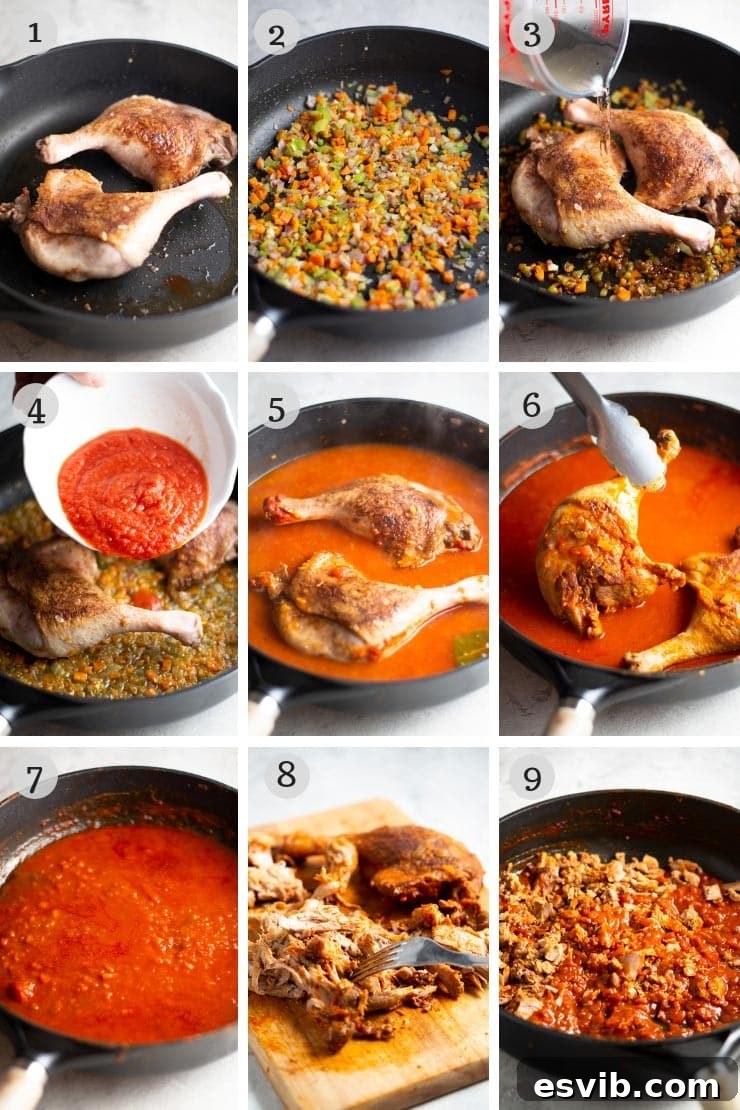
- Prepare and Sear the Duck: Begin by patting the duck legs dry. Season them generously with salt and black pepper, then rub 1/2 teaspoon of cinnamon evenly over the skin. In a large, heavy-bottomed pan or Dutch oven, heat a little olive oil over medium-low heat. Place the duck legs skin-side down and sear for 7-8 minutes on each side until the skin is beautifully browned and crispy, and the fat has rendered. This crucial step creates incredible flavor and seals in moisture. Remove the seared duck legs from the pan and set them aside on a plate.
- Build the Soffritto: In the same pan, which now holds delicious rendered duck fat and pan drippings, add 1 tablespoon of olive oil if needed. Add the finely chopped carrot, onion, and celery. Stir in the orange zest, bay leaf, and the remaining 1/2 teaspoon of cinnamon. Sauté these vegetables slowly for about 10 minutes, stirring frequently, until they are soft and translucent. This slow cooking allows the aromatic flavors to fully develop, forming the essential flavor base for the ragu.
- Deglaze and Simmer: Return the seared duck legs to the pan. Pour in the white wine and bring it to a simmer, allowing the wine to reduce by half. This deglazing step lifts all the flavorful bits from the bottom of the pan. Next, add the orange juice, pureed tomatoes (passata), and tomato paste. Stir all the ingredients well to combine. Pour in the chicken stock.
- Slow Cook to Perfection: Bring the sauce to a gentle simmer. Once simmering, reduce the heat to low, cover the pan loosely, and let the ragu cook slowly for 2 hours. Halfway through the cooking time, turn the duck legs to ensure even cooking and tenderness. The long, slow simmer allows the duck to become incredibly tender and the flavors to deepen into a rich, cohesive sauce. If the sauce appears to reduce too much, you can add a little more stock or water.
- Shred the Duck and Finish the Ragu: After 2 hours, the sauce should be thick and rich, and the duck legs fork-tender. Turn off the heat. Carefully remove the duck legs from the pan and let them rest on a chopping board for about 10 minutes. Resting the meat is vital to keep it juicy. Once cooled slightly, use a fork to shred the succulent meat off the bones, discarding the bones and any excess skin if preferred. Roughly chop the shredded duck meat and return it to the ragu in the pan. At this point, the ragu is essentially ready. Gently heat the ragu while you prepare your pasta.
- Cook the Pappardelle and Serve: Bring a large pot of generously salted water to a rolling boil. Add the pappardelle pasta and cook according to the package instructions until al dente. Before draining, reserve about a cup of the starchy pasta water; this can be added to the ragu if it needs loosening or further emulsifying with the sauce. Drain the pasta using large tongs or a spaghetti spoon and add it directly to the pan with the duck ragu. Toss everything together vigorously to ensure the pasta is thoroughly coated in the rich sauce. Serve immediately in warm bowls, garnished with a generous sprinkling of freshly grated Parmesan cheese.
Pro Tips for an Unforgettable Venetian Duck Ragu
- Master the Sear: Do not rush the initial searing of the duck. This step is fundamental for developing deep flavor through the Maillard reaction and rendering the fat, which adds incredible richness to the sauce. Crispy skin also adds a lovely texture before it softens during the long simmer.
- Slow Down the Soffritto: The foundation of any great ragu is a perfectly sautéed soffritto. Cook the carrots, onions, and celery slowly over low heat until they are very soft and sweet, about 10 minutes. This process coaxes out their natural sugars and complex flavors.
- Rest Your Meat: Always allow the duck legs to rest for at least 10 minutes after removing them from the sauce. This allows the juices to redistribute, ensuring the meat remains tender and succulent when shredded.
- Embrace the Cinnamon: While optional, cinnamon is a hallmark of Venetian cuisine and genuinely enhances the duck’s flavor, adding a subtle warmth that is unique and delicious. Trust the process – it won’t make your ragu taste like dessert!
- Season Thoughtfully: Season the duck well with salt and pepper before cooking. Crucially, taste the ragu at the end of cooking and adjust seasoning as needed. Remember that store-bought stocks can vary greatly in sodium content.
- Quality Stock Matters: A good quality chicken stock (or vegetable stock if preferred) makes a significant difference in the final taste of your ragu. Homemade stock offers the best flavor and control over sodium.
- Choose Excellent Pasta: The quality of your pasta can elevate the entire dish. Use a high-quality brand of pappardelle known for its texture and ability to hold sauce, or consider making homemade pasta for an unparalleled experience.
Beyond the Bowl: Serving Suggestions and Variations
While this Venetian Duck Ragu is heavenly with pappardelle, its versatility allows for many other delightful serving options:
- Creamy Polenta: Serve the rich ragu over a bed of warm, creamy polenta for a comforting and hearty meal. The polenta’s subtle flavor and smooth texture perfectly complement the robust sauce.
- Lasagne al Forno: Transform this ragu into an extraordinary lasagna. Replace the beef ragu in a classic recipe (like this lasagna recipe) with the duck ragu. When making the bechamel sauce, use a light hand with Parmesan or opt for a milder cheese to ensure the duck’s unique flavor remains prominent.
- Other Pasta Shapes: If pappardelle isn’t available, or you prefer a different texture, consider thick-cut tagliatelle, hand-rolled pici, or even hearty rigatoni, all of which are excellent for catching and holding the rich sauce.
- Gnocchi: Serve the ragu with soft, pillowy potato gnocchi for an indulgent and satisfying alternative.
Recipe: Venetian Duck Ragu with Pappardelle Pasta
This rich Venetian duck ragu, made with cinnamon, orange, white wine, and tossed with pappardelle pasta, is a beautiful dish with a festive feel that can be enjoyed all year round. It’s super comforting, easy to prepare, and sure to impress!
Prep time: 20 mins
Cook time: 2 hrs 30 mins
Total time: 2 hrs 50 mins
Servings: 4 servings
Ingredients
- 2 large duck legs
- 1 carrot, finely chopped
- 1 onion, finely chopped
- 1 stick celery, finely chopped
- 1/2 orange zest
- Juice of 1/2 orange
- 1 tsp cinnamon
- 1 cup (150g) passata (pureed tomatoes)
- 1 heaped tbsp tomato paste
- 2/3 cup (150ml) white wine
- 5 cups (1.2 litres) chicken stock
- Salt and pepper, to taste
- 1 bay leaf
- 2 tbsp olive oil
- 14 oz (400g) pappardelle pasta
- Parmesan, for serving
Instructions
- Season the duck with salt and pepper, then rub it all over with 1/2 tsp cinnamon. Sear it skin down first in a large pan with a little olive oil on a medium to low heat for 7-8 minutes on each side until browned. Set aside on a plate.
- Add 1 tbsp of olive oil to the same pan (if needed), then add the chopped carrot, onion, celery, orange zest, bay leaf, and 1/2 tsp cinnamon. Sauté slowly for 10 minutes, stirring often until the vegetables are soft.
- Add the duck back to the pan and add the wine. Reduce the wine by half, then add the orange juice, pureed tomatoes (passata), tomato paste, and stock. Stir to combine all ingredients and simmer slowly, uncovered, for 2 hours, turning the duck around halfway through. If the sauce reduces too much, add more stock or water.
- Turn the sauce off the heat and remove the duck legs. Let them cool on a chopping board for 10 minutes, then shred the meat off the bone using a fork. Roughly chop the meat and add it back to the sauce. The ragu is now ready; heat it gently while your pasta is cooking.
- Bring a large pot of salted water to a boil and cook the pappardelle according to package instructions. Remove the pasta with large tongs or a spaghetti spoon (reserving some pasta water if the sauce needs thinning) and add it directly to the ragu. Toss to coat and serve in bowls with a sprinkling of freshly grated Parmesan cheese.
Helpful Info for All Recipes
- I always use extra virgin olive oil in all of my recipes unless stated otherwise.
- When using canned or jarred tomatoes, I recommend Cirio or Mutti brands for the best results and flavor.
- All vegetables are medium-sized unless stated otherwise.
- All recipes are tested and developed using a fan (convection) oven.
- Find out more about how nutrition is calculated (Note: Nutrition information is automatically calculated, so should only be used as an approximation).
- Check out our must-have Italian Pantry Staples.
- You can also find all our Essential Kitchen Tools for Italian Cooking.
Nutrition Information (Approximate)
- Calories: 524 kcal
- Carbohydrates: 83g
- Protein: 41g
- Fat: 22g
- Saturated Fat: 4g
- Cholesterol: 168mg
- Sodium: 235mg
- Potassium: 918mg
- Fiber: 5g
- Sugar: 8g
- Vitamin A: 2985 IU
- Vitamin C: 16.8mg
- Calcium: 90mg
- Iron: 5.4mg
Nutrition information is automatically calculated, so should only be used as an approximation.
More Ragu Recipes You Might Like:
- Genovese Sauce – La Genovese Napoletana
- Easy Sausage Ragu with Ricotta Gnocchi
- Italian Beef Ragu – A Classic Recipe
- Lentil Ragu Lasagne
If you’ve tried this Venetian Duck Ragu or any other recipe on the blog, please let me know how you got on in the comments below; I love hearing from you! You can also FOLLOW ME on FACEBOOK, TWITTER, INSTAGRAM, and PINTEREST to see more delicious food and what I’m getting up to.