
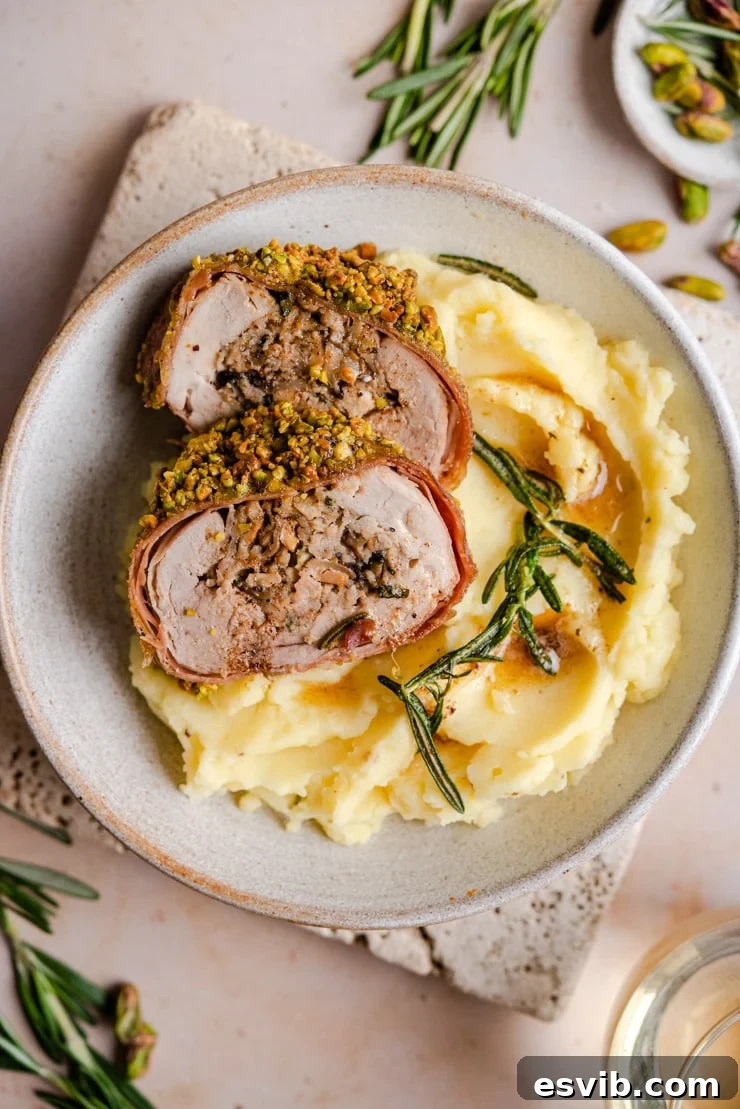
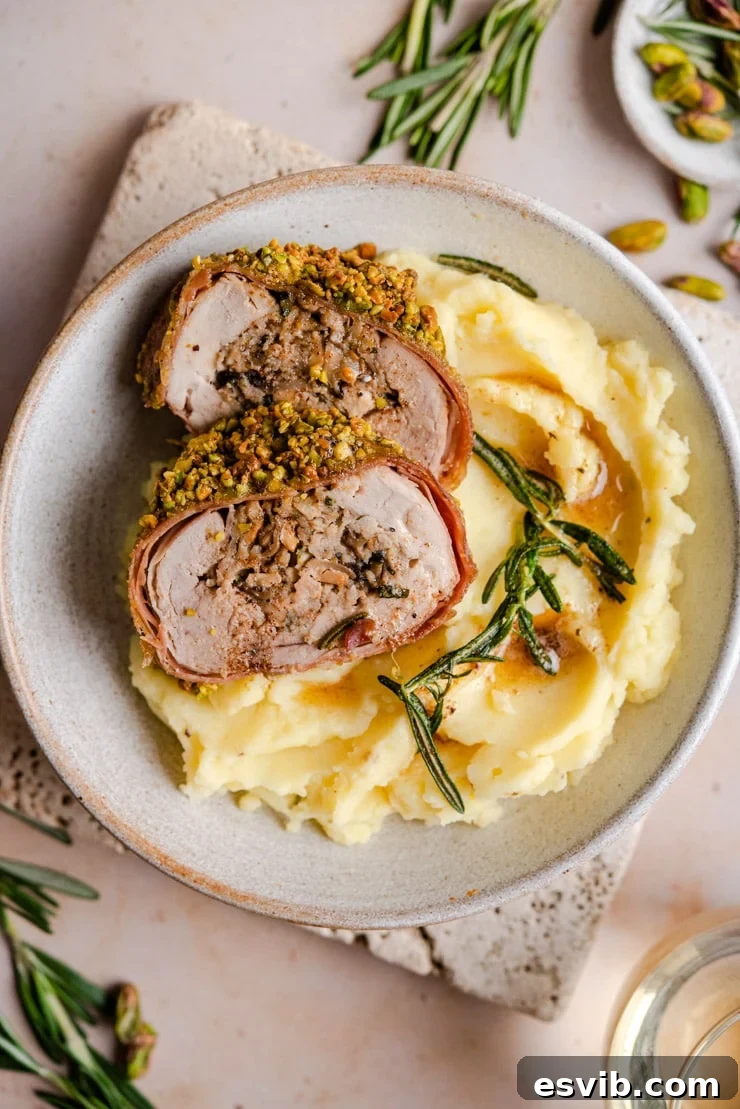
Indulge in a truly spectacular Italian-inspired Stuffed Pork Tenderloin (also known as pork fillet) that’s bursting with flavor. This elegant roast features a rich sausage and mushroom stuffing, encased in savory Italian prosciutto, and finished with a delicate crust of crushed pistachios.
Surprisingly simple to prepare, this stuffed pork tenderloin is ideal for both impressive dinner parties and cozy family meals. Its make-ahead convenience means you can enjoy a gourmet experience without spending all day in the kitchen. Prepare to delight your taste buds with every juicy, succulent slice!
Italian Stuffed Pork Tenderloin: A Gourmet Delight for Any Occasion
Welcome to a culinary journey that brings the vibrant flavors of Italy right to your dining table. This recipe for Stuffed Pork Tenderloin is more than just a meal; it’s an experience. Combining tender pork with a robust, aromatic stuffing, crispy prosciutto, and a unique pistachio crust, it promises an unforgettable dish that looks and tastes incredibly sophisticated, yet remains wonderfully approachable for home cooks. Whether you’re hosting a special gathering or simply craving an elevated weeknight dinner, this Italian Stuffed Pork Tenderloin will undoubtedly become a treasured addition to your recipe repertoire.
Pork Loin vs. Pork Tenderloin: Understanding Your Cut for Optimal Results
Before diving into the stuffing and rolling process, it’s crucial for any aspiring chef to understand the distinct differences between pork loin and pork tenderloin. Confusing these two cuts can significantly impact your cooking time and the final texture of your dish, potentially leading to disappointment. While both come from the pig’s back, they are fundamentally different in their characteristics and how they should be prepared.
- Pork Tenderloin (Pork Fillet): This cut is long, thin, and narrow, typically weighing between 1 to 1.5 pounds (450-680g). It’s renowned for being the most tender cut of pork, incredibly lean, and quick-cooking. Because of its delicate nature, tenderloin requires shorter cooking times to prevent it from drying out. When cooked correctly, it should be incredibly juicy, succulent, and literally melts in your mouth. Overcooking is the cardinal sin here, as it can quickly turn dry and tough. Its shape makes it ideal for butterflying and stuffing.
- Pork Loin: In contrast, pork loin is a much wider, thicker cut, often sold as a roast or cut into thick chops. It can weigh anywhere from 2 to 4 pounds (900g-1.8kg) or more and often comes with a desirable fat cap, which adds flavor and moisture during cooking. Pork loin is less tender than tenderloin and requires longer cooking times, typically roasted whole or cut into chops. If you were to use pork loin for this stuffed recipe, the cooking times would need significant adjustment, and the preparation method of butterflying and rolling might be more challenging due to its greater size and density.
For this Stuffed Pork Tenderloin recipe, we are specifically using the tenderloin to achieve that desirable melt-in-your-mouth texture, which perfectly complements the rich stuffing and crispy exterior. Always ensure you’ve picked up the correct cut for the best and most consistent results!
Mastering the Butterfly Technique for a Perfectly Stuffed Pork Tenderloin
The thought of butterflying meat might sound intimidating, conjuring images of intricate knife skills. However, it’s a straightforward and essential technique for creating a perfectly stuffed and uniformly rolled pork tenderloin. This method allows you to transform the cylindrical tenderloin into a flat, even canvas, making it easy to spread your delicious stuffing and create a consistent roll that cooks evenly. With just a little practice, you’ll be able to butterfly a tenderloin in under 10 minutes, often much quicker!
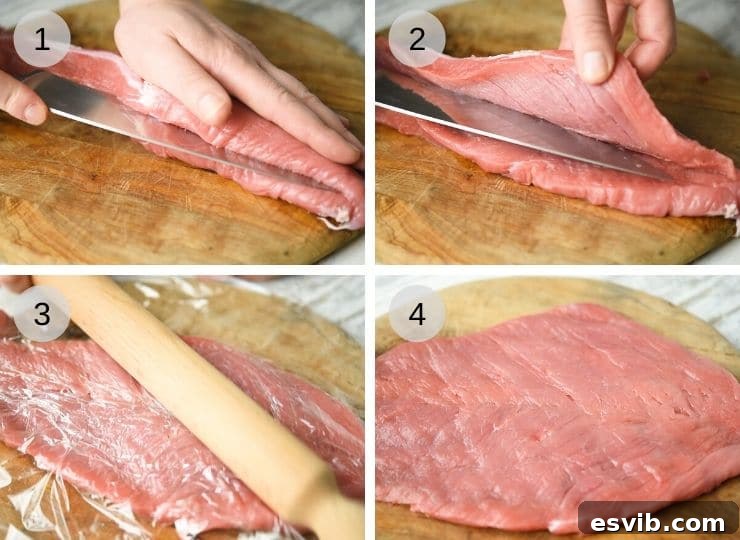
- Initial Lengthwise Cut: Place the pork tenderloin on a clean chopping board. Using a sharp, thin-bladed knife, start making a precise cut lengthwise down the middle of the pork. Imagine you’re trying to slice it into two halves, but it’s crucial to stop about half an inch (approximately 1 cm) before cutting all the way through the bottom. This hinge will allow you to open the meat.
- Open Like a Book: Carefully open the pork tenderloin along the cut line, spreading it out flat like an open book. You should now have a roughly flat piece of meat. Inspect the thickness: if there are any noticeably thicker areas, you can make shallower, parallel cuts into them and open them further (like small additional flaps) to create a more even thickness across the entire surface.
- Flattening to Uniform Thickness: Place the butterflied tenderloin between two sheets of plastic wrap (cling film). Using a rolling pin or the flat side of a meat mallet, lightly but firmly pound the pork. Work from the center outwards, applying even pressure. Your goal is to achieve a uniform thickness of approximately 1/2 inch (about 1.25 cm) across the entire flattened surface. This ensures even cooking and a consistent roll, preventing some parts from being overcooked or undercooked.
This butterflying technique is the secret to a beautifully presented and perfectly cooked stuffed pork tenderloin, allowing the rich flavors of the stuffing to infuse every single bite.
Crafting the Irresistible Sausage and Mushroom Stuffing
The heart of this Stuffed Pork Tenderloin recipe truly lies in its incredibly flavorful yet delightfully simple stuffing. We’re talking about a harmonious blend of ingredients that perfectly complements the rich pork and salty prosciutto, elevating the entire dish to gourmet status. The beauty is in its simplicity and the depth of flavor it provides.
Our star ingredients for the stuffing are high-quality Italian sausages and earthy sautéed mushrooms. The Italian sausages, with their inherent blend of savory pork, garlic, fennel, and other herbs, bring a wonderful depth of savory flavor, a pleasant texture, and a hint of spice. This robust base is then beautifully complemented by fresh, mixed mushrooms, which add an umami richness and a tender, meaty texture that contrasts wonderfully with the pork. Freshly chopped parsley and rosemary introduce bright, herbaceous notes that cut through the richness and elevate the entire flavor profile with their aromatic qualities. Finally, a touch of freshly grated Parmesan cheese is added to bind it all together with a creamy, salty tang, creating an irresistible filling that remains moist and tender inside the roasted pork.
That’s it! Minimal ingredients, maximum impact. This thoughtful combination ensures that every bite of your stuffed pork tenderloin is bursting with complex, satisfying flavors, making it a truly memorable culinary experience.
Step-by-Step Guide: How to Make Stuffed Pork Tenderloin with Prosciutto & Pistachios
Prep Work for a Seamless Cook
- Prepare the Pistachios: Begin by placing your shelled pistachios in a food processor. Pulse them into a medium-fine crumb. Exercise caution during this step, as pistachios can quickly turn into a paste if over-processed, which won’t give you the desired crunchy crust. Once crumbed, transfer the pistachio crumbs to a shallow dish or a wide, flat baking tray and set aside for later use.
- Sauté the Stuffing Base: Heat about ½ tablespoon of olive oil in a skillet or frying pan over medium heat. Add the finely chopped garlic and cook gently for approximately 30 seconds to 1 minute until it becomes fragrant. Be careful not to let the garlic burn, as this can impart a bitter flavor. Next, add the sliced mixed mushrooms, along with the fresh parsley and rosemary. Sauté for 5-7 minutes, stirring occasionally, until the mushrooms are soft and any released moisture has completely evaporated. This step is crucial for developing deep, concentrated flavors and preventing a watery stuffing. Remove the skillet from heat and allow the mushroom mixture to cool completely before mixing with other ingredients.
- Combine the Stuffing Ingredients: Once the mushroom mixture is cool to the touch, remove the Italian sausages from their casings and place the raw sausage meat in a clean mixing bowl. Add the cooled sautéed mushrooms and the freshly grated Parmesan cheese to the bowl. Use your hands (wearing food-safe gloves if preferred) to thoroughly combine all the ingredients until they are well integrated and evenly distributed throughout the sausage mixture.
- Butterfly and Flatten the Pork Tenderloin: Following the butterflying technique detailed in the section above, prepare your pork tenderloin. Once butterflied, place it between two sheets of plastic wrap. Using a rolling pin, lightly but firmly pound the pork until it is uniformly about ½ inch (1.25 cm) thick across its entire surface. This creates an even base for your stuffing and ensures uniform cooking of the finished roast.
Assembling Your Masterpiece: The Stuffed Pork Tenderloin
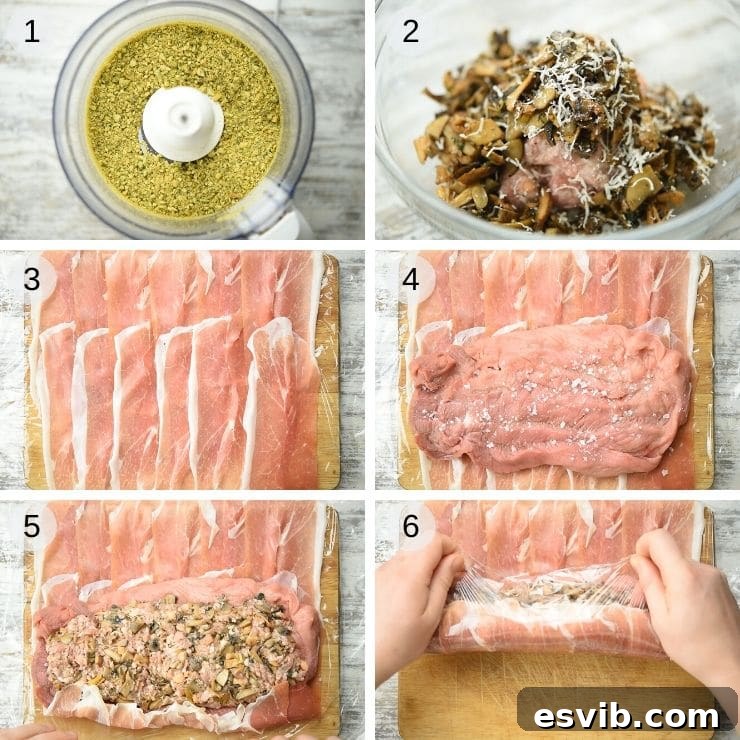
- Lay the Prosciutto Base: On a clean work surface, lay out a large sheet of plastic wrap (cling film). Arrange the thinly sliced prosciutto in an even, slightly overlapping layer. Each slice should overlap the previous one by about 2 inches (5 cm). Ensure you lay out enough prosciutto to cover the full length of your butterflied tenderloin, with a slight overlap at each end. This forms a beautiful, savory, and protective crust around the pork.
- Position and Season the Pork: Carefully place the flattened pork tenderloin on top of the prosciutto layers, positioning it at the end closest to you. Lightly sprinkle the exposed surface of the pork with salt to enhance its natural flavors.
- Add the Stuffing: Evenly spread the prepared sausage and mushroom stuffing over the entire surface of the pork tenderloin. Leave a small border (about half an inch) at the edges to ensure the stuffing doesn’t squeeze out during rolling.
- Roll It Up Tightly: Starting from the end closest to you, begin to tightly roll the tenderloin away from you. Use the plastic wrap underneath the prosciutto to help you achieve a very tight, compact log. The tighter you roll it, the better it will hold its shape during cooking and prevent the stuffing from escaping.
- Chill or Coat Immediately: At this stage, your tightly rolled and stuffed pork tenderloin can be wrapped securely in the plastic wrap and stored in the refrigerator for 1-2 days. This makes it an excellent make-ahead meal option for busy schedules or entertaining. If you plan to cook it immediately, unwrap it and proceed to the next step.
- Pistachio Crust (Optional but Recommended): If you desire the pistachio crust, carefully unwrap the tenderloin from the plastic wrap. Take your shallow dish or baking tray with the prepared pistachio crumbs. Gently roll the entire tenderloin into the crumbs, pressing lightly to ensure they adhere well to the prosciutto surface. While not every crumb will stick perfectly, aim for an even coating to achieve that delightful crunch and visual appeal.
How to Perfectly Cook Your Stuffed Pork Tenderloin
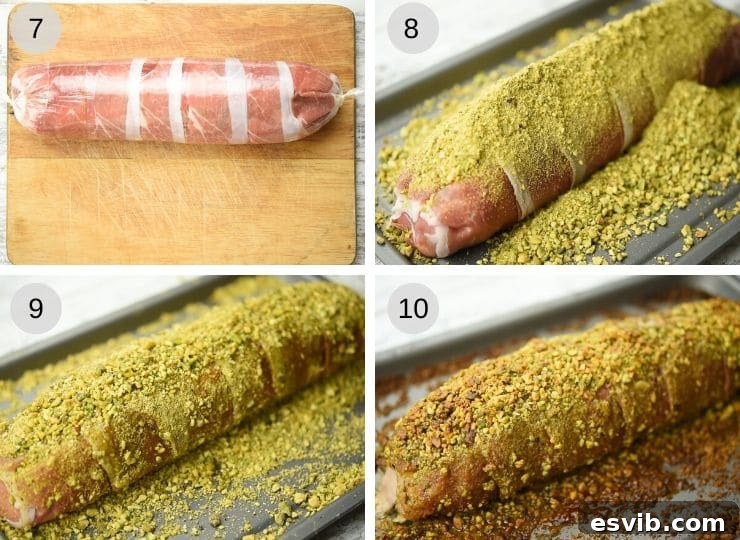
- Preheat Your Oven: Preheat your oven to 350°F (180°C). This ensures the oven is at the correct temperature for even cooking from the start.
- Prepare for Roasting: Lightly drizzle the pistachio-crusted tenderloin with no more than ½ tablespoon of olive oil. This minimal amount helps with browning and moisture. Carefully place the tenderloin on a sturdy baking tray.
- Initial Roast (Covered): Cover the baking tray loosely with aluminum foil. This is a crucial step! The foil helps to ensure the pork cooks through without the delicate pistachio crust or the savory prosciutto burning too quickly, especially during the initial phase. Roast in the preheated oven for 20 minutes.
- Final Roast (Uncovered): After 20 minutes, carefully remove the aluminum foil from the baking tray. Continue to roast for another 20 minutes, or until the pork reaches an internal temperature of 155°F (68°C) when measured with a reliable meat thermometer. Insert the thermometer into the thickest part of the tenderloin, making sure it doesn’t touch the stuffing. This uncovered roasting period allows the prosciutto to crisp up beautifully and the pistachios to toast to a golden perfection.
- Crucial Resting Period: This step is paramount for a truly succulent roast! Once cooked, remove the tenderloin from the oven and let it rest on the baking tray (or transfer it to a clean cutting board) for at least 10 minutes before slicing and serving. Resting allows the precious juices, which concentrate in the center during cooking, to redistribute throughout the entire piece of meat. Cutting too early will cause these flavorful juices to run out, leading to dry and less tender pork.
Top Tips for Effortless Entertaining: Make-Ahead & Freezing Options
One of the many appealing aspects of this Stuffed Pork Tenderloin recipe is its incredible flexibility for meal planning. Whether you’re hosting a dinner party, preparing for a special occasion, or simply looking for smart weeknight solutions, this dish can be largely prepared in advance, saving you valuable time and stress on cooking day.
- Advance Preparation for Refrigeration: You can fully assemble the entire stuffed pork tenderloin, including the prosciutto wrap, up to 1-2 days before you plan to cook it. Simply wrap it tightly in several layers of plastic wrap and store it securely in the refrigerator. When you’re ready to roast, unwrap, coat with pistachios (if using), and follow the cooking instructions. This makes it a perfect choice for weekend roasts or when entertaining friends and family, allowing you to focus on your guests rather than last-minute culinary scrambling.
- Freezing for Future Feasts: For ultimate convenience and to always have a gourmet meal on hand, consider preparing two tenderloins and freezing one for later! Assemble the stuffed and prosciutto-wrapped tenderloin as usual, but it is recommended to omit the pistachio coating if you plan to freeze it. Wrap the tenderloin tightly in several layers of plastic wrap, then an additional layer of heavy-duty aluminum foil, ensuring it is airtight to prevent freezer burn. Label with the date and freeze for up to 3 months.
- Thawing and Roasting from Frozen: When you’re ready to enjoy your frozen masterpiece, transfer it from the freezer to the refrigerator the night before to allow it to thaw completely. Once fully thawed, unwrap it, roll it in pistachios (if desired for that extra crunch), and then roast according to the detailed cooking instructions. This method offers a truly stress-free, minimal-prep dinner that delivers exceptional comfort and flavor on demand, perfect for those busy evenings.
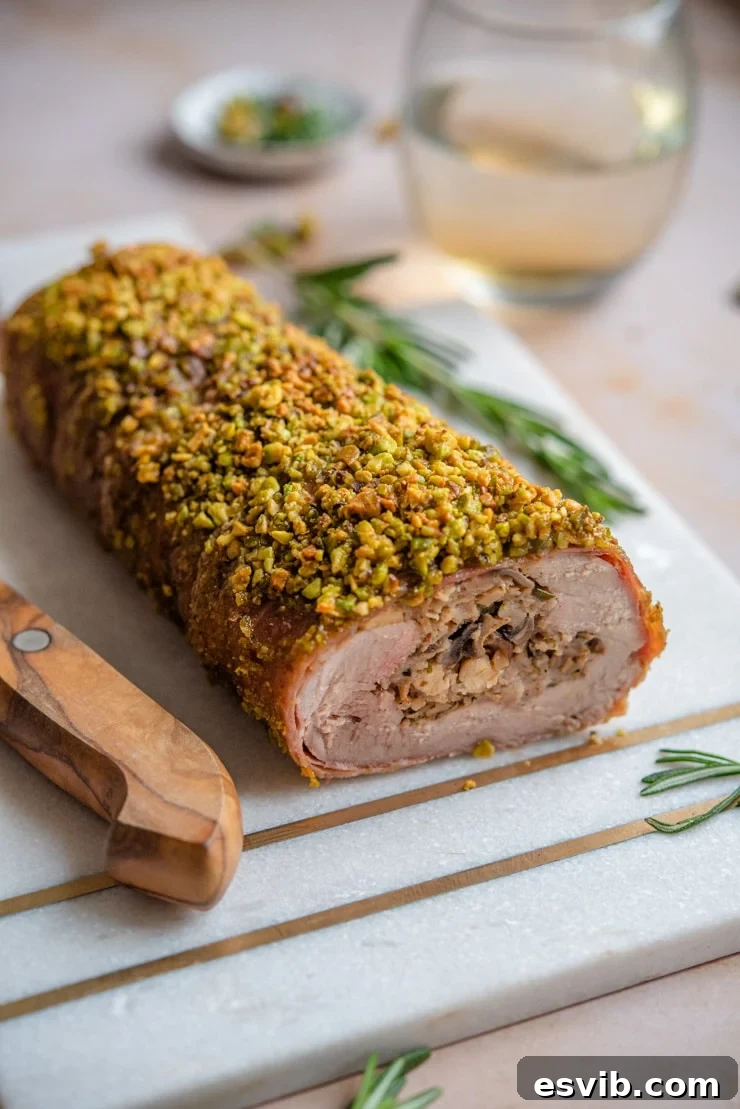
Elevate Your Meal: Delicious Sides and Serving Suggestions
A glorious roast like our Italian Stuffed Pork Tenderloin deserves equally delicious and thoughtfully chosen accompaniments. Here are some ideas to complete your meal, ranging from comforting classics to delightful Italian-inspired twists, ensuring a well-rounded and satisfying dining experience:
- Classic Comfort Pairings: Nothing quite rivals the pairing of tender, succulent roast pork with a generous serving of creamy, warming mashed potatoes. Their smooth texture and subtle flavor provide a perfect, comforting counterpoint to the rich and complex flavors of the stuffed pork. To balance the meal and add freshness, include a vibrant green vegetable, such as perfectly steamed asparagus, blanched green beans, or tender broccoli florets, lightly seasoned.
- Sauce Perfection: While the Stuffed Pork Tenderloin is incredibly flavorful on its own, a simple sauce can elevate it further and add an extra layer of moisture. A classic gravy, perhaps made from the pan drippings, is always a welcome addition. Alternatively, for a touch of elegance and a nutty depth of flavor, drizzle over some homemade brown butter infused with fried rosemary. To make this, simply heat unsalted butter in a small pan with a few fresh rosemary sprigs over medium heat. Allow the butter to gently cook until it turns a beautiful golden, nutty brown color and emits a fragrant aroma, then pour it over the sliced pork just before serving.
- Italian-Inspired Accompaniments: To fully embrace the Italian theme of this exquisite dish, consider these easy and utterly delicious side recommendations that complement the flavors of the pork, prosciutto, and stuffing beautifully:
- Sautéed Broccolini with Pesto, Pine Nuts & Chilli: A vibrant, slightly bitter green vegetable enhanced with classic Italian flavors.
- Italian Roast Potatoes – Rosemary And Garlic: Crispy, aromatic potatoes that perfectly echo the herbs in the stuffing.
- Easy Green Bean Salad with Mustard and Garlic Dressing: A light and tangy salad that provides a refreshing contrast.
- Italian Green Beans In Tomato Sauce: Tender green beans simmered in a rich tomato sauce for a rustic touch.
- Fagioli all’uccelletto – Beans in Tomato Sauce: A traditional Tuscan bean dish that is hearty and flavorful.
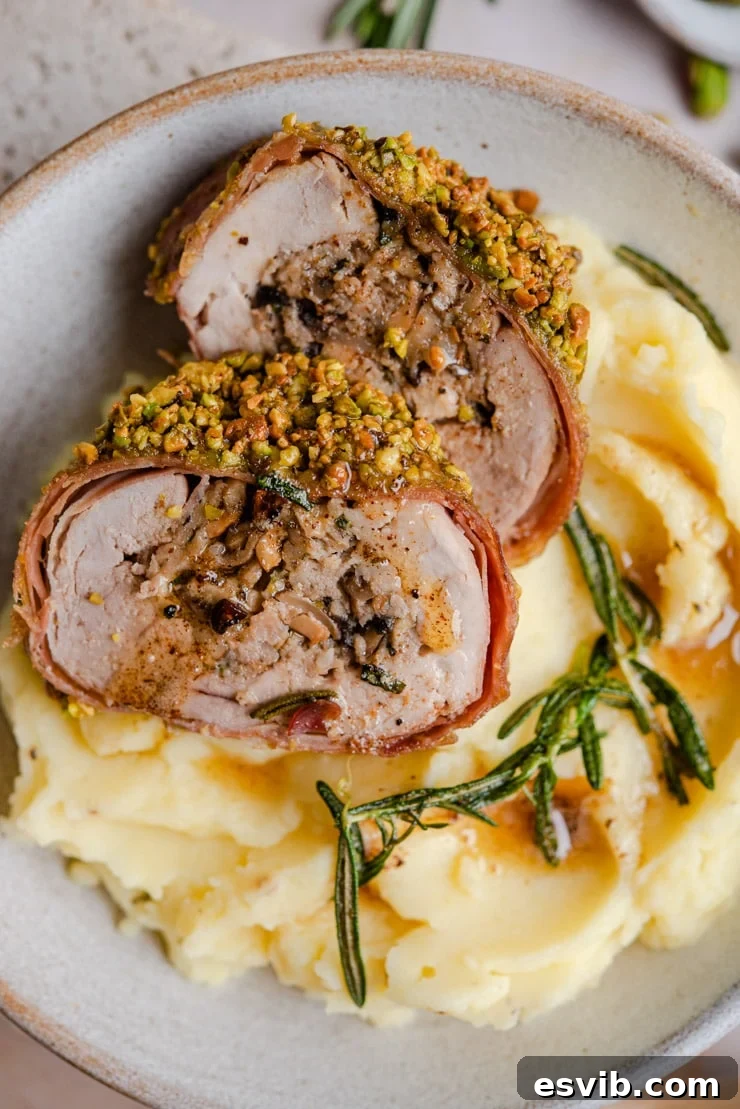
Essential Tips for Stuffed Pork Tenderloin Success
Achieving a perfectly cooked and incredibly flavorful stuffed pork tenderloin is easy when you keep a few key tips in mind. These insights will help you avoid common pitfalls and ensure your roast turns out tender, juicy, and bursting with flavor every single time.
- Precise Roasting Temperature and Doneness: Always roast your pork tenderloin at a moderate temperature of 180°C (350°F). For accurate doneness, especially with stuffed meats where visual cues can be misleading, a reliable meat thermometer is your absolute best friend. Insert it into the thickest part of the tenderloin, making sure it doesn’t touch the stuffing, which can give a false reading. The ideal internal temperature for pork tenderloin is 155°F (68°C). Remember that the temperature will continue to rise slightly (carry-over cooking) as the meat rests outside the oven.
- Prevent Burning with Aluminum Foil: The delicate prosciutto and pistachio crust can brown and even burn quickly in the oven before the pork has had a chance to cook through. To prevent this, make sure to cover the baking tray loosely with aluminum foil for the initial 20 minutes of roasting. This protective layer allows the internal temperature of the pork to rise steadily while shielding the exterior from excessive browning.
- The Golden Rule: Rest the Pork! We cannot emphasize this enough – **always, always rest your pork tenderloin** before slicing and serving. This step is absolutely paramount for a tender and succulent result. If you cut into the meat immediately after removing it from the oven, all the beautiful, flavorful juices will escape onto your cutting board, leaving you with dry and tough pork. Resting for at least 10 minutes (even up to 15-20 minutes for a larger roast) allows these precious juices to redistribute evenly throughout the meat fibers, ensuring a tender, succulent, and incredibly moist roast every single time.
- Pistachio Preference: While the pistachio crust adds a delightful crunch, a unique nutty flavor, and an appealing visual element to this dish, personal preferences vary. If you or your guests are not fond of pistachios, or if you simply prefer a simpler presentation, you can feel free to omit them completely. The tenderloin will still be incredibly delicious wrapped solely in prosciutto.
- Prosciutto Alternatives: If traditional Italian prosciutto isn’t readily available, or if you’d like to experiment with a slightly different flavor profile, this recipe works wonderfully with other thinly sliced cured meats. Consider wrapping the pork in high-quality, thinly sliced pancetta for a rich, porky flavor, or even regular thin-cut bacon for a more familiar, smoky, and equally delicious crispy exterior.
We absolutely love hearing about your culinary adventures! If you’ve tried this Stuffed Pork Tenderloin Recipe or any other recipe from our blog, please share your experience and thoughts in the comments below. Your feedback inspires us and helps our community of home cooks! You can also connect with us and discover more delicious food and behind-the-scenes glimpses by following us on FACEBOOK, INSTAGRAM, and PINTEREST.
Stuffed Pork Tenderloin with Prosciutto and Pistachios
By Emily
Cook Time: 45 minutes
Total Time: 1 hour 5 minutes
Yields: 4-6 servings

A mouth-watering Italian-inspired Stuffed Pork Tenderloin, featuring a savory sausage and mushroom stuffing, wrapped in thinly sliced Italian prosciutto, and coated in crunchy pistachios. This impressive pork roast is packed with incredible flavor yet is surprisingly simple to make, making it perfect for special dinners or convenient meal prep.
Equipment You’ll Need
- Plastic wrap (cling film)
- Aluminium foil
- Food processor (for pistachios)
- Skillet or frying pan
- Large mixing bowl
- Sharp knife
- Rolling pin or meat mallet
- Baking tray
- Meat thermometer (optional, but highly recommended for accuracy)
Ingredients for a Flavorful Roast
- For the Pork:
- 1 pork tenderloin, approximately 19.5-23 oz (550-650g), preferably outdoor bred for best flavor and texture
- Salt, to taste, for seasoning the pork
- For the Savory Stuffing:
- 3 herby Italian sausages (about 8.8 oz / 250g), casings carefully removed
- 8.8 oz / 3 cups mixed mushrooms, thinly sliced
- 2 cloves garlic, peeled and finely chopped
- 1 tablespoon fresh rosemary, finely chopped
- 1 tablespoon fresh parsley, finely chopped
- 1 tablespoon freshly grated Parmesan cheese
- ½ tablespoon olive oil, for sautéing the mushrooms
- For the Crispy Exterior:
- 5.5 oz (156g) thinly sliced prosciutto
- 1 cup pistachios, shelled
- ½ tablespoon olive oil, for drizzling before roasting
Detailed Cooking Instructions
Step 1: Prepare the Stuffing Components
- In a food processor, pulse the shelled pistachios until they form a medium-fine crumb. Be careful not to over-blitz, as they can quickly turn into a paste. Transfer the pistachio crumbs to a shallow dish and set aside.
- Heat ½ tablespoon of olive oil in a skillet or frying pan over medium heat. Add the finely chopped garlic and cook for about 30 seconds until fragrant, taking care not to burn it. Add the sliced mushrooms, fresh parsley, and rosemary. Sauté for 5-7 minutes, stirring occasionally, until the mushrooms are soft and any released liquid has completely evaporated. Remove from heat and let cool completely.
- In a large mixing bowl, combine the sausage meat (removed from casings), the cooled mushroom mixture, and the freshly grated Parmesan cheese. Mix thoroughly with your hands until all ingredients are well combined and evenly distributed.
- Butterfly the pork tenderloin: Place the tenderloin on a chopping board and make a lengthwise cut down the middle, stopping about ½ inch (1.25 cm) before cutting all the way through. Open it like a book. Place the butterflied pork between two sheets of plastic wrap and pound lightly with a rolling pin until it is uniformly about ½ inch (1.25 cm) thick across its entire surface.
Step 2: Assemble the Stuffed Pork Tenderloin
- Lay a large sheet of plastic wrap on your clean work surface. Arrange the prosciutto slices in an even, slightly overlapping layer (each slice overlapping by about 2 inches/5 cm). Ensure the prosciutto sheet is long enough to wrap the entire tenderloin.
- Carefully place the flattened pork tenderloin on top of the prosciutto layers, positioning it at the end closest to you. Season the surface of the pork lightly with salt.
- Evenly spread the prepared sausage and mushroom stuffing over the entire surface of the pork tenderloin, leaving a small border at the edges.
- Using the plastic wrap to assist, tightly roll the tenderloin away from you, forming a compact log. Ensure the roll is as tight as possible to help it hold its shape during cooking.
- At this stage, you can wrap the tenderloin tightly in plastic wrap and store it in the refrigerator for up to 2 days, or proceed directly to the next step.
- If cooking immediately (or after chilling), unwrap the tenderloin. Roll the stuffed tenderloin into the prepared pistachio crumbs, pressing lightly to ensure they adhere well to the prosciutto surface.
Step 3: Cook to Perfection
- Preheat your oven to 350°F (180°C).
- Lightly drizzle the pistachio-crusted tenderloin with an additional ½ tablespoon of olive oil and place it on a baking tray.
- Cover the baking tray loosely with aluminum foil and roast in the preheated oven for 20 minutes.
- Remove the foil and continue to roast for another 20 minutes, or until the internal temperature reaches 155°F (68°C) when measured with a meat thermometer inserted into the thickest part of the tenderloin.
- Remove the tenderloin from the oven and let it rest for at least 10 minutes on a cutting board before slicing and serving. This resting period is crucial for ensuring tender, juicy meat.
Visual Guide: Watch How It’s Made!
For a detailed visual guide on how to prepare this delicious Stuffed Pork Tenderloin, watch the video below. It demonstrates the butterflying, stuffing, and rolling techniques step-by-step.
Important Notes for Perfection
- For the most accurate cooking, always use a meat thermometer. The target internal temperature for pork tenderloin is 155°F (68°C) before resting.
- Covering the pork with aluminum foil for the initial roasting phase prevents the pistachios and prosciutto from burning while the pork cooks.
- **Do not skip the resting step!** Allowing the pork to rest for at least 10 minutes after roasting is critical for juicy, tender meat.
- If pistachios are not to your liking, or you prefer a simpler dish, you can leave them out completely. The prosciutto-wrapped tenderloin will still be incredibly delicious.
- Thinly sliced pancetta or bacon can be used as excellent alternatives to prosciutto for wrapping the pork, offering a slightly different but equally delightful flavor and crispiness.
Helpful Information for All Our Recipes
- We always use extra virgin olive oil in all of our recipes unless stated otherwise, for superior flavor and quality.
- When using canned or jarred tomatoes of any kind, we highly recommend Cirio or Mutti brands for the best results and authentic Italian flavor.
- Unless specified, all vegetables mentioned in our recipes are assumed to be medium-sized.
- All recipes on our blog are meticulously tested and developed using a fan (convection) oven. Adjustments may be necessary for conventional ovens.
- Curious about nutritional values? Find out more about how our nutrition is calculated and estimated.
- Stock your kitchen like an Italian nonna! Check out our guide to must-have Italian Pantry Staples.
- Equip yourself for authentic Italian cooking with our list of Essential Kitchen Tools for Italian Cooking.
Nutrition Facts (Approximate per Serving)
Nutrition information is automatically calculated and provided for guidance, so should only be used as an approximation.
- Calories: 586 kcal
- Carbohydrates: 9g
- Protein: 50g
- Fat: 39g
- Saturated Fat: 10g
- Cholesterol: 153mg
- Sodium: 510mg
- Potassium: 1112mg
- Fiber: 3g
- Sugar: 2g
- Vitamin A: 274 IU
- Vitamin C: 4mg
- Calcium: 64mg
- Iron: 4mg
Did you try this recipe? We’d love to hear from you! Leave a comment below and share your experience and any tips!