
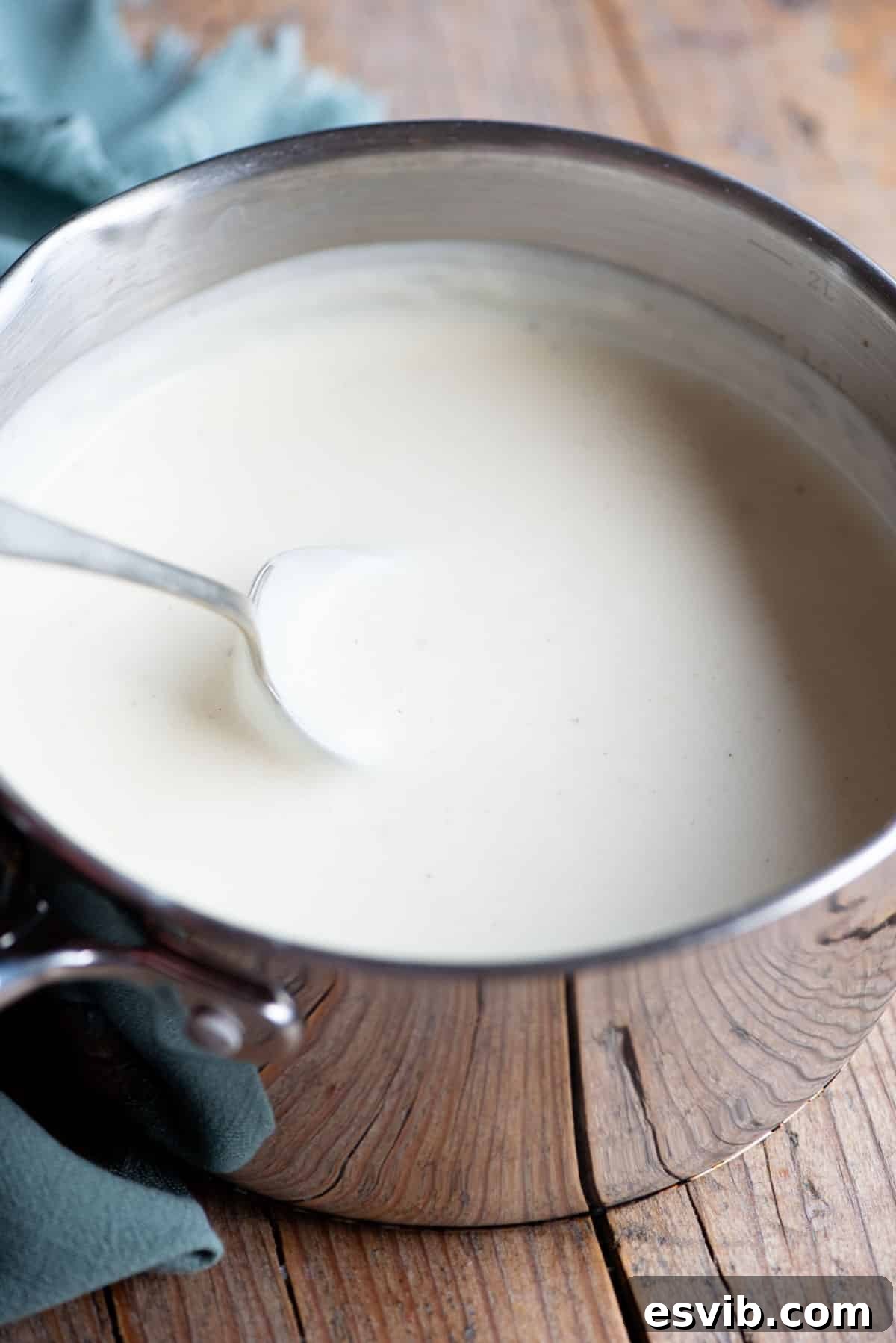
Master the Art of Italian Besciamella: Your Essential Guide to Creamy White Sauce
Italian Bechamel Sauce, known as Besciamella in Italy, is a velvety, smooth, and incredibly versatile white sauce crafted from just a few fundamental ingredients: butter, flour, and milk. This classic culinary foundation is renowned for its rich flavor and decadent creaminess, making it an indispensable component in both French and Italian cuisines. Effortless to prepare, Besciamella elevates a myriad of dishes, transforming simple ingredients into extraordinary meals. Whether you’re aiming to create an authentic Lasagna Bolognese or a comforting Pasta al Forno, mastering this sauce is a gateway to a world of traditional Italian flavors.
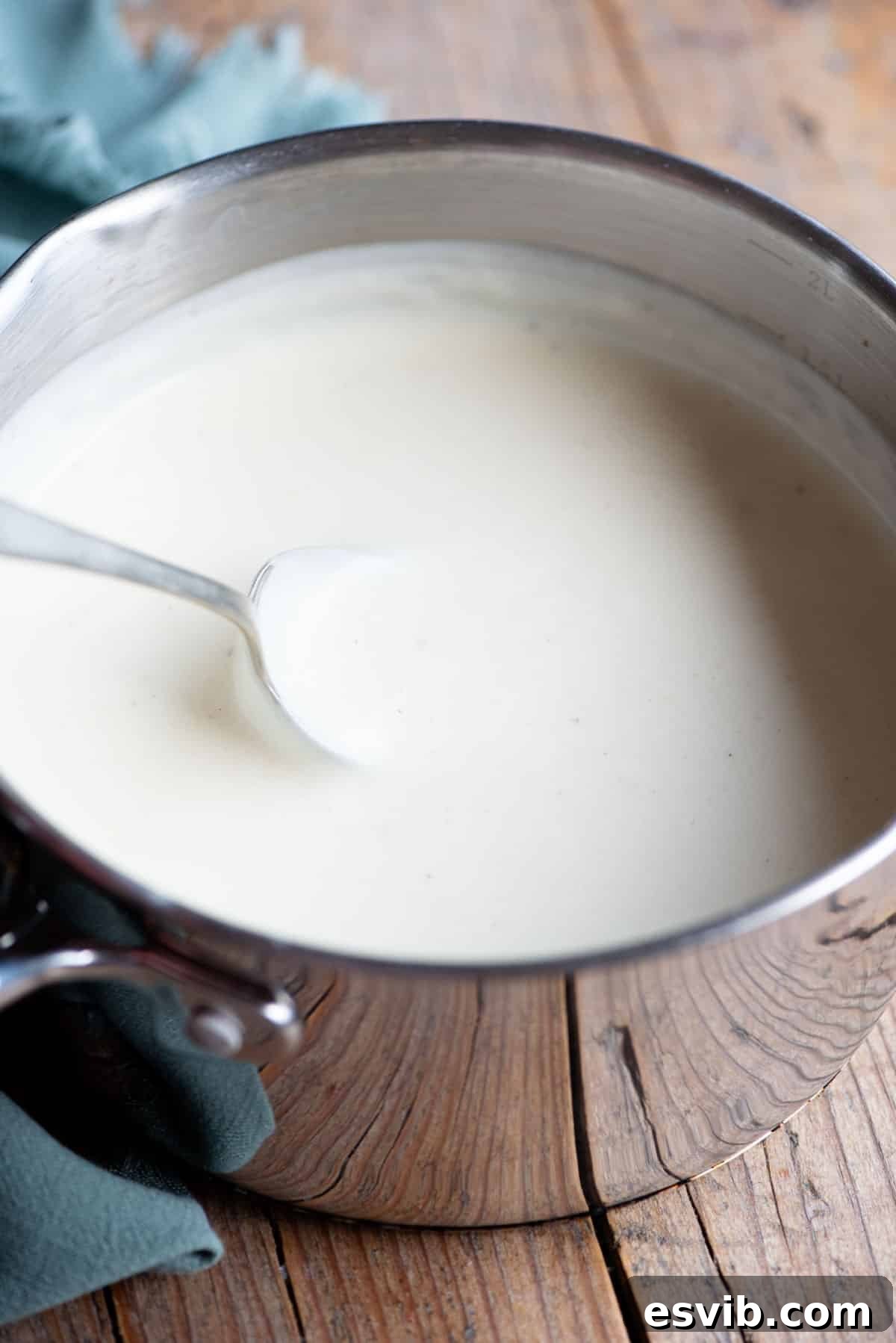
Learning to make Bechamel sauce was one of my earliest and most rewarding culinary achievements. It’s a fundamental technique that every home cook, especially those who appreciate the depth of Italian or French food, should add to their repertoire. Its simplicity belies its incredible impact, providing a luxurious base that binds and enhances countless savory creations.
In Italy, Besciamella is an integral part of many beloved dishes. It forms the creamy core of a classic Lasagne al Forno, enriches stuffed pastas like Cannelloni, and provides a luscious texture to baked pasta dishes such as Pasta al Forno. Beyond pasta, it’s also a star in vegetable bakes, exemplified by the delightful Fennel Gratin and various other oven-baked delights.
A Rich History: The Origins of Béchamel (Besciamella)
The true origins of Bechamel sauce are a subject of spirited debate between French and Italian culinary historians. While it is widely recognized today as one of the five foundational French mother sauces, a compelling theory suggests its roots might actually lie in Tuscany. Legend has it that a similar “white sauce” was known in Italy as Salsa Colla (literally “glue sauce”), used as a binding agent in various Renaissance-era dishes.
This “glue sauce” is believed to have been brought to France by Caterina de’ Medici when she married King Henry II in the 16th century, introducing many Italian culinary innovations to the French court. It was later, in the 17th century, that a chef working for Louis de Béchameil, Marquis of Nointel, is credited with refining the sauce and giving it the name we know today. Regardless of its precise birthplace, Besciamella’s journey through history underscores its enduring appeal and universal adaptability, solidifying its status as a timeless culinary masterpiece that transcends national borders.
Why Homemade Besciamella is a Game Changer
While convenience often tempts us towards store-bought alternatives, crafting your Besciamella from scratch offers an unparalleled difference in flavor, texture, and overall quality. Homemade Besciamella boasts a freshness and depth that pre-made versions simply cannot replicate. You have complete control over the ingredients, allowing you to choose high-quality butter and milk, and adjust the seasoning precisely to your taste. This control also extends to the consistency – whether you prefer a thinner sauce for pouring or a thicker one for layering, it’s all within your power.
The process itself is surprisingly therapeutic and deeply satisfying. There’s a particular joy in watching simple ingredients transform into a silken, aromatic sauce that will become the backbone of your next culinary creation. The difference in taste and the sense of accomplishment make the few minutes spent whisking well worth the effort, truly elevating your Italian dishes from good to extraordinary.
Essential Ingredients for Authentic Italian Besciamella
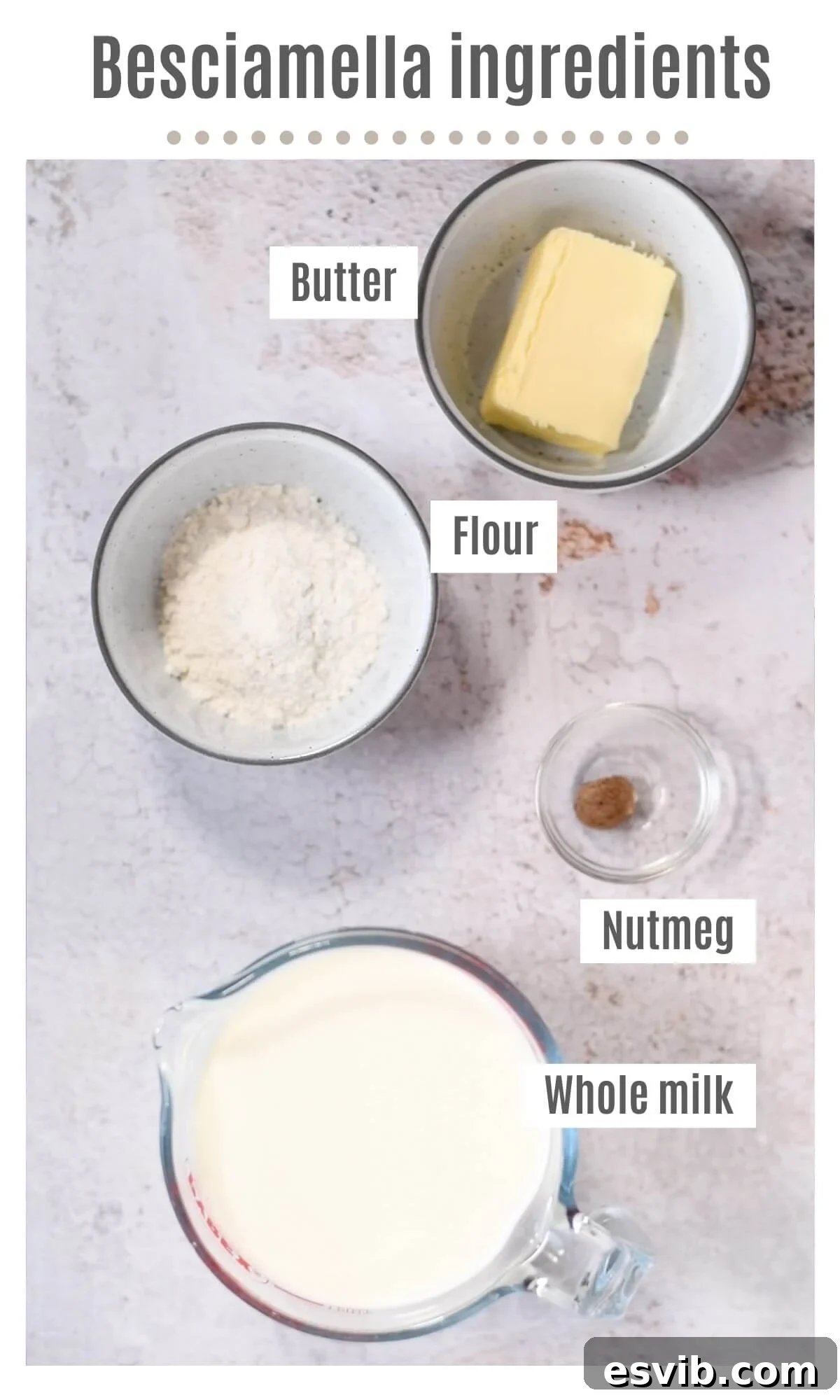
Creating a truly magnificent Besciamella requires just a handful of common pantry staples. The quality of these ingredients, however, can significantly impact the final flavor and texture of your sauce. Here’s a closer look at what you’ll need and why:
Ingredient Notes and Substitutions
- Flour: Standard all-purpose flour (also known as plain flour in the UK) is all you need for this recipe. It forms the base of the roux, which is essential for thickening the sauce. No special flour is required.
- Butter: I highly recommend using unsalted butter. This allows you to control the overall saltiness of the sauce precisely. While salted butter can be used in a pinch, be sure to taste the sauce before adding any additional salt. The temperature of the butter isn’t critical since it will be melted, so either cold or room-temperature butter works perfectly.
- Milk: For the richest, creamiest, and quickest-thickening Besciamella, whole milk (full-fat milk) is undoubtedly the best choice. Its higher fat content contributes significantly to the sauce’s luxurious consistency and flavor. You can use semi-skimmed (half-fat) milk, but be aware that the sauce may take a little longer to thicken and might not achieve the same depth of richness. Skimmed milk is not recommended as it will result in a much thinner and less flavorful sauce.
- Nutmeg: Freshly grated nutmeg offers a delicate, warm, and aromatic hint that beautifully complements the creamy sauce without overpowering it. A small pinch is usually sufficient. If you only have pre-ground nutmeg, use an even smaller amount as its flavor can be more intense.
- Salt and Pepper: Seasoning is crucial for bringing out the best in your Besciamella. Add these towards the end, tasting as you go, to achieve perfect balance. I personally love adding a generous amount of freshly ground black pepper along with sea salt flakes for their nuanced flavor and texture.
Crafting Your Perfect Besciamella: Step-by-Step Instructions
Creating a silky-smooth Besciamella is simpler than you might imagine. Follow these steps for a perfect sauce every time:
Step 1: Gently Warm the Milk. Begin by pouring the milk into a saucepan and heating it over medium heat until it is warm to the touch, but not boiling. This step is crucial as warm milk integrates more smoothly into the roux, helping to prevent lumps. Once warm, remove the saucepan from the heat and set aside.
Step 2: Create the Roux. In a separate, heavy-bottomed saucepan, melt the butter over medium heat. Once the butter has completely melted and is slightly frothy, add the all-purpose flour. Immediately begin whisking continuously. This mixture of butter and flour is called a roux, and it should form a smooth, thick paste. Continue to cook the roux for 1-2 minutes, still whisking, to cook out the raw flour taste. The roux should take on a light golden color and a nutty aroma, but avoid browning it too much.
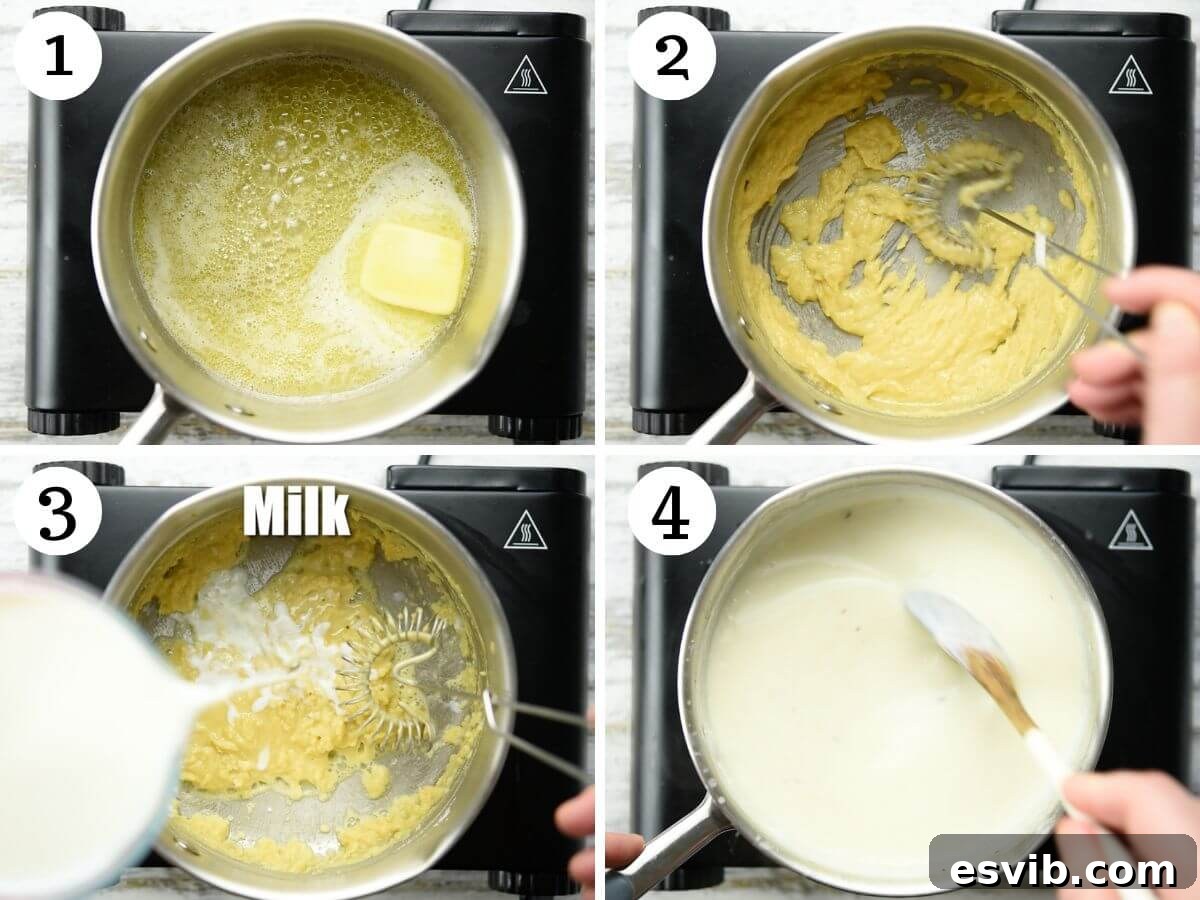
Step 3: Gradually Incorporate Milk. This is the most critical step for a lump-free sauce. While continuously and vigorously whisking the roux, slowly pour in approximately one-third of the warm milk. The mixture will seize up and become very thick almost instantly – this is normal! Keep whisking vigorously until the sauce smooths out and becomes uniform. Then, add the next third of the milk, continuing to whisk until fully incorporated and smooth. Finally, pour in the remaining milk, whisking constantly until the sauce is completely smooth and free of any lumps.
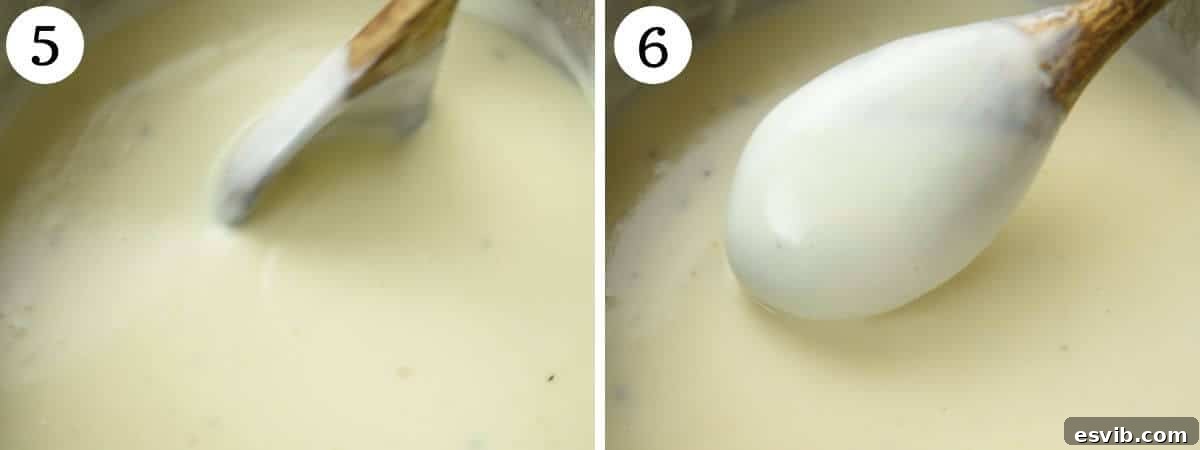
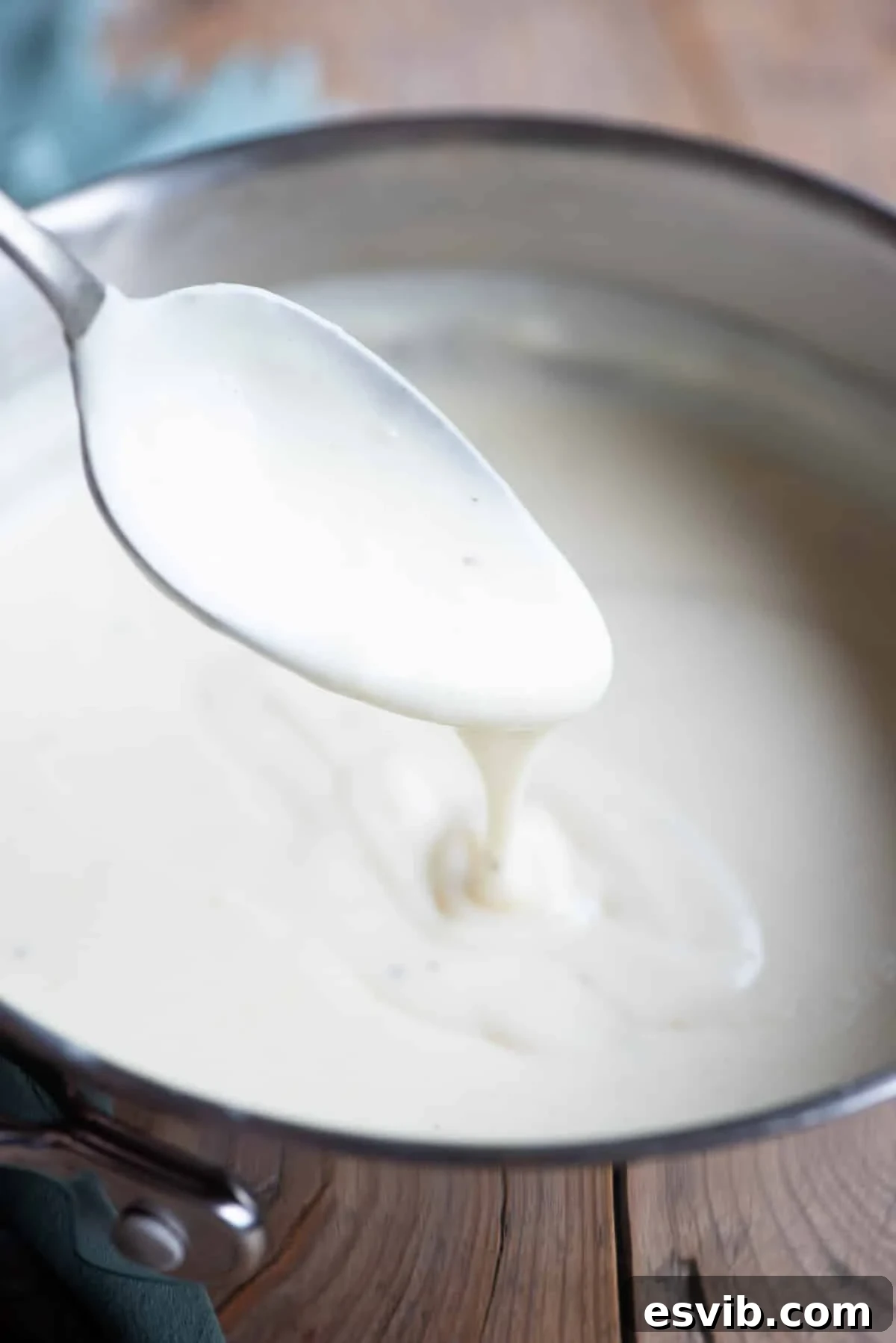
Step 4: Achieve Silky Perfection and Season. Once all the milk is incorporated, continue to cook the sauce over medium heat, whisking frequently, until it reaches your desired thickness. This usually takes a few more minutes. The sauce should be silky, smooth, and coat the back of a spoon. Remove from heat and stir in the pinch of freshly grated nutmeg, along with salt and freshly ground black pepper to taste. Continue whisking for a minute or two to ensure all seasonings are fully dissolved and the sauce maintains its smooth texture.
Step 5: Optional Cheese Addition. If you wish to make a cheese-infused Bechamel, such as a Mornay sauce, add your preferred grated cheese (like Parmigiano Reggiano or Gruyere) at this stage. Stir it in gently until the cheese is fully melted and incorporated, creating an even richer and more flavorful sauce.
Unleash the Versatility: Classic and Creative Uses for Besciamella
Italian Besciamella is a culinary shapeshifter, indispensable for many traditional dishes and a fantastic base for creative new recipes. Its mild, creamy flavor perfectly complements robust ingredients and offers a comforting richness to vegetables. In Italy, it forms the backbone of countless baked pasta and vegetable dishes, earning its title as the ultimate comfort food ingredient.
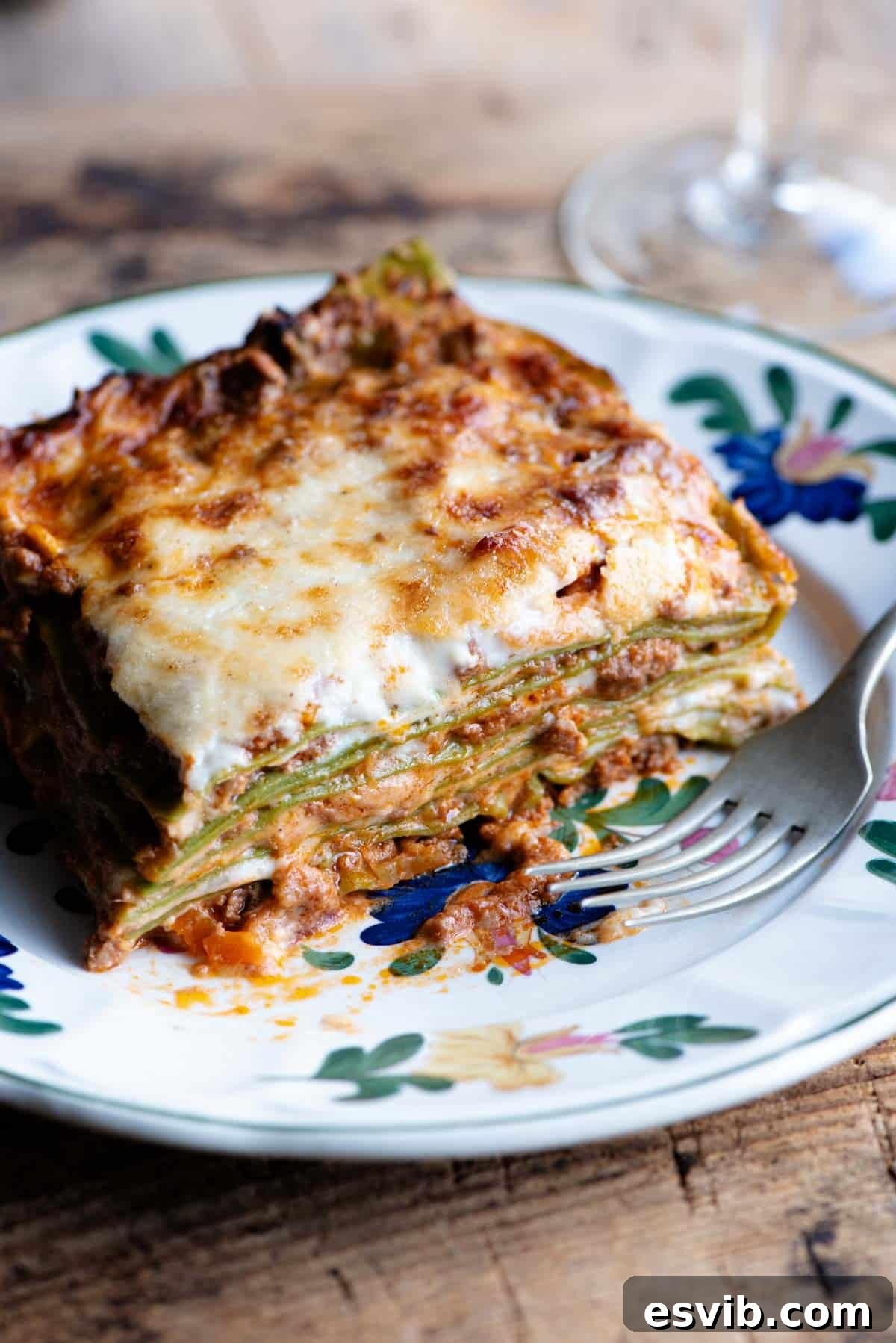
The most iconic use for Besciamella is undoubtedly Lasagna al Forno. The delicate layers of pasta, rich ragù, and creamy Besciamella bake together into a symphony of flavors and textures. We’ve mastered several delicious lasagna recipes that showcase this incredible sauce:
- Authentic Lasagna Bolognese: The gold standard, featuring a slow-cooked meat ragù.
- Lasagne al Forno (Italian Beef Lasagna): A hearty and satisfying classic.
- Eggplant Lasagna: A rich vegetarian option layering tender eggplant.
- Lentil Ragu Lasagne: A wholesome and flavorful plant-based alternative.
- Butternut Squash Lasagna: A sweet and savory delight, perfect for autumn.
Beyond lasagna, Besciamella shines in other cherished Italian recipes:
- Pasta Al Forno (Baked Pasta): A hearty casserole often featuring pasta, meat sauce, and Besciamella, baked until bubbly and golden.
- Crespelle – Savoury Crepes with Peas, Ham and Fontina Cheese: Delicate Italian crepes filled and baked with a creamy Besciamella sauce.
- Rustici Leccesi (Tomato and Mozzarella Pastries): Flaky puff pastry filled with a rich tomato, mozzarella, and Besciamella mixture.
- Pesto Provolone Cannelloni Pasta: Tubes of pasta filled with a flavorful mixture and baked in Besciamella.
- Baked Cauliflower Cheese And Fennel: A delightful vegetarian gratin where Besciamella brings out the best in roasted vegetables.
Besciamella’s neutral yet rich profile also makes it an excellent base for various gratins, vegetable bakes, or even as a creamy sauce for poached fish or chicken, demonstrating its remarkable adaptability in any kitchen.
Expert Tips & Troubleshooting for Besciamella Success
- Use Warm Milk: This is a golden rule! Warm milk (not boiling, just warm to the touch) integrates much more smoothly with the roux, preventing lumps and helping the sauce thicken quicker and more evenly. While cold milk can work, it will require more vigorous whisking and a longer cooking time.
- Embrace Your Whisk: A small hand whisk is your best friend when making Besciamella. Constant and vigorous whisking, especially when adding the milk to the roux, is absolutely essential. This action breaks up any potential lumps and creates that characteristic silky-smooth texture. Don’t be shy with it!
- Prevent a Skin from Forming: As Besciamella cools, a thick skin can quickly form on its surface. To prevent this, immediately after cooking, place a sheet of plastic wrap (cling film) directly onto the surface of the sauce, ensuring it touches every part. This creates a barrier against the air and keeps your sauce perfectly smooth.
- Sauce Not Thickening? If your Besciamella isn’t thickening, the most common culprit is insufficient heat. Turn up the heat slightly (to medium-low) and continue to whisk constantly. The heat activates the starch in the flour, causing the sauce to thicken. Be patient, it will get there!
- Dealing with Lumps: If, despite your best efforts, you end up with a few small lumps, don’t despair! You can either whisk vigorously off the heat for a minute or two, or, for a truly silken result, pass the sauce through a fine-mesh sieve.
- Storage and Freezing: Freshly made Besciamella can be stored in an airtight container in the refrigerator for 2-3 days. Always remember to cover it with plastic wrap directly on the surface to prevent a skin from forming. For longer storage, Besciamella freezes well. Once completely cooled, transfer it to freezer-safe bags or containers. When ready to use, thaw it in the refrigerator overnight and gently reheat over low heat, whisking constantly to restore its smooth consistency.
- No Butter? If you’re out of butter or prefer an alternative, check out our recipe for how to make béchamel sauce without butter.
Frequently Asked Questions (FAQs) About Besciamella
Yes, Besciamella freezes quite well! Once the sauce has completely cooled, transfer it to airtight, freezer-safe containers or heavy-duty freezer bags. It can be stored in the freezer for up to 3 months. When you’re ready to use it, thaw the sauce completely in the refrigerator, then gently reheat it over low heat, whisking constantly to bring it back to a smooth and creamy consistency. A little extra milk can be added if it seems too thick after thawing.
No, a classic, authentic Bechamel or Besciamella sauce fundamentally does not contain any cheese. It is a simple white sauce made from butter, flour, and milk. However, when cheese is added to Besciamella, particularly in French cuisine, it transforms into what is known as Mornay sauce. In Italian cooking, if cheese is desired, Parmigiano Reggiano is the most common and traditional choice to stir in, adding a delicious savory depth.
If a skin has formed on your Besciamella, the easiest way to deal with it is to vigorously whisk it back into the sauce for a few seconds. The whisking action will usually break it up and reincorporate it, making the sauce smooth again. Trying to remove it can be tricky as it’s often thin and delicate. To prevent skin from forming in the first place, always place plastic wrap directly on the surface of the sauce as it cools.
Yes, you can make Besciamella gluten-free by substituting the all-purpose flour with a gluten-free all-purpose flour blend. Ensure the blend contains xanthan gum for optimal thickening. The process remains the same: create a roux with butter and gluten-free flour, then gradually whisk in the warm milk until smooth and thickened.
Absolutely! To make a dairy-free Besciamella, substitute regular butter with a good quality plant-based butter (vegan butter) and use an unsweetened, unflavored plant-based milk such as oat milk, soy milk, or almond milk. Oat milk often yields the creamiest result. Follow the same steps, creating a roux and gradually adding the warm plant-based milk until thick and smooth.
Béchamel is a fundamental white sauce made from a roux (butter and flour) and milk, seasoned with salt, pepper, and sometimes nutmeg. Mornay sauce is essentially a Béchamel sauce that has cheese added to it. Typically, Gruyère, Emmental, or Parmesan (Parmigiano Reggiano in Italy) are stirred into the Béchamel until melted and smooth, giving it a richer, cheesier flavor and a slightly different texture. So, Mornay is a cheesy derivative of Béchamel.
If you’ve tried this Italian Béchamel Sauce recipe or any other recipe on the blog, please don’t forget to rate the recipe and let me know how you got on in the comments below – I love hearing from you! You can also follow us on Facebook, Instagram, and Pinterest, or sign up to our Newsletter to discover more of our delicious food.
Step By Step Photos Above
Most of our recipes come with step by step photos, helpful tips and tricks to make it perfectly first time and even video!
Besciamella (Italian Béchamel Sauce)
By Emily
2
20
22
2 lbs (900g) enough to make one large lasagna
Ingredients
- 5 tablespoons butter, (70g)
- 5 tablespoons all-purpose flour, (70g)
- 4 and 1/4 cups whole milk, (1 litre)
- 1 pinch freshly grated nutmeg
- Salt and pepper, to taste
Optional addition
- Parmigiano Reggiano or other cheese, to taste
Instructions
-
Heat the milk in a saucepan until warm then turn off the heat.
-
In a separate saucepan, melt the butter then add the flour to create a roux (it should look like a paste). Use a whisk to stir the mixture allowing it to cook for 1-2 minutes.
-
Next, whilst constantly whisking add one third of the milk. Whisk the sauce vigorously to avoid any lumps, it should thicken very quickly. Add the next third of milk and whisk until smooth then finally add the rest of the milk. Whisk the sauce until thick and smooth.
-
Add the nutmeg, salt and pepper and continue to cook the mixture for a few minutes (whilst whisking) until thickend and silky smooth. Turn off the heat, the bechamel sauce is ready to use.
-
Note: if adding cheese add it at the end and stir until fully melted.
Video
Notes
- Use warm milk – warm milk helps the sauce thicken quickly. It’s totally fine to use cold milk (I have done many times) it’ll just take a little longer to thicken.
- Use a whisk – a small hand whisk is necessary when incorporating the milk into the roux or else you’ll end up with a lumpy sauce.
- Prevent a skin from forming – as the besciamella cools a skin will form pretty quickly if you don’t cover it. Place a sheet of plastic wrap (cling film) directly on top making sure it touches the surface of the sauce to prevent the skin from forming.
- Storage and freezing – the sauce will keep well in the fridge (covered to prevent a skin) for about 2-3 days or once cooled completely, it can be frozen in freezer bags.
- Sauce not thickening? turn the heat up it’s likely the sauce wasn’t hot enough and whisk the sauce until thickened.
Helpful Info for All Recipes
- I always use extra virgin olive oil in all of my recipes unless stated otherwise.
- When I use canned or jarred tomatoes of any kind I always use Cirio or Mutti brands for the best results and flavor.
- All vegetables are medium sized unless stated otherwise.
- All recipes are tested and developed using a fan (convection) oven.
- Find out more about how nutrition is calculated.
- Check out our must-have Italian Pantry Staples.
- You can also find all our Essential Kitchen Tools for Italian Cooking.
Nutrition
Carbohydrates: 4g |
Protein: 1g |
Fat: 7g |
Saturated Fat: 5g |
Polyunsaturated Fat: 0.3g |
Monounsaturated Fat: 2g |
Trans Fat: 0.3g |
Cholesterol: 19mg |
Sodium: 57mg |
Potassium: 9mg |
Fiber: 0.2g |
Sugar: 0.04g |
Vitamin A: 219IU |
Calcium: 4mg |
Iron: 0.3mg
Nutrition information is automatically calculated, so should only be used as an approximation.
Did you try this recipe?
Leave a comment below!