
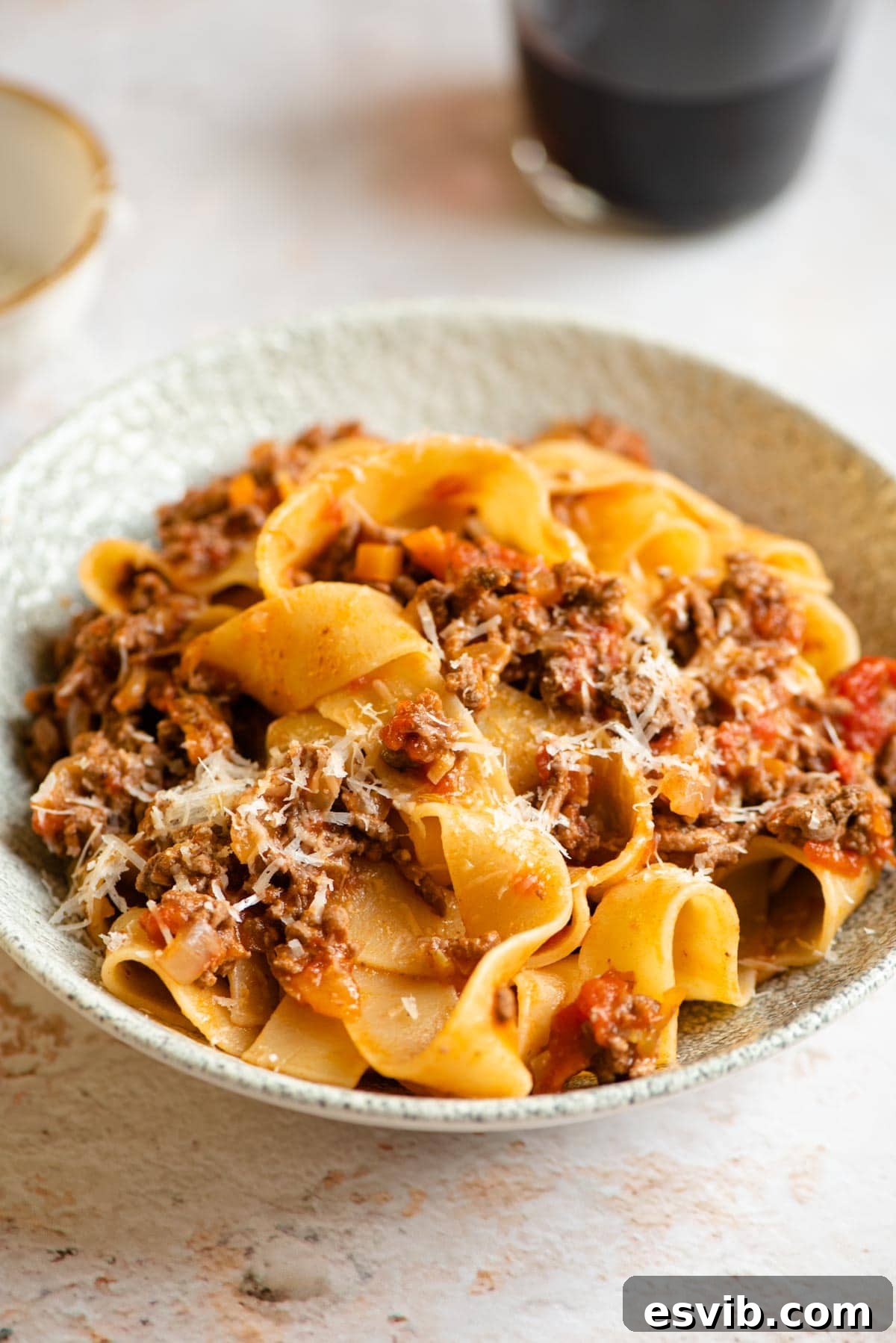
The Ultimate Italian Lamb Ragu: A Heartwarming Slow-Cooked Delight
There’s nothing quite like a rich, slow-cooked Italian ragu to bring warmth and comfort to your dinner table. This recipe for Italian Lamb Ragu, known in Italy as Ragu di Agnello, delivers an unparalleled depth of flavor with minimal effort, making it an ideal choice for a celebratory Easter meal, a cozy spring gathering, or simply a cherished weekend family dinner. Imagine succulent lamb, tender from hours of simmering, bathed in a rich sauce infused with vibrant vegetables, robust red wine, and fragrant rosemary. It’s a truly satisfying dish that promises to become a favorite in your culinary repertoire.
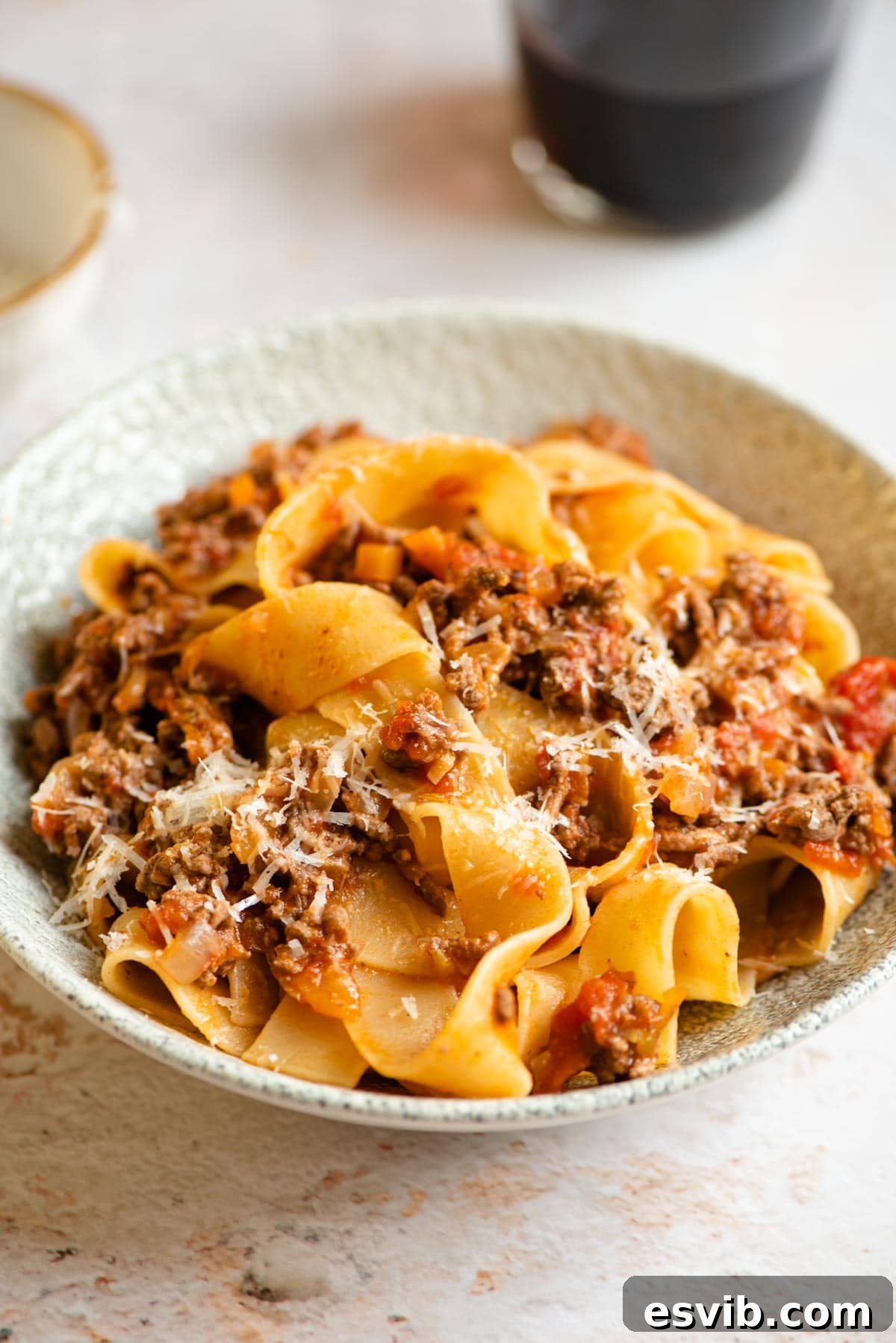
Our Lamb Ragu is more than just a meal; it’s an experience. The sauce, slowly simmered to perfection, transforms humble ingredients into a luxurious culinary masterpiece. It’s traditionally tossed with wide, silky pappardelle pasta, allowing every strand to be coated in the glorious sauce. Beyond pasta, this versatile ragu is also the perfect foundation for a hearty lasagna, adding a gourmet touch to this classic baked dish. And, of course, no Italian ragu experience is complete without a crusty loaf of bread on the side, perfect for “fare la scarpetta” – soaking up every last, incredible drop of sauce.
Essential Ingredients for Your Authentic Lamb Ragu
Crafting an authentic Italian Lamb Ragu begins with selecting high-quality ingredients. Each component plays a vital role in building the complex, rich flavors of this traditional dish. Below, you’ll find a visual guide to all the ingredients you’ll need, along with important notes to ensure your ragu turns out perfectly every time.
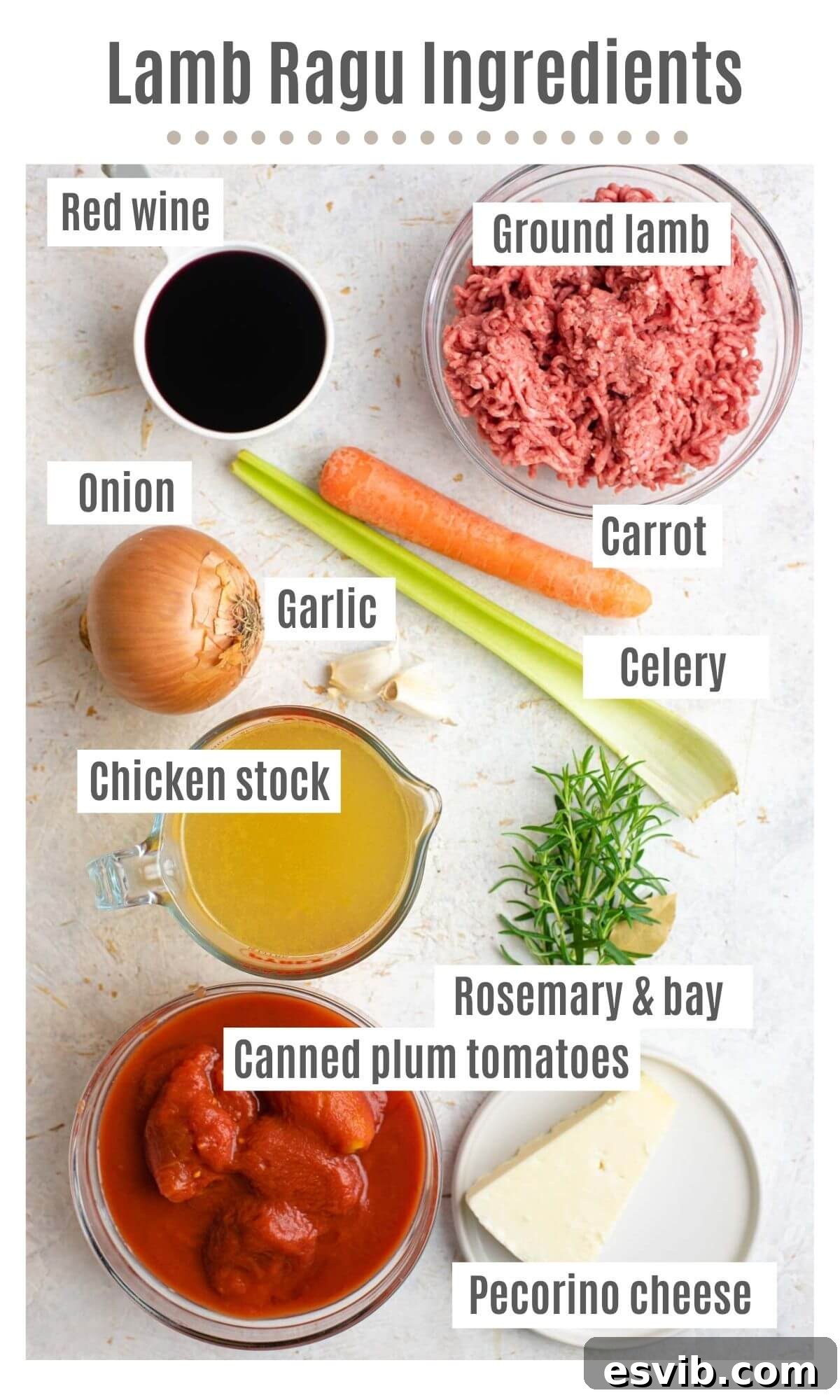
- Carrot, Celery & Onion (Soffritto): This aromatic trifecta forms the irreplaceable foundation of almost all Italian sauces and stews. Known as soffritto, these finely chopped vegetables are slowly sautéed to release their natural sweetness and create an incredible depth of flavor. The key here is patience; cook them gently until they are soft and translucent, but ensure they don’t brown, as this can introduce bitterness.
- Garlic: While traditional Italian cuisine often separates onion and garlic in a single dish, the robust nature of lamb in this ragu beautifully accommodates both. Finely chopped garlic adds another layer of pungent aroma and flavor that perfectly complements the rich meat.
- Lamb: For the most tender and flavorful ragu, we recommend using 20% fat ground lamb (known as mince in the UK). The fat content is crucial for a moist, rich sauce. If ground lamb isn’t available, don’t fret! Lamb shoulder, cut into 1-inch (2.5 cm) pieces, works just as well; it will naturally break down into tender shreds as it slowly simmers.
- Tomatoes: High-quality canned whole plum tomatoes are our top recommendation. Their rich, sweet flavor and lower water content make for a superior sauce. However, good quality chopped tomatoes or smooth passata can also be used if preferred. Always opt for the best quality tomatoes you can find for an authentic Italian taste.
- Chicken Stock: Use a low-sodium chicken stock to maintain control over the saltiness of your ragu. Stock adds body and additional savory notes, enhancing the overall richness.
- Red Wine: A dry red wine is essential for “amping up” the flavor profile of the ragu. It deglazes the pan, capturing all the delicious browned bits, and its tannins and fruit notes deepen the complexity of the sauce. If red wine isn’t to your taste or unavailable, a dry white wine can be used as an alternative, offering a slightly different but still delicious dimension.
- Rosemary and Bay Leaf: These herbs are critical for imparting the distinctive aromatic character of this lamb ragu. It is imperative to use fresh sprigs of rosemary; dried rosemary simply won’t offer the same vibrant, piney notes. A single bay leaf adds a subtle, earthy undertone.
- Salt & Pepper: Proper seasoning is paramount to any successful dish. Taste your ragu thoroughly once it’s finished cooking and adjust the salt and pepper as needed, adding small amounts at a time until the flavors sing. Don’t underestimate the power of seasoning!
How to Create Your Delicious Italian Lamb Ragu
Making this incredible Italian Lamb Ragu is a labor of love that rewards patience with phenomenal flavor. Follow these detailed steps to achieve a perfectly tender and aromatic ragu that will impress everyone at your table.
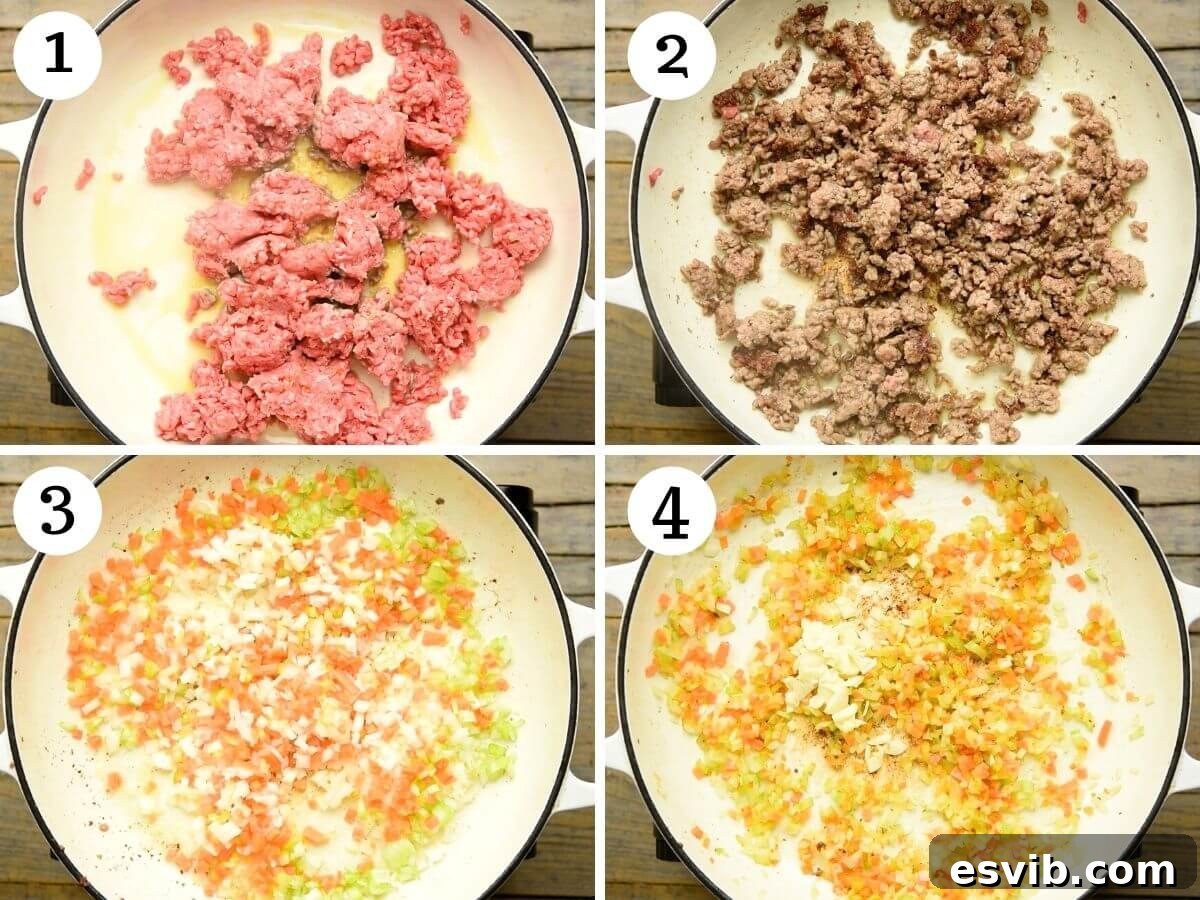
- Brown the Lamb: Begin by adding 1-2 tablespoons of olive oil to a large Dutch oven or heavy-bottomed pot over medium-high heat. Add the ground lamb and brown it thoroughly, breaking it up with a spoon as it cooks. Browning the meat is crucial for developing deep, savory flavors through the Maillard reaction. Once browned, drain any excess fat from the pan to prevent the ragu from becoming greasy, then transfer the lamb to a bowl and set aside.
- Prepare the Soffritto: Add another 1-2 tablespoons of olive oil to the same pan. Reduce the heat to medium-low and add the finely chopped carrot, celery, and onion. Sauté these vegetables slowly and gently for about 10 minutes, stirring occasionally, until they are soft and translucent but not browned. This slow cooking allows their natural sugars to caramelize slightly, building a sweet, aromatic base.
- Add Garlic and Deglaze: Once the soffritto is soft, stir in the finely chopped garlic and sauté for another minute until fragrant. Return the browned lamb to the pan and mix well to combine with the vegetables. Pour in the red wine, scraping the bottom of the pan with your spoon to loosen any browned bits (this is called deglazing and adds immense flavor). Bring the wine to a simmer and reduce it by half, allowing the alcohol to cook off and the flavors to concentrate.
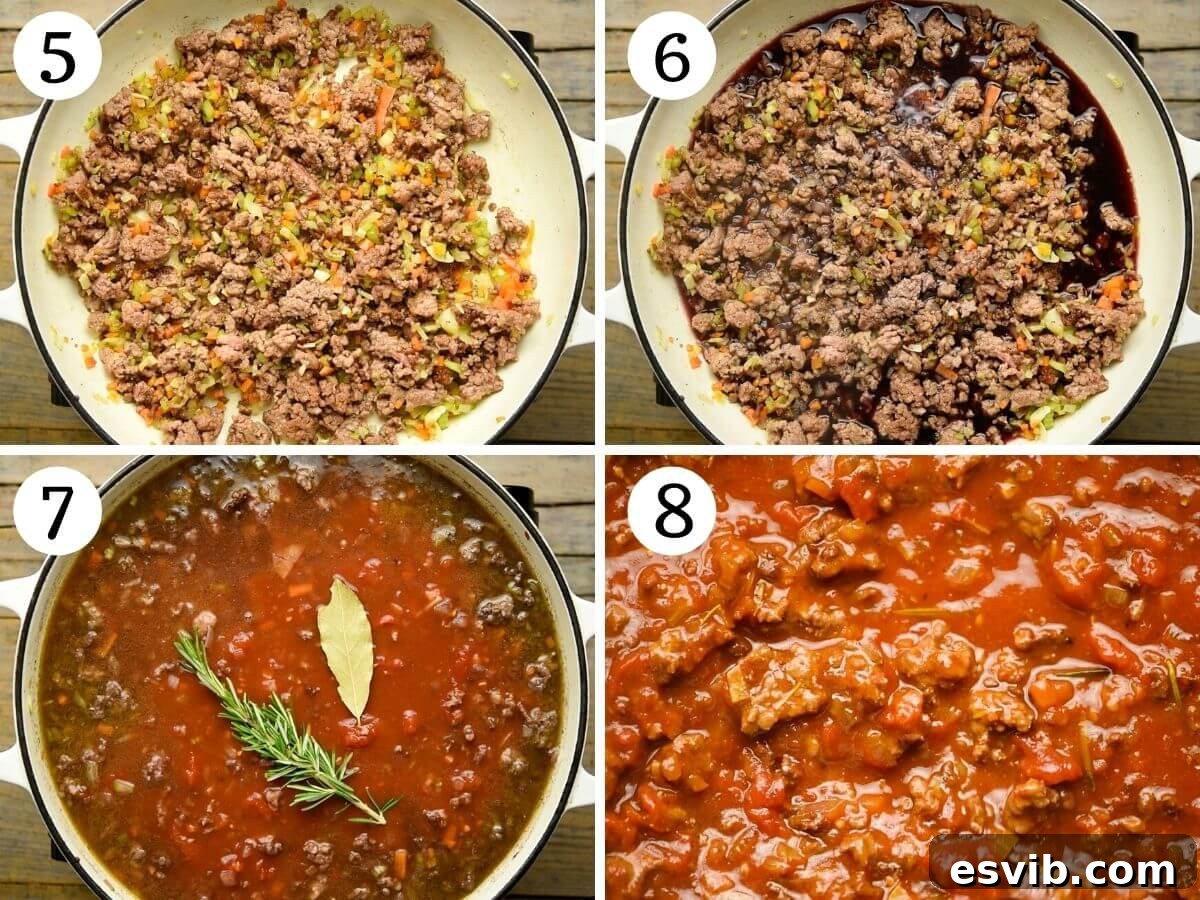
- Simmer the Ragu: After the wine has reduced, add the chicken stock and canned whole plum tomatoes to the pot. Use your spoon to break up the whole tomatoes, then stir everything together. Add the fresh rosemary sprigs and the bay leaf, along with a generous pinch of salt and freshly ground black pepper. Bring the ragu to a gentle simmer.
- Slow Cook to Perfection: Reduce the heat to low, cover the pot partially (or leave uncovered if you prefer a thicker sauce faster, just keep an eye on liquid levels), and let the ragu simmer slowly for at least 3 hours. This extended cooking time is what truly tenderizes the lamb and allows all the flavors to meld beautifully. Check periodically and if the ragu begins to dry out too much, add a little more water or stock to maintain the desired consistency.
- Final Touches and Serving: Once the ragu is rich, thick, and the lamb is incredibly tender, taste and adjust the seasoning with more salt or pepper as needed. While the ragu stays warm, bring a large pot of generously salted water to a rolling boil. Cook your pasta of choice (pappardelle is highly recommended!) until it is perfectly al dente.
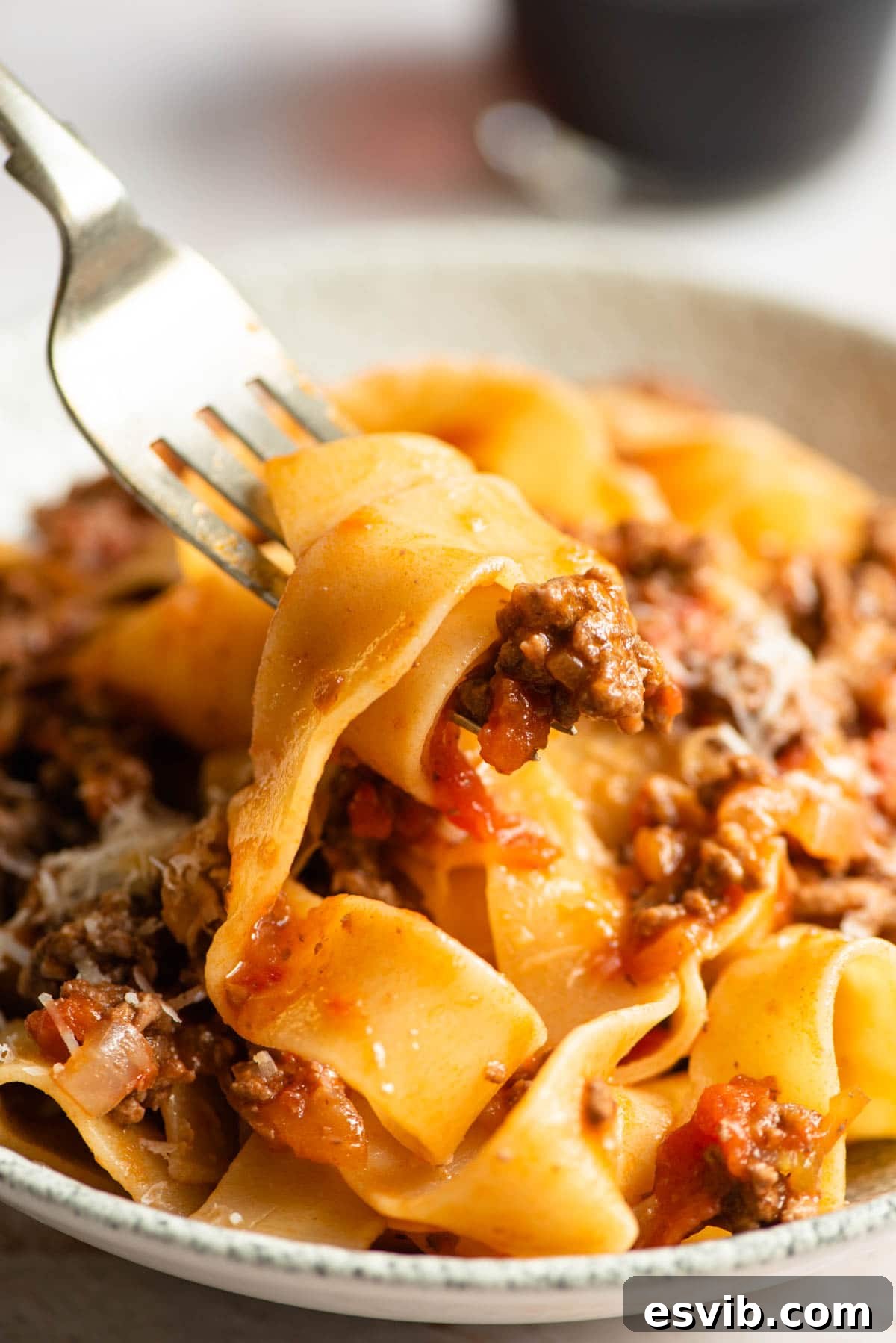
- Combine and Serve: Using tongs or a slotted spoon, transfer the cooked pasta directly into the ragu, allowing some of the pasta water to cling to it (this helps create a beautiful emulsified sauce). Toss the pasta until it is completely coated in the glorious lamb ragu. Serve immediately in warm bowls, topped with generous shavings of Pecorino cheese. Enjoy every exquisite bite!
Expert Tips & Frequently Asked Questions for Perfect Lamb Ragu
To ensure your Italian Lamb Ragu is nothing short of spectacular, consider these helpful tips and answers to common questions:
- Drain the Fat: After browning the lamb, it’s crucial to drain off any excess fat. Leaving too much fat can result in a greasy ragu that lacks the clean, rich flavor we’re aiming for. A lean ragu allows the other ingredients to shine.
- Adjust Stock as Needed: The slow simmering process can sometimes cause liquids to evaporate faster than anticipated. If your ragu starts to reduce too much and becomes overly thick, simply add a splash of warm chicken stock or water to achieve your desired consistency.
- Pasta Pairings: While wide pappardelle pasta is our top recommendation for its ability to perfectly cradle the rich sauce, feel free to experiment with your favorite pasta shapes. Other excellent choices include tagliatelle, rigatoni, or even hearty gnocchi, which soak up the sauce beautifully.
- Transform into Lasagna: This lamb ragu is incredibly versatile! It makes an exceptional filling for lasagna. Simply follow our recipe for lasagne al forno, substituting the beef ragu with this flavorful lamb version for a truly memorable baked dish.
- Pecorino Romano Cheese: For an authentic and robust finish, we highly recommend grating Pecorino Romano cheese over your finished ragu. Its salty, sharp flavor offers a fantastic counterpoint to the rich lamb and deep tomato sauce, often preferred over Parmesan for red meat ragus in central and southern Italy.
- Prepare in Advance: Yes, absolutely! This ragu tastes even better the next day as the flavors have more time to meld and deepen. It’s perfect for meal prepping and can be stored in an airtight container in the refrigerator for 3-4 days.
- Freezing Instructions: This lamb ragu freezes beautifully, making it an excellent candidate for batch cooking. Store the cooled ragu in freezer-safe containers for up to 3 months. Thaw completely in the refrigerator before gently reheating on the stovetop.
- Serving Suggestions Beyond Pasta: While pasta is classic, don’t limit yourself! Lamb ragu can be served over creamy polenta, mashed potatoes, or even alongside roasted vegetables for a hearty, comforting meal without pasta.
- Cooking Method Variations: For added convenience, this ragu can also be adapted for a slow cooker. After browning the lamb and sautéing the soffritto as instructed, combine all ingredients in a slow cooker and cook on low for 6-8 hours, or on high for 3-4 hours, until the lamb is fall-apart tender.
More Italian Ragu Recipes to Explore
If you’ve fallen in love with the comforting flavors of this Lamb Ragu, be sure to explore our other delicious Italian ragu recipes:
- Classic Italian Beef Ragu
- Authentic Bolognese Sauce (Ragu alla Bolognese)
- Hearty Vegetable Ragu with Pappardelle Pasta
- Venetian Duck Ragu with Pappardelle
We hope you thoroughly enjoy making and savoring this incredible Italian Lamb Ragu! If you’ve tried this recipe or any other on our blog, please don’t hesitate to leave a comment below and share your experience. We love hearing from you! You can also FOLLOW US on FACEBOOK, INSTAGRAM, and PINTEREST for more delicious food inspiration and updates on what we’re cooking up.
Step-by-Step Photos and Tips Available Above
Most of our recipes come with detailed step-by-step photos, helpful tips, and tricks to ensure perfect results every time!
Lamb Ragu
By Emily
Print Recipe
Ingredients
- 1 carrot
- 1 celery stalk
- 1 onion
- 2 cloves garlic, finely chopped
- 1 lb (500g) ground lamb, 20% fat recommended
- 1 cup (240ml) dry red wine
- 28 oz (800g) canned whole plum tomatoes
- 2 cups (500ml) chicken stock, low sodium
- 2-3 fresh rosemary sprigs
- 1 bay leaf
- 3-4 tbsp olive oil
- Salt and freshly ground black pepper, to taste
For Serving (optional)
- 1.1 lbs (500g) Pappardelle pasta or your pasta of choice
- Pecorino cheese, for grating
Instructions
- Add 1-2 tbsp of olive oil to a Dutch oven or large pan over medium-high heat. Brown the ground lamb, breaking it up with a spoon. Drain away any excess fat and transfer the lamb to a bowl.
- Add another 1-2 tbsp of olive oil to the same pan. Reduce heat to medium-low and sauté the finely chopped carrot, celery, and onion slowly until soft and translucent (about 10 minutes). Do not brown them.
- Once soft, add the finely chopped garlic and sauté until fragrant (about 1 minute). Add the browned lamb back to the pan and mix to combine. Pour in the red wine and bring to a simmer, reducing it by half while scraping up any browned bits from the bottom of the pan.
- Once the wine has reduced, add the chicken stock and canned tomatoes. Break up the tomatoes with your spoon and stir to combine. Add the fresh rosemary sprigs and the bay leaf, along with a good pinch of salt and pepper.
- Let the ragu simmer slowly, partially covered (or uncovered for a thicker sauce), on a medium-low heat for 3 hours. If it starts to dry out too much, add a little more water or stock as needed.
- Once ready, taste the ragu and add more salt or pepper as needed. Bring a large pot of generously salted water to a boil and cook your preferred pasta (pappardelle is recommended) until al dente, keeping the ragu warm.
- Once the pasta is cooked, transfer it directly into the ragu using tongs. Toss until the pasta is completely combined and coated in the sauce. Serve immediately in bowls, topped with shavings of Pecorino cheese.
Video
Notes
- Drain the Fat: After browning the lamb, ensure you drain off any excess fat to prevent your ragu from becoming too greasy.
- Add More Stock if Needed: If your ragu reduces too much too quickly during simmering, feel free to add a little more stock or water as needed to maintain the desired consistency.
- Pasta to Serve With: We highly recommend serving your lamb ragu with pappardelle pasta, but any robust pasta shape like tagliatelle or rigatoni would also be delicious. Gnocchi is also a fantastic choice.
- Make it into Lasagna: This ragu is perfect for making lasagna! Follow our recipe for lasagne al forno, simply replacing the beef ragu with this flavorful lamb recipe.
- Pecorino Cheese: For an authentic Italian touch, we strongly recommend using Pecorino Romano cheese to grate on top of your ragu instead of Parmesan. Its sharper, saltier profile complements the lamb beautifully.
- Storage: Leftovers will keep well in an airtight container in the fridge for 3-4 days.
- Freezing: You can freeze the cooked ragu for up to 3 months. Ensure it is completely defrosted in the refrigerator before reheating gently on the stovetop.
Helpful Information for All Our Recipes
- We always use extra virgin olive oil in all of our recipes unless explicitly stated otherwise.
- For canned or jarred tomatoes, we exclusively use Cirio or Mutti brands to guarantee the best results and flavor profile.
- Unless specified, all vegetables are assumed to be medium-sized.
- All our recipes are rigorously tested and developed using a fan (convection) oven.
- Find out more about how our nutrition information is calculated.
- Discover our must-have Italian Pantry Staples.
- Explore all our Essential Kitchen Tools for Italian Cooking.
Nutrition
Carbohydrates: 16g |
Protein: 23g |
Fat: 38g |
Saturated Fat: 13g |
Cholesterol: 83mg |
Sodium: 411mg |
Potassium: 927mg |
Fiber: 3g |
Sugar: 7g |
Vitamin A: 2832IU |
Vitamin C: 22mg |
Calcium: 109mg |
Iron: 4mg
Nutrition information is automatically calculated and should only be used as an approximation.
Did you try this recipe?
Leave a comment below!