
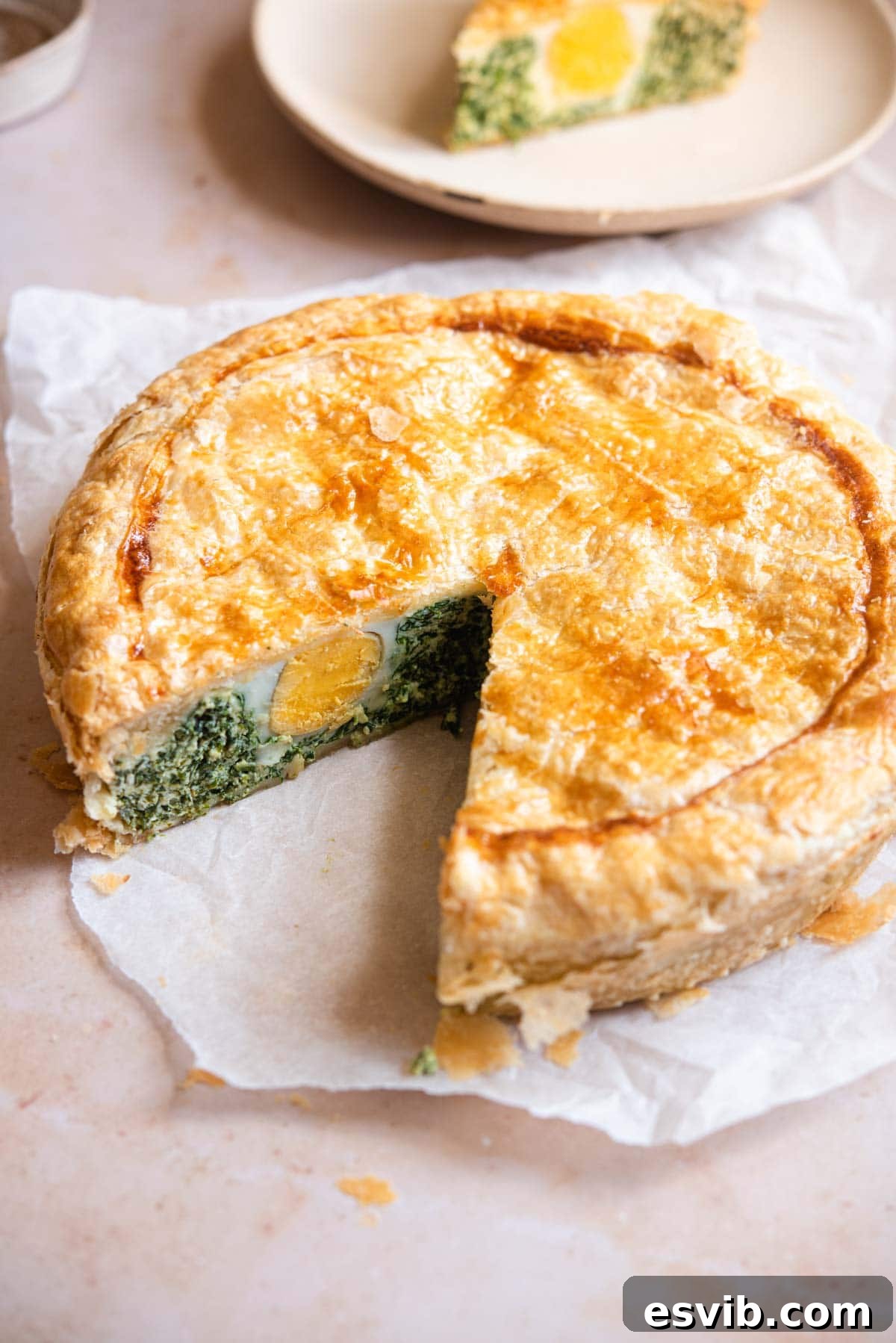
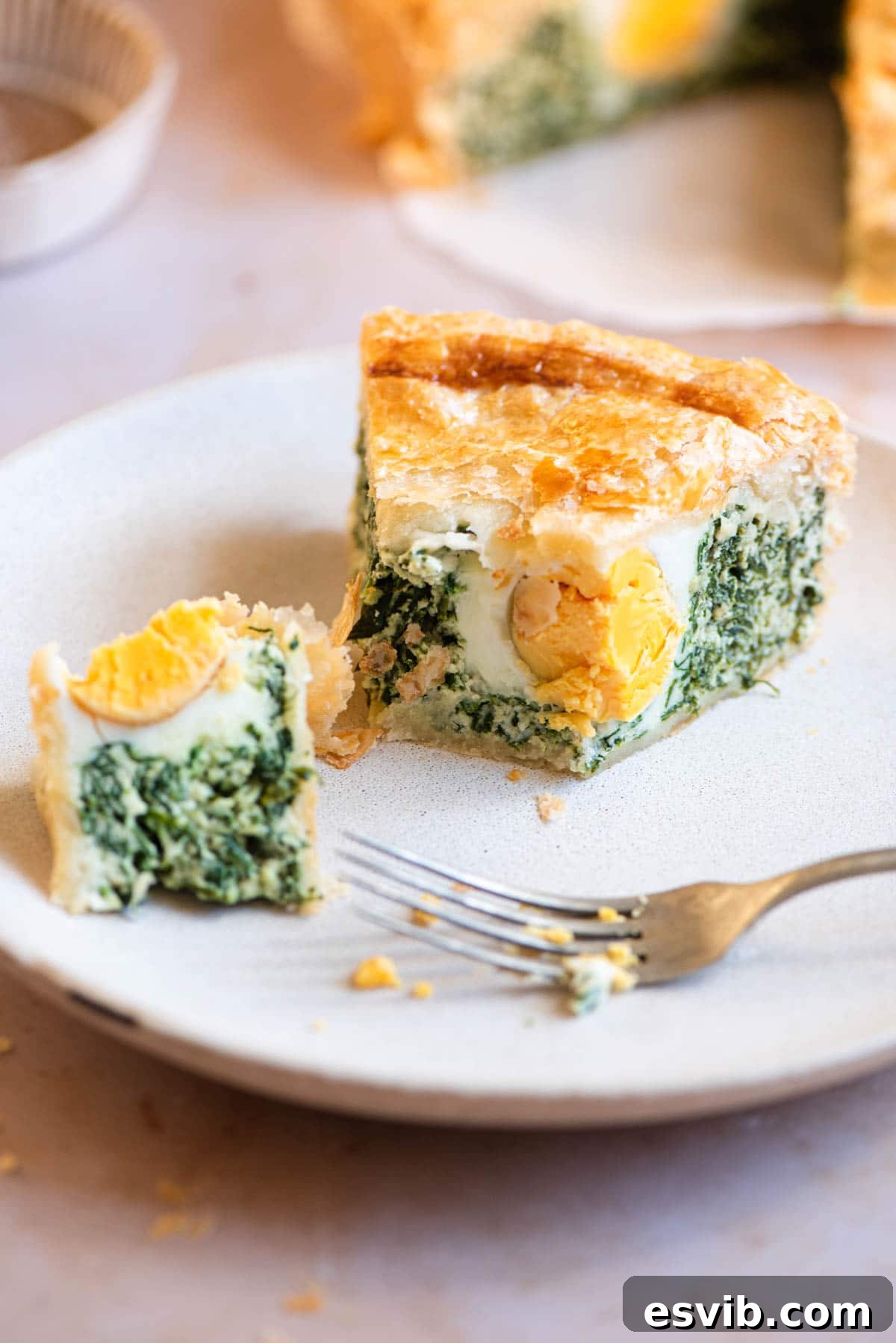
Prepare to delight your senses with Torta Pasqualina, a timeless Ligurian Easter pie that perfectly encapsulates the flavors of spring. This traditional Italian delicacy, rich with vibrant greens, creamy ricotta, farm-fresh eggs, and savory cheese, is more than just a dish—it’s a celebration of heritage and a testament to simple, delicious ingredients. Renowned for its impressive appearance when sliced, revealing perfectly cooked whole eggs nestled within its verdant filling, Torta Pasqualina is an unforgettable center-piece for any Easter feast or special spring gathering.
Originating from the picturesque region of Liguria in Italy, Torta Pasqualina is deeply rooted in Easter traditions. Historically, this savory pie was crafted with an astonishing 33 layers of thin, delicate pastry, each representing a year of Christ’s life. While this artisanal approach is a beautiful nod to its past, our modernized recipe embraces the convenience of ready-made puff pastry, making this exquisite pie accessible to every home cook without compromising on flavor or presentation. You’ll find it incredibly easy to assemble, and it offers wonderful versatility, allowing you to adapt it with your favorite greens and cheeses to suit your taste.
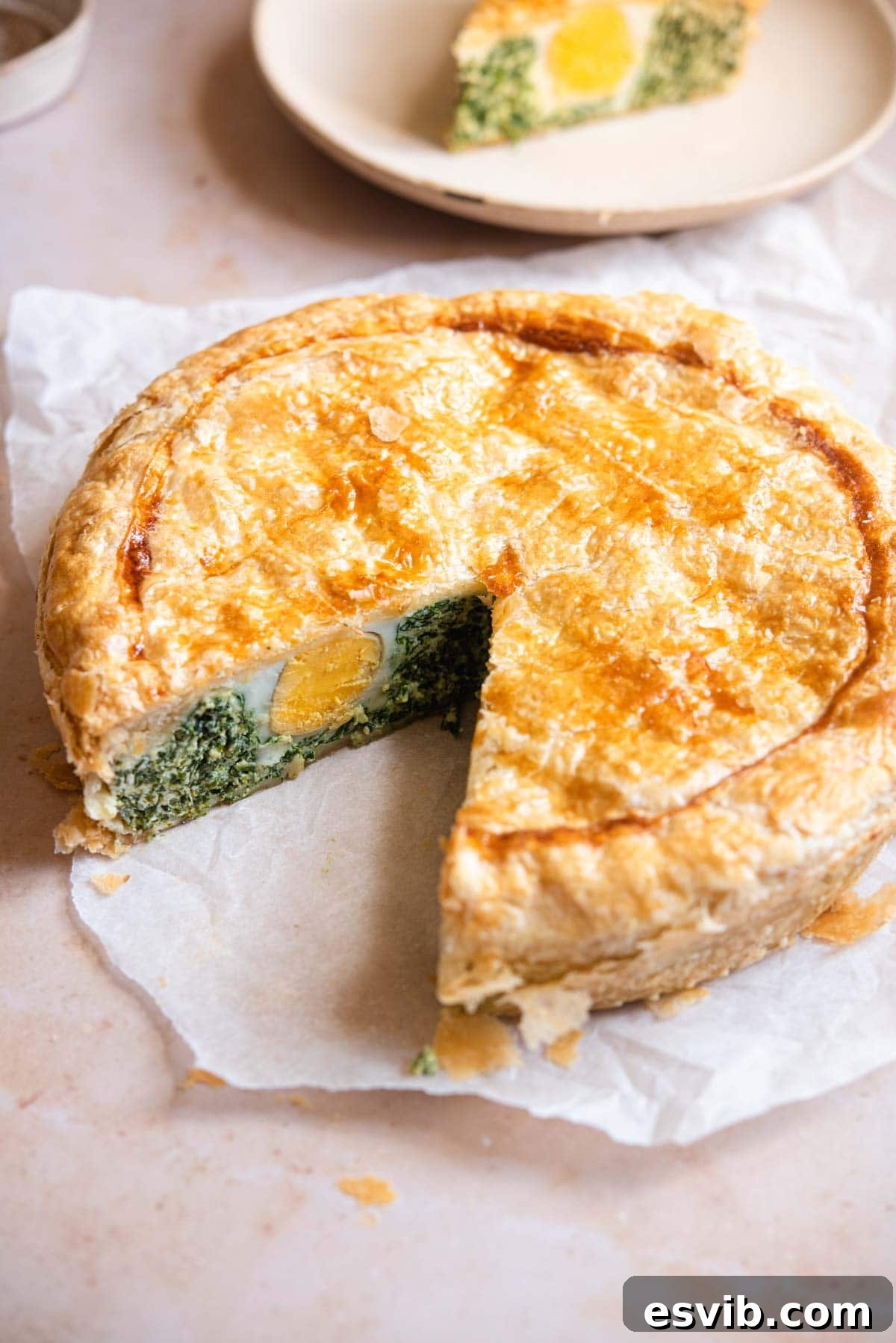
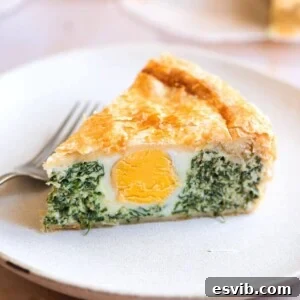
Beyond its rich history, Torta Pasqualina stands out for its captivating visual appeal. Each slice reveals a cross-section of perfectly baked eggs encased in a creamy, herbaceous filling—a true masterpiece that promises to impress guests and elevate your festive table. Follow along for a comprehensive guide, including a detailed ingredient breakdown, step-by-step instructions with accompanying photos, expert tips, and frequently asked questions to ensure your Torta Pasqualina is a resounding success.
Table of Contents
- History and Cultural Significance
- Ingredients: A Deep Dive
- Step-by-Step Guide to Crafting Your Torta Pasqualina
- Expert Tips & FAQs for Success
- Variations and Serving Suggestions
- Storage and Make-Ahead Instructions
- More Italian Easter Recipes
- The Complete Torta Pasqualina Recipe
History and Cultural Significance of Torta Pasqualina
Torta Pasqualina, often translated as “Easter pie,” holds a special place in the hearts and kitchens of Ligurians, particularly around the Easter holiday. This savory pie is a quintessential symbol of spring and rebirth, embodying the freshness of the season with its rich filling of seasonal greens and eggs. Its origins trace back centuries, a time when spring was heralded by an abundance of fresh vegetables and eggs, becoming central to festive culinary traditions.
The most fascinating aspect of its tradition lies in the pastry. Legend has it that the most skilled Ligurian housewives would prepare the pie with exactly 33 delicate layers of dough—a profound symbolic gesture representing the 33 years of Jesus Christ’s life. Each layer was meticulously rolled out to a paper-thin consistency, creating an incredibly flaky and airy crust that was a marvel of culinary artistry. While modern adaptations often opt for fewer layers or ready-made pastry for convenience, the spirit of this intricate tradition lives on in every delicious bite.
Historically, Torta Pasqualina was baked on Holy Thursday or Good Friday and served on Easter Sunday, after the long Lenten fast. It was, and still is, a dish meant for sharing, bringing families together around the table. Its versatility meant it could be enjoyed warm or at room temperature, making it ideal for picnics or celebratory gatherings, truly defining the essence of an Italian Easter feast. Understanding this rich background adds a deeper appreciation for the flavors and traditions contained within this remarkable pie.
Ingredients: A Deep Dive for the Perfect Torta Pasqualina
Crafting an exceptional Torta Pasqualina begins with selecting high-quality ingredients. Below, you’ll find a detailed look at what you need, along with tips for choosing and preparing each component to ensure the best flavor and texture in your Easter pie. These are the stars of our show, promising a symphony of fresh, savory goodness.
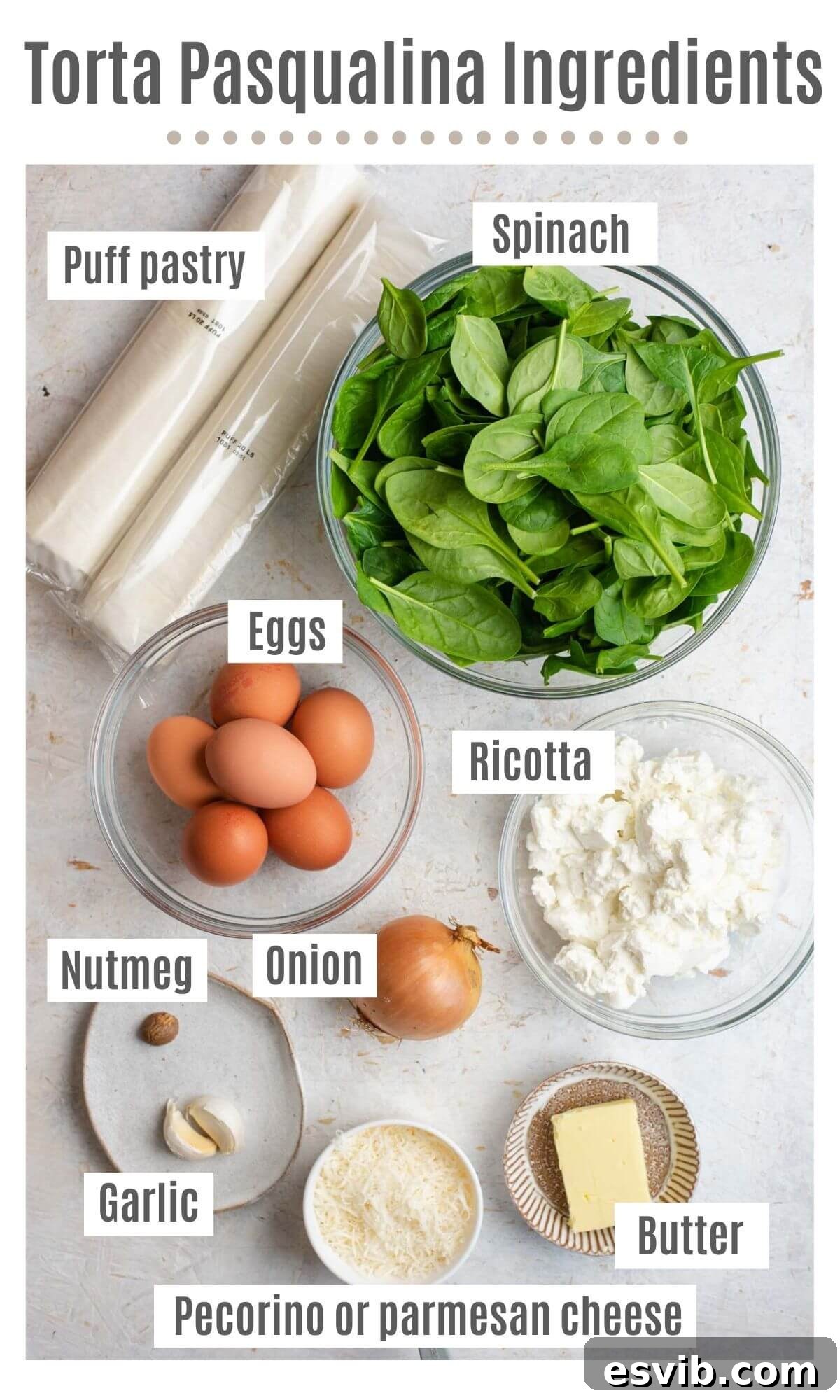
- Puff Pastry (1.5 lbs / 750g ready-rolled): For ease and convenience, we recommend using high-quality, all-butter ready-rolled puff pastry. Its flaky, buttery layers provide a fantastic contrast to the rich filling. If you’re feeling ambitious, you can certainly make your own puff pastry from scratch, or even substitute with a good quality shortcrust pastry for a different texture. Just ensure it’s removed from the fridge about 15-20 minutes before use to make it more pliable.
- Baby Spinach (14 oz / 400g): Fresh baby spinach is ideal for its tender leaves and mild flavor. Before sautéing, always check for any hardy stalks and remove them. While spinach is traditional, this pie is wonderfully adaptable. Consider using a mix of other fresh greens like Swiss chard (remove tough stems and chop), chicory, or even kale (massage first to tenderize), all of which add their own unique nuances. Whichever greens you choose, the key is to wilt them properly and drain excess moisture to prevent a soggy pie.
- Ricotta (2 cups / 500g): Opt for whole milk ricotta cheese for the richest, creamiest filling. It provides a luxurious texture and mild sweetness that balances the greens and cheese. Crucially, before mixing, make sure to drain any excess liquid from the ricotta. You can do this by placing it in a fine-mesh sieve lined with cheesecloth over a bowl for at least 30 minutes, or even overnight in the fridge, to ensure your filling isn’t too wet.
- Onion (1, finely chopped) & Garlic (2 cloves, minced): These aromatic foundations are sautéed with the spinach, building a savory depth of flavor. Finely chopping the onion ensures it softens beautifully and blends seamlessly into the filling. Shallots can also be used as a milder alternative to onion.
- Parmigiano Reggiano or Pecorino Cheese (1 cup / 40g, freshly grated): A generous amount of freshly grated hard Italian cheese is essential for the authentic taste. Parmigiano Reggiano offers a nutty, umami flavor, while Pecorino Romano provides a sharper, saltier kick. Choose based on your preference, or use a combination of both for a balanced profile. Freshly grating it yourself makes a noticeable difference in flavor and texture compared to pre-grated varieties.
- Large Eggs (5): Five large, free-range eggs are used in this recipe—one for the filling and four whole eggs cracked directly into wells within the filling before baking. The whole eggs cook gently within the pie, creating that iconic visual surprise when sliced. Choose the freshest eggs possible for the best taste and structure. An additional egg will be beaten and used for an egg wash to give the pastry a beautiful golden sheen.
- Nutmeg (1 pinch): Just a small pinch of freshly grated nutmeg adds a wonderfully subtle, warm aroma and enhances the overall flavor profile of the ricotta and spinach filling. It’s a classic Italian pairing that shouldn’t be skipped.
- Salt and Pepper: Essential for seasoning the filling. Adjust to your taste, remembering that Pecorino cheese adds significant saltiness.
- Olive Oil (1-2 tbsp): Use a good quality extra virgin olive oil for sautéing the aromatics and greens. Its fruity notes complement the other ingredients beautifully.
- Butter (for greasing): A small amount of butter or olive oil for greasing your pie dish ensures the pastry doesn’t stick and becomes perfectly crisp.
Step-by-Step Guide to Crafting Your Torta Pasqualina
Follow these detailed steps to create a show-stopping Torta Pasqualina. Each stage is designed for clarity, ensuring a delicious and visually stunning result.
Preparation:
- **Prepare Your Dish & Pastry:** Lightly grease a 9-inch (23 cm) pie dish with butter or a little olive oil. Set it aside. Remove your puff pastry sheets from the refrigerator and let them sit at room temperature for about 15-20 minutes. This makes the pastry more pliable and easier to work with.
- **Preheat Oven:** Preheat your oven to 350°F (180°C).
Making the Filling:
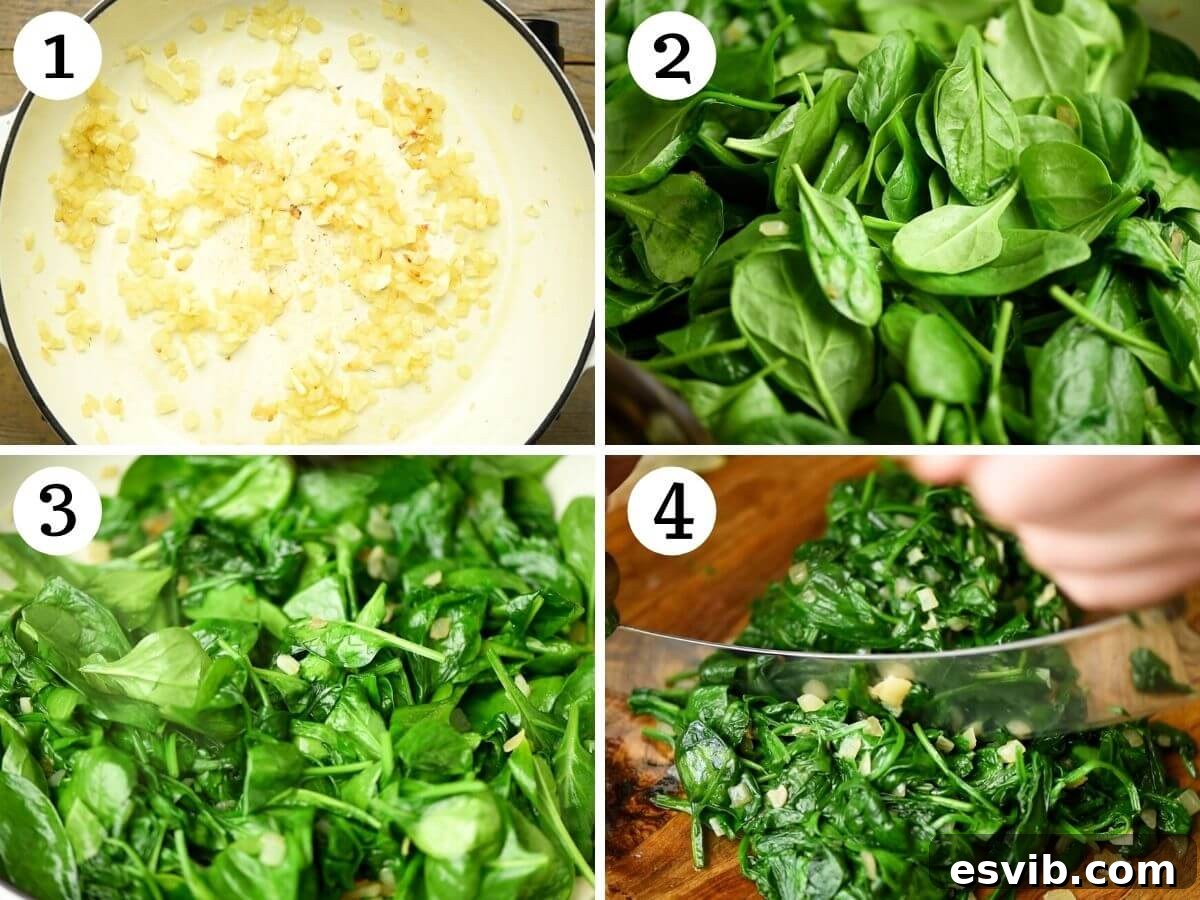
- **Sauté Aromatics:** Heat 1-2 tablespoons of olive oil in a large skillet or pan over medium heat. Add the finely chopped onion and sauté for about 5-7 minutes, stirring occasionally, until it becomes softened and translucent, but not browned. (Refer to photo 1 in the original content for visual guidance)
- **Add Garlic & Spinach:** Add the minced garlic to the pan and cook for another minute until fragrant, being careful not to burn it. Immediately add the baby spinach (or chosen greens) to the pan. (Refer to photo 2)
- **Wilt Spinach & Cool:** Sauté the spinach, stirring frequently, until it has just wilted. It’s crucial not to overcook it, as this can release too much water. As soon as it’s wilted, remove the pan from the heat. Transfer the cooked spinach and onion mixture to a wooden cutting board or a large bowl and allow it to cool completely. This step is vital to prevent the filling from becoming watery.
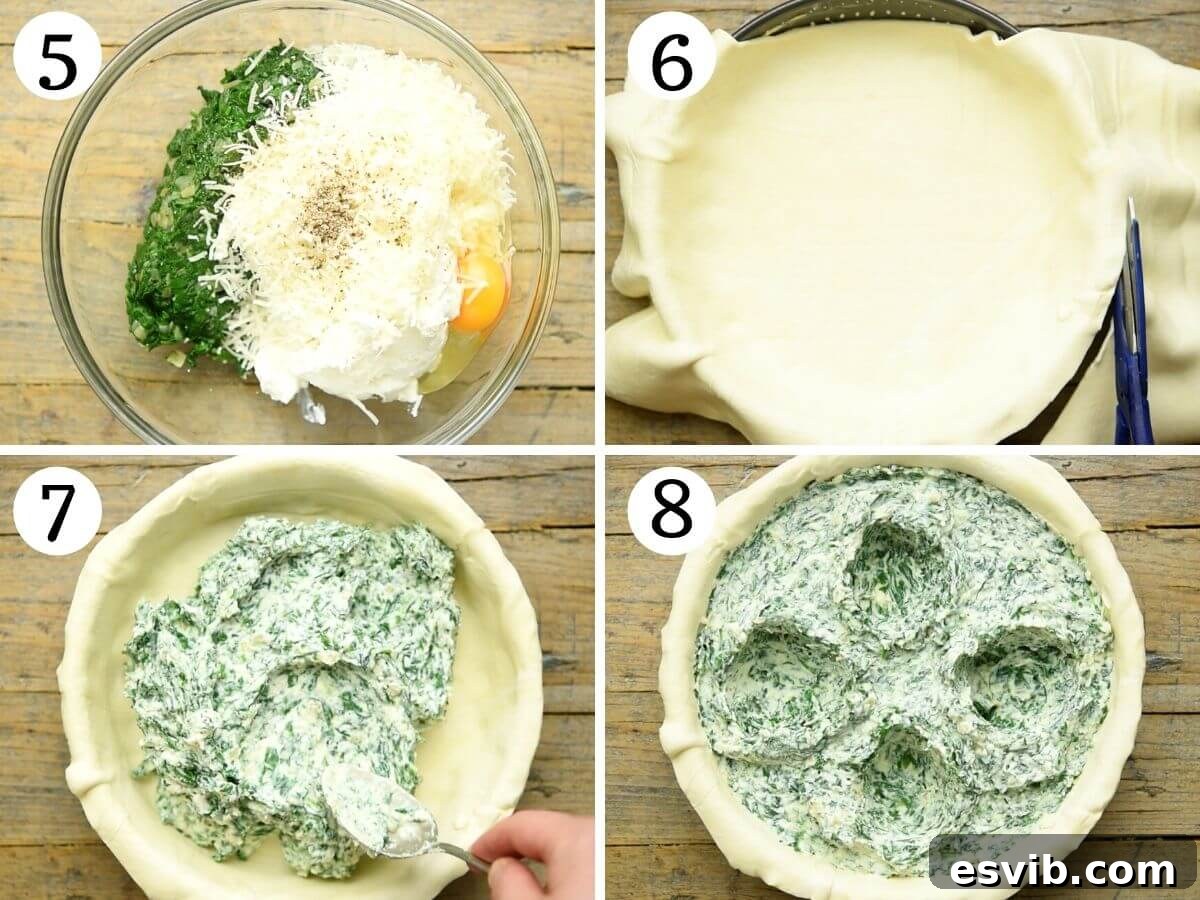
- **Chop & Mix Filling:** Once cooled, roughly chop the spinach mixture into smaller, manageable pieces. Transfer it to a large mixing bowl. Add the drained ricotta cheese, one large egg, grated Parmigiano Reggiano or Pecorino cheese, a pinch of freshly grated nutmeg, and a good pinch of salt and freshly ground black pepper. Mix all the ingredients together until well combined. (Refer to photos 3-5)
Assembling the Pie:
- **Line the Pie Dish:** Carefully unroll one sheet of puff pastry. Gently drape it over your greased 9-inch pie dish, ensuring it covers the bottom and extends up the sides with a slight overhang. Trim any excess pastry from the edges, saving the trimmings for potential decoration. If there are any small gaps or tears, you can patch them with the trimmed pastry, gently pressing to seal. (Refer to photo 6)
- **Add Filling & Create Wells:** Pour the prepared spinach and ricotta filling into the pastry-lined dish. Spread it out evenly with a spoon or spatula. Using the back of a spoon, create four deep wells or indentations in the filling, spaced out evenly. These wells will hold the whole eggs.
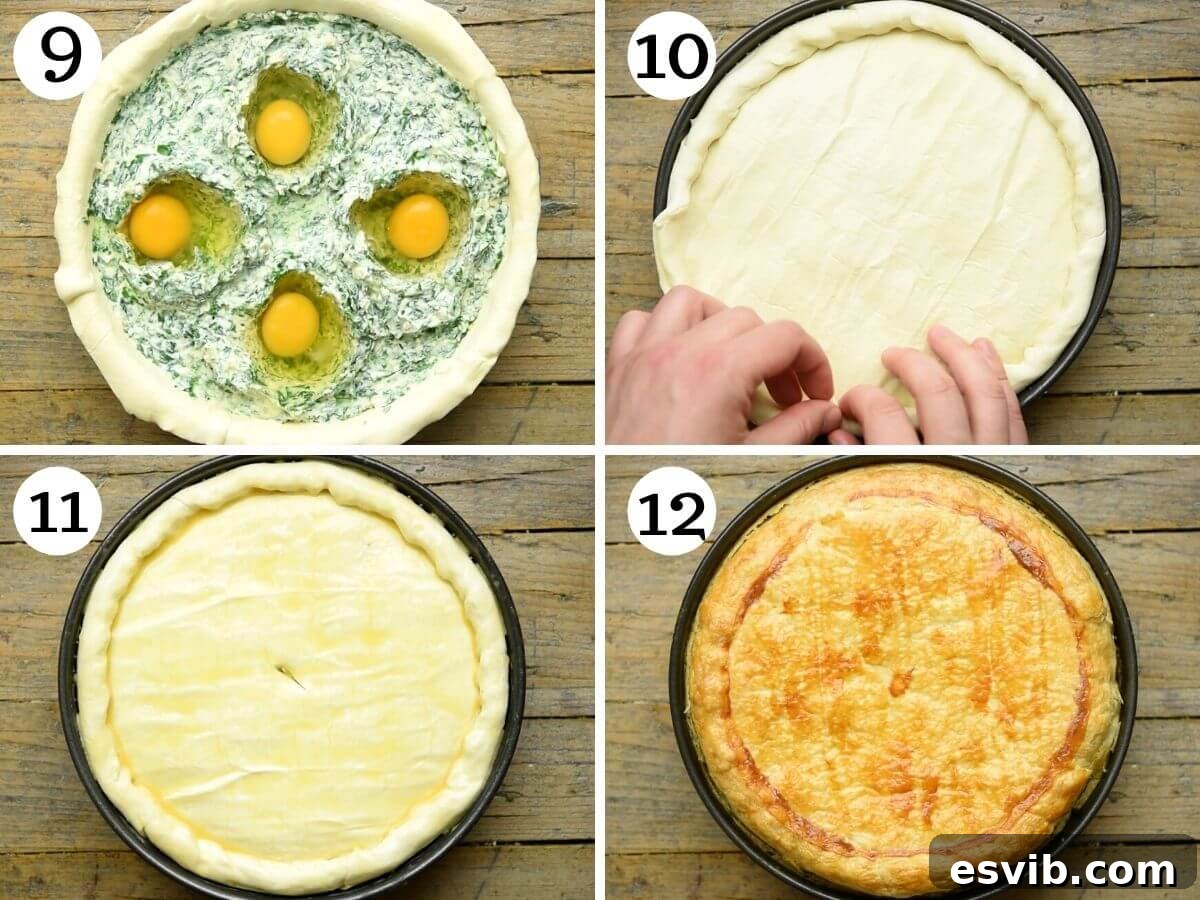
- **Crack in Eggs:** Carefully crack a raw egg into each of the four wells. Sprinkle a tiny pinch of salt over each egg yolk. (Refer to photos 8 & 9)
- **Top with Pastry:** Unroll the second sheet of puff pastry. Carefully place it over the filling, ensuring it sits directly on top and covers the entire pie.
- **Seal the Edges:** Trim the edges of the top pastry, leaving about a 1-inch overhang. Fold the overhanging edges of both the top and bottom pastry together, crimping them tightly to create a secure seal around the pie. You can create a decorative edge using a fork or by pinching with your fingers. (Refer to photo 10)
Baking & Finishing:
- **Egg Wash & Vent:** In a small bowl, whisk the remaining large egg with a tablespoon of water to create an egg wash. Lightly brush the entire top surface of the pie with this egg wash for a beautiful golden crust. Using a sharp knife, make a small cut (about 1 inch long) in the very center of the top pastry. This acts as a steam vent, preventing the pie from puffing up excessively and ensuring even cooking. (Refer to photo 11)
- **Bake:** Carefully transfer the pie dish to your preheated oven. Bake for approximately 50-60 minutes, or until the pastry is deeply golden brown and puffed, and the filling is set. If the crust starts to brown too quickly, you can loosely tent it with aluminum foil.
- **Cool Before Serving:** Once baked, remove the Torta Pasqualina from the oven and let it cool completely on a wire rack before attempting to slice and serve. This cooling period is crucial, allowing the filling to set properly and the whole eggs to solidify, ensuring clean and beautiful slices. (Refer to photo 12)
Expert Tips & FAQs for Success
Elevate your Torta Pasqualina with these essential tips and answers to common questions, ensuring your pie is nothing short of perfection.
- Choosing and Handling Pastry: While ready-rolled puff pastry offers convenience, ensure it’s high quality (all-butter if possible). If you prefer a different texture, traditional shortcrust pastry (pie crust) or even a homemade phyllo-like dough can be used. Always ensure your pastry is cold but pliable enough to handle without cracking. For neat edges, trim them evenly, and use any leftover scraps for decorative cutouts to place on top before baking.
- Preventing a Soggy Filling: This is paramount! Always squeeze out as much excess moisture as possible from your cooked spinach or greens after they’ve wilted. A clean kitchen towel or paper towels work wonders. Similarly, drain your ricotta thoroughly, ideally by letting it sit in a sieve for at least 30 minutes, or even overnight. Excess water will lead to a watery filling and potentially a soggy bottom crust.
- Creating Perfect Egg Wells: When making the indentations for the whole eggs, press down firmly to create wells deep enough to contain the raw eggs. If the wells are too shallow, the egg white can spill over the filling, leading to a less defined look when sliced. Aim for wells that are distinct and roughly the size of the egg.
- Monitoring Greens Wilting: Cook your spinach or greens just until they wilt, and then remove them from the heat immediately. Overcooking can lead to excessive water release, which, as mentioned, is detrimental to the pie’s texture.
- The Art of Decoration: To add an extra touch of elegance, use cookie cutters to create festive shapes (like flowers, leaves, or Easter bunnies) from any leftover pastry scraps. Arrange these decorations on top of the pie before applying the egg wash and baking. They’ll bake up beautifully golden and add a charming, homemade touch.
- Ventilation is Key: Don’t forget to make a small incision in the center of the top pastry before baking. This vent allows steam to escape, preventing the pie from becoming excessively puffy or potentially cracking, ensuring a beautifully baked and stable crust.
- Patience During Cooling: It can be tempting to slice into your Torta Pasqualina straight from the oven, but resist the urge! Allowing the pie to cool completely (or at least to room temperature) is crucial. This gives the filling time to set properly and the whole eggs to firm up, resulting in clean, perfect slices that hold their shape.
Frequently Asked Questions:
Absolutely! Torta Pasqualina is an excellent make-ahead dish. You can prepare the filling up to 2-3 days in advance and store it in an airtight container in the refrigerator. Alternatively, you can assemble the entire pie (without the egg wash and steam vent) and refrigerate it overnight, covered loosely with plastic wrap. Just bring it to room temperature for about 30 minutes before baking, then proceed with the egg wash and baking instructions.
Torta Pasqualina is incredibly versatile and can be served warm, at room temperature, or even chilled. Many prefer it at room temperature, as the flavors are more pronounced and the texture is perfectly set. It makes a wonderful main course for a light lunch or dinner, a fantastic addition to a brunch spread, or an impressive appetizer for a larger gathering. Serve it with a simple side salad to complete the meal.
A standard 9-inch (23 cm) round pie dish or springform pan works perfectly for this recipe. Ensure it’s deep enough to hold the generous filling. If using a springform pan, make sure the pastry extends well above the filling to create a good seal, as the filling can expand slightly during baking.
Variations and Serving Suggestions
While the classic Torta Pasqualina is undeniably delicious, its adaptable nature allows for wonderful variations that can cater to different tastes and dietary preferences. Don’t hesitate to experiment with the filling to make this Ligurian pie truly your own.
- **Greens Galore:** Beyond spinach, consider a medley of spring greens. A mix of Swiss chard, chicory, dandelion greens, or even tender young kale can introduce delightful bitterness or earthy notes that complement the ricotta beautifully. Always remember to properly wilt and drain any greens with higher water content.
- **Cheese Choices:** Elevate the cheese factor by adding a layer of thinly sliced provolone or mozzarella cheese over the spinach-ricotta mixture before adding the whole eggs. This adds extra creaminess and a delightful stretch.
- **Mediterranean Twist:** Incorporate other Mediterranean flavors. Sun-dried tomatoes, chopped Kalamata olives, or even a handful of crumbled feta cheese can bring a savory, tangy dimension to the filling.
- **Herb Infusion:** Fresh herbs are key to Italian cooking. Beyond nutmeg, a sprinkle of fresh parsley, basil, or marjoram in the ricotta mixture can significantly brighten the flavors.
- **Meat Lovers Option (Non-Traditional):** For a heartier pie, though not traditional for Torta Pasqualina, you could add finely diced cooked ham, pancetta, or crumbled Italian sausage to the spinach mixture. Ensure any added meat is fully cooked and drained of excess fat.
- **Artichoke Heart Addition:** Chopped canned or jarred artichoke hearts (well-drained and patted dry) can be mixed into the filling for a lovely tangy and tender element.
Torta Pasqualina is versatile in how it’s served. It’s fantastic as the centerpiece of an Easter brunch, a light lunch, or a satisfying dinner. Pair it with a simple green salad dressed with a lemon vinaigrette, or serve alongside roasted asparagus for a truly seasonal spread. It’s also perfect for packed lunches or picnics, as it travels well and tastes great at room temperature.
Storage and Make-Ahead Instructions
Torta Pasqualina is a fantastic dish for planning ahead, making your celebrations much less stressful. Proper storage also ensures you can enjoy its deliciousness for days to come.
Make-Ahead Tips:
- **Filling Only:** Prepare the spinach and ricotta filling completely, as described in the recipe. Store it in an airtight container in the refrigerator for up to 2-3 days. When ready to bake, proceed with assembling the pie.
- **Assembled Pie (Unbaked):** You can fully assemble the Torta Pasqualina, including lining the dish with pastry, adding the filling, whole eggs, and topping with the second pastry sheet. Cover the unbaked pie loosely with plastic wrap and refrigerate for up to 24 hours. Before baking, remove it from the fridge and let it sit at room temperature for about 30 minutes. Then, apply the egg wash, make the steam vent, and bake as directed.
Storage of Baked Torta Pasqualina:
- **At Room Temperature:** Once baked, Torta Pasqualina can sit at room temperature for up to 2 hours. After this, it should be refrigerated.
- **In the Refrigerator:** Store any leftover baked Torta Pasqualina in an airtight container or tightly wrapped with plastic wrap in the refrigerator for up to 3-4 days.
- **Freezing:** Torta Pasqualina freezes remarkably well. Once completely cooled, you can wrap the entire pie or individual slices tightly in plastic wrap, then aluminum foil. Freeze for up to 2-3 months.
Reheating Instructions:
- **From Refrigerator:** To reheat, place slices on a baking sheet and warm in a preheated oven at 300°F (150°C) for 15-20 minutes, or until heated through. Alternatively, individual slices can be microwaved, though the crust may lose some crispness.
- **From Freezer:** Thaw frozen Torta Pasqualina overnight in the refrigerator. Then, reheat as you would from the refrigerator. For best results, avoid reheating from frozen directly, as this can affect the pastry texture.
More Italian Easter Recipes to Explore
If you’ve enjoyed the taste of traditional Italian Easter fare with Torta Pasqualina, you’ll love these other authentic recipes perfect for your spring celebrations:
- Italian Easter Bread (Pane di Pasqua): A beautifully braided sweet bread, often adorned with colored eggs, symbolizing new life.
- Pizza Rustica (Italian Easter Pie): A hearty, meat and cheese-filled savory pie, a true feast for the senses.
- Italian Lamb Ragu (Ragu di Agnello): A rich and flavorful slow-cooked lamb sauce, often served with pasta for Easter Sunday lunch.
- Pastiera Napoletana: A famous Neapolitan wheat and ricotta tart, known for its unique texture and aromatic flavors of orange blossom and candied fruit.
- Italian Mimosa Cake (Torta Mimosa): A light and airy sponge cake layered with pastry cream and covered with delicate sponge cake crumbs, resembling the mimosa flower.
The Complete Torta Pasqualina Recipe
For visual guidance, refer to the step-by-step photos provided above!
This recipe provides helpful tips and tricks to make Torta Pasqualina perfectly on your first attempt.
Torta Pasqualina (Spinach & Ricotta Egg Pie)
By Emily
20 minutes
1 hour
1 hour 20 minutes
12 servings
Ingredients
- 1.5 lbs (750g) ready-rolled puff pastry
- 14 oz (400g) baby spinach
- 1 onion, finely chopped
- 2 cloves garlic, minced
- 2 cups (500g) whole milk ricotta, well-drained
- 1 cup (40g) Parmigiano Reggiano or Pecorino cheese, freshly grated
- 5 large eggs (1 for filling, 4 for wells, 1 for egg wash)
- 1 pinch fresh nutmeg
- Salt and freshly ground black pepper, to taste
- 1-2 tbsp extra virgin olive oil
- Butter or olive oil, for greasing the pie dish
Instructions
- Grease a 9-inch pie dish (23 cm) with butter or olive oil and set aside. Remove puff pastry from the fridge to soften slightly.
- Preheat your oven to 350°F (180°C).
- Heat the olive oil in a large pan over medium heat. Add the finely chopped onion and sauté for about 5-7 minutes until softened and translucent.
- Add the minced garlic and cook for about 1 minute until fragrant. Then, add the baby spinach to the pan.
- Sauté the spinach, stirring often, until it has just wilted. Do not overcook. Transfer the cooked spinach and onion to a wooden cutting board or bowl and let it cool completely. Once cooled, roughly chop the spinach mixture into small pieces.
- In a large mixing bowl, combine the chopped spinach mixture with the well-drained ricotta cheese, 1 large egg, grated Parmigiano Reggiano or Pecorino cheese, a pinch of nutmeg, and a good pinch of salt and pepper. Mix until well combined.
- Carefully unroll one sheet of puff pastry. Line the bottom and sides of your prepared pie dish with it. Trim the edges, leaving a small overhang, and use any scraps to patch gaps if necessary.
- Add the spinach and ricotta filling to the pastry-lined dish, spreading it out evenly. Create four deep wells in the filling, spaced apart, to hold the eggs.
- Carefully crack one raw egg into each of the four wells. Sprinkle a tiny amount of salt over each egg yolk.
- Unroll the second sheet of puff pastry and place it directly on top of the filling, covering the pie completely.
- Fold the overhanging edges of both the top and bottom pastry together, crimping firmly to seal the pie.
- In a small bowl, beat the remaining large egg with a tablespoon of water to create an egg wash. Brush the top of the pie with this egg wash. Make a small cut (about 1 inch) in the center of the top pastry with a sharp knife to allow steam to escape during baking.
- Bake in the preheated oven for 50-60 minutes, or until the pastry is golden brown and puffed, and the filling is set. If the crust browns too quickly, loosely tent with foil.
- Remove the Torta Pasqualina from the oven and let it cool completely on a wire rack before slicing and serving. This allows the filling and eggs to set properly.
Notes
- Pastry: High-quality ready-rolled puff pastry makes this pie incredibly easy, but feel free to make your own or use a shortcrust pastry (pie crust) for a different texture.
- Egg Wells: Ensure the wells for the eggs are deep enough to prevent the egg white from spilling over the filling.
- Greens: While spinach is traditional, chicory, Swiss chard, or a mix of greens can also be used. Always thoroughly drain cooked greens and ricotta to avoid a soggy pie.
- Wilting Greens: Wilt greens quickly and remove from heat as soon as they’ve softened to prevent excessive water release.
- Decoration: Use leftover pastry scraps to cut out decorative shapes with cookie cutters. Place them on top of the pie before egg washing and baking for an extra festive touch.
Helpful Info for All Our Recipes
- We consistently use extra virgin olive oil in all our recipes unless otherwise specified.
- For canned or jarred tomatoes, we recommend Cirio or Mutti brands for superior flavor and results.
- All vegetables mentioned are assumed to be medium-sized unless specifically stated otherwise.
- Every recipe provided has been thoroughly tested and developed using a fan (convection) oven.
- Find out more about how nutrition information is calculated.
- Explore our must-have Italian Pantry Staples to stock your kitchen.
- Discover all our Essential Kitchen Tools for Italian Cooking.
Nutrition Information
Calories:
465
kcal
|
Carbohydrates:
29
g
|
Protein:
15
g
|
Fat:
32
g
|
Saturated Fat:
11
g
|
Trans Fat:
1
g
|
Cholesterol:
95
mg
|
Sodium:
362
mg
|
Potassium:
311
mg
|
Fiber:
2
g
|
Sugar:
1
g
|
Vitamin A:
3449
IU
|
Vitamin C:
10
mg
|
Calcium:
235
mg
|
Iron:
3
mg
Nutrition information is automatically calculated, so should only be used as an approximation.
If you’ve tried this Torta Pasqualina Recipe or any other recipe on our blog, we’d love to hear from you! Don’t forget to rate the recipe and share your thoughts in the comments below. Your feedback is incredibly valuable! You can also Follow us on Facebook, Instagram, and Pinterest to discover more delicious food and stay updated on our latest culinary adventures.